
In March 2022, the anime streaming landscape underwent one of its most significant transformations: the official merger of Crunchyroll and Funimation under Sony’s umbrella. What began as a gradual consolidation of operations culminated in the full shutdown of the Funimation app and website by April 2024, redirecting all users to Crunchyroll. For millions of anime fans who built their libraries across both platforms, this shift has raised urgent questions about access, content availability, account migration, and long-term viewing experience.
This isn’t just a rebranding—it’s a complete restructuring of how anime is distributed and consumed in North America and beyond. Whether you were a longtime Funimation subscriber or a Crunchyroll loyalist, the merger affects your watchlist, dubs, simulcasts, and even offline downloads. Understanding what changed—and what stayed the same—is essential to navigating your anime library in this new era.
The Road to Merger: How It Happened
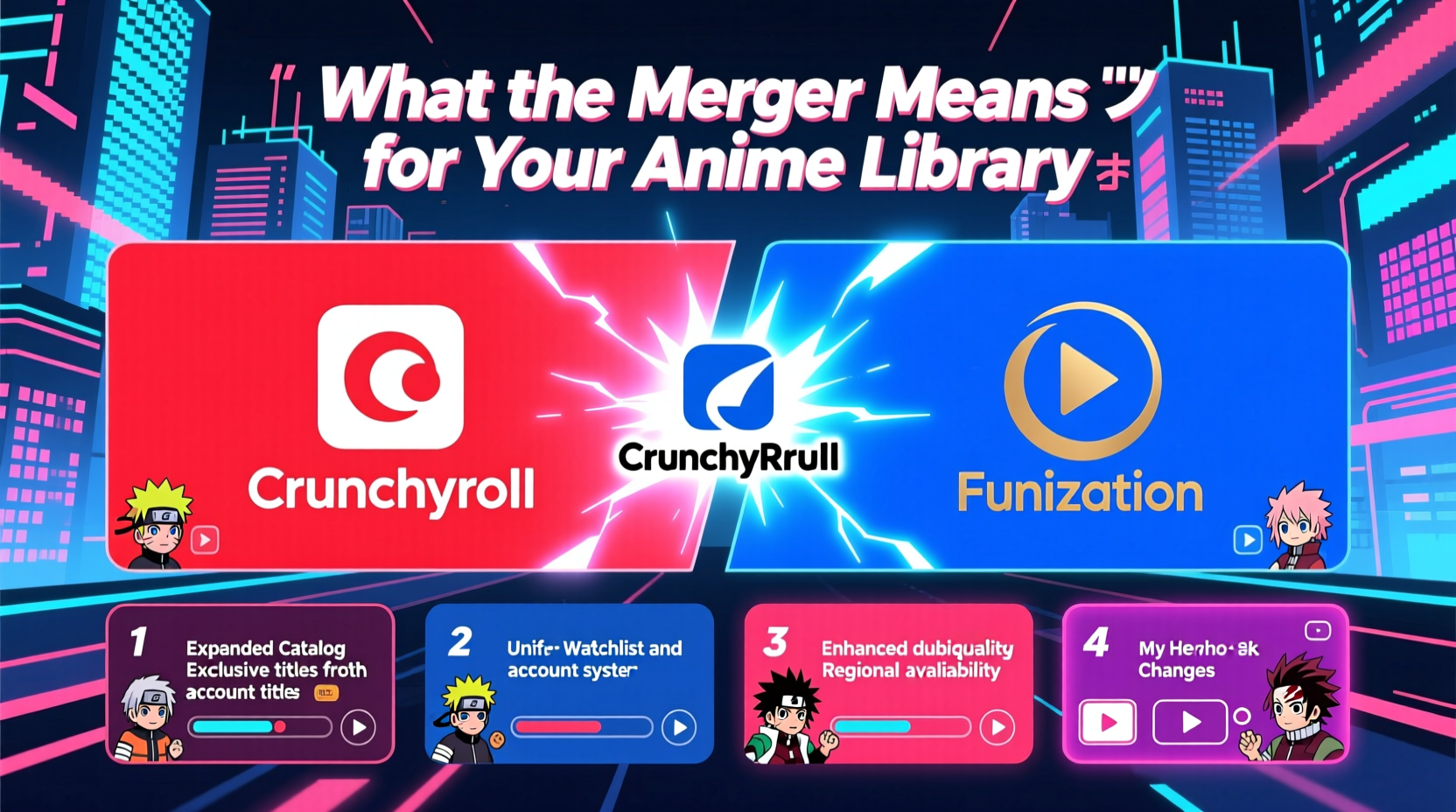
The Crunchyroll-Funimation merger was years in the making. Both services operated as dominant forces in Western anime streaming, but with overlapping ownership under Sony Pictures Entertainment and Aniplex (a subsidiary of Sony Music Japan). In 2017, Funimation acquired a 95% stake in Crunchyroll from Otter Media. Then, in 2021, Sony completed the acquisition of Crunchyroll from AT&T, uniting both brands under one corporate roof.
The strategic goal was clear: consolidate resources, eliminate internal competition, and create a single global anime hub capable of rivaling Netflix and Disney+ in scale and licensing power. By early 2022, the integration process began—starting with shared backend systems, followed by cross-platform content sharing. The final step came in April 2024, when Funimation officially ceased operations, urging all users to migrate to Crunchyroll using linked accounts.
“Uniting these two platforms allows us to deliver a more seamless, expansive experience for anime fans worldwide.” — Rahul Purini, CEO of Crunchyroll
What Happened to Your Funimation Library?
One of the biggest concerns for former Funimation users was whether their personal anime libraries—watchlists, completed series, favorites—would carry over. The answer is both reassuring and incomplete.
If you linked your Funimation account to Crunchyroll before the shutdown, much of your data was migrated automatically. Watch history, favorite titles, and completed series were transferred. However, not all metadata made the transition. Some user ratings, custom lists, and community interactions were lost due to technical limitations in syncing legacy databases.
More importantly, not every title available on Funimation is now on Crunchyroll. While the majority of the catalog was integrated, certain exclusives—particularly older dubs licensed solely by Funimation—remain unavailable due to expiring rights or lack of renewal.
Content Comparison: What’s Gained and What’s Lost
The combined library now boasts over 1,500 anime series and 20,000 episodes—a record for any dedicated anime platform. But quantity doesn’t always mean better access. Here’s a breakdown of key changes affecting viewers:
| Aspect | Before Merger | After Merger |
|---|---|---|
| Dub Availability | Fan-favorite dubs exclusive to Funimation (e.g., Dragon Ball Z Kai, Sailor Moon) | Many dubs moved to Crunchyroll; some still missing or replaced with newer versions |
| Simulcasts | Funimation and Crunchyroll often split seasonal releases | Now unified—simulcasts appear exclusively on Crunchyroll |
| Classic Anime | Funimation had deep catalog of 90s/2000s titles | Limited availability; some classics rotated out due to cost |
| Subtitles & Languages | Varying subtitle quality between platforms | Standardized subtitles; improved accessibility features added |
| Offline Viewing | Both offered download options | Maintained on Crunchyroll; syncs across devices |
While the merger eliminated redundancy, it also reduced competition—which historically drove innovation and faster licensing. Fans noticed delays in acquiring niche or retro titles post-merger, as the focus shifted toward mainstream hits and Crunchyroll Originals.
Real Example: A Longtime Fan’s Experience
Take Mark, a 32-year-old anime enthusiast from Chicago, who subscribed to Funimation since 2013. He built a library of over 200 series, including rare dubs of Yu Yu Hakusho and Rurouni Kenshin. When he migrated to Crunchyroll, he found that his watch history synced—but only 60% of his favorite dubs were available. The original English dub of Sailor Moon Season 1, which he grew up with, was nowhere to be found.
He contacted support and learned the license had expired and wasn’t renewed. “It felt like losing part of my childhood,” he said. “I understand business decisions, but there should’ve been a clearer heads-up.” His case reflects a broader sentiment: emotional attachment to specific voice casts and versions matters deeply to fans.
Navigating Your New Anime Library on Crunchyroll
With Funimation gone, Crunchyroll is now the sole destination for former subscribers. To make the most of your updated library, follow this practical guide:
- Log in via Migration Portal: Use the official Crunchyroll migration tool if you haven’t already. It pulls your subscription tier and viewing history.
- Search for Missing Titles: Use the “Advanced Search” filter to look for series by decade, language, or studio. Try alternate spellings (e.g., “Gundam Wing” vs. “Shin Kidou Senki Gundam Wing”).
- Check the “Funimation Legacy” Section: Crunchyroll created a hidden tag for migrated content. Search “Funimation” in the explore tab to find relocated series.
- Manage Watchlists: Rebuild custom lists manually. Label them clearly (e.g., “Completed – Dub,” “To Watch – Sub”).
- Download for Offline Access: Re-download episodes you previously saved, as old Funimation downloads don’t transfer.
Checklist: Securing Your Anime Collection Post-Merger
- ✅ Migrated Funimation account to Crunchyroll
- ✅ Verified subscription plan and billing details
- ✅ Reviewed transferred watch history and favorites
- ✅ Searched for missing dubs or classic series
- ✅ Downloaded critical episodes for offline viewing
- ✅ Reported missing content to Crunchyroll support
- ✅ Explored Crunchyroll’s “Classics” and “Legacy” categories
Potential Risks and Fan Concerns
Despite the promise of a unified experience, the merger has sparked legitimate concerns within the anime community:
- Reduced Content Diversity: With no competing platform pushing for fast licensing, slower rollout of obscure or older titles has become common.
- Dub Discontinuation: Some beloved English dubs were replaced with newer versions or removed entirely due to union costs or expired contracts.
- Subscription Price Increases: Since the merger, Crunchyroll raised its premium tier from $7.99 to $9.99/month, with annual plans increasing proportionally.
- Platform Stability Issues: User reports of buffering, login errors, and search inaccuracies spiked during peak migration periods.
Industry analysts warn that monopolization in niche markets can stifle innovation. “When one company controls distribution, curation suffers,” says Lila Chen, media analyst at StreamWatch Insights. “Anime thrives on variety—both in content and presentation. We need checks and balances.”
“Fans shouldn’t have to choose between convenience and preservation. Classic dubs are cultural artifacts, not just content.” — Dr. Kenji Tanaka, Professor of Japanese Pop Culture, UCLA
Frequently Asked Questions
Will I lose access to Funimation-exclusive dubs?
Some will remain unavailable. Crunchyroll has re-recorded or replaced several iconic dubs (e.g., Dragon Ball Z Kai), citing modern standards and union compliance. Others were dropped due to lapsed licenses. There is no official archive or compensation program for lost dubs.
Can I still use my Funimation gift cards or credits?
No. All unused Funimation credits expired after April 2, 2024. However, active subscribers were granted extended free access to Crunchyroll as part of the transition. Contact support if you believe you’re owed credit.
Is Crunchyroll planning to restore missing classic anime?
There’s no public roadmap. While Crunchyroll has reintroduced select classics like Neon Genesis Evangelion and Cowboy Bebop, many 90s-era titles remain absent. Licensing costs and music rights are cited as major barriers.
Looking Ahead: The Future of Anime Streaming
The Crunchyroll-Funimation merger marks the end of an era—and the beginning of a consolidated future. As Sony positions Crunchyroll as its global anime flagship, the platform has expanded into live events (like Crunchyroll Expo), merchandise, and original productions such as Onyx Equinox and FreakAngels.
However, fan trust hinges on transparency. Viewers want assurance that legacy content won’t be erased in favor of new IP. There’s growing demand for a “preservation mode”—a dedicated section for classic dubs, historical context, and behind-the-scenes features from defunct studios like Ocean Group and Bang Zoom!.
Meanwhile, competitors are emerging. Platforms like Hidive and RetroCrush cater to niche audiences with deep catalogs and uncensored versions. Even Netflix, with its aggressive anime acquisitions (Castlevania, Pluto), poses a threat to Crunchyroll’s dominance. The lack of competition post-merger may ultimately push fans toward alternatives.
Conclusion: Take Control of Your Anime Legacy
The Crunchyroll-Funimation merger reshaped how we access anime—but it doesn’t have to erase your personal connection to the medium. Your library is more than a list of shows; it’s a timeline of memories, emotions, and cultural discovery. While corporate decisions may limit availability, proactive steps can preserve what matters most.
Revisit your favorite series, re-download key episodes, engage with the community, and advocate for content preservation. Support physical media when possible—Blu-rays and collector’s editions ensure long-term access regardless of streaming shifts. And above all, keep speaking up. Companies listen when fans organize, review, and demand better stewardship of beloved franchises.




 浙公网安备
33010002000092号
浙公网安备
33010002000092号 浙B2-20120091-4
Comments
No comments yet. Why don't you start the discussion?