
Diamonds have long been symbols of luxury, love, and lasting beauty. But in recent years, a new aesthetic has emerged from vintage-inspired jewelry circles: the \"crushed ice\" diamond. Coveted for its chaotic brilliance and retro charm, this type of stone is gaining popularity among collectors and modern buyers alike. Yet, many wonder—what exactly makes a diamond look like \"crushed ice,\" and does it outshine the classic brilliant cut? The answer isn't straightforward, but understanding the nuances reveals why this trend is more than just fleeting fashion.
What Are Crushed Ice Diamonds?
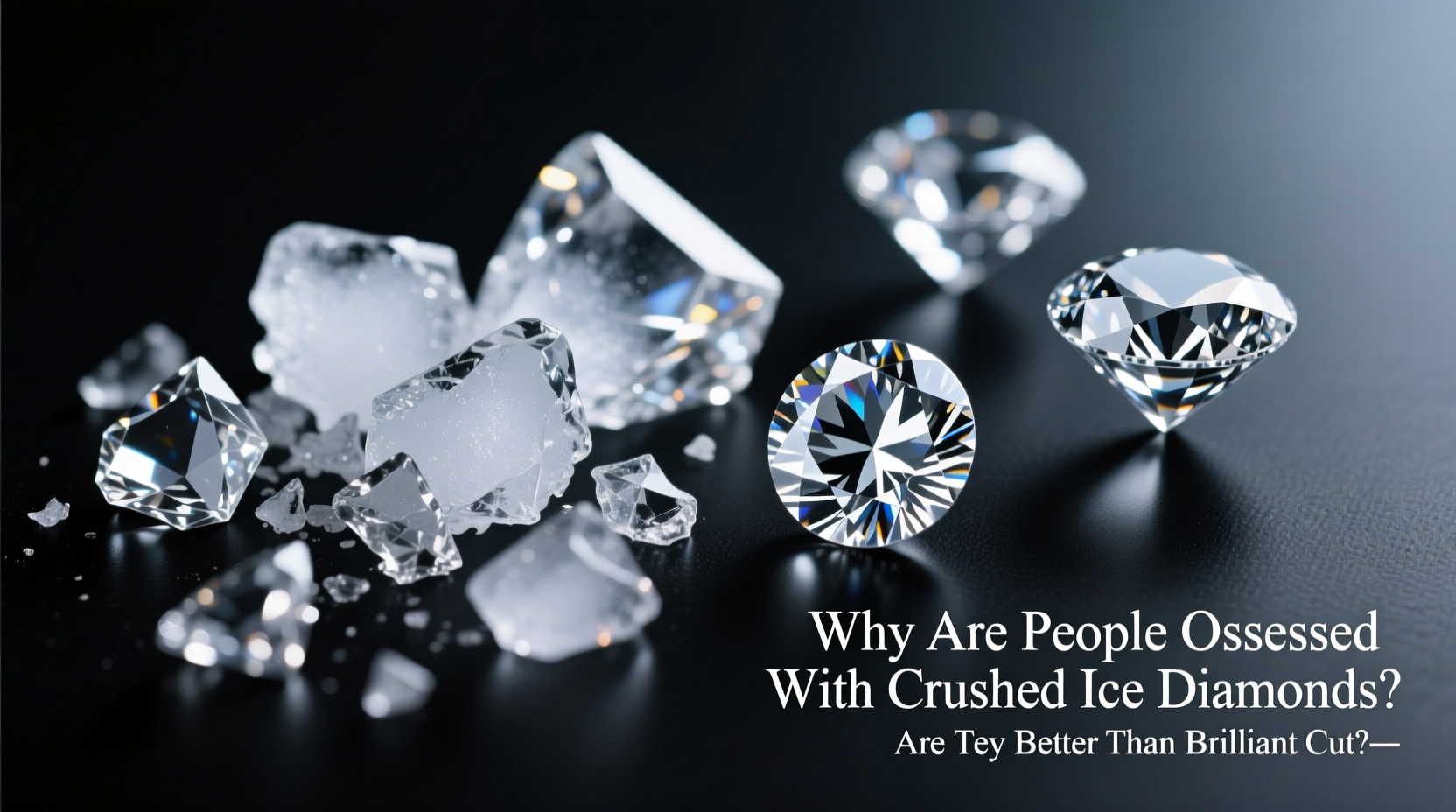
The term “crushed ice” doesn’t refer to a specific diamond cut or grading category—it’s a visual descriptor. A crushed ice diamond appears to shimmer with a fragmented, almost watery sparkle, resembling light reflecting off tiny shards of ice in a glass. This effect typically occurs in certain vintage-style cuts such as old mine, European antique, or some poorly proportioned modern cushion or radiant cuts.
Unlike the clean, symmetrical fire seen in well-cut modern round brilliants, crushed ice diamonds scatter light unpredictably. They lack the sharp contrast between dark and bright zones (known as the “hearts and arrows” pattern), instead producing a diffuse glow across the entire surface. Some find this randomness enchanting; others see it as a flaw.
The Allure: Why People Are Obsessed
The fascination with crushed ice diamonds stems largely from nostalgia and individuality. These stones evoke early 20th-century elegance, reminiscent of Art Deco engagement rings and heirloom pieces passed through generations. In an era where uniqueness is prized over perfection, their irregular sparkle stands out against mass-produced, machine-precise diamonds.
Designers and influencers have amplified the trend by showcasing these gems in minimalist settings that emphasize their organic luminosity. Social media platforms like Instagram and TikTok are filled with close-up videos highlighting how crushed ice diamonds seem to \"dance\" differently under movement—less flashy, more mysterious.
“Crushed ice diamonds aren’t about maximum fire—they’re about soul. There’s a warmth in their imperfection that resonates emotionally.” — Lena Torres, Vintage Jewelry Curator at The Gilded Vault
Additionally, many buyers appreciate that these diamonds often come at a lower price point than high-clarity brilliant cuts, especially if they're antique or estate pieces. For budget-conscious shoppers seeking character-rich stones, the value proposition is strong.
Crushed Ice vs. Brilliant Cut: A Detailed Comparison
To determine whether crushed ice diamonds are “better,” one must first define what “better” means. Is it brilliance? Fire? Rarity? Long-term value? Below is a breakdown comparing key attributes.
| Feature | Crushed Ice Diamond | Modern Brilliant Cut |
|---|---|---|
| Light Performance | Diffuse, scattered sparkle; soft overall glow | Highly focused brilliance and fire; sharp flashes |
| Cut Precision | Often lower symmetry; inconsistent facet alignment | Engineered for optical precision; ideal proportions |
| Visual Appeal | Vintage, romantic, understated elegance | Bold, modern, attention-grabbing sparkle |
| Price (Relative) | Generally lower per carat, especially antiques | Higher due to demand and cutting standards |
| Durability & Wearability | Comparable, depending on setting and shape | Excellent; designed for everyday wear |
| Resale Value | Variable; depends on provenance and collector interest | More predictable; certified brilliants hold value well |
The data shows no clear winner. It comes down to personal taste and intended use. A bride wanting show-stopping sparkle on her wedding day might lean toward a brilliant cut. Someone drawn to history, texture, and subtlety may fall for the quiet magic of crushed ice.
How to Choose the Right One for You
Selecting a diamond should be guided by both emotion and education. If you're considering a crushed ice stone, follow this step-by-step guide to ensure satisfaction.
- Define Your Priorities: Decide whether you value uniqueness and vintage appeal over maximum brilliance.
- Inspect in Person: Always view the diamond outside of lab reports. Video can misrepresent how light interacts with the stone.
- Check Proportions: Even within crushed ice types, avoid stones with excessive windowing (transparent areas) or overly shallow depths.
- Ask About Origin: Was it mined recently or part of an antique piece? Estate diamonds may carry historical significance.
- Verify Certification: While GIA doesn’t grade “crushed ice” specifically, ensure any diamond has a reputable report detailing clarity, color, and measurements.
- Consider the Setting: Halo or bezel settings can enhance a crushed ice diamond’s presence without overwhelming its delicate nature.
Mini Case Study: Emma’s Engagement Ring Journey
Emma, a graphic designer based in Portland, spent months searching for an engagement ring that felt “authentic.” She disliked the uniform sparkle of mall-brand diamonds and wanted something with personality. After visiting several vintage jewelers, she found a 1.8-carat cushion-cut diamond set in a 1920s platinum mounting. The stone had a hazy brilliance—clearly not a modern ideal cut—but when sunlight hit it, the facets seemed to ripple like water.
She later learned it was described by experts as having a “crushed ice” appearance. Though her friends questioned the lack of intense fire, Emma cherished its depth and history. Three years later, she still receives compliments on its unique glow. “It doesn’t scream for attention,” she says. “But when someone notices it, they always ask, ‘Where did you get that?’”
Expert Tips for Buyers: What to Watch For
- Avoid assuming all cloudy-looking diamonds are crushed ice—some exhibit haze due to poor clarity or internal graining.
- Be cautious with online purchases; video footage may exaggerate or diminish the crushed ice effect.
- Pair with simple bands to let the stone’s texture shine.
- Don’t confuse crushed ice with “fish-eye” effects, which result from shallow pavilions and appear lifeless.
Frequently Asked Questions
Are crushed ice diamonds real diamonds?
Yes, crushed ice refers only to the visual effect, not authenticity. These are genuine diamonds, often older cuts or those with non-ideal proportions that create a distinctive light performance.
Do crushed ice diamonds sparkle less than brilliant cuts?
They sparkle differently, not necessarily less. Instead of concentrated flashes of light (brilliance and fire), they emit a broader, softer shimmer. Under dynamic lighting, this can appear equally captivating, though less intense.
Can crushed ice diamonds be resold easily?
Resale depends heavily on market trends and buyer preferences. While brilliant cuts have broad appeal, crushed ice diamonds attract niche collectors. Their resale value increases if they come from notable eras or designer houses.
Final Thoughts: Beauty in Imperfection
The rise of crushed ice diamonds reflects a cultural shift—one where perfection is no longer the ultimate goal. People are embracing complexity, history, and emotional resonance in their jewelry choices. While the modern brilliant cut remains unmatched in technical excellence, the crushed ice diamond offers something different: a whisper of the past, a flicker of spontaneity, a sense of discovery.
Neither is objectively better. Each serves a purpose, speaks to a mood, and complements a lifestyle. Whether you choose a razor-sharp brilliant or a softly glowing antique, the right diamond is the one that feels irreplaceable when you wear it.




 浙公网安备
33010002000092号
浙公网安备
33010002000092号 浙B2-20120091-4
Comments
No comments yet. Why don't you start the discussion?