
Broach collecting and styling has seen a revival in recent years, with vintage-inspired accessories making bold appearances on lapels, scarves, and even handbags. Among the most popular styles are crystal and enamel brooches—both elegant, both expressive, but fundamentally different in composition, care, and longevity. The question isn’t just which looks better; it’s whether one outperforms the other in real-world wear. While personal taste plays a major role, understanding the materials, craftsmanship, and practical considerations behind each type can help you make informed choices that align with your lifestyle and aesthetic goals.
The Anatomy of Crystal Brooches
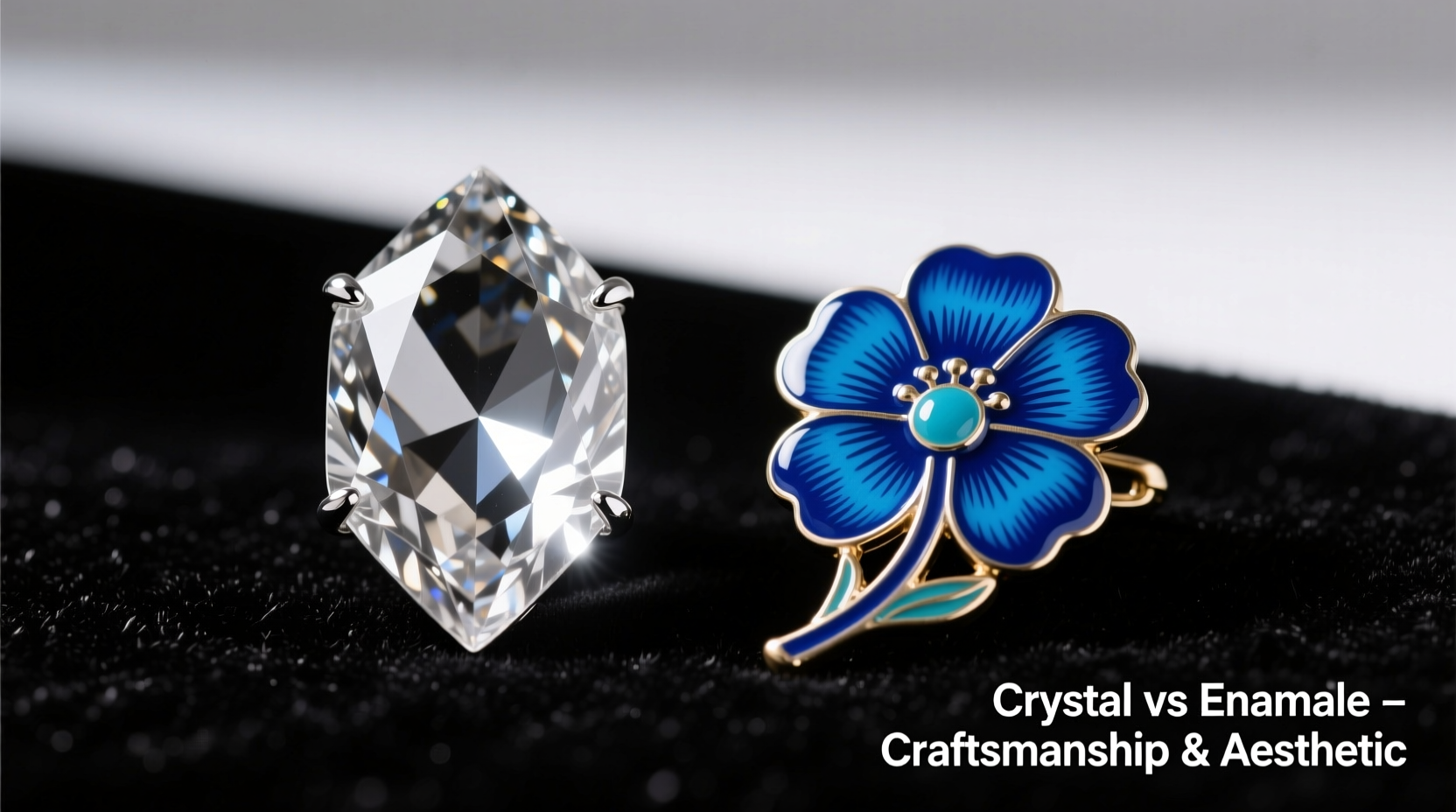
Crystal brooches are defined by their use of cut glass or genuine gemstones, often set in metal frameworks of gold-tone, silver-tone, or rhodium-plated brass. The most famous producer of decorative crystals is Swarovski, whose precision-cut stones refract light dramatically, giving these brooches a signature sparkle. These pieces are typically assembled using prong, bezel, or pave settings, allowing maximum light exposure for brilliance.
Because of their reflective quality, crystal brooches tend to stand out in formal or evening wear. They catch light beautifully under indoor lighting and add a sense of opulence to minimalist outfits. However, their visual impact comes with trade-offs. Crystals, especially when glued rather than securely set, can loosen over time. Exposure to moisture, perfume, or friction may cause clouding or chipping, particularly in lower-quality replicas.
Understanding Enamel Brooch Craftsmanship
Enamel brooches are created by fusing powdered glass to a metal base—usually copper, brass, or silver—through high-heat firing. This process results in a smooth, glossy surface available in nearly any color. There are several types of enamel techniques: cloisonné (divided cells filled with enamel), champlevé (carved recesses filled with enamel), and painted enamel, each offering distinct textures and depth.
What sets enamel apart is its artistic versatility. Designers use it to create intricate patterns, pictorial scenes, or bold geometric shapes that remain vibrant over decades if properly cared for. Unlike crystal, enamel doesn’t rely on light reflection for appeal—it offers color saturation and matte or glossy finishes that suit both casual and couture contexts.
High-fired enamel is remarkably durable, resistant to fading and scratching. However, low-quality or soft enamel (common in fashion jewelry) can develop fine cracks or lose luster when exposed to chemicals or hard impacts.
“Enamel, when done traditionally, is as much an art form as it is adornment. A well-made cloisonné brooch can last centuries.” — Lila Moreau, Jewelry Historian & Curator at the European Decorative Arts Institute
Crystal vs Enamel: A Practical Comparison
| Feature | Crystal Brooches | Enamel Brooches |
|---|---|---|
| Visual Appeal | Sparkling, luminous, eye-catching under light | Vibrant colors, artistic detail, rich finish |
| Durability | Moderate; stones can chip or fall out | High (if fired properly); resistant to fading |
| Cost Range | $20–$500+ (based on stone quality and setting) | $30–$800+ (handcrafted enamel increases value) |
| Care Requirements | Avoid water, perfume, and rough handling | Keep dry, clean gently with soft cloth |
| Lifespan | 5–20 years (varies with wear frequency) | Decades to lifetime (with proper care) |
| Best For | Evening wear, statement pieces, gifting | Daily wear, collectible art, vintage styling |
When Style Meets Substance: Real-World Use Cases
Consider Sarah, a museum curator who frequently speaks at events. She owns a vintage Art Deco crystal brooch passed down from her grandmother. While she loves its brilliance, she noticed two small stones fell out after wearing it pinned to a wool blazer during a week-long conference. The friction from brushing against tables and chairs gradually loosened the adhesive. Since then, she reserves it for special occasions and now wears a mid-century enamel cat brooch daily—one that retains its deep cobalt hue despite regular use.
This example illustrates a broader truth: how and where you wear a brooch significantly affects its longevity. If your lifestyle involves frequent movement, layering fabrics, or exposure to elements, enamel often proves more resilient. Crystal excels in controlled environments—weddings, galas, photo shoots—where appearance trumps practicality.
How to Choose Based on Your Lifestyle
Selecting between crystal and enamel shouldn’t be solely about aesthetics. It should reflect your habits, wardrobe needs, and long-term intentions. Ask yourself:
- Do I wear structured jackets or softer knits?
- Am I likely to forget a brooch is pinned and lean into surfaces?
- Do I want a piece I can pass down, or something trendy for now?
- Will it be exposed to perfume, sweat, or rain?
If you lead an active professional life or enjoy travel, enamel brooches offer peace of mind. Their color-fast surfaces and solid construction handle daily wear better. Crystal brooches shine—literally—in roles where attention is meant to be drawn, such as bridal ensembles, red carpet events, or theatrical costumes.
Step-by-Step Guide to Caring for Each Type
- For Crystal Brooches:
- Remove before applying perfume, lotion, or hairspray.
- Clean with a soft, dry microfiber cloth after each wear.
- Store separately in a padded box to prevent scratching.
- Inspect prongs or glue points every few months.
- For Enamel Brooches:
- Wipe with a slightly damp cloth only if necessary.
- Never soak in water or cleaning solutions.
- Avoid dropping or knocking against hard surfaces.
- Store flat to prevent pressure on raised enamel areas.
Frequently Asked Questions
Can I wear a crystal brooch every day?
It’s possible, but not ideal. Daily friction and exposure to skin oils increase the risk of stone loss or clouding. Reserve crystal pieces for special occasions to preserve their condition.
Are enamel brooches prone to chipping?
Poorly made or thin enamel can chip, especially on edges. High-quality cloisonné or champlevé pieces are fired multiple times and are far more resistant. Inspect the finish closely before buying.
Which holds value better over time?
Well-crafted enamel brooches, particularly vintage or artist-signed ones, often appreciate due to their artistry. Crystal brooches retain sentimental or brand-based value (e.g., vintage Chanel), but mass-produced versions rarely gain monetary worth.
Final Thoughts: It’s Not Just About the Look
While aesthetics drive initial attraction, the choice between crystal and enamel brooches ultimately hinges on function, durability, and intention. Crystal dazzles, commands attention, and elevates formal attire—but demands careful handling. Enamel offers enduring beauty, artistic depth, and resilience, making it ideal for everyday elegance. Neither is objectively “better.” Instead, the right choice depends on how you live, dress, and value your accessories.
Think of your brooch collection like a wardrobe: some pieces are for celebration, others for reliability. By understanding the strengths and limitations of each material, you can curate a selection that balances glamour with longevity.




 浙公网安备
33010002000092号
浙公网安备
33010002000092号 浙B2-20120091-4
Comments
No comments yet. Why don't you start the discussion?