
When it comes to men’s jewelry, few accessories command attention like a well-crafted chain. Among the most popular styles, the Cuban link and the wheat chain stand out as timeless contenders. One exudes boldness and luxury; the other, elegance and refinement. But with rising trends favoring chunkier designs, is the Cuban link truly dethroning the wheat chain—or is the latter quietly holding its crown?
The answer isn’t as simple as declaring one “better.” Each chain has distinct characteristics that make it suitable for different tastes, occasions, and lifestyles. Understanding their differences in construction, appearance, durability, and cultural significance helps clarify whether the Cuban link’s popularity is justified or if the wheat chain remains the ultimate choice for discerning wearers.
Design & Construction: What Sets Them Apart
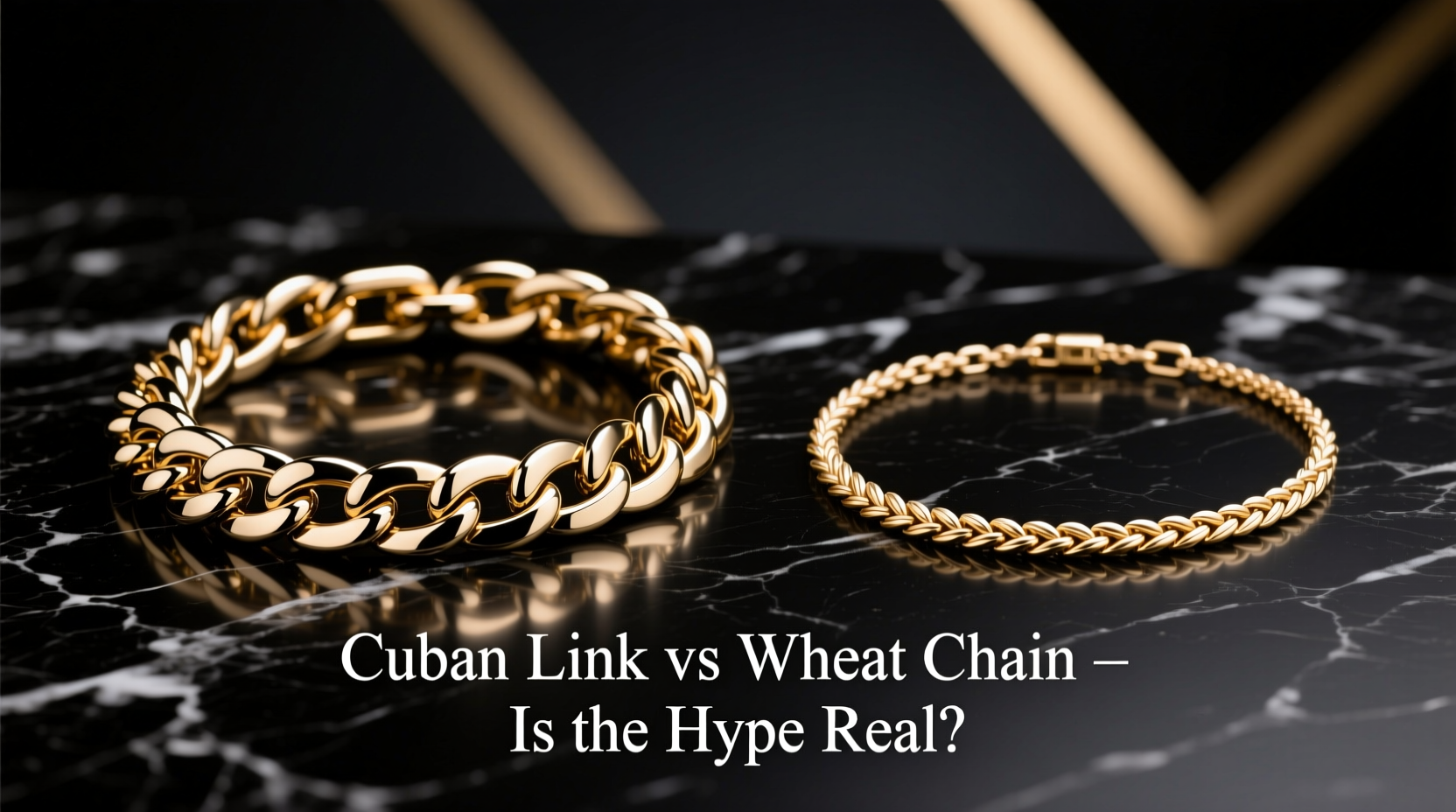
The visual distinction between a Cuban link and a wheat chain lies in how the links are formed and interlocked.
Cuban link chains feature thick, flat, twisted oval links that are tightly interlocked. The twist gives each link a braided effect, creating a smooth, rope-like texture that reflects light uniformly when polished. These chains are typically heavier due to their solid construction and dense metal use—often made from gold, stainless steel, or platinum.
Wheat chains, on the other hand, consist of four strands of small, twisted oval links woven together in a spiral pattern that mimics the texture of wheat stalks—hence the name. This intricate weaving results in a flexible yet strong chain with a more delicate, shimmering appearance. Wheat chains often feel lighter on the neck despite being durable.
Durability & Longevity: Which Chain Lasts Longer?
Durability isn’t just about strength—it’s about resistance to kinking, stretching, and everyday wear.
Cuban links are renowned for their resilience. Because each link is solid and tightly connected, they resist tangling and maintain shape over time. However, their weight can cause strain on clasps, especially in longer or thicker variants. A poorly made clasp may fail under pressure, so craftsmanship matters significantly.
Wheat chains, while surprisingly strong due to their multi-strand weave, are more prone to kinking if bent sharply. Their complex structure means repairs can be more challenging and costly. That said, high-quality wheat chains with secure lobster or spring-ring clasps can last decades with proper care.
“Chain longevity depends less on style and more on build quality. A well-made wheat chain will outlast a cheap Cuban link any day.” — Marcus Rivera, Master Goldsmith & Jewelry Designer
Style & Versatility: Fashion Fit for Every Occasion
Styling plays a major role in the Cuban vs. wheat debate. Both have carved niches in fashion, but their adaptability differs.
Cuban links are inherently bold. They pair well with streetwear, open-collar shirts, or layered looks. Popularized by hip-hop culture and modern celebrities, they signal confidence and opulence. Thicker Cuban chains (6mm and above) serve as centerpieces, often worn without pendants to highlight the chain itself.
Wheat chains lean toward classic versatility. They work seamlessly with formal attire, turtlenecks, or minimalist outfits. Their refined texture adds subtle shine without overwhelming an ensemble. Many professionals and traditionalists favor wheat chains for daily wear because they strike a balance between presence and restraint.
| Feature | Cuban Link | Wheat Chain |
|---|---|---|
| Weight | Heavy to very heavy | Light to medium |
| Texture | Smooth, twisted rope | Textured, woven strands |
| Tangle Resistance | Excellent | Moderate (can kink) |
| Fashion Vibe | Bold, modern, statement-making | Elegant, timeless, understated |
| Best For | Layering, streetwear, spotlight moments | Daily wear, formal events, layering with pendants |
Real-World Example: Two Men, Two Styles
Consider two professionals in their early 30s: James and Daniel.
James works in entertainment marketing and frequently attends music events and photo shoots. He owns a 7mm yellow gold Cuban link he wears solo over a black tee. It’s become part of his brand—visible in social media posts and recognized by colleagues. The chain draws compliments and reinforces his image as someone who embraces modern luxury.
Daniel, a corporate lawyer, prefers subtlety. His 5mm white gold wheat chain is worn under dress shirts or paired with a simple cross pendant. It’s never flashy, but clients have noticed and commented on his polished aesthetic. When asked, he says, “I want my work to speak for me—but my jewelry should say I care about details.”
Neither is wrong. Their choices reflect personal identity and professional context. The Cuban link amplifies James’s visibility; the wheat chain complements Daniel’s discretion.
Buying Guide: How to Choose the Right Chain
Selecting between a Cuban link and a wheat chain shouldn’t be based on trend alone. Follow this checklist to make a confident decision:
- Define your purpose: Is it for daily wear, special events, or fashion statements?
- Assess comfort level: Can you handle the weight of a thick Cuban link?
- Check clasp quality: Look for secure, reinforced clasps—especially important for Cuban chains.
- Verify metal purity: Ensure authenticity with hallmarks (e.g., 14K, 18K, .925 silver).
- Consider maintenance: Will you clean it regularly? Wheat chains need gentle handling to avoid kinks.
- Think long-term: Does the style align with your evolving taste, or is it a passing trend?
FAQ: Common Questions About Cuban Links and Wheat Chains
Can you wear a Cuban link every day?
Yes, but consider the thickness and weight. A 4–5mm Cuban link in 14K gold is manageable for daily wear. Anything thicker may cause neck strain or draw unwanted attention in conservative environments.
Which chain is better for adding a pendant?
Wheat chains are traditionally preferred for pendants because their structure allows for smooth movement and secure attachment. However, many people pair large pendants with Cuban links for a bolder look—especially in urban fashion circles.
Do wheat chains break easily?
Not if well-made. While they have a more complex design, high-quality wheat chains are durable. Avoid sharp bends and store them straight to prevent kinking, which can weaken the links over time.
Conclusion: Hype vs. Heritage
The rise of the Cuban link is undeniable. Social media, celebrity influence, and shifting fashion norms have elevated it into a symbol of success and self-expression. Its weight, shine, and presence make it a favorite among those who want their jewelry to speak first.
Yet, the wheat chain endures—not through noise, but through quiet excellence. It doesn’t need viral moments to prove its worth. Generations have worn it to weddings, graduations, and milestones, valuing its grace and reliability.
So, is the hype around Cuban links real? Yes—but it doesn’t diminish the wheat chain’s reign. Kingship isn’t always loud. Sometimes, it’s woven in fine detail, built to last beyond trends.
Your choice should reflect not just what’s popular, but who you are. Whether you gravitate toward the commanding presence of a Cuban link or the enduring elegance of a wheat chain, invest in quality, care for it diligently, and wear it with intention.




 浙公网安备
33010002000092号
浙公网安备
33010002000092号 浙B2-20120091-4
Comments
No comments yet. Why don't you start the discussion?