
When shopping for a sparkling bracelet, many consumers face a common dilemma: should they invest in a piece set with real zircon or opt for the more affordable cubic zirconia alternative? At first glance, both stones look nearly identical—brilliant, clear, and full of fire. But beneath the surface, significant differences in composition, durability, rarity, and long-term value separate them. Understanding these distinctions helps determine whether the higher price tag of a real zircon bracelet is truly justified—or if cubic zirconia offers smarter value for everyday wear.
Understanding the Basics: What Are Cubic Zirconia and Zircon?
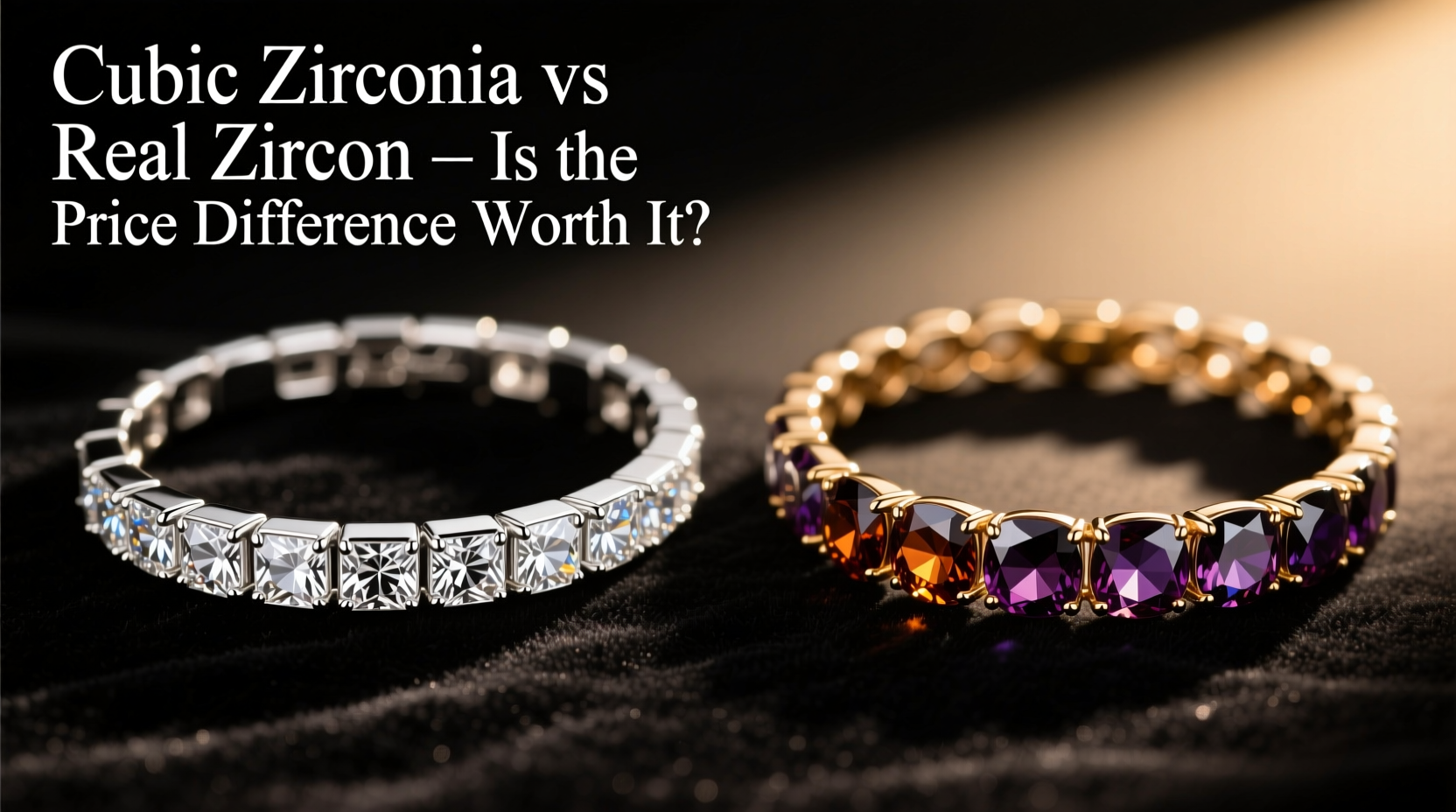
Cubic zirconia (CZ) and zircon are often confused due to their similar names and appearances, but they are fundamentally different materials.
Cubic zirconia is a lab-created synthetic gemstone made from zirconium dioxide. It’s engineered to mimic the optical properties of diamonds, offering high clarity, brilliance, and affordability. Because it’s manufactured, CZ is consistent in quality and widely available in various cuts and colors.
Zircon, on the other hand, is a naturally occurring mineral composed of zirconium silicate. Found in regions like Cambodia, Sri Lanka, and Vietnam, natural zircon has been used in jewelry for centuries. It occurs in multiple colors, including blue, red, yellow, and colorless. High-quality colorless zircon rivals diamond in sparkle and is sometimes mistaken for it even by trained eyes.
Appearance and Brilliance: How Do They Compare?
Both stones dazzle in daylight and under artificial light, but subtle differences emerge upon close inspection.
Cubic zirconia is known for its “perfect” clarity and intense fire—the dispersion of light into spectral colors. However, this very perfection can be a giveaway. CZ tends to refract too much colored light, giving it a slightly “disco ball” effect that some find less refined than natural gemstones.
Real zircon, especially when cut well, exhibits a more balanced brilliance. It has a higher refractive index than CZ, meaning it bends light more efficiently, creating deeper scintillation. Natural zircon also displays birefringence—a doubling of facet lines visible under magnification—which synthetic stones lack.
“Zircon has a soulful sparkle. It’s not just about brightness—it’s about depth and character.” — Dr. Lena Torres, Gemologist and Mineralogist at the American Gem Society
Cost Comparison: Why the Price Gap Exists
The most immediate difference between the two lies in price. A well-cut 1-carat cubic zirconia typically costs under $20, while a comparable natural zircon can range from $150 to over $500 depending on clarity, color, and origin.
This gap stems from several factors:
- Rarity: Natural zircon suitable for fine jewelry is relatively scarce, especially in larger, eye-clean specimens.
- Extraction and Processing: Mined zircon requires careful extraction, cutting, and treatment, increasing labor and supply chain costs.
- Market Positioning: CZ is mass-produced as an affordable simulant; zircon is marketed as a genuine gemstone with historical significance.
| Feature | Cubic Zirconia | Real Zircon |
|---|---|---|
| Origin | Synthetic (lab-grown) | Natural (mined) |
| Hardness (Mohs Scale) | 8–8.5 | 6.5–7.5 |
| Refractive Index | 2.15–2.18 | 1.92–2.01 |
| Durability (Daily Wear) | Good, but prone to scratches over time | Moderate; sensitive to impact |
| Average Price (1ct, colorless) | $10–$20 | $150–$500+ |
| Long-Term Value | Negligible resale value | Potential heirloom value |
Practical Considerations: Who Should Choose Which?
The decision isn’t solely about budget—it’s about lifestyle, intent, and personal values.
Cubic zirconia is ideal for fashion-forward individuals who enjoy rotating accessories, want a low-risk option for travel, or prefer spending on design rather than stone value. It’s perfect for trendy pieces meant to last a season or two. Many designers use CZ in statement jewelry because it allows for bold designs without astronomical costs.
Real zircon appeals to collectors, those seeking meaningful gifts, or buyers interested in geology and authenticity. Its natural origin and unique optical properties give it a story beyond aesthetics. However, due to its lower hardness compared to sapphire or diamond, zircon is best suited for occasional wear or protective settings like pendants and earrings—not daily-worn bracelets exposed to knocks and abrasions.
Mini Case Study: Sarah’s Jewelry Dilemma
Sarah, a 32-year-old marketing executive, wanted a delicate tennis bracelet for her anniversary. She found two options: a 14k gold bracelet with cubic zirconia for $320, and a similar design with natural zircon for $1,100. After consulting a jeweler, she learned that the zircon version would require extra care to avoid chipping. Given her active lifestyle—working out, typing all day, traveling frequently—she chose the CZ piece. “I still get compliments every time I wear it,” she says. “And I don’t stress if it gets bumped.”
How to Care for Each Type of Bracelet
Proper maintenance extends the life and luster of any gemstone jewelry. Here’s how to care for each:
- For Cubic Zirconia: Clean monthly with warm water, mild dish soap, and a soft toothbrush. Avoid ultrasonic cleaners if the setting is delicate. Store separately to prevent scratching from harder gems.
- For Real Zircon: Handle with extra caution. Remove during physical activity. Clean gently with lukewarm water and a microfiber cloth. Never expose to sudden temperature changes, which can cause fracturing.
Step-by-Step Guide: Choosing the Right Bracelet for You
Follow this process to make a confident decision:
- Define Your Purpose: Is it for daily wear, special occasions, or as an heirloom?
- Assess Your Lifestyle: Do you work with your hands, exercise often, or travel frequently?
- Set a Realistic Budget: Decide how much you’re willing to spend without regret.
- Evaluate Long-Term Goals: Do you want something replaceable or something that could be passed down?
- Consult a Reputable Jeweler: Ask for certification or origin details, especially for zircon.
- Try Before You Buy: Observe both stones under natural and indoor lighting to compare sparkle and color.
Frequently Asked Questions
Can you tell the difference between cubic zirconia and zircon just by looking?
Not always. To the untrained eye, both appear bright and clear. However, a gemologist can identify zircon by its birefringence and natural inclusions using a loupe or microscope.
Does cubic zirconia lose its shine over time?
Yes. While initially brilliant, CZ can develop a cloudy film from exposure to lotions, sweat, and chemicals. Regular cleaning restores much of its luster, but prolonged wear may lead to microscopic scratches that dull the surface permanently.
Is zircon a good alternative to diamond?
High-quality colorless zircon comes closest to diamond in brilliance and fire among natural non-diamond gems. However, due to its lower hardness, it’s less durable for engagement rings or bracelets worn daily.
Final Verdict: Is the Price Difference Worth It?
The answer depends on what you value most. If you prioritize affordability, versatility, and low maintenance, cubic zirconia offers exceptional beauty at a fraction of the cost. It’s a smart choice for modern, fashion-conscious consumers who view jewelry as wearable art rather than investment.
However, if you cherish authenticity, natural origin, and the idea of owning a rare piece of Earth’s history, then a real zircon bracelet may be worth the premium. Its geological uniqueness and potential emotional or sentimental value can justify the higher price—for the right buyer.
In practical terms, cubic zirconia wins for everyday elegance. Real zircon excels as a collector’s item or meaningful gift. Neither is inherently superior; each serves a distinct role in the world of jewelry.




 浙公网安备
33010002000092号
浙公网安备
33010002000092号 浙B2-20120091-4
Comments
No comments yet. Why don't you start the discussion?