
Among the vast world of spices, few are as frequently mistaken for one another—or as fundamentally different—as cumin and turmeric. Both are golden-hued powders commonly found in spice racks across the globe, especially in Indian, Middle Eastern, and Latin American kitchens. Yet their roles in cooking, flavor profiles, origins, and even health implications diverge significantly. Confusing them can transform a dish entirely—sometimes for the worse. Understanding the distinctions between cumin and turmeric is not just a matter of culinary precision; it’s essential for crafting authentic, balanced flavors and leveraging their unique properties in everyday cooking.
Definition & Overview
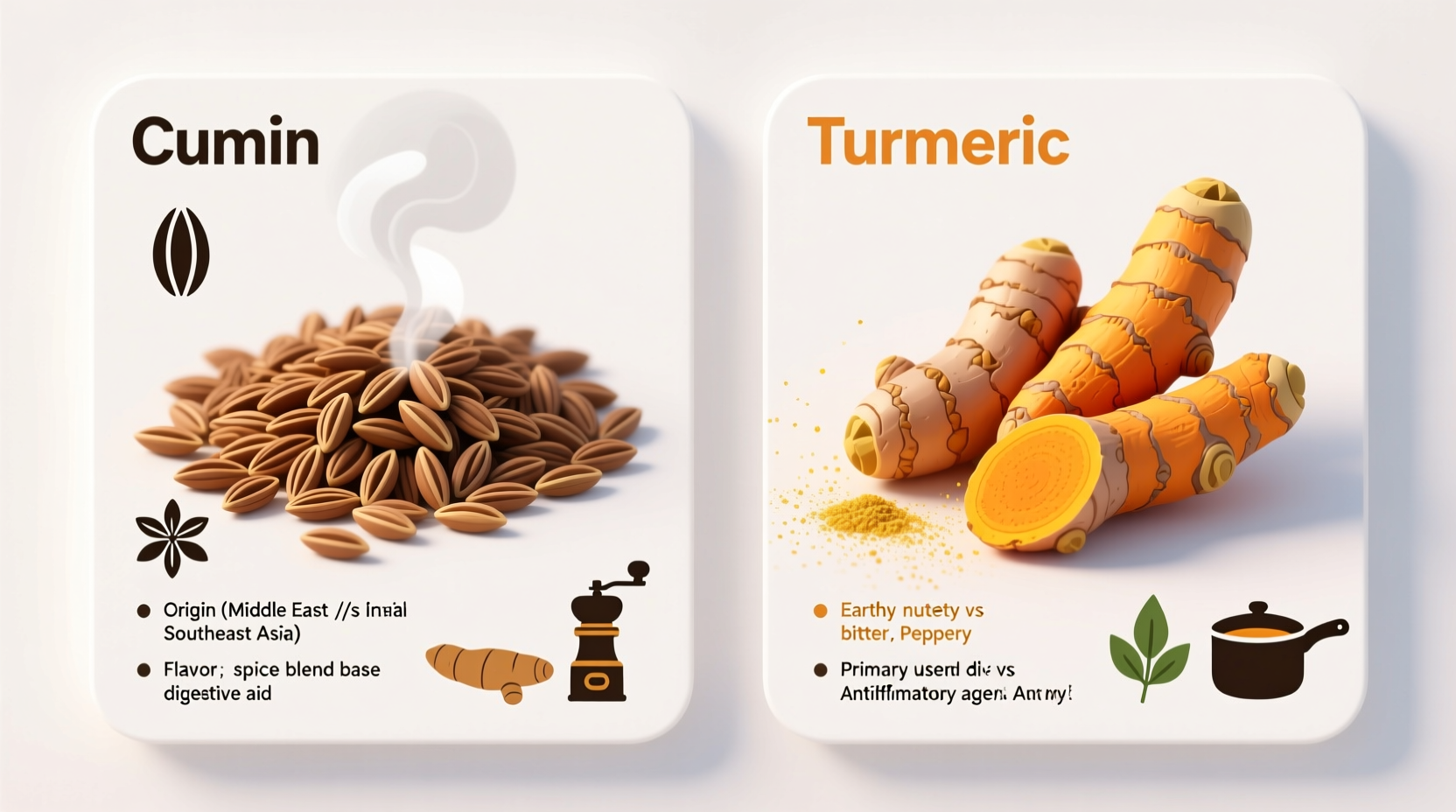
Cumin (Cuminum cyminum) is a flowering plant in the Apiaceae family, native to the eastern Mediterranean and South Asia. Its dried seeds are ground into a warm, earthy spice used globally in savory preparations. Cumin has been cultivated for over 5,000 years and appears in ancient Egyptian, Roman, and Ayurvedic traditions both as a seasoning and a digestive aid.
Turmeric (Curcuma longa), on the other hand, is a rhizome from the ginger family, native to Southeast Asia and India. The underground stem is boiled, dried, and ground into a vibrant orange-yellow powder. It is most famous as the primary coloring agent in curry powders and a cornerstone of Indian cuisine, but its use extends deeply into traditional medicine, particularly due to its active compound, curcumin.
While both spices are staples in global pantries, they originate from different plant parts—cumin from seeds, turmeric from roots—and serve distinct purposes in flavoring, coloring, and health-supportive cooking.
Key Characteristics
| Characteristic | Cumin | Turmeric |
|---|---|---|
| Origin | Mediterranean / South Asia (seed) | South Asia (rhizome) |
| Flavor Profile | Earthy, nutty, slightly bitter, warm with peppery undertones | Mildly bitter, earthy, faintly peppery, musky-sweet |
| Aroma | Pungent, toasted, smoky when dry-roasted | Subtle, woody, slightly gingery |
| Color | Light to medium tan-brown | Vibrant golden-orange |
| Heat Level | None (but adds warmth) | None |
| Culinary Function | Flavor enhancer, depth builder | Colorant, subtle base note, anti-inflammatory agent |
| Shelf Life | 6–12 months (ground), up to 2 years (whole seeds) | 6–12 months (color and potency degrade faster) |
The contrast is immediate: cumin delivers bold, assertive flavor, while turmeric contributes more in color and background complexity than in punch. Neither is inherently \"hot,\" though cumin's sharpness can feel warming on the palate.
Practical Usage: How to Use Each Spice
Cumin in Cooking
Cumin is a foundational spice in chili powders, taco seasonings, ras el hanout, garam masala, and berbere. It excels in dishes where depth and savoriness are needed. Whole cumin seeds are often tempered in hot oil at the start of cooking—a technique called *tadka* in Indian cuisine—to release their volatile oils before adding onions or tomatoes.
For best results:
- Dry-toast whole seeds in a skillet over medium heat until fragrant (about 1–2 minutes). This intensifies their nuttiness.
- Grind fresh using a mortar and pestle or spice grinder just before use for maximum aroma.
- Add early in the cooking process if using ground, allowing it to bloom in fat (oil, ghee) to mellow bitterness.
Use cumin in lentil soups, bean stews, roasted vegetables, grilled meats, falafel, and homemade hummus. A classic application is in Mexican-style black beans: sauté onions in oil, add 1 tsp ground cumin and ½ tsp oregano, then stir in cooked beans and simmer for 10 minutes to deepen flavor.
Pro Tip: Never add raw ground cumin directly to cold dishes like salads or dressings—it will taste dusty and harsh. Always cook it briefly in oil or broth to unlock its full potential.
Turmeric in Cooking
Turmeric’s greatest strength lies in its ability to lend rich color and a gentle earthiness without overwhelming other ingredients. It is rarely the star but acts as a crucial supporting player in spice blends and slow-cooked dishes.
Because curcumin—the active compound in turmeric—is fat-soluble and poorly absorbed on its own, optimal usage includes:
- Combining with healthy fats (e.g., coconut oil, ghee, olive oil).
- Pairing with black pepper, which contains piperine and boosts curcumin absorption by up to 2,000%.
- Heating gently in liquid or oil to activate its compounds without burning (turmeric scorches easily).
Common applications include golden milk (turmeric latte), dal, rice pilafs, vegetable curries, and marinades for tofu or chicken. In Moroccan tagines, a pinch of turmeric enhances color and adds a subtle backbone beneath saffron and ginger.
A simple way to integrate turmeric daily: whisk ¼ tsp into scrambled eggs with a dash of black pepper and a spoonful of butter. The result is creamy, golden-hued eggs with mild warmth and enhanced nutritional value.
Variants & Types
Cumin Varieties
- Whole Cumin Seeds: Best for tempering, pickling, or grinding fresh. Retain aroma longer than ground form.
- Ground Cumin: Convenient for rubs, batters, and spice mixes. Loses potency faster—buy in small batches.
- Black Cumin (Kalonji): Not true cumin; comes from Nigella sativa. Smaller, black seeds with an oniony, aromatic profile used in naan and Bengali panch phoron.
- Bunium persicum (Shahi Jeera): Also called black cumin in some regions, this rare variety has a smoky, caraway-like scent used in royal Mughlai dishes.
Turmeric Forms
- Ground Turmeric: Most common; stable but fades quickly. Check expiration dates carefully.
- Fresh Turmeric Root: Resembles ginger but smaller and brighter orange inside. Can be grated into juices, sauces, or stir-fries. Offers superior freshness and enzymatic activity.
- Turmeric Paste (Golden Paste): A blend of turmeric, black pepper, and oil—used medicinally or stirred into soups and grains.
- Supplemental Curcumin Extracts: High-concentration capsules, often with added piperine. Used therapeutically rather than culinarily.
Storage Tip: Keep both ground cumin and turmeric in airtight containers away from light and heat. Store near the back of a dark cupboard—not above the stove. For extended shelf life, freeze whole cumin seeds in a sealed bag for up to two years.
Comparison with Similar Ingredients
Cumin and turmeric are often confused not only with each other but also with related spices. Clarifying these distinctions prevents culinary mishaps.
Cumin vs. Caraway
Both are Apiaceae-family seeds with similar appearances. However:
- Cumin: Warmer, more robust, slightly bitter, dominant in Mexican and Indian cuisines.
- Caraway: Sweeter, more anise-like, central to rye bread, goulash, and Central European dishes.
They are not interchangeable in traditional recipes—substituting one for the other alters the dish’s cultural identity.
Turmeric vs. Saffron
Both impart golden color, leading to turmeric being historically dubbed “Indian saffron.” But:
- Turmeric: Earthy, affordable, widely available. Overuse leads to bitter, medicinal notes.
- Saffron: Floral, honeyed, delicate. Extremely expensive. Used sparingly in paella, biryani, and French bouillabaisse.
While turmeric can mimic saffron’s hue, it cannot replicate its aroma. In budget-conscious cooking, a tiny pinch of turmeric plus a few threads of saffron offers both economy and elegance.
Cumin and Turmeric: Side-by-Side Summary
| Aspect | Cumin | Turmeric |
|---|---|---|
| Primary Role | Flavor anchor | Color and health support |
| Best Paired With | Coriander, chili, garlic, paprika | Ginger, black pepper, cinnamon, coconut milk |
| Signature Dishes | Tacos, chili, chana masala, falafel | Yellow curry, turmeric rice, golden milk, lentil dal |
| Health Focus | Digestive aid, iron source | Anti-inflammatory, antioxidant (curcumin) |
| Overuse Risk | Bitter, overpowering, medicinal | Stains surfaces, bitter aftertaste, yellow teeth/tongue |
Practical Tips & FAQs
Can I substitute cumin for turmeric or vice versa?
No. They are not interchangeable. Substituting cumin for turmeric will add strong flavor without color. Using turmeric instead of cumin will tint your dish yellow but leave it flat and lacking depth. If you're out of one, consider omitting it rather than replacing it incorrectly.
Why does my turmeric taste bitter?
Bitterness arises from using too much (more than ½ tsp per 4 servings), burning it during cooking, or using old, degraded powder. Always bloom turmeric gently in fat and pair with balancing elements like sweetness (onion, carrot) or acidity (lemon juice, vinegar).
Is there a difference between “curry powder” and turmeric?
Yes. Curry powder is a blend—often containing turmeric, cumin, coriander, fenugreek, and chili. Turmeric is a single ingredient and typically makes up 20–30% of most curry powders. Do not equate the two; using pure turmeric in place of curry powder results in unbalanced flavor.
How much cumin should I use in chili?
For a standard 6-serving pot of chili, use 1½ to 2 teaspoons of ground cumin. Toasting whole seeds first and grinding them fresh can reduce the amount needed while increasing impact.
Does turmeric stain everything?
Yes. It is a natural dye. Use caution when handling—wear gloves if prepping large amounts, and clean cutting boards and utensils immediately. Stainless steel bowls are preferable to plastic, which can retain stains.
Are there any side effects to consuming large amounts?
In culinary doses, both are safe. However, excessive turmeric (over 3 grams daily of curcumin supplements) may cause gastrointestinal upset or interact with blood thinners. Cumin in very high quantities may stimulate uterine contractions—pregnant women should consume it in normal food amounts only.
“The art of spice blending begins with understanding individual components. Cumin gives soul; turmeric gives light. One speaks loudly, the other glows softly—but both must be heard and seen in harmony.” — Chef Anika Rahman, Culinary Anthropologist & Author of *Spice Pilgrimage*
Summary & Key Takeaways
Cumin and turmeric, though often grouped together in spice jars and curry blends, are fundamentally different in origin, function, and culinary role. Recognizing these differences empowers cooks to use them intentionally and effectively.
- Cumin is a seed-based spice prized for its deep, warm, slightly bitter flavor. It builds savory foundations in dishes ranging from tacos to dals.
- Turmeric is a root-derived powder valued primarily for its vivid color and health-promoting curcumin. Its flavor is subtle and supportive.
- Always bloom both spices in fat to enhance flavor and bioavailability, especially turmeric with black pepper and oil.
- Store both in cool, dark places and replace ground forms every 6–12 months for peak quality.
- Never substitute one for the other—they fulfill separate roles in the kitchen.
- Embrace their variants: whole cumin seeds for depth, fresh turmeric root for vibrancy.
Mastery of these two spices unlocks access to dozens of global cuisines. Whether you’re building a smoky chili, a fragrant biryani, or a soothing golden latte, knowing when and how to deploy cumin versus turmeric transforms good cooking into authentic, resonant cuisine.
Take action today: Open your spice cabinet, check the dates on your cumin and turmeric, and perform a quick sniff test. If they lack aroma, replace them. Then, prepare a simple dish—like turmeric-scented rice with cumin-toasted onions—to experience their synergy firsthand.




 浙公网安备
33010002000092号
浙公网安备
33010002000092号 浙B2-20120091-4
Comments
No comments yet. Why don't you start the discussion?