
Selecting the right method to hang curtains goes beyond aesthetics—it affects how smoothly your drapes open and close, how evenly they fall, and even how long they last. Yet many homeowners still treat curtain hardware as an afterthought. The debate between curtain hooks and curtain rings isn't just about tradition versus modernity; it's about practicality, maintenance, and design harmony. With so much riding on this small decision, it’s worth understanding what each option offers—and whether one is truly outdated or simply misunderstood.
The Basics: What Are Curtain Hooks and Rings?
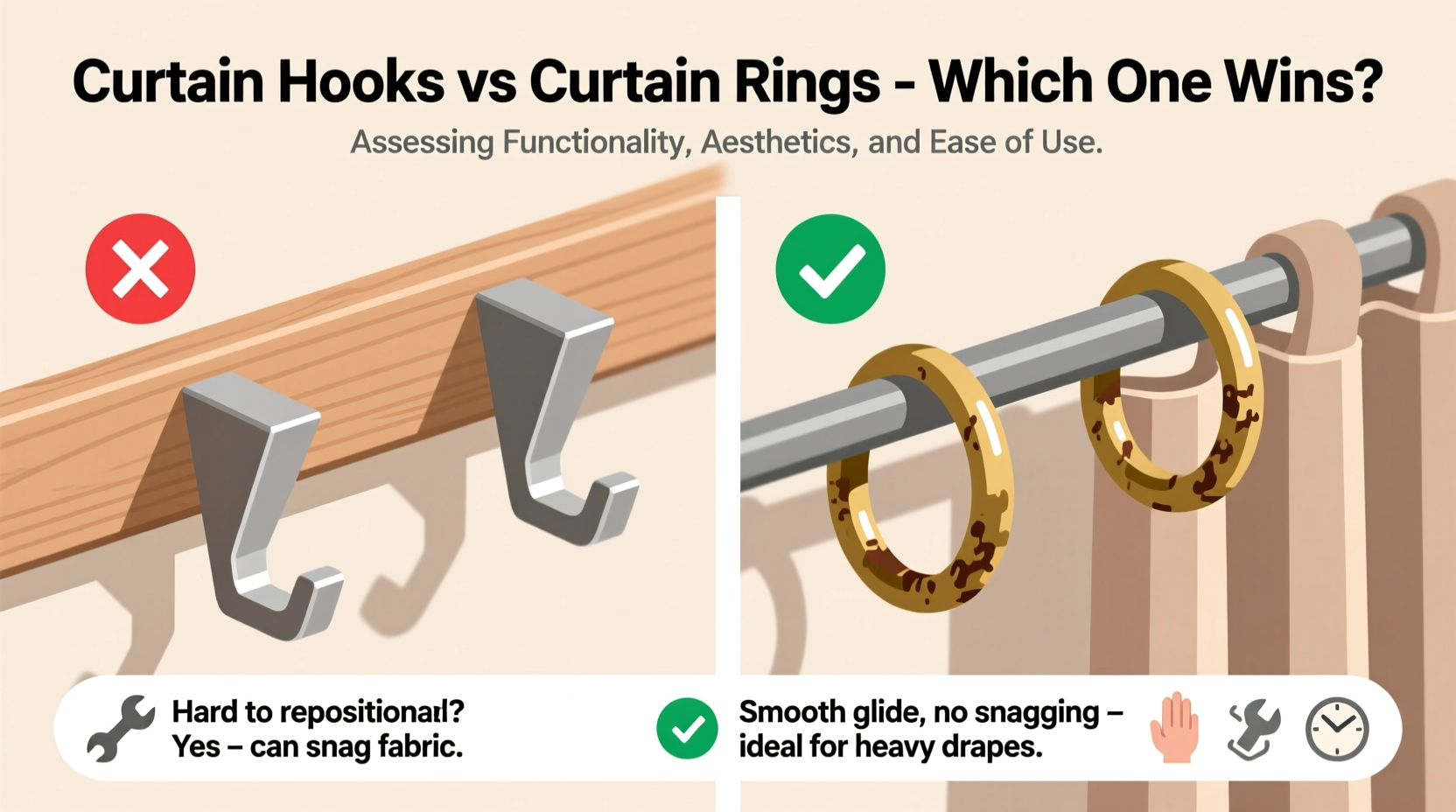
Curtain hooks and rings serve the same fundamental purpose: to suspend curtains from a rod. But their mechanisms differ significantly.
Curtain hooks are small metal or plastic pieces that attach directly to the header of a curtain—typically through grommets, back tabs, or pinch pleats. They hook onto the rod or track, holding the fabric in place. Some styles require multiple hooks per panel for stability.
Curtain rings, on the other hand, are circular loops (usually made of metal or plastic) that slide along a rod. Curtains are attached to the rings via clips or by threading the ring through a fabric loop sewn into the top of the drape. They allow for smooth gliding and are often used with decorative rods.
The choice between these two systems impacts not only function but also visual appeal and long-term usability.
Performance Comparison: Functionality and Ease of Use
When evaluating curtain hardware, performance matters most in daily use. How easily can you open and close the drapes? Do they snag or jam? Can you install them without frustration?
| Feature | Curtain Hooks | Curtain Rings |
|---|---|---|
| Installation Difficulty | Moderate to high (requires precise hook placement) | Low to moderate (slide-on design) |
| Gliding Smoothness | Poor to fair (can catch or bind) | Excellent (especially on round rods) |
| Durability | High (if properly secured) | High (metal rings resist wear) |
| Aesthetic Flexibility | Limited (mostly hidden) | High (visible rings add style) |
| Maintenance Needs | Moderate (hooks may loosen over time) | Low (rarely need adjustment) |
While both options are durable, rings generally provide superior movement, especially on longer or heavier panels. Hooks can be finicky during installation and may shift out of alignment, leading to uneven hanging. Rings, once threaded, maintain consistent spacing and glide effortlessly when paired with compatible rods.
Design Considerations: Style and Modern Trends
Interior design trends have shifted toward cleaner lines and more visible hardware. Decorative curtain rods with finials and ornamental rings are now common in modern homes. In this context, curtain rings aren’t outdated—they’ve evolved into design elements.
Curtain hooks, while functional, remain largely invisible. This can be an advantage in minimalist spaces where you want the fabric to take center stage. However, in traditional or eclectic interiors, rings with antique brass finishes or crystal accents can elevate the entire window treatment.
That said, not all ring styles suit every decor. Oversized chrome rings might clash in a cottage-style bedroom, just as delicate lace curtains on industrial iron hooks could look mismatched. The key is cohesion: match the hardware to the overall aesthetic.
“The best window treatments don’t hide their mechanics—they integrate them. Rings, when chosen thoughtfully, become part of the room’s rhythm.” — Lila Monroe, Interior Stylist & Author of *Elevating Everyday Spaces*
Real-World Example: A Kitchen Reno Dilemma
Sarah, a homeowner in Portland, recently renovated her kitchen and wanted light-filtering café curtains over the sink. She initially chose clip-on rings for their ease of installation and clean look. But after a few weeks, she noticed the rings were scratching her brushed nickel rod and the clips pulled threads from the cotton fabric.
She switched to small, non-scratch plastic hooks designed for tab-top curtains. Though less stylish, they eliminated friction and preserved both the rod and the drape. Her compromise? She added a valance above the curtains to conceal the hardware, maintaining a polished appearance without sacrificing function.
This case illustrates that neither solution is universally superior. Context—room type, fabric weight, rod material, and usage frequency—dictates the better choice.
Step-by-Step Guide: Choosing the Right Option for Your Space
Follow this sequence to make an informed decision tailored to your needs:
- Assess your curtain type. Does it have grommets, tabs, or pleats? Grommet tops work well with rings; pinch pleats often require hooks.
- Measure the rod diameter. Thicker rods (over 1 inch) need larger inner-diameter rings. Hooks must fit securely without wobbling.
- Consider weight and length. Heavy floor-length drapes benefit from rings with ball bearings or double attachments for smoother motion.
- Evaluate daily use. High-traffic areas like living rooms demand hardware that opens and closes easily—favor rings here.
- Match to your décor. If your rod is decorative, rings can complement it. If you prefer a seamless look, go with hidden hooks.
- Test before committing. Hang one panel with rings and another with hooks (if possible) to compare operation and appearance.
Common Misconceptions Debunked
One widespread belief is that curtain rings are obsolete due to the rise of track systems and hidden hardware. But this overlooks their versatility. Rings are compatible with both rods and certain types of tracks, particularly those with carriers that accept ring attachments.
Another myth: hooks are always cheaper. While basic plastic hooks are inexpensive, high-quality tension or self-gripping hooks for heavy fabrics can cost as much as premium rings. Moreover, replacing bent or broken hooks adds hidden long-term costs.
Finally, some assume rings are noisy. While cheap metal rings can clink together, nylon-glided or rubber-coated versions operate silently—even on daily use.
FAQ: Common Questions About Curtain Hardware
Can I use curtain rings with any type of curtain?
No—not all curtains are compatible. Tab-top, eyelet (grommet), and rod-pocket styles work best with rings. Pinch-pleat or goblet-pleat headers typically require hooks unless adapted with ring clips.
Are curtain hooks really harder to use?
They can be, especially with dense fabrics or tight pleats. Attaching multiple hooks evenly takes patience. Once installed, however, they’re secure and won’t slide out of place like unclipped rings might.
Do curtain rings damage rods over time?
Potentially, if they’re low-quality metal or used on soft finishes like brushed brass or painted rods. Opt for rings with smooth interiors or protective coatings to minimize wear.
Checklist: Before You Buy Curtain Hardware
- ☐ Confirm curtain header type (grommet, tab, pleat, etc.)
- ☐ Measure rod diameter and length
- ☐ Determine curtain weight (light, medium, heavy)
- ☐ Decide on visibility: Should hardware blend in or stand out?
- ☐ Choose material: Brass, stainless steel, plastic, or coated metal?
- ☐ Check compatibility with existing track or rod system
- ☐ Purchase extras for replacements
Conclusion: It’s Not About Outdated vs. Painful—It’s About Purpose
The idea that curtain rings are outdated ignores their evolution and enduring utility. Likewise, dismissing hooks as “a pain” overlooks their reliability in specific applications. The real answer lies in intentionality: choosing the right tool for the job at hand.
For elegance, ease, and fluid motion, rings excel—especially in main living areas. For simplicity, discretion, and compatibility with structured headers, hooks remain relevant. The smartest approach combines both, using each where it performs best.




 浙公网安备
33010002000092号
浙公网安备
33010002000092号 浙B2-20120091-4
Comments
No comments yet. Why don't you start the discussion?