
When commemorating life’s milestones—first holidays as a family, a child’s birth, a milestone anniversary, or the quiet remembrance of someone beloved—we instinctively reach for objects that hold meaning beyond aesthetics. Two categories dominate this space: custom engraved ornaments and handmade keepsakes. Both promise sentimentality, yet they operate on fundamentally different emotional frequencies. One speaks through precision and permanence; the other breathes through texture, time, and human imperfection. Understanding how each cultivates and sustains sentimental value—not just at the moment of gifting, but across decades—is essential for choosing wisely, giving meaningfully, and preserving memory with integrity.
What Sentimental Value Really Means (Beyond “It’s Special”)
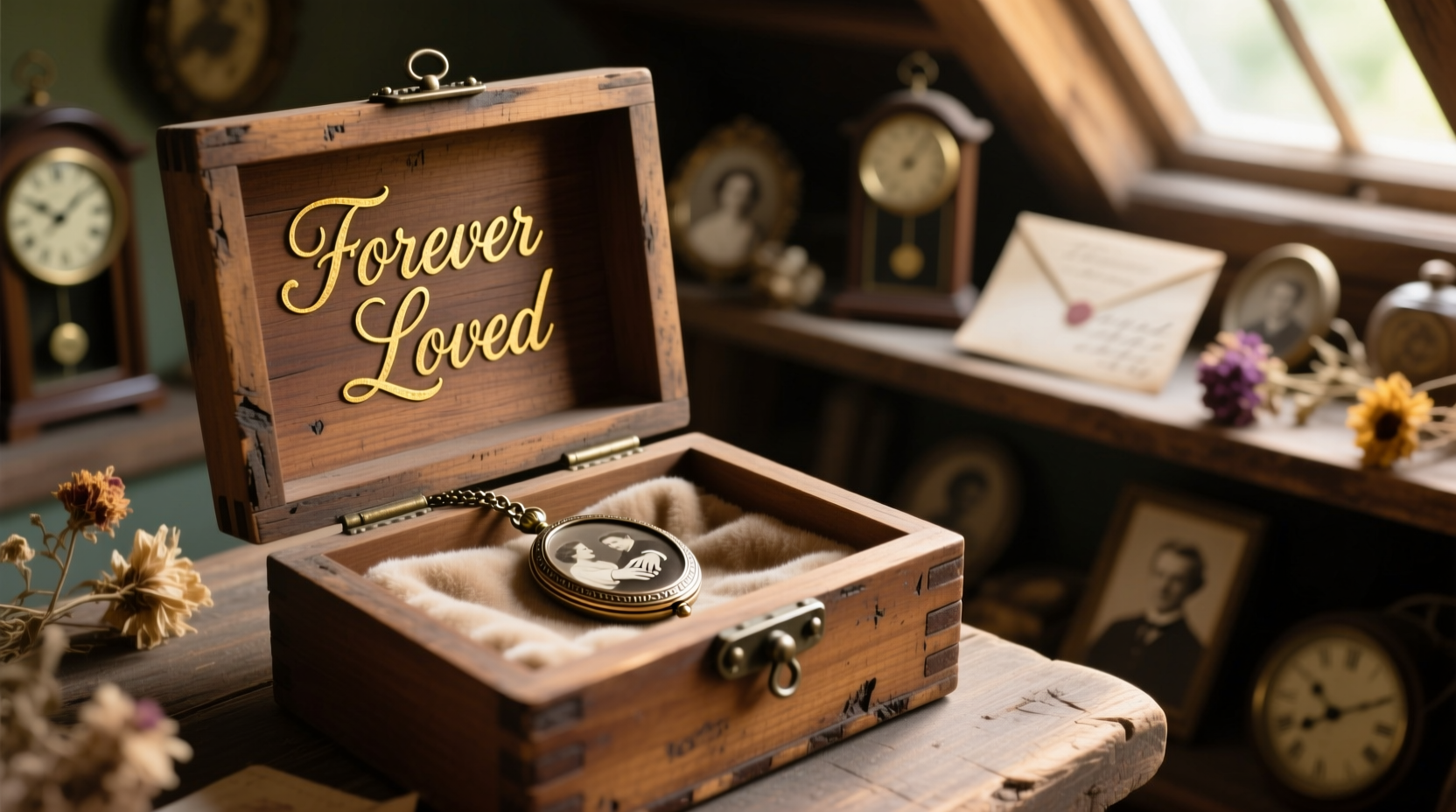
Sentimental value isn’t inherent in an object—it’s co-created through three interlocking elements: intention, association, and continuity. Intention refers to the conscious decision behind selecting or making the item—why this shape, this phrase, this material? Association is the lived experience tethered to it: the year it was hung on the tree, the hands that shaped it, the story told when it’s unwrapped. Continuity is how consistently—and authentically—it remains part of ritual, display, or daily life over time. An object loses sentimental weight when it’s stored away, replaced by trendier versions, or disconnected from narrative. A 1998 glass bauble with chipped paint may mean more than a flawless 2024 laser-etched crystal because its flaws map directly onto real years of use, laughter, and quiet moments. Sentimental value, then, is less about craftsmanship alone and more about the durability of shared meaning.
Custom Engraved Ornaments: Precision, Permanence, and Personal Archiving
Custom engraved ornaments—typically crafted from wood, glass, metal, or ceramic and inscribed with names, dates, coordinates, or short phrases—function as miniature archives. Their strength lies in legibility, consistency, and reproducibility. A font chosen carefully, a date etched with micron-level accuracy, a monogram placed exactly where intended: these are acts of deliberate documentation. They excel in marking singular, fixed moments—“Est. 2023,” “Baby James • Dec 12,” “Our First Home • Portland, OR.”
Their sentimental power grows strongest when integrated into annual ritual. Consider the tradition of adding one new engraved ornament each year to a growing collection—a visual timeline suspended on a branch. Over time, the set becomes a tactile chronicle: not just of events, but of evolving handwriting styles (as children begin engraving their own), shifting family configurations, and even changes in material preference (from acrylic to reclaimed walnut to brushed brass). This ritual scaffolding gives each piece context and cumulative weight.
Handmade Keepsakes: Imperfection, Embodied Labor, and Emotional Texture
Handmade keepsakes—knitted baby blankets, hand-thrown ceramic mugs, watercolor portrait ornaments, carved wooden spoons, or stitched memory quilts—carry sentiment through evidence of human presence. You feel the slight variation in stitch tension, see the subtle glaze pooling in a ceramic rim, notice the grain of wood responding uniquely to the carver’s tool. These aren’t flaws; they’re signatures of attention, patience, and embodied care. Psychologist Dr. Elena Torres, who studies object attachment in grief counseling, observes: “When someone spends hours shaping clay for a memorial pendant, the recipient doesn’t just receive an object—they absorb the quiet concentration, the repeated motion, the emotional labor embedded in every millimeter of surface. That residue is irreplaceable.”
“The most powerful keepsakes aren’t perfect. They’re *lived-in* before they’re even given—warmed by the maker’s hands, marked by focused breathing, shaped by choices made in real time.” — Dr. Elena Torres, Clinical Psychologist & Author of *Objects of Belonging*
This category thrives on sensory intimacy. A hand-knitted ornament smells faintly of wool and lanolin. A hand-stitched fabric ornament holds the softness of repeated handling during creation. These subtle physical qualities create neurological anchors—olfactory and tactile cues that trigger deeper, more visceral memory recall than visual-only cues. Handmade items also invite participation: a child tracing stitches with a finger, an elder running a thumb over a carved curve. That interaction reinforces connection across generations.
A Side-by-Side Comparison: Where Meaning Takes Root
| Dimension | Custom Engraved Ornament | Handmade Keepsake |
|---|---|---|
| Primary Emotional Driver | Clarity of memory (who, when, where) | Embodied presence (how it felt to make/give/receive) |
| Time Signature | Fixed point in time (a milestone) | Duration of making (hours/days/weeks of attention) |
| Ritual Integration | Strong in annual traditions (tree decorating, holiday box opening) | Strong in daily or intimate rituals (using the mug, wrapping in the blanket) |
| Vulnerability to Loss of Meaning | When detached from ritual (e.g., stored permanently, not displayed yearly) | When separated from story (no explanation of maker’s intent or process) |
| Longevity Factor | High structural durability; low emotional decay if ritual maintained | Variable physical durability; high emotional resilience if story preserved |
Real-World Example: The Two Ornaments on Maya’s Tree
Maya, 34, hangs two ornaments side-by-side on her family tree each December: one is a 2017 custom-engraved walnut disc with “First Christmas • Liam & Maya • 2016” laser-burned in clean sans-serif. The other is a lopsided, hand-sculpted clay ornament made by her late grandmother in 2015—its surface stamped with a pressed maple leaf, glazed unevenly in cobalt and sage, and signed in shaky cursive: “For my girl’s first home. Love, Nana.”
The walnut disc is precise, elegant, and instantly legible. When Maya’s son asks about it at age five, she says, “That’s when Mommy and Daddy got our first apartment.” It conveys fact cleanly. But when he picks up the clay ornament—its weight surprising, its ridges catching his small fingers—Maya tells him about Nana’s arthritis, how she’d sit at the kitchen table for three afternoons straight, reshaping the clay until it “felt right,” how she mixed the glaze herself and laughed when the green ran too far. He runs his thumb over the stamp. He smells the faint, earthy clay scent still lingering after eight years. That ornament doesn’t just mark time—it transmits presence. Its sentimental value hasn’t diminished; it has deepened with each telling, each touch, each season it survives, slightly more chipped, profoundly more loved.
How to Maximize Sentimental Value—Regardless of Type
Neither category guarantees enduring meaning. Sentimental value must be nurtured. Here’s how to ensure your chosen object becomes a true heirloom:
- Anchor it in narrative immediately. Write the story—the reason for choosing it, who made or chose it, what moment it represents—on archival paper and tuck it inside the ornament box or attach it to the keepsake with acid-free tape.
- Designate a consistent display or use rhythm. Hang the ornament on the same branch each year. Use the handmade mug for morning tea every Sunday. Repetition transforms object into ritual.
- Involve recipients in the meaning-making. Ask a child to help choose the engraving phrase. Let a teen select the glaze color for a ceramic piece. Shared authorship multiplies emotional investment.
- Preserve the maker’s voice. If gifting a handmade item, include a short note *in the maker’s handwriting* describing one detail they loved about creating it (“I loved how the wood grain curved here”). Voice matters more than polish.
- Plan for continuity. Document care instructions (e.g., “Hand-wash only—glaze is food-safe but fragile”) and store with gentle materials (acid-free tissue, breathable cotton bags—not plastic).
FAQ: Clarifying Common Confusions
Can a custom engraved ornament ever feel as personal as something handmade?
Yes—but only when engraving transcends data entry. Phrases like “The night you laughed until you cried at the campfire” or coordinates paired with a handwritten note about why that location matters activate narrative imagination. Engraving becomes personal when it invites interpretation, not just recognition.
Isn’t handmade always more valuable emotionally?
Not inherently. A poorly executed handmade item—rushed, ill-conceived, or disconnected from the recipient’s life—can feel hollow. Conversely, a meticulously engraved ornament tied to a deeply shared, specific memory (e.g., “The bench where we said yes, 4:17 p.m., October 3rd”) carries profound weight. Intention and resonance matter more than method.
What if I want both precision *and* handmade warmth?
Hybrid approaches work beautifully: a hand-thrown ceramic ornament with a custom-engraved date on the base; a hand-knitted ornament with a tiny, sewn-in embroidered initial; a wood-burned ornament where the artist freehand-carved the lettering rather than using a stencil. The fusion honors both clarity and craft.
Conclusion: Choose Not for Today, But for the Future Story
The question isn’t whether custom engraved ornaments or handmade keepsakes hold more sentimental value—it’s which form best serves the story you want to tell, and how faithfully it will carry that story forward. An engraved ornament preserves a moment like a well-captioned photograph: sharp, contextual, enduring. A handmade keepsake preserves a feeling like a well-worn sweater: softened by time, rich with unspoken history, alive with the echo of human hands. Neither is superior. Each is a different dialect of love—one spoken in dates and declarations, the other in texture and tenderness.
So before you click “order” or pick up your knitting needles, pause. Ask: What part of this memory needs to be remembered *exactly*? And what part needs to be *felt*, again and again, across years? Then choose the object that answers both questions—not perfectly, but honestly. Your future self, unpacking the holiday box or unfolding a quilt, will recognize the intention. And that recognition—that quiet, certain knowing—is where true sentimental value lives, long after trends fade and dust settles.




 浙公网安备
33010002000092号
浙公网安备
33010002000092号 浙B2-20120091-4
Comments
No comments yet. Why don't you start the discussion?