
Every day, the average person makes over 35,000 decisions. From what to wear and eat, to how to respond in meetings and whether to check email one more time—each choice consumes a small but measurable amount of mental energy. Over time, this accumulation leads to decision fatigue: a state of cognitive depletion that impairs judgment, increases procrastination, and reduces willpower. The good news? Decision fatigue isn’t inevitable. With intentional strategies, you can streamline your daily choices, preserve mental stamina, and make better decisions without burnout.
Understanding Decision Fatigue: Why It Matters
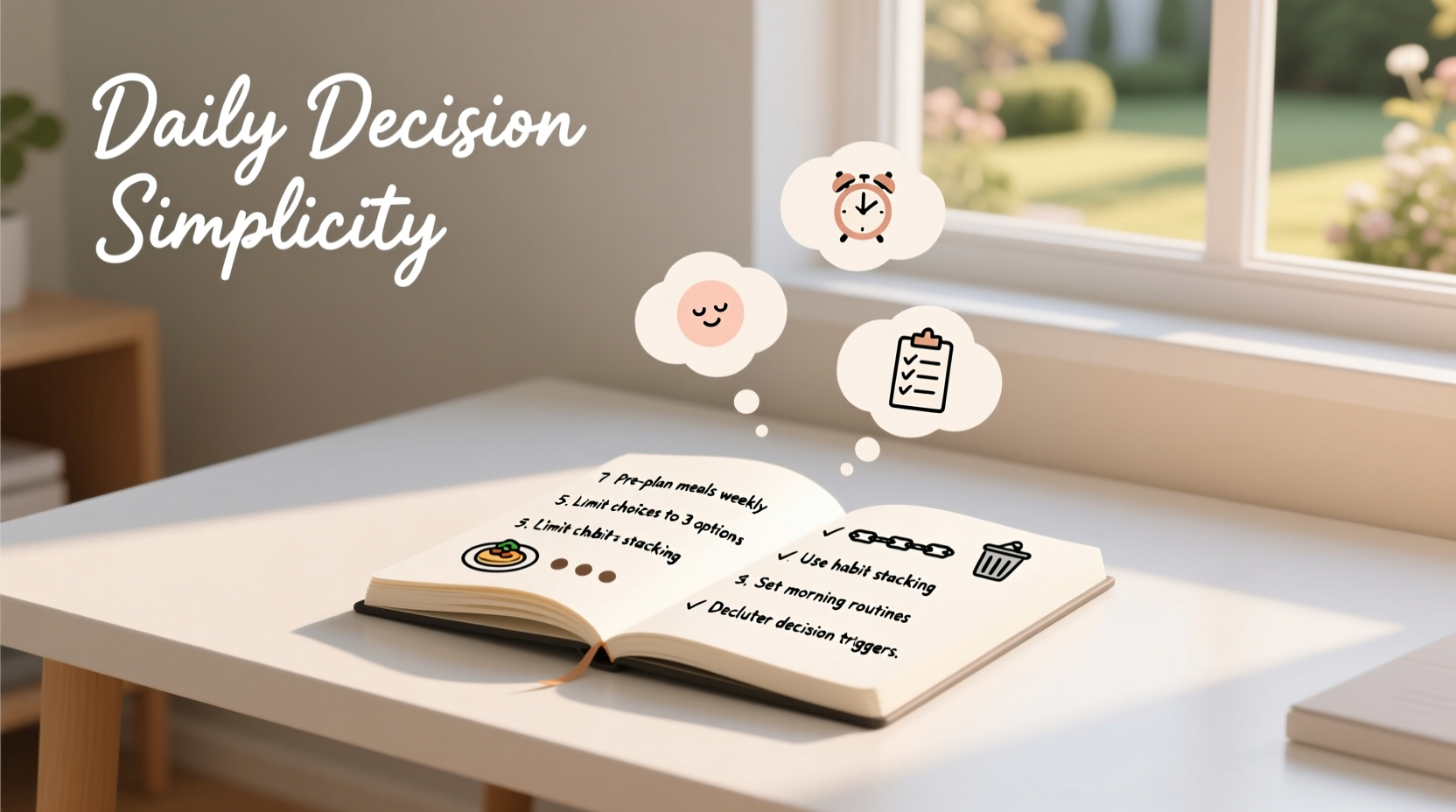
Decision fatigue occurs when the quality of your choices deteriorates after a long session of decision-making. Unlike physical exhaustion, it creeps in silently. You might not notice it until you impulsively order takeout instead of cooking, skip a workout, or snap at a colleague over a minor issue. Research from the National Academy of Sciences shows that judges are significantly more likely to grant parole early in the day or right after breaks—highlighting how mental depletion affects even high-stakes decisions.
The brain treats every decision as a cost. Each option evaluated, each trade-off weighed, drains glucose and focus. When resources run low, the mind defaults to shortcuts: avoidance, impulse, or sticking with the status quo. This explains why people often make poor financial choices late at night or abandon healthy habits after a taxing workday.
Recognizing decision fatigue is the first step toward managing it. The goal isn’t to eliminate decisions altogether—but to reduce unnecessary ones and protect your cognitive bandwidth for what truly matters.
Streamline Your Morning Routine
Mornings set the tone for the rest of the day. Starting with a series of low-impact decisions—what to wear, what to eat, which route to take—can deplete reserves before the workday begins. High performers like Barack Obama and Mark Zuckerberg famously wore the same outfit daily to conserve mental energy.
A structured morning routine minimizes friction. When actions become automatic, they bypass conscious deliberation. For example, laying out clothes the night before, prepping breakfast ingredients, or setting a fixed wake-up time all reduce morning decisions.
“Willpower is like a muscle. If you use it too much early on, it weakens later.” — Roy F. Baumeister, psychologist and author of *Willpower: Rediscovering the Greatest Human Strength*
Step-by-Step Guide to a Low-Decision Morning
- Prepare the night before: Choose clothes, pack lunch, and organize bags.
- Set a consistent wake-up time: Even on weekends, aim for no more than a one-hour variance.
- Limit food options: Rotate between 2–3 healthy breakfasts (e.g., oatmeal, smoothie, eggs).
- Automate hygiene: Keep toiletries in the same place; follow a fixed sequence.
- Delay non-urgent decisions: Avoid checking email or social media for at least 30 minutes.
Design Decision-Saving Systems
Systems replace constant choosing with consistency. Instead of deciding what to do each day, you follow a framework that guides action. This applies to meals, workouts, work schedules, and even communication habits.
Meal planning is a classic example. Without a plan, every dinner becomes a negotiation involving hunger, time, budget, and preferences. But with a weekly menu, grocery shopping becomes a checklist, and cooking turns into execution—not evaluation.
| Situation | Without System | With System |
|---|---|---|
| Workouts | \"Should I go today? What exercise? How long?\" | Fixed schedule: Mon/Wed/Fri 7 AM strength training |
| Email Management | Constantly checking, reacting, replying | Check only at 10 AM, 1 PM, and 4 PM |
| Shopping | Impulse buys, duplicate purchases | Monthly list + approval rule: wait 24 hours for non-essentials |
Creating systems doesn’t mean losing flexibility—it means gaining freedom from trivial decisions. The key is to design them during high-energy periods, such as weekends or after rest, when judgment is sharpest.
Apply the 4 Ds of Decision Management
To reduce decision load, adopt the 4 Ds: Delete, Delegate, Defer, and Do. This framework helps categorize choices efficiently and prevents overload.
- Delete: Eliminate unnecessary decisions. Ask: “Does this choice impact my goals or well-being?” If not, remove it. Example: unsubscribe from promotional emails that trigger purchase temptation.
- Delegate: Transfer decisions to others when appropriate. Parents can let kids choose their weekend outfits; managers can empower teams to handle routine approvals.
- Defer: Schedule low-priority decisions for a specific time. Instead of answering every request immediately, batch them for a weekly review.
- Do: Make quick decisions immediately if they take less than two minutes. This prevents small tasks from piling up and becoming overwhelming.
This method, adapted from productivity expert David Allen’s Getting Things Done methodology, creates clarity and reduces mental clutter. By systematically processing choices, you avoid the paralysis of indecision and the drain of revisiting the same questions repeatedly.
Mini Case Study: Sarah’s Workweek Transformation
Sarah, a marketing manager, used to feel mentally drained by Wednesday. She spent hours each day switching between emails, team requests, project planning, and personal logistics. After tracking her decisions, she realized 60% were repetitive or low-value—like approving social media posts or deciding when to reply to non-urgent messages.
She applied the 4 Ds: deleted redundant meetings, delegated content approvals to her assistant, deferred non-critical emails to twice-daily slots, and committed to making small replies instantly. Within two weeks, she regained two hours per week and reported higher focus during strategy sessions. Her team also became more autonomous, reducing bottlenecks.
Sarah didn’t work harder—she decided smarter.
Create a Personal Decision Hierarchy
Not all decisions are equal. A powerful way to combat fatigue is to establish a hierarchy that prioritizes based on impact and reversibility.
Stanford professor and decision scientist Chip Heath recommends asking two questions: How important is this decision? and Can it be reversed? Using these axes, decisions fall into four categories:
| Impact / Reversibility | Reversible | Irreversible |
|---|---|---|
| High Impact | Make quickly (e.g., hiring a contractor) | Invest time (e.g., buying a house) |
| Low Impact | Automate or delegate (e.g., choosing lunch) | Minimize effort (e.g., replacing a lightbulb) |
High-impact, irreversible decisions deserve research, consultation, and reflection. But high-impact, reversible decisions? Make them fast. As Jeff Bezos noted in Amazon’s 2015 shareholder letter, most decisions should be made with 70% of the information—you can correct course later. Waiting for perfect data wastes time and energy.
“Most decisions should probably be made with somewhere around 70 percent of the information you wish you had. If you wait for 90 percent, you’re probably being slow.” — Jeff Bezos, Founder of Amazon
Conversely, low-impact decisions—whether reversible or not—should require minimal attention. Use defaults, routines, or simple rules (e.g., “Always order the grilled option when eating out”) to bypass deliberation.
Checklist: 7 Daily Habits to Reduce Decision Fatigue
Implement these actionable steps to build resilience against decision fatigue:
- ✅ Wear a simplified wardrobe or repeat outfits for key days.
- ✅ Plan meals weekly and prep ingredients in advance.
- ✅ Set fixed times for checking email and messages.
- ✅ Use automation tools (e.g., bill pay, smart home settings).
- ✅ Apply the 4 Ds to incoming requests daily.
- ✅ Schedule important decisions for high-energy times (usually morning).
- ✅ End each day by preparing for the next (clothes, bag, priorities).
Consistency compounds. These habits may seem minor individually, but together they free up hundreds of micro-decisions per week—translating into greater focus, reduced stress, and improved outcomes.
FAQ
How do I know if I’m experiencing decision fatigue?
You might be fatigued if you notice increased irritability, procrastination, impulsive choices (like overspending or junk food), or difficulty concentrating later in the day. Physical signs include mental fog, low motivation, or craving sugary snacks—your brain seeking quick energy.
Can decision fatigue affect relationships?
Yes. When mentally depleted, people are more likely to react emotionally, withdraw, or avoid conflict resolution. Couples often argue about trivial matters late at night because both parties lack the patience for thoughtful dialogue. Scheduling important conversations for calmer times can prevent unnecessary tension.
Is it bad to make fewer decisions overall?
No—making fewer trivial decisions is beneficial. The goal is not passivity but strategic allocation of mental energy. By automating routine choices, you gain clarity and capacity for meaningful decisions in your career, health, and relationships.
Conclusion: Reclaim Your Mental Energy
Decision fatigue is an invisible tax on modern life. But it doesn’t have to control your days. By simplifying routines, building smart systems, and prioritizing decisions by impact, you can preserve your mental strength for what truly matters. Start small: pick one area—meals, wardrobe, or email—and apply a single strategy this week. Notice the difference in your energy and clarity.
Every saved decision is a deposit into your cognitive bank. Over time, those deposits compound into sharper thinking, better habits, and a more intentional life. You don’t need to make more decisions—you need to make fewer, better ones.




 浙公网安备
33010002000092号
浙公网安备
33010002000092号 浙B2-20120091-4
Comments
No comments yet. Why don't you start the discussion?