
When purchasing a diamond, especially online or through private vendors, trust is essential—but verification is non-negotiable. The International Gemological Institute (IGI) is one of the most widely recognized gem labs globally, providing detailed grading reports that serve as a diamond’s official quality record. Yet, without proper knowledge, these documents can seem like cryptic codes filled with jargon and abbreviations. Understanding an IGI report empowers buyers to make informed choices, avoid overpaying, and ensure they’re getting what they pay for.
What Is an IGI Diamond Certificate?
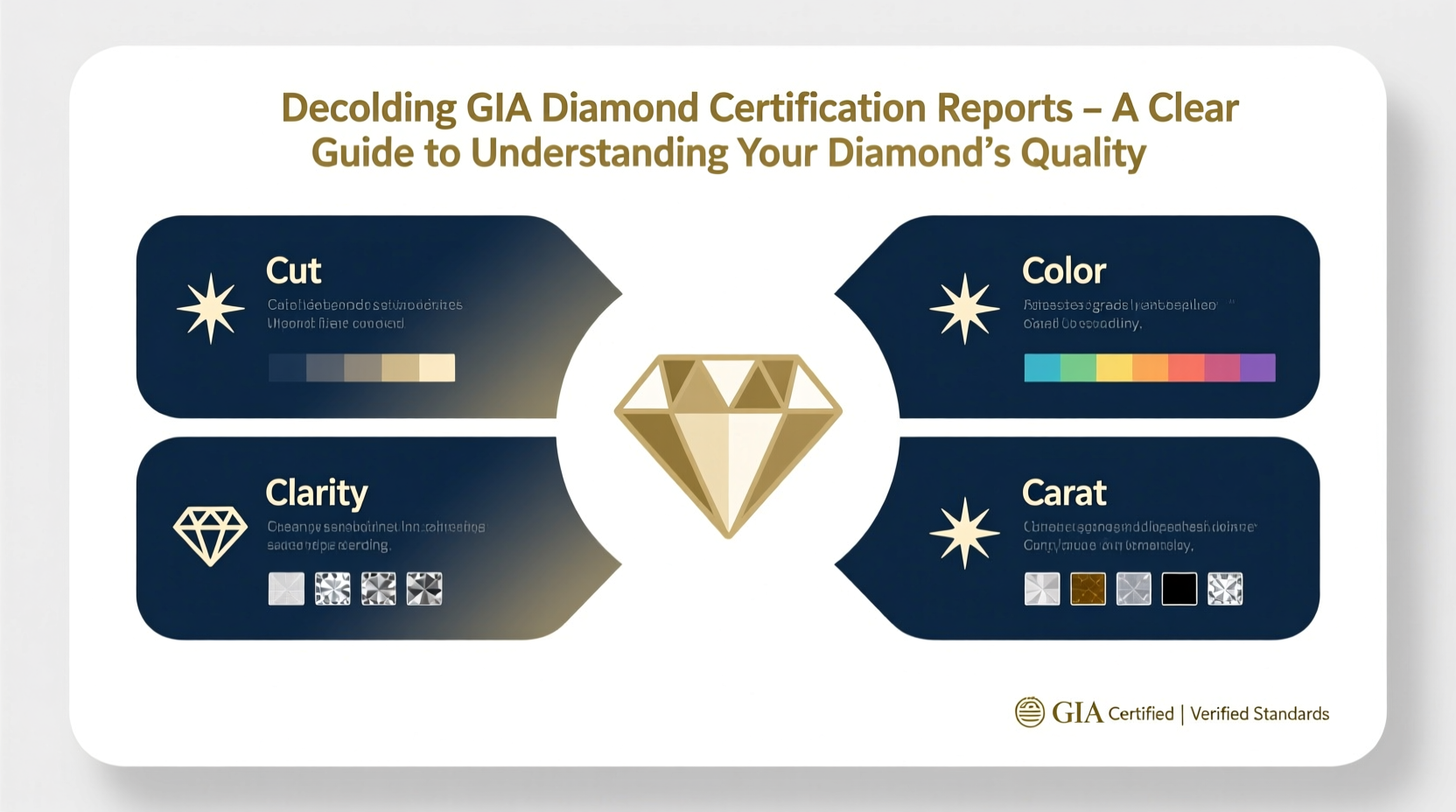
The IGI, founded in 1975, operates laboratories across major diamond hubs including Antwerp, Mumbai, New York, and Bangkok. Unlike some other labs, IGI grades both loose and mounted diamonds, making it particularly useful for retailers and consumers dealing with finished jewelry.
An IGI certificate provides an objective assessment of a diamond’s characteristics based on standardized criteria. It includes critical data such as the 4Cs—carat weight, color, clarity, and cut—as well as measurements, fluorescence, polish, symmetry, and proportions. While not all gem labs apply identical standards, IGI follows rigorous protocols aligned with global industry practices.
“An IGI report gives transparency, but buyers must understand its nuances—especially since IGI may grade slightly more leniently than GIA in certain categories.” — Lena Torres, Certified Gemologist & Jewelry Appraiser
Breaking Down the Key Sections of an IGI Report
To truly benefit from an IGI certificate, you need to know where to look and what each section means. Here's a breakdown of the core components:
1. Carat Weight
This is straightforward: the total weight of the diamond measured in carats (ct). One carat equals 0.2 grams. On the report, this appears near the top, usually rounded to two decimal places (e.g., 1.02 ct).
2. Color Grade
IGI uses the standard D-to-Z scale for color grading, where D represents completely colorless and Z indicates noticeable yellow or brown tint. The grading is done under controlled lighting conditions by trained gemologists.
3. Clarity Grade
Clarity refers to internal flaws (inclusions) and surface blemishes. IGI evaluates clarity using a 10x magnification loupe and assigns grades ranging from FL (Flawless) down to I3 (Included 3). Most diamonds fall between VS and SI grades.
4. Cut Grade
For round brilliant diamonds, IGI provides a cut grade—Excellent, Very Good, Good, Fair, or Poor—based on proportions, symmetry, and polish. This directly impacts brilliance and sparkle. Fancy shapes (like oval or pear) do not receive formal cut grades but are assessed for proportions and finish.
5. Polish and Symmetry
Both rated from Excellent to Poor, these reflect craftsmanship. High polish ensures smooth facets; good symmetry means precise alignment of facets. Even if the cut is Excellent, poor symmetry can dull light performance.
6. Fluorescence
Some diamonds emit a soft glow under UV light. IGI notes the strength (None, Faint, Medium, Strong, Very Strong) and color (usually blue). Moderate fluorescence can sometimes make lower-color diamonds appear whiter in sunlight—but strong fluorescence may cause haziness.
7. Measurements and Proportions
Detailed dimensions (e.g., 6.45–6.50 x 3.92 mm) help verify authenticity and assess cut precision. Table percentage, depth percentage, crown angle, and pavilion angle are included for technical evaluation.
Understanding the Plot Diagram and Inclusion Map
One of the most valuable parts of the IGI report is the plotted diagram—a visual representation of the diamond’s inclusions and blemishes. Black dots indicate inclusions, red lines show surface features, and green circles represent extra facets or minor polishing marks.
This map acts like a fingerprint. When verifying a diamond at a jeweler, compare the plot to the actual stone under magnification. Matching inclusions confirm identity and prevent substitution.
| Inclusion Symbol | Meaning |
|---|---|
| Black Dot | Internal flaw (e.g., crystal, feather) |
| Red Line | Surface-reaching feature (e.g., nick, scratch) |
| Green Circle | Extra facet or minor polish line |
| Open Circle | Cavity or pit on surface |
Step-by-Step Guide: How to Verify Your Diamond Using an IGI Report
Follow this sequence to independently validate your diamond’s authenticity and quality:
- Locate the Report Number: Check the laser-inscribed number on the diamond’s girdle using a 10x loupe.
- Match Dimensions: Compare listed measurements with those taken by a professional using a micrometer.
- Review the Plot: Under magnification, identify key inclusions shown on the diagram (e.g., a black dot near the culet).
- Check Grading Consistency: Ensure the stated color and clarity match what you observe (consider lighting and setting).
- Cross-Reference Online: Enter the report number on IGI’s official website (igi.org) to view the digital copy and confirm validity.
“Always verify the report via IGI’s online portal. Counterfeit certificates still exist, and direct verification eliminates risk.” — Raj Mehta, Director of Quality Control, Premier Jewel Imports
Common Pitfalls and What Buyers Miss
Even with a certificate, mistakes happen. Some common oversights include:
- Mistaking IGI’s “Total Carat Weight” for single-stone weight in multi-diamond settings.
- Overvaluing a high carat weight without considering cut quality, which affects beauty more than size.
- Ignoring fluorescence effects—especially in larger stones where strong blue fluorescence might create a hazy appearance.
- Failing to distinguish between IGI’s “Natural” and “Laboratory-Grown” designations, now clearly marked on newer reports.
Mini Case Study: Sarah’s Engagement Ring Purchase
Sarah was shopping online for an engagement ring with a 1.2-carat round diamond advertised as “IGI certified, VVS2 clarity, E color.” Excited by the price—$300 less than competitors—she nearly clicked \"buy\" until she downloaded the full IGI report.
Upon closer inspection, she noticed the cut grade was only “Good,” not “Excellent.” She also saw moderate blue fluorescence. After consulting a local jeweler, she learned that while the stone met basic specs, the subpar cut would result in less fire and brilliance. Additionally, the fluorescence could cause cloudiness in bright sunlight.
Sarah decided to pass and found another IGI-certified diamond with an Excellent cut, no fluorescence, and comparable clarity—for just $150 more. The upgrade made a visible difference in sparkle and face-up appeal.
IGI vs. Other Labs: A Quick Comparison
While IGI is reputable, it’s important to recognize differences between labs. The Gemological Institute of America (GIA) is often considered the strictest grader, especially for color and clarity. Here’s how they compare:
| Feature | IGI | GIA | HRD |
|---|---|---|---|
| Global Recognition | High | Very High | Moderate (Europe-focused) |
| Mounted Diamond Grading | Yes | No | Limited |
| Color Grading Strictness | Moderate | Strict | Moderate |
| Clarity Grading Tolerance | Slightly Lenient | Conservative | Neutral |
| Report Accessibility | Free online lookup | Free online lookup | Requires login |
For international buyers, IGI offers practical advantages—especially for pre-set jewelry. However, for maximum resale value and assurance, many prefer GIA-graded stones.
FAQ: Common Questions About IGI Reports
Does an IGI certificate guarantee my diamond’s value?
No certificate guarantees market value, but it provides an independent quality benchmark. Resale value depends on demand, brand, setting, and current pricing trends. GIA-graded diamonds often hold value better due to stricter grading.
Can I get my diamond re-graded by another lab?
Yes. Reputable labs like GIA accept loose diamonds for independent grading. This can be wise if you’re investing heavily and want a second opinion. Note: removal from setting may be required and involves cost.
Are older IGI reports still valid?
Yes, but note that IGI updated its reporting format in 2019 to include enhanced security features and clearer disclosure of laboratory-grown status. Older reports remain legitimate but lack some modern safeguards.
Final Checklist Before Buying an IGI-Certified Diamond
- ✅ Confirm the report number matches the laser inscription
- ✅ Verify the report on igi.org
- ✅ Check whether the diamond is natural or lab-grown
- ✅ Review cut grade, especially for round brilliants
- ✅ Examine fluorescence and its potential impact
- ✅ Compare plotted inclusions with actual stone under magnification
- ✅ Assess overall balance of the 4Cs—not just carat weight
Take Control of Your Diamond Purchase
An IGI diamond certificate is more than a piece of paper—it’s a tool for empowerment. With the right knowledge, you can move beyond marketing claims and focus on measurable quality. Whether you're choosing an engagement ring, anniversary gift, or investment piece, taking time to decode the report pays off in confidence and long-term satisfaction.




 浙公网安备
33010002000092号
浙公网安备
33010002000092号 浙B2-20120091-4
Comments
No comments yet. Why don't you start the discussion?