
Every holiday season, the moment you plug in your string of Christmas lights only to find that half remains stubbornly dark can be more frustrating than festive. While it might seem like a simple bulb issue, the root cause often lies deeper—within the design of the light strand itself or subtle electrical failures that aren’t immediately obvious. Understanding why this happens—and how to systematically address it—is essential for restoring your display without buying a new set every year.
Modern Christmas light strings are engineered with specific circuit configurations that balance energy efficiency and safety. However, these designs also mean that a single point of failure can shut down an entire section. With a methodical approach, most problems can be diagnosed and repaired at home using basic tools and a bit of patience.
Understanding How Christmas Light Strings Work
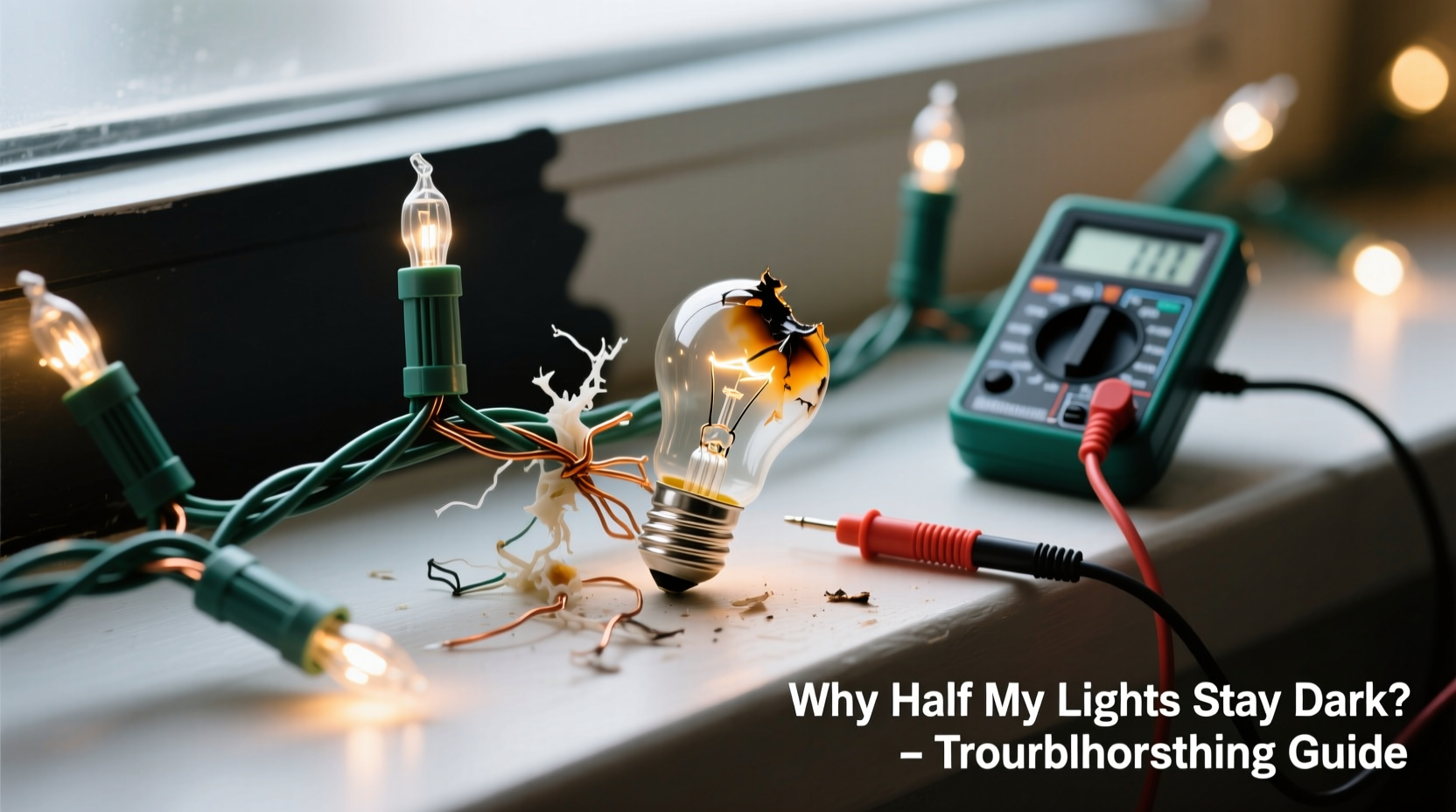
Most traditional incandescent mini-light strands are wired in series circuits, meaning electricity flows from one bulb to the next in a continuous loop. If any part of that loop is broken—a burned-out bulb, loose connection, or damaged socket—the current stops, and the downstream lights go dark. This explains why only half the strand lights up: the circuit is interrupted somewhere in the first half, leaving the second half powerless.
Newer LED strands often use a combination of series and parallel wiring, which improves reliability. Still, many retain segmented series circuits where each half operates independently. In such cases, one functioning half indicates that power reaches the strand but fails to continue past a fault point.
The bulbs themselves typically have shunts—tiny wires inside the base designed to activate when a filament burns out. In theory, the shunt bypasses the dead bulb, allowing the rest of the strand to stay lit. But shunts don’t always work as intended, especially if the bulb wasn’t properly seated or if debris interferes with conductivity.
Common Causes of Half-Lit Light Strings
A partial failure in a light string usually stems from one of several predictable issues. Identifying the most likely culprit saves time and prevents unnecessary replacements.
- Burned-out or faulty bulb: The most frequent cause. Even with shunts, some bulbs fail in a way that breaks the circuit completely.
- Loose bulb: A bulb not fully screwed into its socket interrupts continuity, especially in older strands.
- Damaged socket: Cracked or warped sockets may not make proper contact with the bulb base.
- Wire break or cut: Internal wire damage—even microscopic—can occur from bending, pinching, or rodent activity.
- Faulty fuse: Many plug ends contain small fuses that protect against power surges. One blown fuse can disable half the strand.
- Moisture or corrosion: Outdoor lights exposed to rain or snow may develop internal corrosion over time.
Not all of these issues are visible to the naked eye. A seemingly intact strand could harbor a hairline wire fracture beneath the insulation. That’s why troubleshooting requires both visual inspection and functional testing.
Step-by-Step Troubleshooting Guide
Follow this systematic process to identify and resolve the issue causing half your lights to remain dark. Most problems can be fixed in under 30 minutes with minimal tools.
- Unplug the strand and separate it from others. Work on one string at a time to avoid confusion.
- Inspect the plug end for fuses. Use a small screwdriver to open the fuse compartment. Look for discoloration or broken filaments. Replace with identical-rated fuses (usually 3–5 amps).
- Check each bulb in the dark half. Remove and examine bulbs one by one. Look for darkened glass, broken filaments, or bent base contacts. Replace any suspect bulbs with spares from the original pack.
- Re-seat all bulbs firmly. Even bulbs that appear fine may be slightly loose. Gently press and twist each into place.
- Examine sockets and wires. Look for cracks, melting, or frayed insulation. Pay close attention near bends or anchor points.
- Test continuity with a multimeter (optional). Set to continuity mode. Place one probe on the metal tab inside the first dark socket and the other on the corresponding contact in the last working socket. No beep means a break in the line.
- Use a light tester tool. Devices like the “LightKeeper Pro” send a pulse through the strand to clear shunt failures and detect open circuits.
- Replace or patch damaged sections. For minor wire damage, splice with waterproof wire connectors. For multiple failed sockets, consider cutting out the section and reconnecting with inline connectors.
If the problem persists after these steps, the issue may lie in the internal bridge between the two halves of the strand—a less accessible junction that sometimes fails due to heat stress or manufacturing defect.
Do’s and Don’ts When Repairing Light Strings
| Do | Don't |
|---|---|
| Unplug lights before servicing | Attempt repairs while plugged in |
| Use replacement bulbs of the same voltage and type | Mix LED and incandescent bulbs in the same strand |
| Store lights on reels or cardboard spools | Crush or tightly coil lights, risking wire damage |
| Check manufacturer’s instructions for max run length | Daisy-chain more than three strands unless rated for it |
| Use outdoor-rated lights outside | Expose indoor-only lights to moisture |
“Many people replace entire strands when just one bulb or fuse is at fault. A few minutes of inspection can save money and reduce waste.” — Daniel Reeves, Electrical Safety Technician, National Holiday Lighting Association
Real Example: Fixing a Partially Dark Strand on a Front Porch Display
Sarah from Portland had used the same 50-bulb C7 strand across her porch railing for five years. Last season, after storage in a damp garage, she noticed only the first 25 lights illuminated. She followed a structured approach:
First, she unplugged the strand and checked the fuses. One was visibly blown—likely from a surge during a storm. She replaced it with a spare, but the second half remained dark. Next, she removed each bulb in the non-working section. On the 18th socket, she found a bulb with a blackened base and a corroded contact. After cleaning the socket with a dry cotton swab and inserting a new bulb, the entire strand lit up.
She later realized the strand had been left outdoors uncovered, allowing moisture to seep in. Since then, she wraps her lights in plastic sleeves before storing them in sealed bins. Her repair took 20 minutes and cost nothing—saving her $18 on a replacement.
Preventive Maintenance Checklist
To minimize future failures, follow this annual checklist before and after each holiday season:
- ✅ Test all strands before decorating
- ✅ Replace any flickering or dim bulbs immediately
- ✅ Inspect cords for cuts, kinks, or brittleness
- ✅ Clean dust and debris from sockets with compressed air
- ✅ Store lights on reels or in organizers to prevent tangles
- ✅ Label indoor vs. outdoor sets to ensure correct usage
- ✅ Keep original packaging with spare bulbs and fuses
- ✅ Avoid placing heavy objects on stored light boxes
Proper maintenance extends the life of a light string from 3–5 years to a decade or more. It also reduces fire risk—over 200 U.S. fires annually are linked to decorative lighting, according to the NFPA.
Frequently Asked Questions
Can I connect half-lit strings together?
No. Daisy-chaining partially working strings increases electrical load unevenly and can overload circuits. Only connect fully functional, compatible strands rated for series connection. Check the label for maximum string count.
Why do only the lights after a certain point stay dark?
This indicates a break at or near that point—either a missing/broken bulb, poor connection, or internal wire fault. Electricity cannot jump gaps, so everything downstream loses power. Start troubleshooting at the first unlit bulb.
Are LED strings less prone to this issue?
Yes. Most modern LED strings use parallel-series hybrid circuits, so one failed bulb rarely affects others. They also draw less heat and power, reducing stress on components. However, they can still suffer from fuse failure or physical damage.
Conclusion: Restore Your Lights and Save the Season
A dark half of your Christmas lights doesn’t mean the end of the strand—it’s often a solvable issue rooted in basic electrical principles. By understanding series circuits, recognizing common failure points, and applying careful troubleshooting, you can revive your display safely and affordably. The tools you need are likely already in your home: a screwdriver, spare bulbs, and a little time.
With preventive habits like proper storage and pre-season testing, future issues become rare. You’ll spend less on replacements, reduce electronic waste, and keep traditions shining brightly year after year.




 浙公网安备
33010002000092号
浙公网安备
33010002000092号 浙B2-20120091-4
Comments
No comments yet. Why don't you start the discussion?