
Moissanite has emerged as a popular alternative to diamonds, prized for its brilliance, durability, and ethical sourcing. However, as demand rises, so does the risk of counterfeit or misrepresented stones. Whether you're purchasing a new piece of jewelry or evaluating an inherited gem, knowing how to confirm the authenticity of moissanite is essential. This guide outlines scientifically backed, field-tested methods used by gemologists and experienced jewelers to distinguish genuine moissanite from look-alikes.
Understanding Moissanite: What Makes It Unique
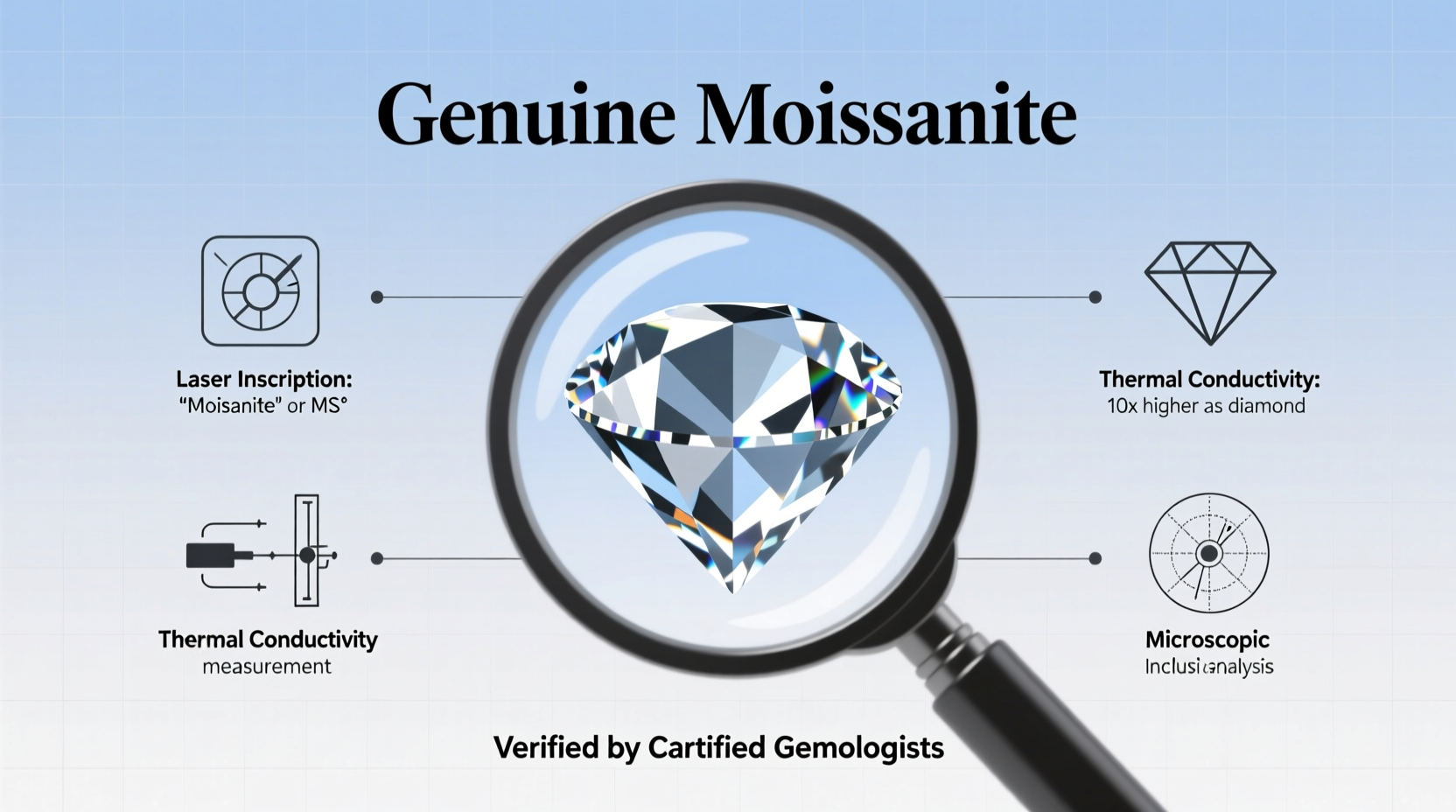
Discovered in 1893 by French scientist Henri Moissan in a meteorite crater, natural moissanite is extremely rare. Today’s moissanite gems are lab-created silicon carbide crystals engineered to mimic diamond brilliance while offering superior fire and hardness (9.25 on the Mohs scale). Unlike cubic zirconia or glass imitations, moissanite is a legitimate gemstone with distinct optical and physical properties.
The key to verification lies in recognizing these inherent traits—refractive index, double refraction, electrical conductivity, and dispersion—that set moissanite apart from other stones.
Step-by-Step Guide: How to Test Moissanite at Home and Professionally
While professional grading is ideal, several reliable home tests can help determine authenticity when used correctly. Follow this sequence for accurate results:
- Visual Inspection Under Magnification: Use a 10x jeweler’s loupe to examine the stone. Genuine moissanite often shows double refraction—lines or facets appear doubled when viewed through the crown. This effect is absent in diamonds and most simulants.
- Refractometer Test: Moissanite has a refractive index between 2.65–2.69, higher than cubic zirconia (2.15–2.18) and close to diamond (2.42). A calibrated refractometer will display readings outside the standard diamond range, signaling moissanite.
- Thermal Conductivity Test: Use a diamond tester. Most early testers detect thermal conductivity and will register moissanite as “diamond” due to similar heat dispersion. But this doesn’t mean it *is* a diamond—it means further testing is needed.
- Electrical Conductivity Test: Moissanite is electrically conductive; diamonds (except blue type IIb) are not. Advanced testers combine thermal and electrical sensors to differentiate them accurately.
- UV Light Examination: Some moissanites exhibit faint fluorescence under long-wave UV light, typically green or orange. While not definitive, unusual reactions may prompt deeper analysis.
Do’s and Don’ts When Verifying Moissanite
| Do’s | Don’ts |
|---|---|
| Use a dual-mode tester (thermal + electrical) | Rely solely on a basic diamond tester |
| Inspect symmetry and facet precision under magnification | Assume high sparkle equals authenticity |
| Compare weight vs. size with known standards | Clean the stone with harsh chemicals before testing |
| Consult a certified gemologist for valuation | Scratch the stone with metal to test hardness |
| Check for laser inscriptions near the girdle | Expose the gem to extreme heat during testing |
Expert Insight: Why Misidentification Is Common
“Over 60% of what clients bring in labeled ‘moissanite’ turns out to be CZ or poorly disclosed composites. The real issue isn't fraud—it's lack of proper tools and education.” — Dr. Lena Torres, GIA-Certified Gemologist and Director of Precision Gem Analysis, San Diego
Dr. Torres emphasizes that many jewelers still use outdated diamond testers incapable of detecting moissanite’s unique conductivity. She recommends using multi-sensor devices like the Presidium Gem Tester Plus or the Alpha Diamond-Moissanite Identifier, which reduce false positives significantly.
She also warns about \"doublets\"—composite stones made with a top layer of moissanite bonded to a cheaper base. These can pass initial visual checks but fail under microscopic examination where adhesive lines or differing material layers become visible.
Real Example: Identifying a Counterfeit Moissanite Ring
A customer in Austin purchased a “certified moissanite” engagement ring online for $800. Upon taking it to a local appraiser, two red flags appeared immediately: the stone showed no double refraction under 10x magnification, and it failed the electrical conductivity test. Further inspection revealed micro-bubbles trapped beneath the surface—a hallmark of fused glass rather than crystalline silicon carbide.
The vendor had provided a generic certificate without traceable lab details. After investigation, the seller was found to be reselling mass-market costume jewelry mislabeled as premium moissanite. The buyer recovered funds only after filing a chargeback. This case underscores the importance of third-party verification—even with documentation.
Comprehensive Verification Checklist
- ✅ Examine the stone under 10x magnification for double refraction
- ✅ Use a dual-mode (thermal + electrical) gem tester
- ✅ Check for manufacturer laser inscription (e.g., “Charles & Colvard” or “Forever One”)
- ✅ Weigh the stone and compare density to expected moissanite values
- ✅ Inspect for fluorescence under UV light (optional supporting clue)
- ✅ Review certification from recognized labs like GCAL or EGL
- ✅ Have the piece evaluated by an independent, certified gemologist
- ✅ Avoid sellers who refuse returns or provide vague product descriptions
Frequently Asked Questions
Can a regular diamond tester tell if a stone is moissanite?
No—not reliably. Traditional diamond testers measure thermal conductivity and often misidentify moissanite as diamond because both materials dissipate heat efficiently. You need a tester specifically designed to detect electrical conductivity, which moissanite possesses and diamond generally does not.
Is moissanite worth certifying?
Yes, especially for stones over 0.5 carats. Reputable brands like Charles & Colvard or Harro Gem provide detailed grading reports including cut, clarity, color, and origin. Certification adds resale value and ensures transparency. Always verify the lab’s credibility—look for GCAL, IGI, or EGL USA accreditation.
Does moissanite lose its sparkle over time?
No, moissanite retains its brilliance indefinitely. Unlike softer stones such as opal or CZ, it resists scratching and clouding. However, dirt, oils, and lotions can dull its appearance temporarily. Clean it monthly with warm water, mild soap, and a soft brush to maintain maximum luster.
Final Thoughts: Confidence Through Knowledge
Verifying moissanite isn’t about suspicion—it’s about informed ownership. With rising instances of misrepresentation in online marketplaces, relying solely on marketing claims puts buyers at risk. By combining simple home evaluations with access to professional tools and expertise, you protect your investment and ensure peace of mind.
Genuine moissanite offers exceptional beauty and performance. When properly authenticated, it stands as a modern, sustainable choice without compromise. Take the time to verify, question ambiguous claims, and prioritize transparency in every purchase.




 浙公网安备
33010002000092号
浙公网安备
33010002000092号 浙B2-20120091-4
Comments
No comments yet. Why don't you start the discussion?