
In the world of modern shonen anime, two titans have risen to dominate both critical acclaim and global popularity: Demon Slayer: Kimetsu no Yaiba and Jujutsu Kaisen. While both series share thematic DNA—supernatural battles, tragic backstories, and high-stakes emotional arcs—their visual execution sets them apart in profound ways. The real debate isn’t just about which show is better, but which animation studio is pushing the medium forward: Ufotable behind Demon Slayer, or MAPPA leading Jujutsu Kaisen. This isn’t a contest of fandom—it’s a study in artistry, technique, and production philosophy.
The Studios Behind the Magic
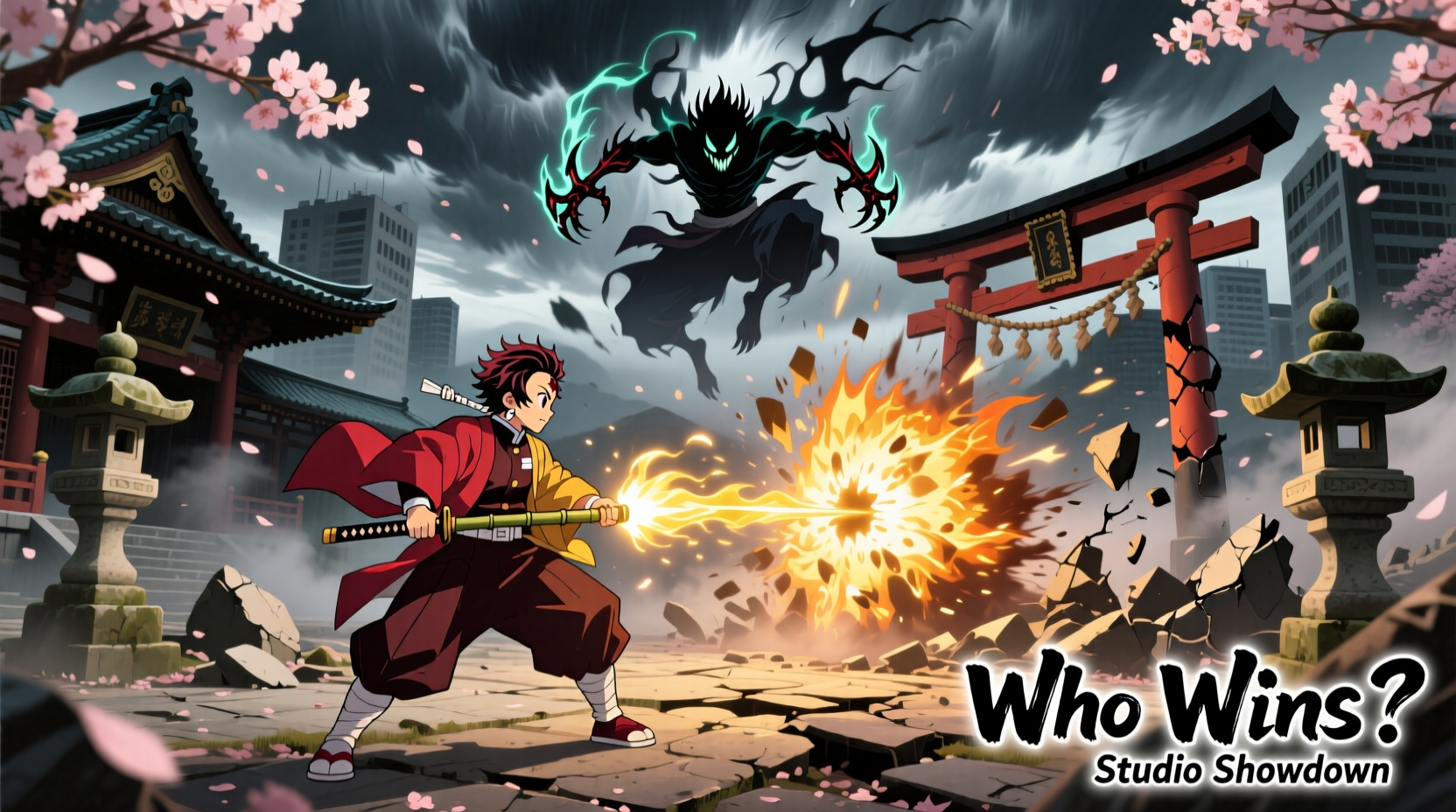
Understanding the stylistic differences begins with recognizing the studios’ histories and creative identities.
Ufotable has built its reputation on cinematic-quality animation, particularly in action sequences. Known for their work on the Fate series, especially Fate/stay night: Unlimited Blade Works and Fate/Zero, Ufotable mastered the integration of 3D backgrounds with 2D character animation. Their signature look blends fluid motion, dynamic lighting, and painterly effects that give scenes an almost dreamlike intensity. With Demon Slayer, they pushed this further, using digital compositing to simulate watercolor textures—especially evident in the “Hinokami Kagura” dance sequences where fire swirls like living ink.
MAPPA, on the other hand, is a studio defined by versatility and speed. Founded by Madhouse veterans, MAPPA has handled everything from Attack on Titan: The Final Seasons to Berserk and Chainsaw Man. They’re known for tight deadlines and aggressive production schedules, yet consistently deliver polished results. For Jujutsu Kaisen, MAPPA adopted a cleaner, more modern aesthetic—sharp lines, bold shadows, and a focus on spatial clarity during fights. Their approach prioritizes readability in combat, ensuring viewers never lose track of movement or impact.
“Ufotable treats animation like fine art. MAPPA treats it like precision engineering. Both are valid, but they serve different visions.” — Akira Saito, Animation Historian and Critic
Visual Language: A Side-by-Side Breakdown
The core distinction lies in how each studio interprets motion, emotion, and environment.
In Demon Slayer, Ufotable leans heavily into atmosphere. Take Tanjiro’s Water Breathing techniques: each form is rendered with flowing, calligraphic strokes that mimic actual water currents. The camera often glides around characters in slow motion, emphasizing grace over brutality. Even blood splatter is stylized—more symbolic than grotesque. This poetic approach enhances the show’s melancholic tone but can sometimes sacrifice clarity. In chaotic multi-character battles, such as the Mugen Train arc, it becomes difficult to parse who is hitting whom.
Jujutsu Kaisen, by contrast, favors kinetic efficiency. Consider Gojo Satoru’s Hollow Purple attack—a beam of destructive energy formed by merging space-time domains. The animation doesn’t linger on beauty; it emphasizes consequence. Buildings disintegrate in crisp, calculated frames. Impact points are highlighted with sharp flashes and directional force lines. Every movement serves narrative purpose. MAPPA uses limited animation strategically, conserving detail for key moments—like Megumi’s summoning sequences—where intricate linework and shadow play elevate tension without overwhelming the viewer.
Animation Techniques Compared
| Aspect | Demon Slayer (Ufotable) | Jujutsu Kaisen (MAPPA) |
|---|---|---|
| Action Clarity | High artistic value, lower readability in chaos | Prioritizes spatial awareness and timing |
| Color & Lighting | Rich gradients, ambient glow, watercolor simulation | High contrast, flat shading, neon accents |
| Frame Rate Usage | Frequent full-animation sequences; heavy CGI integration | Selective fluidity; strong keyframe emphasis |
| Background Style | Painted, atmospheric, often blurred for mood | Clean, architectural, sharply defined |
| Emotional Expression | Slow pans, lingering close-ups, dramatic lighting shifts | Exaggerated facial reactions, rapid cuts, minimal filters |
Production Realities: Budget, Time, and Burnout
No discussion of animation quality is complete without addressing the human cost behind the screen.
Ufotable’s pursuit of perfection comes at a price. Reports indicate that animators on Demon Slayer worked under intense pressure, with some episodes requiring hundreds of in-between drawings per minute. The studio famously reused certain assets—like Tanjiro’s breathing forms—to maintain consistency while managing workload. However, this level of polish demands significant investment. Each episode reportedly costs between $1.5 to $2 million, among the highest in TV anime.
MAPPA operates differently. Under director Sunghoo Park, Jujutsu Kaisen was produced with a leaner team and tighter schedule. To compensate, the studio outsourced non-critical scenes to partner studios like Studio Kai andにしむらプロダクション. Key battles were reserved for in-house talent, ensuring quality peaks aligned with story climaxes. This model allows faster turnaround—season two arrived just two years after season one—but risks inconsistency. Some filler episodes show noticeable drops in line stability and background detail.
Yet MAPPA’s agility gives it an edge in long-term sustainability. While Ufotable struggles to scale beyond flagship projects, MAPPA juggles multiple major titles simultaneously. That operational flexibility may matter more in the streaming era, where audience attention spans are short and release cycles must be predictable.
Real Example: The Fight Against Upper Rank Four
A telling comparison emerges in two pivotal battles: Gyutaro’s confrontation in Demon Slayer: Entertainment District Arc versus Sukuna’s rampage in Jujutsu Kaisen: Shibuya Incident.
Gyutaro’s fight spans five episodes and relies on sustained emotional weight. Ufotable uses prolonged silence, soft lighting, and intimate camera angles to underscore the tragedy of his backstory. When the action erupts, it’s a blur of red and silver—beautiful, but emotionally exhausting. The choreography feels balletic, with every slash extended through time-dilation effects. It’s less about victory and more about catharsis.
Sukuna’s attack, however, unfolds with surgical precision. MAPPA breaks down each cursed technique into distinct phases: domain expansion, melee strikes, evasion patterns. Viewers can map the battlefield in real time. When Sukuna decapitates civilians, the horror stems not from abstraction, but from clarity—the animation refuses to look away. This isn’t poetry; it’s a tactical report from hell.
Both approaches succeed, but in different genres. If Demon Slayer were a novel, it would be lyrical fiction. Jujutsu Kaisen reads like a thriller—every frame moves the plot forward.
Which Studio Is Winning? A Nuanced Answer
Declaring a “winner” depends on your criteria.
- If visual spectacle and emotional resonance are paramount, Ufotable wins. No current studio matches their ability to make animation feel transcendent.
- If narrative efficiency, scalability, and modern design sensibility matter most, MAPPA takes the lead. They’ve redefined how fast-paced action can remain coherent under pressure.
- For innovation, both push boundaries—but in opposite directions. Ufotable refines tradition; MAPPA reinvents workflow.
One thing is clear: neither studio could produce the other’s show. Swap them, and the results would collapse. Imagine MAPPA’s stark realism applied to Nezuko’s bamboo muzzle glowing in moonlight—it would lose its fairy-tale magic. Conversely, Ufotable slowing down Sukuna’s finger assault to savor the blood droplets would undermine the terror of unpredictability.
Checklist: How to Evaluate Anime Animation Quality
- Watch silent playback: Mute the audio and judge movement clarity.
- Pause during action: Check line consistency and perspective accuracy.
- Compare still frames: Look for repeated cels or dropped details.
- Track character proportions: Do bodies warp unnaturally between scenes?
- Note background complexity: Are environments detailed or simplified?
- Assess emotional delivery: Does facial animation convey intent without dialogue?
Future Trajectories: What Comes Next?
The competition is evolving. Ufotable has begun experimenting with hybrid workflows, integrating AI-assisted in-betweening tools to reduce labor strain. Meanwhile, MAPPA is investing in internal training programs to standardize quality across productions. Both studios face mounting challenges: rising costs, animator shortages, and growing international expectations fueled by Netflix and Crunchyroll partnerships.
Upcoming projects will test their adaptability. Ufotable’s rumored Fate Grand Order: Cosmos in the Lostbelt movie aims for even higher fidelity, potentially setting a new benchmark for theatrical anime. MAPPA’s continuation of Chainsaw Man and future arcs of Jujutsu Kaisen will reveal whether they can maintain momentum without sacrificing polish.
Ultimately, the rivalry benefits fans. Healthy competition drives innovation. Where once studios mimicked success, now they differentiate. We’re witnessing a golden age not because of one dominant player, but because multiple houses are raising the bar in unique ways.
FAQ
Is Demon Slayer’s animation better than Jujutsu Kaisen’s?
“Better” depends on preference. Demon Slayer excels in visual artistry and emotional depth, using lush effects and cinematic pacing. Jujutsu Kaisen offers superior fight choreography clarity and modern design. Neither is objectively superior—they serve different storytelling goals.
Why does Demon Slayer look so expensive?
It is. Ufotable uses extensive digital painting, custom shaders, and high frame counts. Many scenes blend 2D characters with 3D-rendered environments, then apply post-processing filters to mimic traditional media. This level of detail requires larger budgets and longer production times.
Can MAPPA keep up with demand?
So far, yes—but with caveats. MAPPA’s strength is project management, not infinite resources. Recent strains on staff during overlapping productions (e.g., Attack on Titan and Chainsaw Man) have led to minor quality dips. Long-term sustainability hinges on better labor practices and expanded teams.
Conclusion: Elevating the Art Form
The question isn’t who’s winning—it’s how both studios are lifting the entire industry. Ufotable reminds us that animation can be breathtaking art. MAPPA proves it can also be razor-sharp storytelling. Rather than picking sides, viewers should celebrate this diversity. The golden age of anime isn’t defined by one champion, but by the coexistence of excellence in many forms.
As consumers, we vote with attention. Support the works you love, advocate for fair treatment of animators, and appreciate the craft behind every frame. Whether drawn in watercolor flame or etched in cursed energy, these stories endure because of the hands that bring them to life.




 浙公网安备
33010002000092号
浙公网安备
33010002000092号 浙B2-20120091-4
Comments
No comments yet. Why don't you start the discussion?