
As the seasons shift between spring and fall, dressing appropriately becomes less about extremes and more about adaptability. Temperatures fluctuate, mornings are crisp, afternoons warm, and evenings cool. In this transitional window, outerwear choices matter—not just for comfort, but for style continuity. Two staples dominate casual wardrobes during these months: the denim jacket and the chore coat. Both are rugged, timeless, and rooted in workwear history. But when it comes to layering and smooth seasonal transition, one begins to outperform the other in subtle but meaningful ways.
This isn’t just about fabric weight or pocket count. It’s about how each piece interacts with your wardrobe ecosystem—how easily it pairs with a t-shirt, a sweater, or a hoodie; how well it handles unpredictable weather; and how seamlessly it moves from April to October without looking out of place. Let’s break down the strengths and limitations of each.
The Denim Jacket: A Timeless Layer
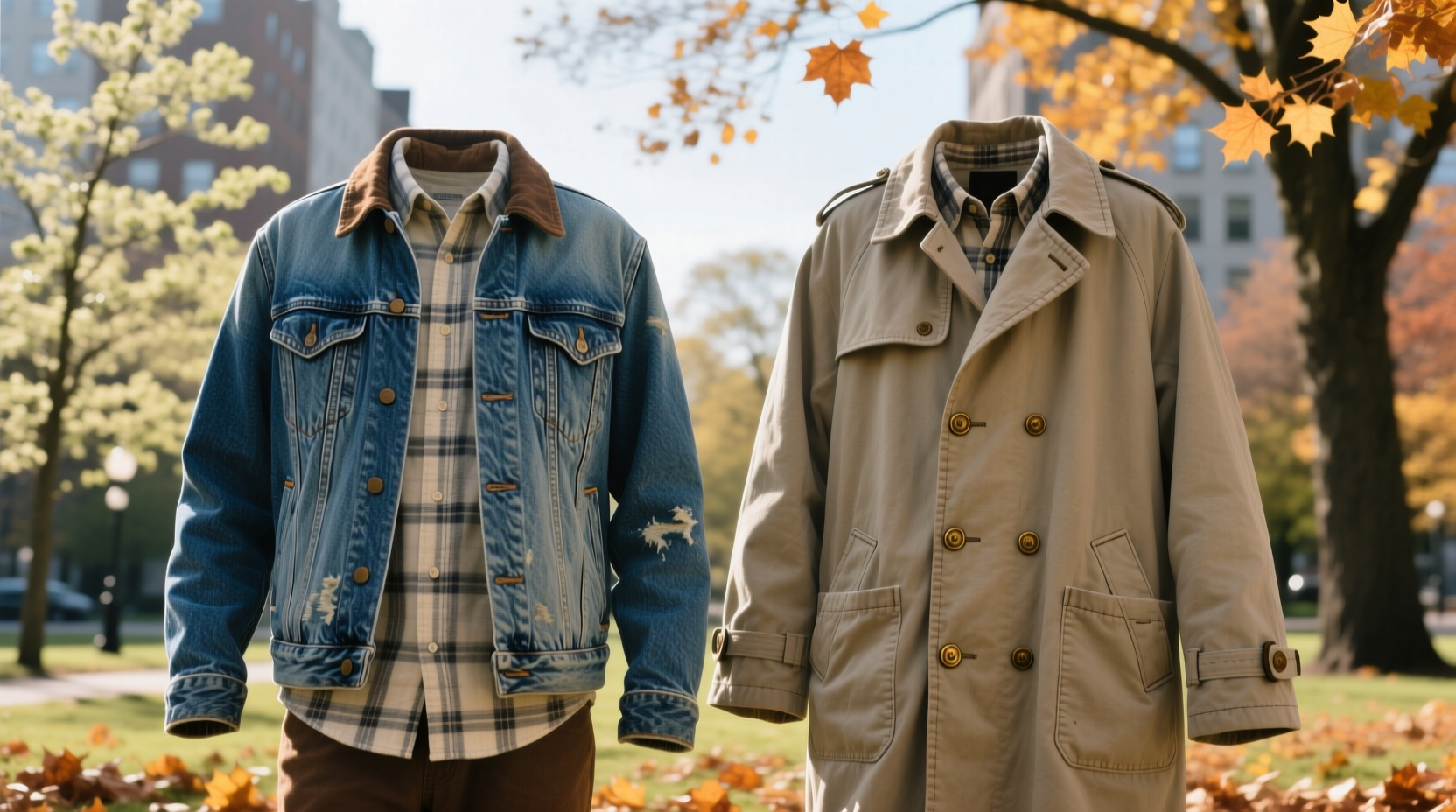
The denim jacket, particularly the classic blue trucker style, is an icon. Born from Levi Strauss’s durable cotton twill workwear in the late 19th century, it evolved into a symbol of rebellion, youth culture, and effortless cool. Its appeal lies in its simplicity: two chest pockets, button closure, ribbed cuffs, and a slightly boxy cut.
In spring, a denim jacket shines. It’s light enough to wear over a short-sleeve shirt on a breezy day but substantial enough to add structure to an outfit. The rigid cotton provides mild wind resistance and just enough insulation for cool mornings. By mid-spring, as temperatures climb, many people shed heavier layers entirely—but the denim jacket often stays, now worn open over graphic tees or lightweight polos.
However, its limitations become apparent as fall approaches. Standard denim jackets are typically made from 10–12 oz cotton denim. While durable, this weight doesn’t offer significant thermal protection. Once nighttime temps dip below 55°F (13°C), most wearers find themselves needing something warmer underneath—or replacing the denim jacket altogether.
Another consideration is color. While indigo denim fades beautifully over time, it can clash with deeper, earth-toned palettes typical of fall fashion. Pairing raw denim with corduroys or olive chinos works, but it requires intentionality. Over time, the contrast between “summer” denim and “fall” fabrics can feel jarring rather than cohesive.
The Chore Coat: Built for Change
The chore coat has a quieter legacy. Originating in early 20th-century France, it was designed for laborers who needed durable, functional outerwear that could withstand long days of physical work. Made from heavy cotton canvas or moleskin, featuring multiple large pockets and a straight fit, the chore coat prioritizes utility without sacrificing form.
Modern interpretations vary—from waxed cotton versions that repel light rain to unlined cotton blends that breathe well in milder conditions. What sets the chore coat apart is its versatility in weight and texture. Many fall-weight chore coats range from 12–16 oz, offering more insulation than standard denim while remaining breathable. Some even come lined with quilted nylon or flannel, making them ideal for late fall.
But where the chore coat truly excels is in its ability to layer *over* bulkier garments. Its boxy, slightly longer cut accommodates hoodies, chunky knits, and even lightweight vests. Unlike the denim jacket, which tends to hug the torso tightly when buttoned, the chore coat often features a looser silhouette and front snap or button closure that doesn’t strain over layers.
“The chore coat is the ultimate transitional garment because it’s built to evolve with the season. You can wear it alone in May and layered in October.” — Marcus Reed, Menswear Designer & Historian
Material-wise, chore coats come in colors that naturally align with seasonal shifts: olive green, charcoal gray, rust brown, navy, and black. These tones blend effortlessly into both spring florals and autumn foliage, making coordination easier across wardrobes. Even as you swap out tees for turtlenecks, the chore coat remains visually at home.
Layering Performance: A Side-by-Side Comparison
To understand which jacket performs better in real-world layering scenarios, consider how each behaves under different combinations. Below is a comparison table outlining key performance factors during the spring-to-fall transition.
| Feature | Denim Jacket | Chore Coat |
|---|---|---|
| Base Layer (T-shirt) | Excellent – clean, classic look | Excellent – complements casual and utilitarian styles |
| Middle Layer (Flannel, Sweater) | Fair – can feel tight when buttoned | Excellent – roomy cut allows easy layering |
| Bulk Layer (Hoodie, Vest) | Poor – restricts movement, distorts shape | Very Good – designed to accommodate volume |
| Weather Resistance | Fair – blocks wind moderately; no water resistance | Good to Excellent – especially waxed or brushed cotton versions |
| Seasonal Range | Spring to early fall (approx. 50–75°F) | Late spring to late fall (approx. 40–70°F) |
| Style Flexibility | High – works with jeans, chinos, shorts | High – pairs well with workwear, smart-casual, and streetwear |
| Average Fabric Weight | 10–12 oz | 12–16 oz (higher with lining) |
While both jackets perform well in mild conditions, the chore coat demonstrates superior adaptability when temperatures drop and layering demands increase. Its design philosophy—function-first, durability-focused—lends itself naturally to changing climates.
Real-World Example: A Month in Transition
Consider Alex, a graphic designer living in Portland, Oregon. April through October brings dramatic swings: 50°F mornings, 75°F afternoons, sudden drizzle, and Indian summer heatwaves. For years, Alex relied solely on a vintage Levi’s denim jacket. It worked fine in May and June, but by September, it wasn’t enough. On chilly mornings, Alex added a merino sweater underneath—but the denim jacket strained at the buttons, losing its clean drape.
Last year, Alex invested in a khaki cotton canvas chore coat with flap pockets and a hidden interior zip pocket. From late April onward, it became the go-to outer layer. In May, it was worn open over a linen shirt. In July, it stayed in the office for air-conditioned rooms. Come September, it layered perfectly over a hoodie during bike commutes. Even in early October, with temps near 45°F, the chore coat—with a thermal base layer—remained functional.
The denim jacket didn’t disappear—it still gets worn occasionally—but it now plays a supporting role. The chore coat, meanwhile, carried Alex through six months of unpredictable weather with minimal wardrobe changes.
Step-by-Step: Building a Transitional Layering System
Choosing the right jacket is only part of the equation. How you build your layers determines comfort, mobility, and visual harmony. Follow this sequence to maximize versatility from spring to fall:
- Start with a moisture-wicking base layer. Merino wool or technical synthetics regulate temperature and prevent sweat buildup, especially important when moving between indoor and outdoor environments.
- Add a lightweight middle layer. A flannel shirt, fine-gauge sweater, or unzipped hoodie provides adjustable warmth. Choose neutral tones (gray, navy, beige) for maximum mix-and-match potential.
- Select your outer shell based on forecast. If highs are above 65°F and dry, the denim jacket may suffice. If below 60°F, windy, or damp, opt for the chore coat.
- Adjust openness and fit throughout the day. Wear the jacket open during warmer hours, buttoned or snapped when cool. Ensure sleeves don’t ride up over sweater cuffs—a sign the fit is too tight.
- End with footwear and accessories. Swap sneakers for boots as fall deepens. Add a beanie or scarf when temps drop below 50°F—these complement the chore coat’s rugged aesthetic more naturally than the denim jacket’s casual vibe.
This system allows one core wardrobe to stretch across seasons. The outer layer acts as the variable—switching between denim and chore coat depending on conditions—while the rest remains consistent.
Checklist: Choosing Your Transitional Workhorse
Before deciding between a denim jacket and a chore coat, ask yourself the following:
- ✅ Do I need to layer over thick sweaters or hoodies regularly?
- ✅ Am I in a climate with rapid temperature shifts between morning and afternoon?
- ✅ Do I prefer a rugged, utilitarian aesthetic or a classic Americana look?
- ✅ Will I be outdoors frequently during shoulder seasons?
- ✅ Is weather resistance (light rain, wind) a priority?
- ✅ Do I want one jacket that lasts five months, or two that each last two?
If most answers lean toward practicality, durability, and extended seasonal use, the chore coat is likely the better investment. If style nostalgia, brand loyalty, or pairing with vintage jeans matters most, the denim jacket retains emotional and cultural value—even if it’s less versatile.
Frequently Asked Questions
Can I wear a chore coat in the summer?
Typically not as a top layer in hot weather. Most chore coats are too heavy for summer heat. However, in air-conditioned environments or during cool summer evenings, a lightweight unlined version can work. Opt for cotton-linen blends in lighter colors for better breathability.
Is a denim jacket outdated for fall fashion?
No—but its role has shifted. It’s no longer the primary outer layer for cooler months. Instead, it functions best as a secondary layer under a heavier coat or as a weekend piece during mild spells. Think of it like a reliable tool in your kit, not the whole toolbox.
How do I care for a chore coat?
Most cotton canvas chore coats can be machine washed in cold water and air-dried to preserve shape and fabric integrity. Avoid frequent washing; spot-clean when possible. For waxed versions, follow manufacturer instructions—some require reproofing every few seasons to maintain water resistance.
Conclusion: One Wins on Function, But Both Have a Place
When judged purely on transitional performance—from spring to fall—the chore coat emerges as the superior choice. Its thoughtful construction, broader thermal range, and compatibility with diverse layers make it a pragmatic cornerstone of any adaptable wardrobe. It bridges gaps between seasons, outfits, and weather conditions with quiet confidence.
The denim jacket, while iconic, operates within narrower parameters. It excels in spring and early fall but falters when true layering demands arise. That doesn’t diminish its value—it simply redefines it. The denim jacket is less a seasonal workhorse and more a cultural artifact, best appreciated in context.
Ultimately, the smartest approach may not be choosing one over the other, but integrating both. Use the denim jacket for warm days and stylistic flair. Keep the chore coat ready for when the wind picks up and the leaves begin to turn. Together, they cover the full spectrum of temperate dressing.




 浙公网安备
33010002000092号
浙公网安备
33010002000092号 浙B2-20120091-4
Comments
No comments yet. Why don't you start the discussion?