
Early spring brings unpredictable weather—crisp mornings, mild afternoons, and the occasional cold snap. This transitional period demands outerwear that balances insulation, breathability, and adaptability. Two staples often considered for this season are the denim jacket and the chore coat. Both are timeless pieces rooted in workwear heritage, but they serve different functions when it comes to layering. Understanding their construction, fabric properties, and styling potential helps determine which performs better as a mid-season layering piece.
Understanding the Core Differences
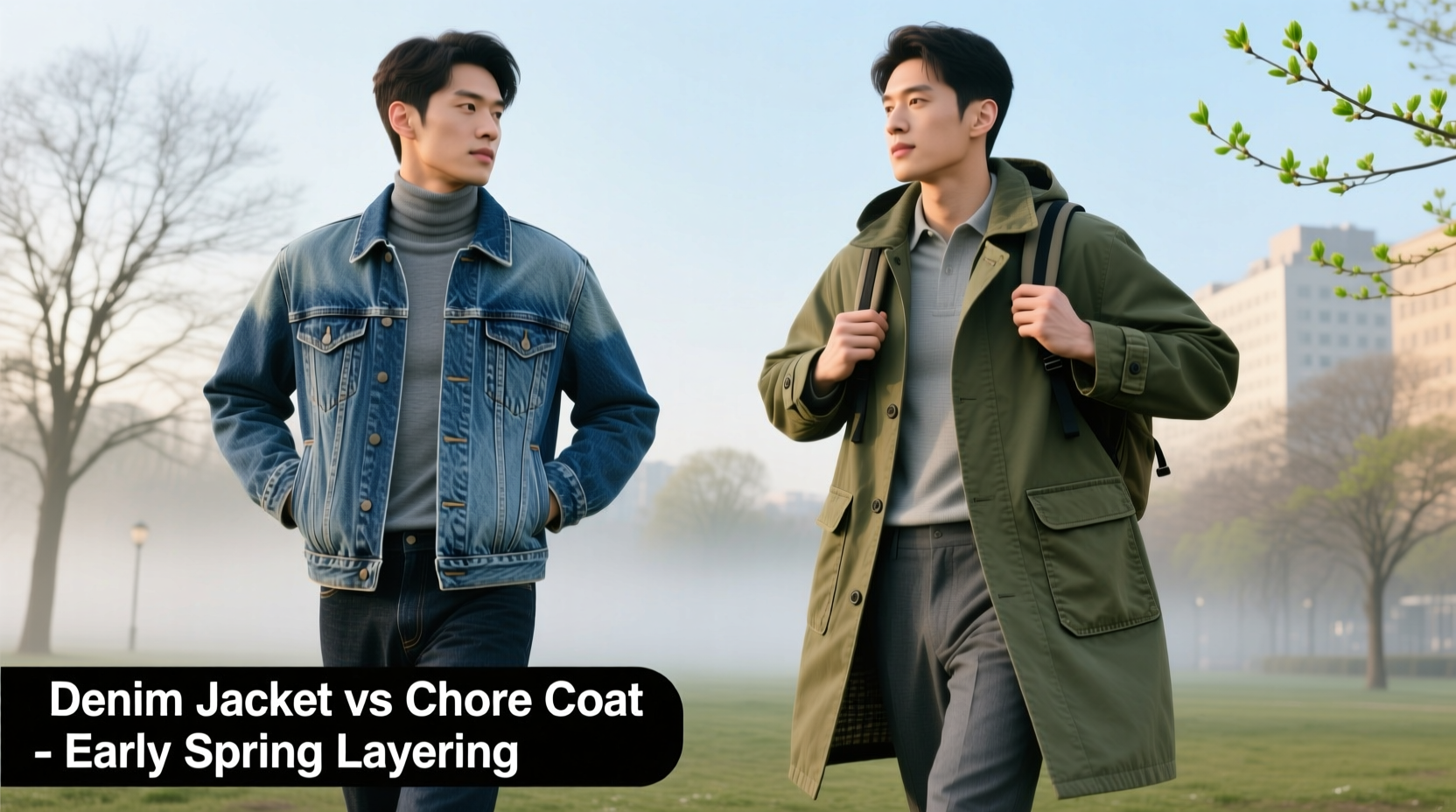
The denim jacket and the chore coat originate from distinct labor traditions. The denim jacket, popularized by brands like Levi’s in the early 20th century, was designed for miners and railroad workers who needed durable yet flexible protection. Made from cotton denim—typically 10–14 oz—the jacket is rigid at first but softens with wear. It features minimal padding, a slim fit, and classic details like chest pockets and button fronts.
In contrast, the chore coat emerged from French farmworkers’ wardrobes. Known as a “sac de travail,” it was built for utility: roomy pockets, reinforced stitching, and slightly heavier cotton canvas or twill (12–16 oz). Modern versions often include quilted linings or added insulation, making them inherently warmer than standard denim jackets.
These foundational differences shape how each garment behaves during layering. While both can be worn over shirts or light sweaters, their cut, weight, and internal structure influence comfort, mobility, and temperature regulation.
“Layering isn’t just about stacking clothes—it’s about managing microclimates between garments. The right outer shell makes all the difference.” — Marcus Reed, Menswear Textile Consultant
Weight, Warmth, and Breathability Compared
When evaluating layering performance, three factors dominate: thermal retention, airflow, and moisture management. Let’s break down how each jacket performs across these metrics.
| Feature | Denim Jacket | Chore Coat |
|---|---|---|
| Fabric Weight | 10–14 oz cotton denim | 12–16 oz cotton canvas/twill |
| Lining | Rarely lined; unlined or basic cotton backing | Often quilted nylon or flannel-lined |
| Breathability | High (tight weave but no lining) | Moderate (lining reduces airflow) |
| Insulation Value | Low to moderate | Moderate to high |
| Moisture Wicking | Good (absorbs sweat, dries slowly) | Fair (lining may trap humidity) |
| Best For | Cool mornings, indoor-outdoor transitions | Chilly days, windy conditions |
The data shows a clear divide: the chore coat generally offers more warmth due to its heavier fabric and common use of linings. However, this added insulation can lead to overheating during midday walks or heated indoor spaces. The denim jacket, while less insulating, allows greater air circulation, reducing the risk of clamminess when moving between environments.
Layering Flexibility and Fit Considerations
Fit plays a crucial role in layering success. A jacket too tight will restrict movement and compress insulating layers, reducing their effectiveness. One too loose sacrifices wind resistance and creates bulk under additional outerwear.
Most denim jackets follow a trim silhouette—slim through the body, narrow shoulders, and tapered sleeves. This design works well over a T-shirt or flannel shirt but struggles with thicker knits. Attempting to wear a chunky cable sweater underneath often results in strained buttons and limited arm motion.
Chore coats, on the other hand, are traditionally cut with a boxier profile. They feature straight hems, wider shoulders, and generous sleeve openings. This extra room accommodates multiple layers without constriction. You can comfortably wear a hoodie, turtleneck, or even a lightweight vest beneath a chore coat without sacrificing mobility.
However, this roominess has trade-offs. In windy conditions, excess space inside the coat can create a chimney effect, drawing cold air upward. To counteract this, many modern chore coats include adjustable waist tabs, drawstrings, or storm cuffs—features rarely found on classic denim jackets.
- Denim Jacket Layering Sequence: T-shirt → Flannel → Denim Jacket
- Chore Coat Layering Sequence: Thermal Base → Sweater → Hoodie → Chore Coat
For those building adaptable spring outfits, the chore coat clearly supports deeper layering. But if your routine involves frequent removal and re-wearing—like commuting to an office—the denim jacket’s sleeker profile and lighter weight make it more practical.
Real-World Use Case: A Week in Early Spring
Consider Alex, a graphic designer living in Portland, Oregon. His daily routine includes biking to a co-working space, working indoors at 72°F, and walking home through breezy riverfront paths where temperatures drop into the low 50s.
During a typical week in March, Alex tested both jackets:
- Monday – Denim Jacket: Worn over a merino wool T-shirt. Comfortable during the commute, slightly chilly on the return ride. Removed indoors without issue.
- Tuesday – Chore Coat (unlined): Paired with a cotton shirt and thin sweater. Stayed warm during transit and didn’t overheat inside. Wind resistance was noticeably better.
- Thursday – Denim Jacket + Scarf: Added a wool scarf for extra neck warmth. Helped marginally but arms felt restricted when wearing gloves.
- Friday – Lined Chore Coat: Too warm indoors. Had to roll up sleeves and felt bulky sitting at the desk.
The verdict? The unlined chore coat provided the best balance. It allowed sufficient layering for outdoor protection while remaining manageable indoors. The denim jacket worked on milder days but required supplemental accessories when temperatures dipped. The lined chore coat, though effective outside, proved excessive for mixed-use scenarios.
Styling Versatility Across Occasions
Beyond function, aesthetic integration matters. How well does each jacket transition from casual errands to semi-formal settings?
The denim jacket remains a wardrobe staple because of its effortless cool. Paired with chinos and boots, it elevates a simple outfit. Over a button-down shirt, it adds rugged contrast to tailored trousers. Its familiarity makes it universally acceptable in casual workplaces and social gatherings alike.
The chore coat leans utilitarian. Its military-inspired look—often in olive drab, navy, or charcoal—conveys purposefulness. When styled with raw denim and work boots, it projects a minimalist, functional aesthetic. With beige trousers and suede loafers, it can be refined into smart-casual territory, especially in Japanese or European-inspired designs.
However, the chore coat’s bulkier appearance can overwhelm smaller frames or shorter torsos. Without careful proportion balancing, it risks looking sloppy rather than intentional. The denim jacket, being closer-fitting and more familiar, is generally more forgiving across body types and fashion fluency levels.
Do’s and Don’ts: Styling Summary
| Action | Denim Jacket | Chore Coat |
|---|---|---|
| Pair with dress shoes | ✅ Yes – works with clean silhouettes | ⚠️ Carefully – only with minimalist styles |
| Wear over hoodies | ❌ Limited room | ✅ Ideal for casual layering |
| Use in business-casual settings | ✅ Often acceptable | ❌ Rarely appropriate |
| Roll sleeves neatly | ✅ Easy due to stiffness | ⚠️ Depends on cuff design |
Step-by-Step Guide to Choosing Your Spring Layer
Selecting the right jacket depends on your climate, lifestyle, and existing wardrobe. Follow this decision process:
- Assess Your Daily Temperature Range: If mornings are below 50°F and afternoons exceed 65°F, prioritize adaptability. A medium-weight chore coat gives more buffering against cold starts.
- Evaluate Your Commute: Do you bike, walk, or drive? Active commuters benefit from wind-resistant fabrics and room for layers—favoring the chore coat.
- Inventory Your Mid-Layers: List what you typically wear underneath. If you own several sweaters or hoodies, ensure your jacket can accommodate them without strain.
- Test Indoor Environments: Offices with consistent heating favor lighter shells. Denim jackets excel here due to easy on/off access and compact storage.
- Consider Long-Term Use: Will you wear this beyond early spring? Denim jackets are year-round options in mild climates. Chore coats peak in utility during transitional months.
Frequently Asked Questions
Can I layer a denim jacket under a chore coat?
Absolutely. This combination is ideal for volatile spring weather. The denim adds texture and a secondary barrier, while the chore coat provides wind protection and structure. Just ensure the chore coat is sized to fit over the denim without pulling.
Are there hybrid options that blend both styles?
Yes. Some brands now offer “denim chore coats”—made from heavyweight denim with a boxy cut and patch pockets. These merge the durability of denim with the functional layout of a chore coat, creating a versatile middle ground.
How do I care for each jacket during spring humidity?
Denim should be washed infrequently (every 4–6 wears) in cold water to prevent shrinkage and fading. Air dry flat. Chore coats, especially those with linings, can be spot-cleaned or machine-washed on gentle cycles. Always check labels, as some vintage reproductions require dry cleaning.
Final Recommendation
For most early spring layering needs, the chore coat outperforms the denim jacket in warmth, wind resistance, and multi-layer compatibility. Its roomier cut and sturdier fabric make it better suited to fluctuating conditions. However, the denim jacket wins in versatility, ease of removal, and stylistic neutrality—making it preferable for urban professionals or those in stable indoor environments.
The optimal approach? Own both. Rotate based on the day’s forecast and schedule. Keep a lightweight chore coat in your bag for unexpected chills. Reserve your favorite denim jacket for milder days and polished looks.
“The most functional wardrobe isn’t built on single heroes—it’s built on strategic redundancy.” — Lena Torres, Sustainable Style Editor
Take Action This Season
Don’t wait for perfect weather to refine your spring rotation. Pull out both jackets, try them with your common layer combinations, and note where each excels. Adjust your choices based on real experience, not just aesthetics. Share your findings with others navigating the same seasonal shift—because great style is always informed by practicality.




 浙公网安备
33010002000092号
浙公网安备
33010002000092号 浙B2-20120091-4
Comments
No comments yet. Why don't you start the discussion?