
Fall is the season of transition—crisp mornings, cool afternoons, and unpredictable evenings. It’s also the time when your outerwear choices matter most. Two staples dominate casual wardrobes during this shift: the denim jacket and the chore coat. Both are rugged, timeless, and rooted in workwear heritage. But when it comes to layering effectively as temperatures drop, they serve different purposes. Understanding their structural, material, and stylistic differences reveals which performs better when building a functional fall outfit.
The answer isn’t one-size-fits-all. Your climate, daily routine, and personal style all influence whether a denim jacket or a chore coat will serve you best. However, by analyzing insulation, fabric weight, cut, and compatibility with other layers, we can determine which piece offers superior versatility and warmth in autumn conditions.
Material and Construction: The Foundation of Layering
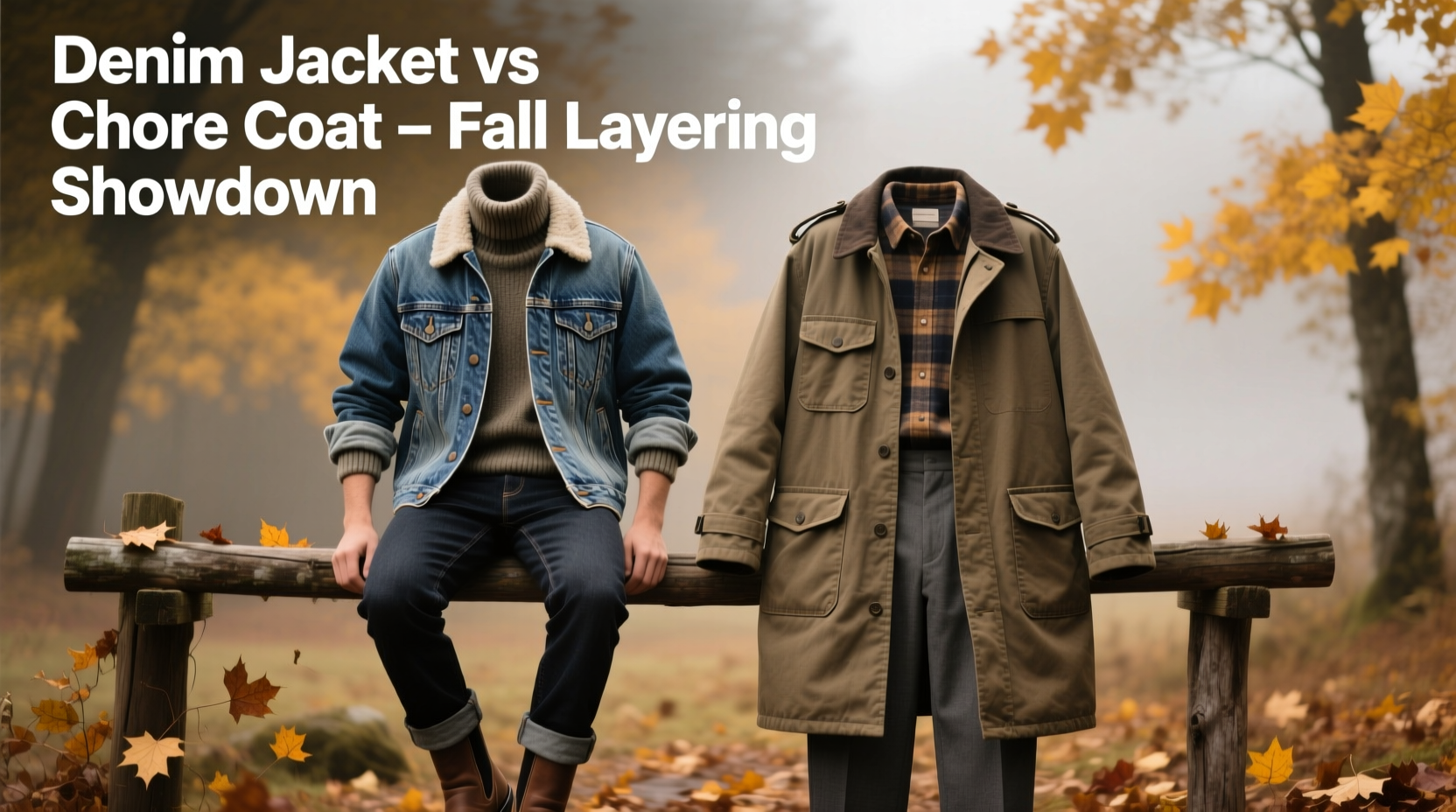
At the core of any effective layering system is the base garment’s ability to retain heat while allowing breathability and movement. Denim jackets and chore coats differ significantly in their construction, starting with the materials used.
Denim jackets are typically made from 100% cotton denim, weighing between 9 and 14 ounces per square yard. This medium-weight fabric provides minimal insulation on its own. Most denim jackets lack lining, though some feature a thin flannel or quilted interior. Their primary function is wind resistance and visual appeal rather than thermal protection. Because denim is tightly woven, it resists light wind but does not trap heat efficiently without additional layers underneath.
Chore coats, originally designed for French laborers in the late 19th century, are constructed from heavier cotton canvas or moleskin, often ranging from 12 to 16 oz. They frequently include a full lining—usually in cotton, wool, or a synthetic blend—that adds both structure and warmth. The double-layer front panels and button-up storm flaps enhance wind resistance. This makes chore coats inherently more insulated and better suited for cooler environments.
Layering Performance: How Each Jacket Handles Under- and Over-Layers
Effective layering follows the principle of base, mid, and outer layers. The outer layer must accommodate the others without restricting movement or compromising breathability. Let’s break down how each jacket functions within this system.
A denim jacket excels as a mid-weight outer layer in mild fall weather (50–65°F). It pairs well over a T-shirt or lightweight sweater but struggles when worn over bulkier pieces like hoodies or thick turtlenecks. Its rigid fabric and snug fit limit expansion, causing shoulder strain and zipper tension when over-layered. Additionally, denim softens over time but maintains stiffness initially, reducing comfort under stress.
In contrast, the chore coat is built for practicality. It features a boxier, slightly looser cut that accommodates thicker mid-layers such as shawl-collar cardigans, fleece vests, or even lightweight down jackets. The button-front closure allows incremental adjustment—unlike zippers, buttons don’t pull when the fabric stretches unevenly. This flexibility makes the chore coat far more adaptable across fluctuating temperatures.
“Layering isn’t just about warmth—it’s about microclimate control. A good outer shell should allow moisture escape while blocking wind. Chore coats, with their breathable cotton and structured drape, do this more effectively than standard denim.” — Marcus Reed, Menswear Designer & Textile Consultant
Comparative Breakdown: Denim Jacket vs Chore Coat
| Feature | Denim Jacket | Chore Coat |
|---|---|---|
| Fabric Weight | 9–14 oz cotton denim | 12–16 oz cotton canvas/moleskin |
| Lining | Rare; sometimes flannel | Common (cotton, wool, or blend) |
| Cut | Slim to regular, fitted shoulders | Boxy, relaxed, roomy sleeves |
| Closure | Buttons or zip | Buttons with storm flap |
| Pockets | 2 chest, 2 hip | Multiple: chest, hand-warmer, interior |
| Wind Resistance | Moderate | High (double front + flap) |
| Layering Capacity | Light to mid-layers only | Mid to heavy mid-layers |
| Best For | Transitional weather, urban styling | Cooler climates, outdoor activity |
Real-World Application: A Week in the Life of Two Fall Outfits
To illustrate how these garments perform outside theory, consider two scenarios involving Alex, a freelance photographer based in Portland, Oregon—a city known for its damp, variable fall weather.
Scenario 1: Denim Jacket in Action
On a Tuesday morning, Alex heads out for an early shoot at a riverside park. Temperatures hover around 58°F with light drizzle. He wears a merino wool T-shirt, a cotton hoodie, and his favorite vintage Levi’s Type III denim jacket. By mid-morning, he feels chilly. The denim offers little protection against the damp air, and the unlined interior provides no buffer. When he tries adding a packable windbreaker over the jacket, the sleeves bind and the waist restricts movement. He ends up carrying the jacket in his bag by noon.
Scenario 2: Chore Coat Takes Charge
Later that week, Alex switches to a dark olive cotton canvas chore coat lined with brushed cotton flannel. Same base layers: merino tee and hoodie. This time, he feels warm and unrestricted. The coat’s deep hand pockets hold gloves and a lens cloth, and the storm flap keeps wind off his chest during long waits between shots. Even when he adds a lightweight nylon vest for extra core warmth, the coat accommodates the layer without tension. At day’s end, he’s comfortable, dry, and hasn’t needed to adjust his outerwear once.
This mini case study highlights a key truth: context determines performance. In stable, dry, urban environments, a denim jacket suffices. But when conditions demand adaptability and resilience, the chore coat proves superior.
When to Choose Which: A Practical Decision Framework
Selecting between a denim jacket and a chore coat shouldn’t be based on trend alone. Instead, use a decision framework grounded in environment, activity, and wardrobe goals.
- Assess your local fall climate: If you experience consistent rainfall, high humidity, or temperatures regularly below 60°F, prioritize the chore coat. Its heavier fabric and lining offer tangible benefits.
- Evaluate your daily movement: Do you walk or bike frequently? Are you outdoors for extended periods? Chore coats support active lifestyles better due to their durability and ventilation.
- Consider your existing wardrobe: Denim jackets pair effortlessly with chinos, jeans, and sneakers—ideal for smart-casual looks. Chore coats shine with workwear-inspired outfits: durable trousers, boots, and layered knits.
- Think long-term versatility: While denim remains a year-round staple in milder zones, chore coats fill a specific seasonal niche. However, their rising popularity in streetwear and minimalist fashion has expanded their stylistic range.
- Budget and care: Denim jackets often require less maintenance—spot clean and air out. Chore coats, especially those with linings, may need professional cleaning. Invest based on frequency of use.
Expert-Backed Layering Tips for Fall
Building a functional fall outfit isn’t just about the outer layer—it’s how all pieces interact. Follow these expert-recommended practices to maximize comfort and style.
- Start with a moisture-wicking base: Merino wool or technical synthetics keep you dry even when static indoors.
- Add a mid-layer with texture: Cable knits, waffle tees, or fleece quarter-zips provide warmth without bulk.
- Match sleeve lengths: Ensure your mid-layer sleeves peek slightly from under the jacket cuffs for visual balance.
- Use color tonally: Earth tones (olive, rust, navy) work with both denim and chore coats. Avoid clashing brights unless intentional.
- Don’t neglect the neck: A scarf or overshirt collar adds warmth and dimension, especially with open-front chore coats.
“The best fall outfits aren’t the bulkiest—they’re the most thoughtfully assembled. One well-chosen outer layer can anchor three different looks.” — Lena Choi, Stylist & Wardrobe Architect
Frequently Asked Questions
Can I wear a chore coat in the city, or is it too rugged?
Absolutely. Modern chore coats come in refined cuts and muted colors suitable for urban settings. Pair with slim-fit trousers and Chelsea boots for a polished look. The key is balancing utility with proportion.
Is a denim jacket enough for November?
In most temperate regions, no. By November, average highs often fall below 55°F, and denim lacks sufficient insulation. Layer it over a heavy sweater and under a wool overcoat if needed, but don’t rely on it as your sole outer layer.
How do I style a chore coat without looking like a farmer?
Focus on fit and footwear. Choose a tailored chore coat with clean lines, avoid oversized work pants, and wear it with minimalist sneakers or leather boots. Roll the sleeves once to show wrist definition.
Final Recommendation: Prioritize Function, Then Style
If layering effectiveness in fall is your primary concern, the chore coat is the superior choice. Its heavier fabric, insulating lining, roomier cut, and enhanced wind protection make it better equipped to handle the season’s challenges. It supports multiple mid-layers, adapts to changing conditions, and performs reliably in wet or windy environments.
That said, the denim jacket retains unmatched cultural appeal and sartorial flexibility. It’s ideal for early fall, indoor-outdoor transitions, and fashion-forward combinations where warmth is secondary. Think of it as the stylish cousin who shows up for brunch; the chore coat is the dependable friend who helps you move apartments in the rain.
The smart approach? Own both. Use the denim jacket during September and early October, then transition to the chore coat as autumn deepens. This rotation extends the life of each piece, prevents overuse, and keeps your wardrobe feeling fresh week after week.




 浙公网安备
33010002000092号
浙公网安备
33010002000092号 浙B2-20120091-4
Comments
No comments yet. Why don't you start the discussion?