
A clean, organized desk isn’t just about aesthetics—it directly impacts focus, productivity, and mental clarity. Yet, despite good intentions, many professionals and creatives struggle to maintain order. Two popular solutions dominate the market: desktop grid organizers and drawer organizers. While both promise a clutter-free workspace, they serve different needs, workflows, and environments. Choosing the right one depends on more than preference; it hinges on how you use your desk, what tools you rely on daily, and how disciplined your organizational habits are.
Understanding the Core Differences
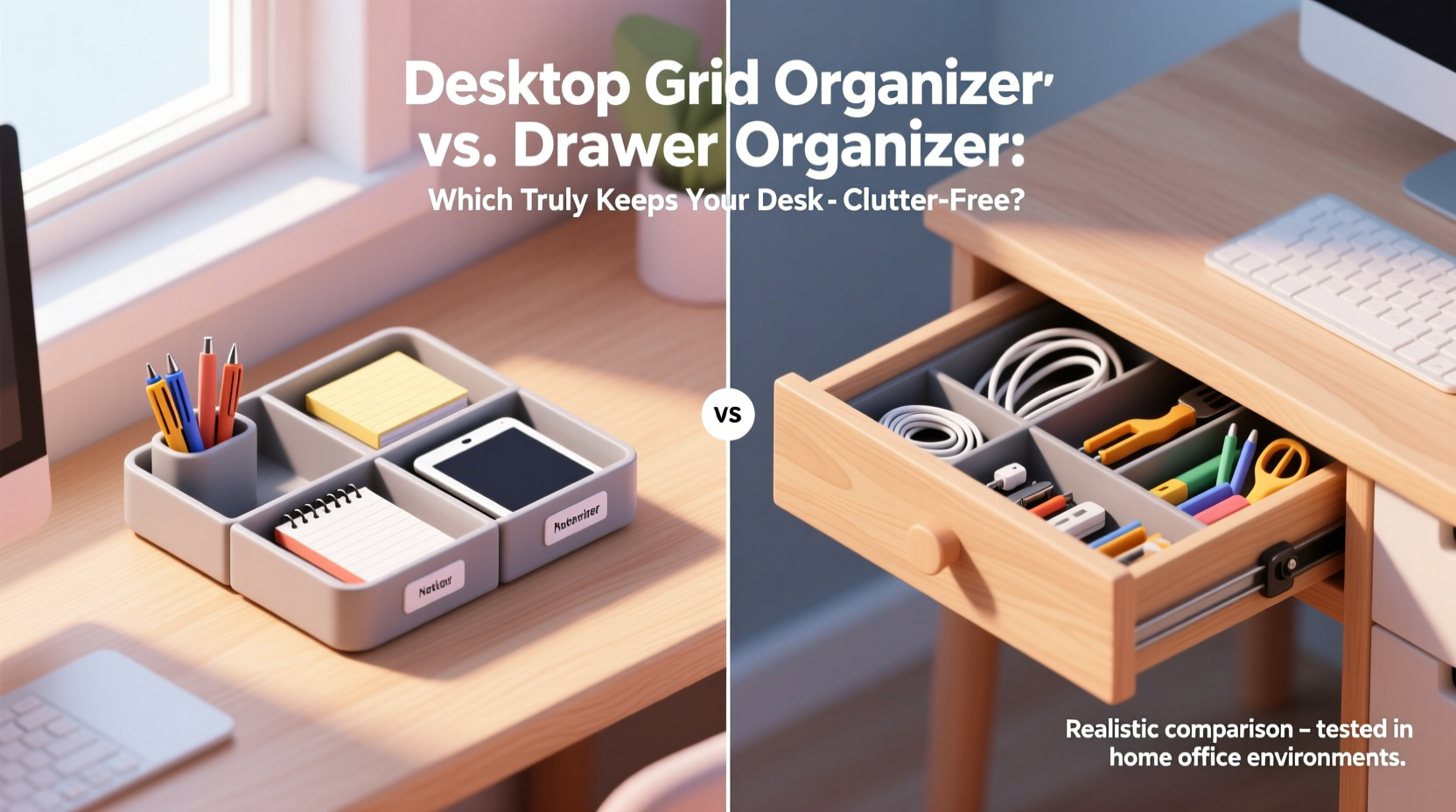
At first glance, both types of organizers aim to reduce visual noise and improve accessibility. But their design philosophies diverge significantly.
A desktop grid organizer is typically a modular tray system that sits directly on your desk surface. It uses adjustable dividers or pre-set compartments to corral items like pens, notepads, USB drives, headphones, and small electronics. These are often made from aluminum, acrylic, or wood and are designed for visibility and immediate access.
In contrast, a drawer organizer fits inside a desk drawer—either built-in or standalone—and segments the internal space into labeled or dedicated zones. These are usually made from fabric, felt, plastic, or molded foam and prioritize concealment over exposure.
The fundamental distinction lies in visibility versus containment. Grid organizers keep essentials within reach and sight, while drawer organizers hide them away, reducing surface distractions but potentially increasing search time.
“Accessibility and visibility are key drivers in workspace efficiency. If you’re constantly opening and closing drawers, you’re adding friction to your workflow.” — Dr. Lena Torres, Ergonomics Researcher at the Human Workspace Institute
Pros and Cons: A Side-by-Side Comparison
| Feature | Desktop Grid Organizer | Drawer Organizer |
|---|---|---|
| Visibility | High – Everything is in plain sight | Low – Items are hidden when drawer is closed |
| Access Speed | Instant – No need to open anything | Moderate – Requires pulling out drawer |
| Surface Clutter | Potential for visual clutter if overfilled | Keeps desk surface completely clear |
| Customization | High – Many offer adjustable dividers | Limited – Fixed compartments in most models |
| Dust Exposure | Higher – Open design collects dust | Lower – Closed drawer offers protection |
| Ease of Cleaning | Easier – Wipe down surface quickly | Harder – Must remove contents to clean |
| Ideal For | Frequent-use items (pens, sticky notes, phone) | Occasional-use tools (adapters, spare cables, backups) |
Real-World Application: Case Study of a Freelance Designer
Sophie, a freelance graphic designer working from a compact home office, initially used only a drawer organizer. Her desk looked pristine, but she found herself constantly opening and closing the drawer for pens, styluses, and SD cards. This repetitive motion disrupted her flow, especially during client calls or creative sprints.
After switching to a magnetic aluminum grid organizer on her desk, she placed her most-used items—Wacom stylus, favorite pen, earbuds, and charging cable—in designated slots. The drawer organizer remained but was repurposed for less frequently used items: extra batteries, tape, and backup USBs.
The result? A 30% reduction in task-switching time and fewer instances of misplaced tools. “I didn’t realize how much mental energy I was wasting just opening drawers,” she said. “Now everything I need is where my hand naturally lands.”
Choosing the Right System for Your Workflow
Your choice shouldn’t be based on trends or aesthetics alone. Instead, consider these factors:
- Frequency of Use: If you grab an item multiple times a day, it belongs on the desktop.
- Desk Size: Small desks benefit from drawer organizers to maximize surface area.
- Work Style: Creative roles often require quick access to tools; administrative roles may favor neatness over speed.
- Environmental Control: Dusty or shared spaces may make drawer storage more practical.
Step-by-Step Guide to Optimizing Your Desk Setup
- Inventory Your Tools: Lay out everything you use in a typical workday.
- Categorize by Frequency: Label each item as “daily,” “weekly,” or “rarely used.”
- Select Zones: Assign daily items to potential desktop grid spots; weekly and rare items go into drawers.
- Test the Layout: Arrange items temporarily without organizers to assess natural placement.
- Install Organizers: Choose a grid system with adjustable dividers and a drawer organizer with compartment flexibility.
- Review Weekly: Adjust positions based on actual usage over the first month.
Expert Recommendations and Common Pitfalls
Many users fall into the trap of organizing once and assuming the job is done. However, organizational systems require maintenance and adaptation.
One common mistake is overfilling a desktop grid. While it’s tempting to fit every small object into a slot, overcrowding defeats the purpose. A cluttered grid creates visual stress and slows retrieval. Similarly, using a drawer organizer without labeling sections leads to “black hole” syndrome—where items vanish into the depths.
“An organizer doesn’t create order—it supports it. The real work happens in your habits.” — Marcus Reed, Productivity Consultant and Author of *The Minimal Desk*
Checklist: Building a Sustainable Desk Organization System
- ✅ Audit all desk-related items monthly
- ✅ Limit desktop grid to 5–7 essential tools
- ✅ Label drawer compartments clearly
- ✅ Clean surfaces and organizers weekly
- ✅ Rotate seasonal tools (e.g., holiday cards, project-specific supplies)
- ✅ Avoid stacking unrelated items in one compartment
Frequently Asked Questions
Can I use both a desktop grid and a drawer organizer?
Absolutely. In fact, this hybrid approach is ideal for most users. Keep high-access items on the desktop and store backups, infrequently used tools, and sensitive items (like passports or external drives) in the drawer.
Are desktop grid organizers worth it for small desks?
Yes, but choose a compact model. Look for slim profiles or corner-fit designs. Prioritize vertical organization (stackable trays) to save space. Just ensure the grid doesn’t interfere with typing or mouse movement.
How do I prevent my desktop grid from becoming cluttered again?
Treat it like a curated display. Only include items you use daily. If something hasn’t been touched in two weeks, move it to the drawer. Set a reminder to re-evaluate your grid every 30 days.
Final Thoughts: Function Over Form
The debate between desktop grid organizers and drawer organizers isn’t about which is objectively better—it’s about alignment with your workflow. A beautifully organized drawer means little if you waste minutes each day searching for your favorite pen. Conversely, a crowded desktop grid undermines the calm a tidy workspace should provide.
The most effective setups combine visibility with intentionality. Start by identifying your true daily essentials. Then, place them where they’re easiest to access. Use drawer organizers not as dumping grounds, but as structured archives for secondary tools. Regularly reassess what stays out and what goes in.
Ultimately, a clutter-free desk isn’t achieved through a single product. It’s the result of thoughtful design, consistent habits, and honest self-assessment. Whether you lean toward grids, drawers, or both, the goal remains the same: a workspace that supports—not hinders—your best work.




 浙公网安备
33010002000092号
浙公网安备
33010002000092号 浙B2-20120091-4
Comments
No comments yet. Why don't you start the discussion?