
For decades, home cooks and even seasoned chefs have used the terms “chicken broth” and “chicken stock” interchangeably. But beneath the surface of these golden liquids lies a fundamental distinction that can elevate—or undermine—a dish. Understanding the difference isn’t just culinary pedantry; it’s essential for achieving the right depth of flavor, body, and clarity in soups, sauces, gravies, and braises. While both start with simmered chicken parts and aromatics, their preparation methods, ingredients, and final applications diverge significantly. This guide breaks down the science, tradition, and practical use of each, so you can make informed choices in your kitchen.
Definition & Overview
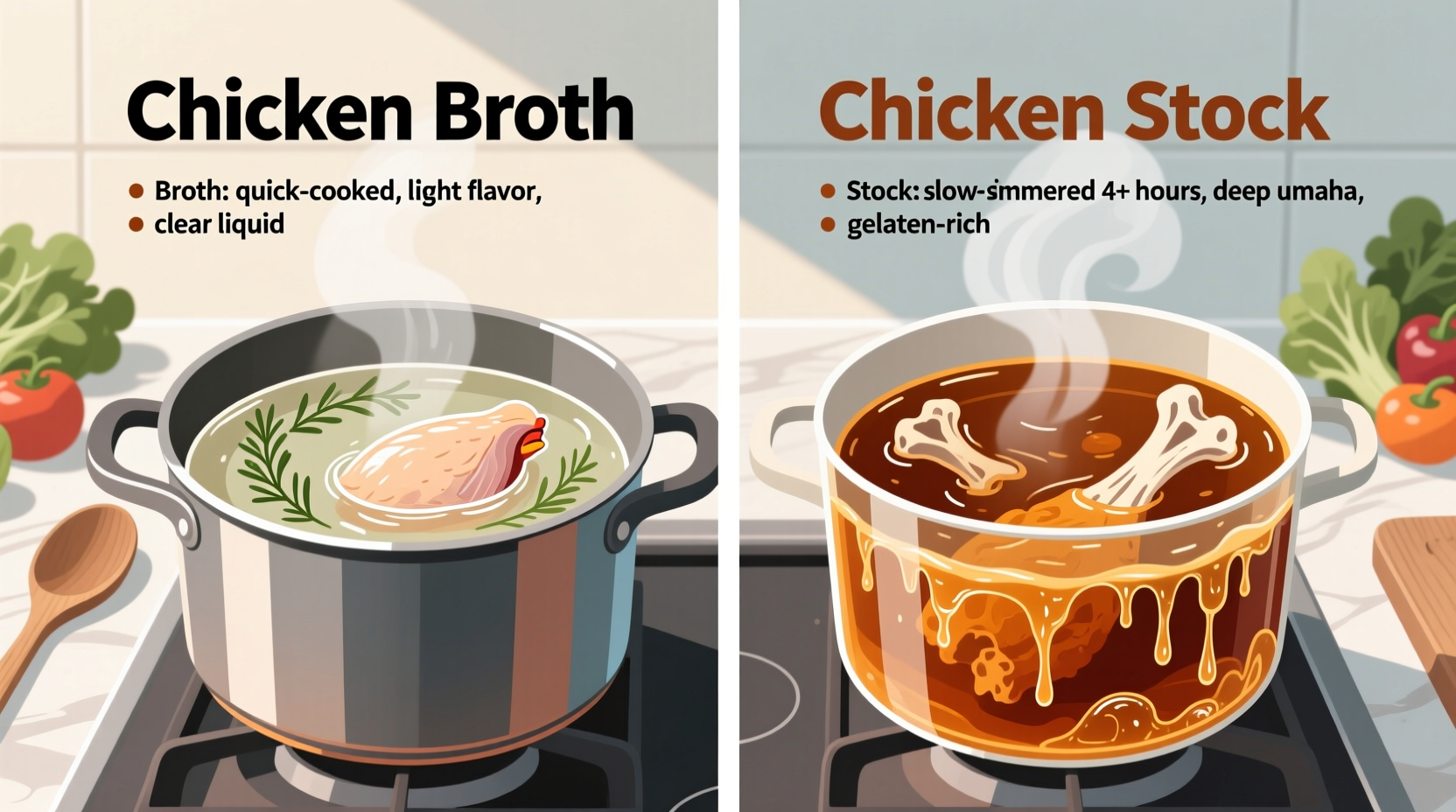
Chicken broth is a flavorful liquid made by simmering meat—often from boneless chicken breasts or thighs—along with vegetables, herbs, and seasonings such as salt, pepper, garlic, and onions. The goal is a ready-to-drink, savory liquid with immediate flavor appeal. It’s typically lighter in body and designed for consumption as-is.
Chicken stock, on the other hand, is built on structure. It’s made by slowly simmering chicken bones—often roasted first—along with connective tissue, cartilage, and sometimes feet or joints, which release collagen during long cooking. This collagen converts into gelatin, giving stock its signature mouthfeel and ability to enrich dishes. Stock is generally unsalted or lightly seasoned, functioning more as a foundational ingredient than a finished product.
The divergence begins not in taste but in purpose: broth is meant to be enjoyed; stock is meant to build upon.
Key Characteristics
| Characteristic | Chicken Broth | Chicken Stock |
|---|---|---|
| Primary Ingredient | Meat (breast, thigh) | Bones and connective tissue |
| Cooking Time | 45 minutes – 2 hours | 3–6 hours (sometimes up to 8) |
| Flavor Profile | Savory, seasoned, immediately palatable | Deep, rich, umami-forward, often unseasoned |
| Texture / Body | Thin, light-bodied | Full-bodied, viscous (forms jelly when chilled) |
| Salt Content | Usually salted | Rarely salted (chef’s control) |
| Culinary Role | Finished product or soup base | Building block for sauces, reductions, stews |
| Shelf Life (Refrigerated) | 4–5 days | 5–7 days |
| Freezable | Yes (up to 6 months) | Yes (up to 6 months) |
Practical Usage: How to Use Each in Cooking
Knowing how to apply broth versus stock separates functional meals from exceptional ones. Their roles are distinct, though occasionally overlapping.
When to Use Chicken Broth
Choose broth when:
- You’re making a quick weeknight soup—especially vegetable, noodle, or matzo ball soup.
- You need a flavorful liquid to cook grains like rice or quinoa without added salt.
- You're reheating leftovers and want moisture with taste.
- You're preparing a delicate sauce where heavy body would overpower the dish.
Because most commercial broths are already seasoned, they deliver instant savoriness. A simple bowl of ramen comes alive with hot broth poured over noodles and toppings. However, caution is needed when reducing broth—it can become overly salty.
When to Use Chicken Stock
Stock shines when complexity and texture matter:
- In pan sauces: deglaze with stock after searing meat to capture fond and create a glossy, rich sauce.
- For risotto: the gelatin in stock helps release starch gradually, yielding creamy consistency.
- In braising liquids: stock maintains moisture while enhancing depth over long cooking times.
- As a base for demi-glace or reductions: its neutral salt level allows precise seasoning at the end.
A classic French velouté sauce—one of the five mother sauces—starts with a roux and finishes with chicken stock, not broth, because its clean, full-bodied nature supports emulsification and thickening without cloudiness.
Pro Tip: Never substitute store-bought broth for stock in recipes calling for reduction unless you reduce the amount and adjust seasoning carefully. The excess salt can ruin the balance.
Variants & Types
Both broth and stock come in various forms, each suited to different needs and storage preferences.
By Form
- Homemade: Offers the purest flavor control. You decide the ingredients, cooking time, and seasoning. Ideal for serious cooks.
- Canned/Liquid (Store-Bought): Convenient but varies widely in quality. Some brands add MSG, preservatives, or excessive sodium.
- Concentrated (Bouillon Cubes, Paste, or Granules): Space-efficient and shelf-stable. Dissolve in water to reconstitute. Best used when fresh options aren’t available—but always taste before adding extra salt.
- Frozen: Often higher quality than canned versions, especially those from specialty producers. Retains freshness better than dehydrated forms.
By Preparation Style
- White Stock: Made from raw chicken bones and mirepoix (onion, carrot, celery). Lighter in color and flavor. Common in French cuisine.
- Brown Stock: Bones are roasted until deeply caramelized before simmering. Results in a darker, richer stock used in brown sauces and hearty stews.
- Clear Broth (Consommé-style): Clarified through egg whites or lean meat, producing a crystal-clear, intensely flavored liquid served as a refined starter.
- Vegetable Broth/Stock: Plant-based alternative. Note: lacks gelatin, so it behaves differently in thickening applications.
There’s also growing interest in bone broth, a hybrid trend emphasizing extended simmering (12+ hours) to maximize collagen extraction. Though marketed as health food, its culinary behavior aligns more closely with traditional stock than broth.
Comparison with Similar Ingredients
Understanding distinctions prevents misuse in recipes. Here’s how broth and stock compare to commonly confused counterparts.
| Ingredient | Difference from Broth/Stock | Best Used For |
|---|---|---|
| Bouillon | Dehydrated form of broth; high in salt and additives. Not interchangeable without dilution adjustments. | Emergency substitution; camping; seasoning boost |
| Consommé | Purified, clarified broth with intense flavor. More labor-intensive than regular broth. | Elegant starters; clear soups; presentation dishes |
| Bone Broth | Marketed version of long-simmered stock; often includes apple cider vinegar to extract minerals. | Health-focused drinks; gut-support diets; collagen boost |
| Vegetable Stock | No animal collagen; thinner body; sweeter notes from vegetables. | Vegetarian dishes; vegan sauces; light soups |
| Fond Blanc (French White Stock) | Professional term for white chicken stock; strictly defined ratios and techniques. | Haute cuisine; restaurant kitchens |
\"Stock is architecture. Broth is comfort. One builds the skeleton of a dish; the other wraps it in warmth.\" — Chef Marie LeFevre, Culinary Institute of Lyon
Practical Tips & FAQs
Can I substitute broth for stock (and vice versa)?
Yes—with caveats. Substituting broth for stock works acceptably in soups or quick sauces, but avoid using it in reductions due to salt concentration. Conversely, unsalted stock can replace broth if you season it properly at the end. For best results, treat them as specialized tools rather than universal swaps.
How do I make low-sodium broth without losing flavor?
Simmer meat and aromatics without salt. Boost savoriness with umami-rich ingredients: dried mushrooms, tomato paste, Parmesan rinds, or kombu seaweed. Finish with a splash of lemon juice or vinegar to brighten flavors naturally.
Why does my homemade stock gel when refrigerated?
This is a sign of success. Gelation occurs when collagen from bones converts to gelatin during slow simmering. When cooled, it solidifies. Reheating returns it to liquid. If your stock doesn’t gel, it likely lacked sufficient connective tissue or wasn’t cooked long enough.
What’s the ideal ratio of bones to water for stock?
Use about 3–4 pounds of bones per gallon of cold water. Cover completely, bring to a gentle simmer, and maintain just below boiling for 4–6 hours. Skim foam early to ensure clarity.
Should I roast the bones before making stock?
For brown stock, yes. Roasting at 400°F (200°C) for 45–60 minutes develops Maillard reactions, creating deeper, nuttier flavors. For white stock, skip roasting to preserve a clean, light profile.
How can I enhance store-bought broth or stock?
Elevate packaged products with a few minutes of stovetop finishing:
- Add fresh herbs (thyme, parsley stems).
- Simmer with extra mirepoix.
- Stir in a spoonful of soy sauce or fish sauce for umami.
- Reduce by half to intensify flavor (watch salt levels).
Is organic or free-range chicken worth it for stock?
Yes. Higher-quality poultry tends to have cleaner flavor and fewer off-notes. Pasture-raised chickens may also yield more gelatin due to active movement and natural diet. While subtle, the difference accumulates in layered dishes.
Can I reuse bones to make a second batch of stock?
You can, but expect weaker results. The first simmer extracts most collagen and flavor. A second pass (“remouillage”) yields a thinner, less potent liquid suitable only as a cooking medium for grains or beans—not as a primary base.
Storage Guide: Cool stock/broth quickly (within 2 hours). Store in airtight containers: up to 5 days in the fridge, 6 months in the freezer. Freeze in ice cube trays for small portions, then transfer to bags—ideal for deglazing or boosting flavor in stir-fries.
Summary & Key Takeaways
The difference between chicken broth and stock lies not in appearance but in intent, composition, and function. Broth prioritizes immediate flavor and drinkability, relying on meat and seasoning. Stock emphasizes structural richness, extracting gelatin from bones to enhance texture and carry flavor in complex dishes.
- Broth = Seasoned, meat-based, light-bodied, quick-cooked. Best for soups, sipping, or moistening grains.
- Stock = Unsalty, bone-based, gelatin-rich, slow-simmered. Essential for sauces, reductions, risottos, and braises.
- Substitutions are possible but require attention to salt and body.
- Homemade versions offer superior control; roasting bones deepens flavor.
- Gelling when chilled is a hallmark of well-made stock.
Mastering this distinction empowers precision in cooking. Whether you’re crafting a delicate consommé or a robust coq au vin, choosing the right liquid foundation transforms technique into artistry. Keep both broth and stock in your repertoire—not as synonyms, but as specialized tools tailored to specific outcomes.




 浙公网安备
33010002000092号
浙公网安备
33010002000092号 浙B2-20120091-4
Comments
No comments yet. Why don't you start the discussion?