
Annatto and achiote are terms often used interchangeably in recipes, spice aisles, and culinary discussions—yet confusion persists about whether they refer to the same ingredient or two distinct products. The truth lies somewhere in between: they originate from the same seed but diverge in usage, preparation, regional naming, and culinary context. Understanding the nuances between annatto and achiote is essential for cooks aiming to replicate authentic Latin American, Caribbean, and Central American dishes with precision. This guide clarifies their relationship, explores how they differ in practice, and provides actionable guidance on using each effectively in the kitchen.
Definition & Overview
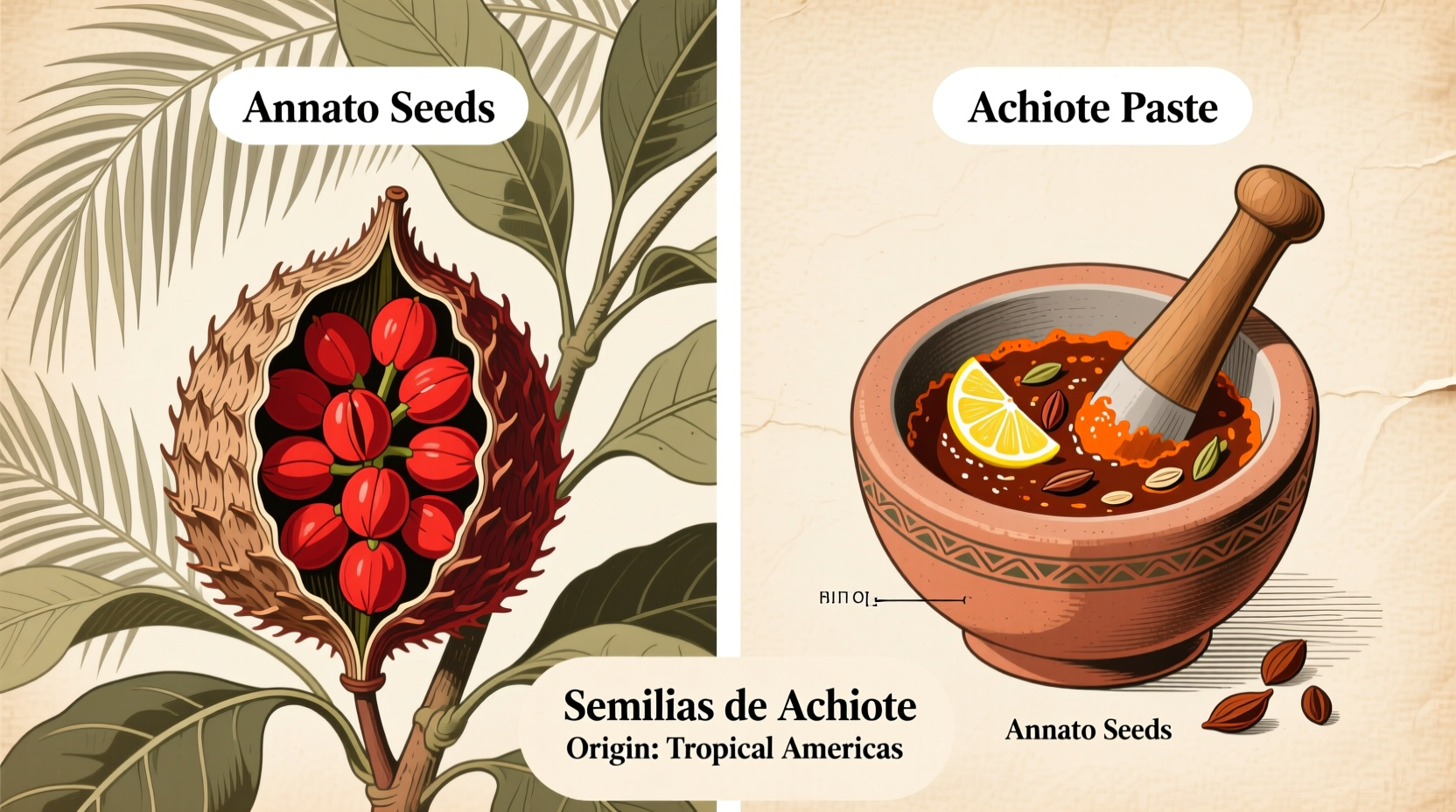
Both annatto and achiote derive from the seeds of the Bixa orellana plant, a tropical shrub native to the Amazon basin and widely cultivated across Latin America, the Caribbean, and parts of Africa and Asia. The plant produces spiky red pods filled with reddish-orange seeds that have been used for centuries—not only as a food coloring agent but also in body paint, textiles, and traditional medicine.
The term annatto typically refers to the raw or processed seed in its various commercial forms, especially in English-speaking and European contexts. It is most commonly found as a powder, paste, extract, or oil infusion and is prized primarily for its vibrant color rather than its flavor.
Achiote, by contrast, is the Spanish name for the same seed, but it carries broader cultural and culinary implications. In Latin American and Caribbean cuisines, “achiote” often denotes not just the seed itself but also seasoned blends, pastes, or marinades made from ground seeds combined with garlic, cumin, oregano, vinegar, and citrus. These preparations are integral to dishes like cochinita pibil, arroz con pollo, and recado rojo.
While botanically identical, the distinction arises in language, form, and culinary application. Annatto is the ingredient; achiote is often the tradition.
Key Characteristics
| Characteristic | Annatto (Seed/Extract) | Achiote (Culinary Preparation) |
|---|---|---|
| Origin | Bixa orellana seeds | Bixa orellana seeds + seasonings |
| Flavor Profile | Mildly peppery, earthy, slightly nutty; nearly neutral when used in small amounts | Robust, savory, aromatic—due to added spices and acids |
| Aroma | Faint, woody, slightly floral | Pronounced garlic, citrus, toasted spice notes |
| Color Contribution | Vibrant yellow-orange to deep red, depending on concentration | Rich terra-cotta red, consistent across uses |
| Heat Level | None | Low to none (unless chiles are added) |
| Culinary Function | Coloring agent, mild flavor enhancer | Marinade base, flavor builder, coloring agent |
| Shelf Life | 2–3 years (powder), 1 year (oil/paste) | 6 months refrigerated (paste), up to 1 year frozen |
Practical Usage: How to Use Annatto and Achiote
Despite their shared origin, annatto and achiote serve different roles in cooking. Knowing how and when to use each ensures both visual appeal and authentic flavor development.
Using Annatto in Cooking
Annatto is best employed when color is the primary goal. Its subtle flavor does not dominate, making it ideal for enhancing appearance without altering taste profiles significantly.
- Infused Oils: Heat 1 cup of neutral oil (such as sunflower or canola) with 1–2 tablespoons of whole annatto seeds over low heat for 5–7 minutes until the oil turns golden-red. Strain and store in a dark bottle. Use this oil to sauté rice, beans, or proteins for an instant color boost.
- Dairy Products: Annatto is legally permitted as a natural colorant in cheeses like cheddar, Mimolette, and Red Leicester. It contributes no flavor but gives these cheeses their signature orange hue.
- Commercial Applications: Food manufacturers use annatto extract (E160b) in snacks, margarine, soups, and ready meals to avoid synthetic dyes.
- In Beverages: Rarely, annatto is used in traditional drinks like atol de achiote in Nicaragua, where it adds both color and slight earthiness.
Pro Tip: Never toast annatto seeds dry—they burn easily and turn bitter. Always use them in liquid or fat-based infusions to extract color safely.
Using Achiote in Cooking
Achiote shines in complex, slow-cooked dishes where depth of flavor matters as much as appearance. It functions more like a spice rub or marinade base than a mere pigment.
- Achiote Paste (Recado Rojo): Blend ¼ cup ground achiote seeds, 4 cloves garlic, 1 tsp each cumin and oregano, ½ tsp clove, juice of 1 orange, 2 tbsp white vinegar, and 1 tsp salt. This paste is rubbed onto pork before wrapping in banana leaves for cochinita pibil, a Yucatecan specialty.
- Marinades: Combine achiote paste with lime juice, soy sauce, or beer to tenderize and flavor meats. Let chicken or fish marinate for at least 4 hours before grilling or roasting.
- Stews and Rice Dishes: Stir a spoonful into simmering black beans, yellow rice, or sancocho for rich color and layered flavor.
- Street Food Applications: In Venezuela, achiote-infused oil colors arepas and tequeños. In Puerto Rico, it’s used in sofrito as a foundational element.
Expert Insight: \"Achiote isn’t just about color—it’s about memory. When I smell that blend of toasted seeds, garlic, and sour orange, I’m back in my grandmother’s kitchen in Campeche.\" — Chef Luis Escalante, Oaxaca Culinary Institute.
Variants & Types
Both annatto and achiote come in multiple forms, each suited to specific cooking methods and storage needs.
Forms of Annatto
- Whole Seeds: Small, triangular, rust-colored seeds. Used primarily for oil infusion. Best stored in airtight containers away from light.
- Ground Powder: Finely milled seeds. Convenient for dry rubs or mixing into doughs. May be blended with fillers like cornstarch in lower-quality products.
- Liquid Extract: Concentrated solution in water or alcohol. Used in industrial food production for uniform coloring.
- Annatto Oil: Pre-made infused oil sold commercially or homemade. Ideal for stir-fries, rice, and frying tortillas.
- Microencapsulated Powder: Spray-dried annatto used in powdered drink mixes and dairy analogs for even dispersion.
Forms of Achiote
- Dry Achiote Mix: Pre-mixed seasoning blend containing ground seeds, garlic, cumin, salt, and sometimes dried herbs. Found in Latin markets. Dissolve in liquid before use.
- Wet Achiote Paste: Ready-to-use refrigerated or frozen paste. Brands like Goya offer convenient versions, though homemade is superior in flavor complexity.
- Tablets/Bricks: Compressed blocks of dried achiote mixture. Dissolve in warm broth or water to make marinades or sauces.
- Regional Variants: In the Philippines (where it was introduced via the Manila galleon trade), achiote is called atsuete and used in adobo and kinilaw. The preparation is simpler, focusing on color rather than spice blending.
Comparison with Similar Ingredients
Annatto and achiote are frequently mistaken for other red-hued spices. Clarifying these distinctions prevents recipe mishaps and improves culinary accuracy.
| Ingredient | Difference from Annatto/Achiote |
|---|---|
| Paprika | Made from ground peppers; delivers pronounced sweetness or heat depending on variety. Adds strong flavor and red color, unlike neutral annatto. |
| Saffron | Far more expensive, floral aroma, golden-yellow hue. Used similarly for coloring rice, but imparts unmistakable fragrance annatto lacks. |
| Turmeric | Earthier, more pungent flavor with bright yellow color. Can substitute visually for annatto but alters taste significantly. |
| Alkanet Root | Another natural red dye, used in oils and vinegars. Not edible in large quantities; annatto is safer and approved globally. |
| Beet Powder | Provides red color but with sweet, vegetal notes. Lacks the warmth and neutrality of annatto and doesn't withstand high heat well. |
\"I once saw a chef try to replace achiote paste with smoked paprika in a Yucatecan stew. The dish turned into something entirely different—smoky, spicy, overwhelming. Achiote’s role is subtlety and balance.\" — Maria Fernandez, Culinary Historian, University of Havana.
Practical Tips & FAQs
Q: Are annatto and achiote safe to consume?
A: Yes. Both are generally recognized as safe (GRAS) by the FDA. However, rare allergic reactions—particularly skin rashes or digestive discomfort—have been reported in sensitive individuals. Discontinue use if adverse effects occur.
Q: Can I make my own achiote paste at home?
A: Absolutely. Combine 3 tbsp ground annatto seeds, 5 minced garlic cloves, 1 tbsp white vinegar, 1 tbsp lemon or orange juice, 1 tsp each ground cumin and oregano, ½ tsp black pepper, and 1 tsp salt. Blend into a thick paste. Store in a jar, cover with a thin layer of oil, and refrigerate for up to 2 weeks or freeze in portions.
Q: Is there a vegan substitute for annatto?
A: Annatto itself is plant-based. For those avoiding it due to allergies, turmeric offers a similar yellow hue but changes flavor. For red-orange tones, consider beetroot powder mixed with paprika—but test in small batches.
Q: Why does my annatto oil taste bitter?
A: Bitterness results from overheating. Annatto seeds degrade above 175°C (350°F). Always heat gently and never let the oil smoke. If bitterness occurs, discard the batch—there’s no fixing it.
Q: Where can I buy authentic achiote paste?
A: Look in Latin American grocery stores, particularly Mexican, Puerto Rican, or Caribbean markets. Reputable brands include Goya, El Yucateco, and El Mexicano. Online retailers like Amazon or MercadoMagico also carry imported varieties.
Q: Does achiote add heat or spiciness?
A: No. Pure achiote has no capsaicin. Any heat in achiote-based dishes comes from added ingredients like chiles or black pepper. Always check the label if buying pre-made blends.
Q: How do I store annatto seeds long-term?
A: Keep whole seeds in an airtight container in a cool, dark cupboard. Avoid humidity and temperature fluctuations. Properly stored, they retain color potency for up to three years.
Storage Checklist:
- Keep annatto powder away from moisture to prevent clumping.
- Refrigerate wet achiote paste after opening.
- Label homemade infusions with dates—use within one year.
- Freeze achiote paste in ice cube trays for portion control.
Summary & Key Takeaways
The difference between annatto and achiote hinges on context: annatto is the botanical ingredient—the seed of Bixa orellana—used globally for its safe, natural red-orange pigment. Achiote is the cultural expression of that seed within Latin American and Caribbean kitchens, where it evolves into seasoned pastes, marinades, and spice blends that define regional cuisines.
Understanding this distinction empowers cooks to choose the right form for the right purpose. Use pure annatto when you need color without flavor interference—ideal for oils, cheeses, and neutral bases. Reach for achiote paste or mix when building depth in traditional dishes like cochinita pibil, arroz amarillo, or sofrito.
They are not substitutes in a strict sense—one is a component, the other a composite. Confusing them may result in dishes that look right but taste wrong, or vice versa.
To master their use:
- Learn to make your own annatto oil for consistent coloring.
- Experiment with homemade achiote paste to surpass store-bought versions.
- Respect regional authenticity—don’t assume all red seasonings are interchangeable.
- Store properly to preserve color integrity and prevent spoilage.
Final Thought: The next time you see “achiote” on a menu or “annatto” on a label, pause and consider not just the ingredient, but the journey it represents—from Amazonian forests to global kitchens, from pigment to palate. That awareness transforms cooking from replication to understanding.




 浙公网安备
33010002000092号
浙公网安备
33010002000092号 浙B2-20120091-4
Comments
No comments yet. Why don't you start the discussion?