
Garlic is one of the most beloved flavor enhancers in global cuisine, but when it comes to convenience forms like garlic salt and garlic powder, confusion abounds. Many home cooks use them interchangeably, not realizing that doing so can dramatically alter the taste, salt balance, and texture of a dish. Understanding the distinctions isn’t just about semantics—it’s about control over your cooking. Whether you're seasoning roasted vegetables, crafting a dry rub for grilled meats, or stirring up a quick sauce, choosing the right form of garlic matters. The difference often lies in sodium content, potency, and intended culinary function. This guide breaks down everything you need to know about garlic salt versus garlic powder: their composition, flavor profiles, best uses, substitutions, and how to avoid common mistakes in the kitchen.
Definition & Overview
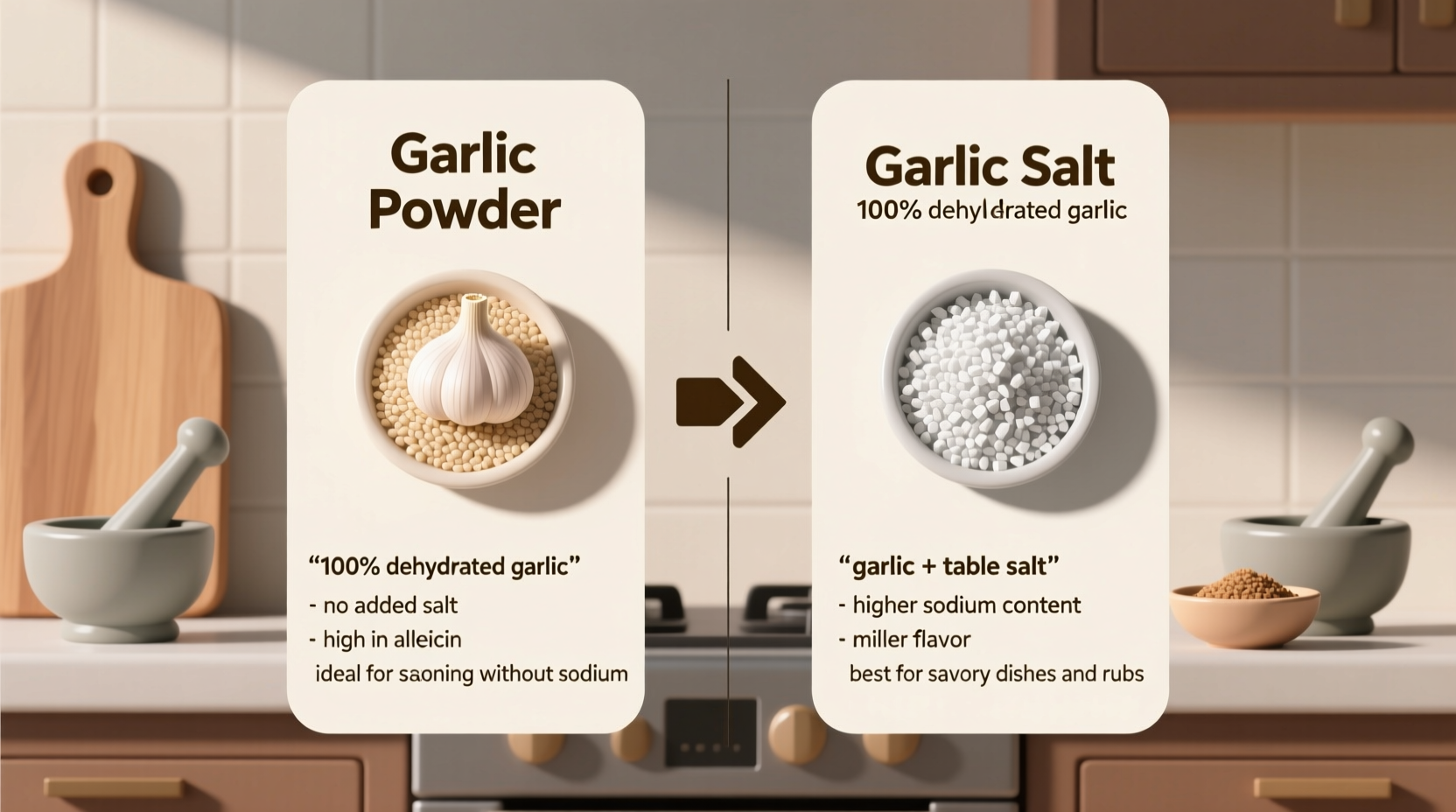
Garlic powder is made by dehydrating fresh garlic cloves and grinding them into a fine, light tan-to-beige powder. It captures the pungent, earthy essence of raw garlic but in a shelf-stable, concentrated form. Because it contains no added ingredients (in its pure form), it delivers garlic flavor without altering the salt content of a recipe.
Garlic salt, on the other hand, is a blended seasoning composed primarily of garlic powder and table salt, typically in a 3:1 or 6:1 ratio of salt to garlic powder. Some commercial versions also include anti-caking agents like calcium silicate or small amounts of sugar. Unlike garlic powder, garlic salt is a compound seasoning designed to add both flavor and salinity simultaneously.
Both are pantry staples, especially in American home cooking, but they serve different roles. Garlic powder functions as a flavoring agent akin to dried herbs, while garlic salt acts more like a seasoned salt—convenient but requiring careful measurement to avoid oversalting.
Key Characteristics
| Characteristic | Garlic Powder | Garlic Salt |
|---|---|---|
| Composition | 100% ground dehydrated garlic | Mixture of garlic powder + salt (typically 3 parts salt to 1 part garlic) |
| Sodium Content | Negligible (naturally occurring only) | High (approximately 900–1,200 mg sodium per teaspoon) |
| Flavor Profile | Pungent, earthy, slightly sweet with sharp garlic notes | Salty first, followed by garlic; less intense garlic flavor due to dilution |
| Color & Texture | Fine, soft powder; pale beige | Granular, slightly coarser; white with faint yellow tint |
| Shelf Life | 3–4 years if stored properly | 2–3 years; may clump over time |
| Culinary Role | Flavor enhancer (like onion powder or paprika) | Seasoned salt (like celery salt or lemon pepper) |
Practical Usage: How to Use Each in Cooking
Understanding how to apply garlic powder and garlic salt correctly begins with recognizing their distinct purposes in seasoning strategy.
When to Use Garlic Powder
Garlic powder excels in recipes where you want pronounced garlic flavor without increasing sodium. It integrates seamlessly into spice blends, rubs, marinades, and dry mixes because it doesn't dominate with saltiness. Its fine texture allows for even dispersion, making it ideal for:
- Homemade taco seasoning or chili powder blends
- Dry rubs for ribs, chicken, or pork where salt is added separately
- Breading for fried foods (e.g., garlic parmesan chicken cutlets)
- Blending into butter or oil for garlic-infused spreads
- Adding depth to soups, stews, and sauces during simmering
Because garlic powder lacks moisture, it benefits from rehydration. For maximum flavor impact, bloom it in hot oil or mix it with a liquid (like vinegar or broth) before adding to dishes. This technique unlocks volatile compounds that mimic fresh garlic’s complexity.
When to Use Garlic Salt
Garlic salt is best used as a finishing or all-in-one seasoning where simplicity is key. It's commonly found in:
- Popcorn seasoning
- Buttered vegetable tosses (e.g., green beans, corn)
- Simple meat or potato seasonings
- Store-bought snack coatings (e.g., flavored nuts, chips)
Due to its high salt content, garlic salt should be used sparingly—especially if other salty ingredients (soy sauce, cheese, canned tomatoes) are already in the recipe. It works well for quick fixes but offers less control in layered seasoning.
Pro Tip: Never substitute garlic salt for garlic powder (or vice versa) on a 1:1 basis. Replacing 1 teaspoon of garlic powder with 1 teaspoon of garlic salt adds roughly 1,000 mg of sodium—equivalent to nearly half the daily recommended limit. Always adjust for salt content when substituting.
Variants & Types
While standard garlic powder and garlic salt dominate supermarket shelves, several variations exist that cater to specific dietary needs or flavor preferences.
Types of Garlic Powder
- Standard Garlic Powder: Made from single-origin dehydrated garlic. Most common and versatile.
- Organic Garlic Powder: Sourced from organically grown garlic, free from synthetic pesticides.
- Granulated Garlic: A coarser version of garlic powder, sometimes labeled “minced.” Releases flavor more slowly, suitable for long-cooking dishes.
- Smoked Garlic Powder: Made from smoked then dehydrated garlic. Offers a deep, smoky aroma ideal for barbecue rubs and charcuterie-style applications.
Types of Garlic Salt
- Classic Garlic Salt: Table salt + garlic powder + anti-caking agent. Brands like Lawry’s and McCormick dominate this category.
- Low-Sodium Garlic Salt: Uses potassium chloride or reduced-salt blends. Flavor can be slightly metallic; best used in cooked dishes to mellow aftertaste.
- Sea Salt-Based Garlic Salt: Combines garlic powder with coarse sea salt. Offers mineral complexity and flakier texture, preferred in gourmet applications.
- Herb-Infused Garlic Salts: Blended with parsley, oregano, or onion. Often marketed as “Italian” or “steakhouse” blends.
Artisan and homemade versions allow full control over ratios. A chef might blend 4 parts kosher salt to 1 part garlic powder for a custom balance suited to their menu.
Comparison with Similar Ingredients
Garlic powder and garlic salt are often confused not only with each other but also with other garlic-based products. Clarifying these distinctions ensures better ingredient decisions.
| Ingredient | Difference from Garlic Powder | Difference from Garlic Salt |
|---|---|---|
| Garlic Salt | Contains added salt; higher sodium; less concentrated garlic flavor | Same product |
| Garlic Powder | Same product | No added salt; stronger garlic presence per volume |
| Fresh Garlic | More complex, brighter flavor; contains moisture and enzymes; shorter shelf life | Less salty; requires mincing/chopping; enzymatic heat when raw |
| Minced Garlic (jarred) | Liquid base; milder flavor; preservatives may affect taste | Not pre-salted; but still less potent than fresh |
| Garlic Flakes (dehydrated slices) | Whole pieces rehydrate slowly; better for long simmers | No salt; chunkier texture |
The key takeaway: garlic powder is a pure flavor agent, garlic salt is a seasoning shortcut. Neither replaces fresh garlic entirely, but both offer valuable utility in time-sensitive or consistency-driven cooking.
Practical Tips & FAQs
Can I substitute garlic powder for garlic salt?
Yes—but only if you compensate for the missing salt. As a rule of thumb: for every ½ teaspoon of garlic salt, use ¼ teaspoon garlic powder plus ¼ teaspoon table salt. Adjust to taste and consider overall sodium in the recipe.
Can I make my own garlic salt?
Absolutely. Combine 3 parts kosher salt (by volume) with 1 part garlic powder. Mix thoroughly and store in an airtight container. This method avoids anti-caking agents and allows customization—add a pinch of onion powder or dried parsley for complexity.
Does garlic powder lose potency over time?
Yes, though it doesn’t spoil. Garlic powder gradually loses volatile oils responsible for aroma and bite. After two years, it may taste flat. To test freshness, rub a pinch between your fingers and smell: strong garlicky aroma indicates viability; faint scent means it’s time to replace.
Is garlic salt unhealthy?
It depends on context. For individuals managing hypertension or sodium intake, commercial garlic salt can contribute excessively to daily salt consumption. One teaspoon delivers up to 25% of the recommended daily sodium limit. Opt for garlic powder and control salt separately for healthier cooking.
What dishes should never use garlic salt?
Dishes where salt levels must be tightly controlled, such as:
- Brined or cured meats (already high in salt)
- Casseroles with canned soups or broths
- Cheese-heavy dishes like gratins or mac and cheese
- Recipes using soy sauce, miso, or fish sauce
In these cases, garlic powder preserves flavor integrity without compounding sodium.
\"In professional kitchens, we keep garlic powder in the main spice lineup but treat garlic salt like a condiment—available at the pass for last-minute tweaks, not built into base seasoning.\" — Chef Elena Rodriguez, Executive Chef, Hearth & Vine
How should I store both?
Store in airtight containers away from heat, light, and moisture—ideally in a cool, dark cupboard. Avoid storing above the stove or near the dishwasher. Garlic salt is prone to clumping; include a rice packet or bay leaf in the jar to absorb humidity. Properly stored, garlic powder remains potent for up to four years; garlic salt for two to three.
Summary & Key Takeaways
Garlic powder and garlic salt are not interchangeable ingredients despite their similar names and overlapping uses. Recognizing their differences empowers better seasoning decisions and prevents over-salting disasters.
- Garlic powder is pure dehydrated garlic—ideal for adding robust garlic flavor without sodium.
- Garlic salt is a blend of salt and garlic powder, functioning as a convenient but sodium-heavy seasoning.
- Substituting one for the other requires recalculating salt levels to maintain balance.
- Homemade garlic salt offers superior control and avoids additives.
- For health-conscious or precision cooking, garlic powder paired with measured salt is the preferred approach.
- Both degrade over time; store properly and assess potency periodically.
Mastering the use of these pantry staples means understanding not just what they are, but how they behave in the broader context of flavor layering. The next time you reach for that shaker, pause and ask: do I need garlic, or do I need salted garlic? That simple question can elevate your cooking from good to expert-level.




 浙公网安备
33010002000092号
浙公网安备
33010002000092号 浙B2-20120091-4
Comments
No comments yet. Why don't you start the discussion?