
For gardeners and home cooks alike, selecting the right tomato variety can make the difference between a steady harvest and a single-season bounty. While both indeterminate and determinate tomatoes produce the familiar fruit prized in salads, sauces, and salsas, their growth patterns, yield timelines, and culinary applications vary significantly. Understanding these differences is essential not only for maximizing garden space and productivity but also for planning meals throughout the growing season. Confusing the two types can lead to overcrowded plants, unmet expectations for yield, or mismatched uses in the kitchen. This guide breaks down the structural, horticultural, and practical distinctions between indeterminate and determinate tomatoes, empowering growers and cooks to make informed choices.
Definition & Overview
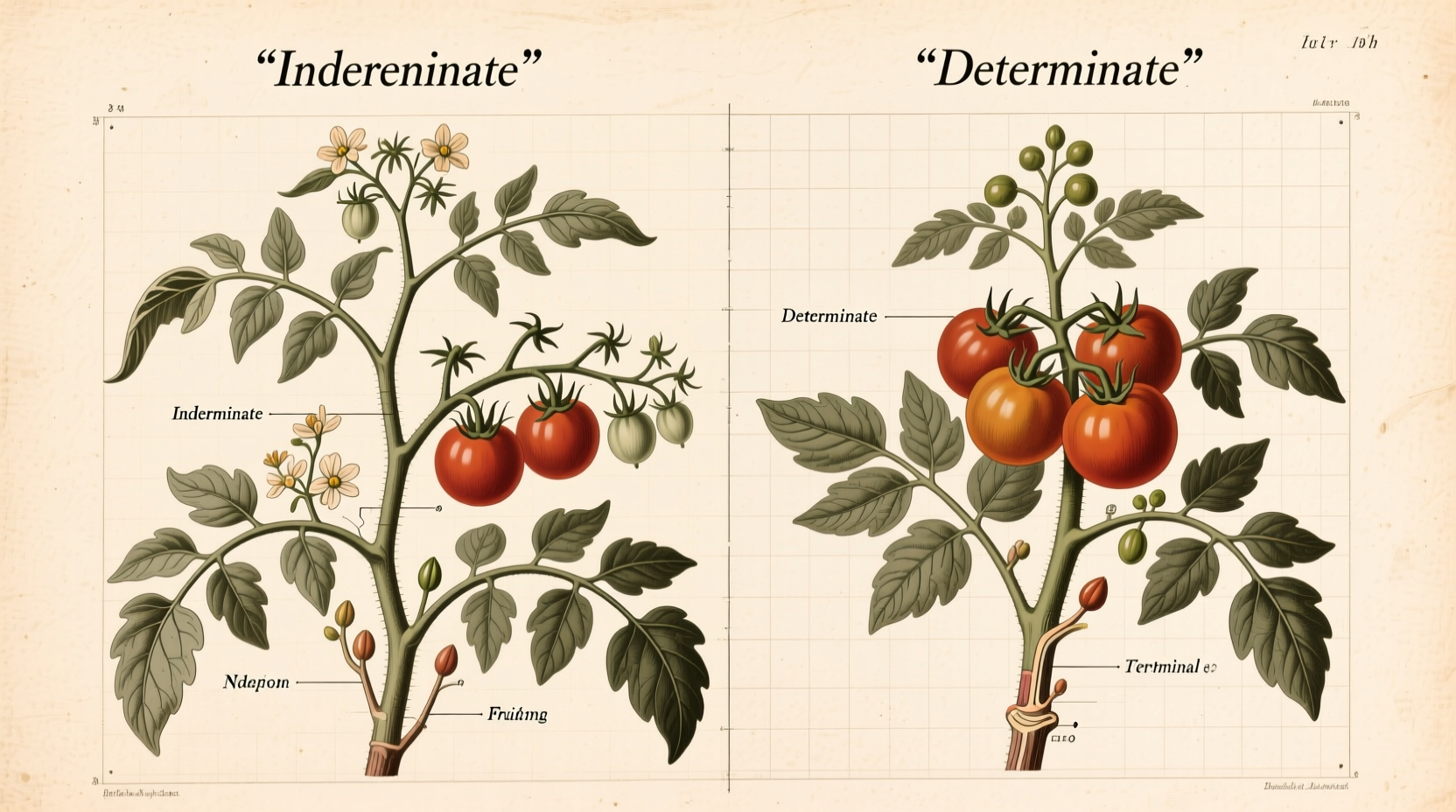
Tomatoes (Solanum lycopersicum) are classified into two primary growth types: indeterminate and determinate. These classifications refer to the plant’s natural growth habit, flowering pattern, and fruiting cycle—factors that influence everything from staking needs to harvest scheduling.
Indeterminate tomatoes grow continuously throughout the growing season, producing new leaves, flowers, and fruit until killed by frost. They behave like vines, extending indefinitely with proper support, and typically require pruning and trellising. These varieties are often favored by serious gardeners and farmers’ market growers for their extended harvest window.
Determinate tomatoes, in contrast, have a genetically programmed stop point. They grow to a certain height—usually 3 to 4 feet—set fruit in concentrated waves, and then cease production. Often called “bush” tomatoes, they are ideal for container gardening, small spaces, and situations where a large volume of fruit is needed all at once, such as for canning.
The distinction originates from selective breeding. Determinate varieties were developed from a mutation in the sp (self-pruning) gene, which limits apical dominance and causes the plant to flower at the terminal bud, halting vertical growth. Indeterminate types retain continuous apical growth, allowing them to climb and produce over many months.
Key Characteristics
| Feature | Indeterminate Tomatoes | Determinate Tomatoes |
|---|---|---|
| Growth Habit | Vining, continuous upward growth | Bushy, compact, stops at fixed height |
| Height | 6–12 feet (requires staking) | 3–4 feet (minimal support) |
| Fruiting Period | Extended; produces fruit over 2–4 months | Concentrated; one or two main harvests |
| Yield per Plant | Higher total yield over season | Lower total yield, but high per flush |
| Pruning Needs | Regular pruning (suckering) recommended | Minimal pruning; avoid excessive cutting |
| Support Required | Trellises, stakes, or cages essential | Cages helpful, but not always required |
| Lifespan in Season | Until first frost | Ends after fruit set and ripening |
| Common Uses | Fresh eating, slicing, gourmet markets | Canning, sauces, processing, containers |
Practical Usage in Gardening and Cooking
The choice between indeterminate and determinate tomatoes isn’t just botanical—it directly affects how you plan your garden, manage labor, and use the harvest in the kitchen.
Gardening Applications
Indeterminate varieties are best suited for long growing seasons and gardeners who want a steady supply of fresh tomatoes. Because they produce fruit gradually, they’re ideal for households that consume tomatoes regularly in salads, sandwiches, and garnishes. However, their vining nature demands more infrastructure. Growers should install tall stakes (5–7 feet), string trellises, or robust tomato cages at planting time. Regular pruning—removing suckers between the main stem and branches—improves air circulation, reduces disease risk, and directs energy toward fruit development.
Due to their extended productivity, indeterminate tomatoes benefit from consistent fertilization and deep watering. Side-dress with compost or balanced organic fertilizer every 4–6 weeks to sustain growth. In cooler climates, using black plastic mulch or cloches can help warm the soil and extend the season.
Determinate tomatoes excel in short-season gardens, urban balconies, and raised beds with limited space. Their predictable size and synchronized ripening make them perfect for gardeners focused on preservation. A single flush of ripe fruit allows efficient harvesting for canning salsa, marinara, or tomato paste. Because they stop growing early, they don’t respond well to heavy pruning—removing too many shoots can reduce yields dramatically.
These bush types are also excellent for container gardening. Use pots at least 18 inches wide and fill with high-quality potting mix. Water daily during hot weather, as containers dry out quickly. Avoid nitrogen-heavy fertilizers, which promote leafy growth at the expense of fruit.
Tip: For a continuous harvest while still benefiting from determinate efficiency, plant both types. Start with early-maturing determinates (like 'Roma' or 'Celebrity') for midsummer sauce-making, then follow with indeterminate slicers ('Brandywine', 'Sungold') for fall freshness.
Culinary Applications
In the kitchen, the growth type indirectly influences flavor, texture, and availability.
- Indeterminate tomatoes include most heirloom and gourmet varieties known for exceptional flavor, juiciness, and aroma. Their prolonged vine-ripening enhances sugar development and acidity balance. Use them raw: sliced on burgers, in caprese salad, or chopped for pico de gallo. Varieties like 'Cherokee Purple', 'Green Zebra', and 'Sun Sugar' shine here.
- Determinate tomatoes are often bred for uniformity and disease resistance, making them reliable for processing. Many paste and plum tomatoes (e.g., 'San Marzano', 'Amish Paste') are determinate or semi-determinate. Their lower moisture content and dense flesh make them ideal for reducing into sauces without lengthy simmering.
When planning preserves, knowing your tomato’s type helps schedule labor. A backyard gardener with five determinate plants might process 20 pounds of tomatoes in one weekend. With indeterminates, the same volume could be spread over six weeks—more manageable but requiring ongoing attention.
Variants & Types
While the binary classification holds true for most garden tomatoes, several subtypes and hybrids blur the lines.
True Indeterminate Varieties
- 'Beefsteak' – Large, juicy fruits; excellent for slicing.
- 'Sweet Million' – Prolific cherry tomato with sweet flavor.
- 'Yellow Pear' – Ornamental and edible; pale yellow teardrop-shaped fruit.
- 'Black Krim' – Smoky, salty heirloom with dark shoulders.
True Determinate Varieties
- 'Roma VF' – Classic paste tomato; meaty with few seeds.
- 'Bush Early Girl' – Compact version of the popular early hybrid.
- 'Patio Princess' – Bred specifically for containers.
- 'Marglobe' – Disease-resistant, round slicer with firm flesh.
Semi-Determinate Tomatoes
A third category exists: semi-determinate. These plants grow larger than typical determinates but eventually stop. They offer a compromise—moderate height (4–5 feet), longer production than determinates, yet more compact than full indeterminates. Examples include 'Mountain Merit' and some modern 'Chef’s Choice' hybrids. They’re useful in medium-sized gardens where full vines would overwhelm space.
Hybrid vs. Heirloom Considerations
Most heirloom tomatoes are indeterminate, preserving the traditional vining habit. Hybrid breeding has produced many determinate cultivars optimized for commercial farming and home gardens seeking predictability. However, newer breeder efforts (e.g., Dwarf Tomato Project) have introduced compact indeterminate types with unique flavors, expanding options for space-limited growers.
Comparison with Similar Concepts
Confusion sometimes arises between tomato growth types and other plant categories. Clarifying these distinctions prevents misapplication of care techniques.
| Concept | Difference from Tomato Growth Types |
|---|---|
| Perennial vs. Annual | Tomatoes are annuals in temperate zones regardless of type. Neither survives winter outdoors, though indeterminates may live longer in greenhouses. |
| Indoor vs. Outdoor Varieties | Dwarf and determinate types are better suited to indoor growing due to size, but growth habit remains the defining trait. |
| Cherry vs. Beefsteak | Fruit size doesn't determine growth type. Cherry tomatoes can be indeterminate ('Sun Gold') or determinate ('Tiny Tim'). |
| Pruning Needs in Other Crops | Unlike herbs or fruit trees, tomato pruning is tied directly to growth type. Indeterminates need it; determinates do not. |
\"Choosing the wrong tomato type is the most common mistake I see in beginner gardens. People plant indeterminates in small pots without support and wonder why they collapse. Or they expect a 'Roma' to keep producing into October—it simply won’t.\" — Master Gardener Elena Rodriguez, Pacific Northwest Extension
Practical Tips & FAQs
How do I tell if my tomato plant is indeterminate or determinate?
Check the seed packet or plant tag—reputable sources list growth habit. If unknown, observe early growth: determinates form flower clusters at the end of stems when the plant is still small (12–18 inches). Indeterminates continue branching and flowering along side stems without a clear terminal bud.
Can I prune determinate tomatoes?
Minimally. Remove diseased or ground-touching foliage, but avoid removing suckers—the plant has a limited number of fruiting sites. Over-pruning can drastically reduce yield.
Do indeterminate tomatoes taste better?
Not inherently, but many top-flavor varieties happen to be indeterminate. Flavor depends more on genetics, soil health, sunlight, and ripeness at harvest than growth type. That said, longer vine time can enhance sugar accumulation.
Which type is better for containers?
Determinate and dwarf varieties are best. Look for \"patio,\" \"container,\" or \"bush\" in the name. Some indeterminates (like 'Tumbling Tom') work in hanging baskets but require frequent watering and feeding.
How much space do each type need?
- Indeterminate: 18–24 inches between plants, 4–5 feet between rows. Use vertical space efficiently with trellises.
- Determinate: 12–18 inches apart. Can be planted slightly closer due to predictable size.
What about diseases and pests?
Indeterminates are more prone to fungal issues (early blight, septoria) due to dense foliage and longer field life. Practice crop rotation, mulch heavily, and water at the base. Determinates, with shorter exposure, often escape late-season diseases. Both benefit from resistant cultivars (look for VFN tolerance codes).
Can I grow both types together?
Yes—and it's recommended. Stagger planting times: start determinates earlier for early sauce-making, add indeterminates later for sustained fresh harvest. Just ensure indeterminates don’t shade smaller types.
Storage Tip: Never refrigerate ripe tomatoes. Cold temperatures destroy volatile flavor compounds. Store at room temperature, stem-side down, and use within 3–5 days for peak quality.
Summary & Key Takeaways
Understanding the differences between indeterminate and determinate tomatoes is fundamental to successful growing and cooking. The core distinction lies in growth pattern: indeterminate varieties grow like vines, producing fruit continuously until frost, while determinate types mature compactly and deliver a concentrated harvest before declining.
Indeterminate tomatoes require more space, support, and maintenance but reward gardeners with superior flavor and an extended supply of fresh fruit. They dominate the heirloom and gourmet categories, making them favorites for fresh eating and farmers’ markets.
Determinate tomatoes are efficient, predictable, and space-saving. Ideal for canning, containers, and short growing seasons, they deliver high volumes of uniform fruit in a short window—perfect for batch cooking and preservation.
Smart garden planning includes both types: use determinates for early processing and space-limited areas, and rely on indeterminates for long-term fresh harvests. Label plants clearly, provide appropriate support, and tailor care to each type’s needs.
Ultimately, the choice isn’t about which is better—but which is better suited to your goals. Whether you're stocking the pantry or serving summer salads, matching tomato type to purpose ensures garden success and culinary satisfaction.
Call to Action: Next growing season, try a side-by-side comparison: plant 'Roma' (determinate) and 'Sungold' (indeterminate) in similar conditions. Track harvest dates, yields, and kitchen uses. You’ll gain firsthand insight that no guide can replicate.




 浙公网安备
33010002000092号
浙公网安备
33010002000092号 浙B2-20120091-4
Comments
No comments yet. Why don't you start the discussion?