
In an age where screens dominate our work, communication, and entertainment, stepping away can feel like losing a limb. Many people who try to cut back on digital use report rising anxiety, restlessness, or a sense of emptiness. The fear isn't just about missing out—it's about what replaces the screen. Reducing screen time shouldn't mean trading one discomfort for another. Done right, it can open space for deeper focus, richer relationships, and renewed energy.
The goal isn’t punishment or deprivation. It’s realignment. With thoughtful habits and self-awareness, you can reclaim your attention without triggering stress or boredom. This guide offers practical, sustainable methods grounded in behavioral psychology and lifestyle design.
Why Reducing Screen Time Triggers Anxiety
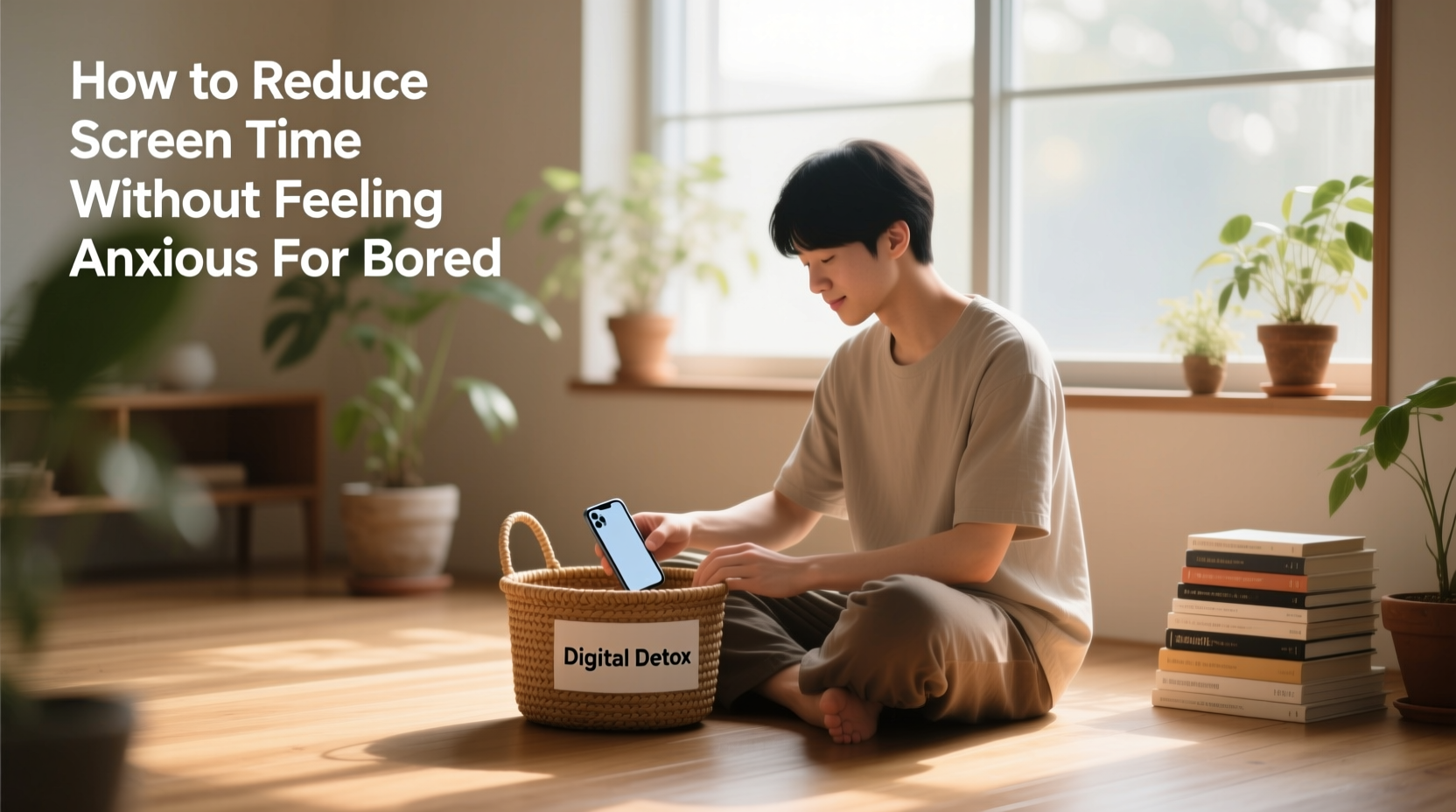
Screens aren’t just tools—they’re emotional regulators. We scroll when we're stressed, check notifications when we're uncertain, and binge content when we're lonely. When you remove that outlet abruptly, the underlying emotions surface. That’s not weakness; it’s human nature.
Neurologically, frequent screen use activates dopamine pathways similar to other reward-based behaviors. Over time, the brain begins to rely on these quick hits of stimulation. Remove them too fast, and withdrawal-like symptoms—fidgeting, irritability, mental fog—can appear.
“Digital detoxes fail not because people lack willpower, but because they don’t replace the function the device was serving.” — Dr. Lena Patel, Cognitive Behavioral Therapist
The key is substitution, not elimination. Replace passive scrolling with activities that fulfill the same psychological needs: connection, novelty, comfort, or distraction—but in healthier forms.
Create a Replacement Routine (Not Just a Removal Plan)
Attempting to quit screens cold turkey is rarely effective. Instead, design a parallel routine that satisfies the same cravings in offline ways.
For example:
- If you reach for your phone during transitions (e.g., after waking up), replace it with making tea, journaling, or stretching.
- If you scroll at night to wind down, swap it for reading fiction or listening to ambient music.
- If you check social media when feeling isolated, schedule a weekly call with a friend instead.
A Step-by-Step Transition Timeline
Follow this four-week plan to reduce screen time gradually while building new anchors:
- Week 1: Identify three high-frequency screen moments (e.g., morning in bed, during lunch, before sleep). Write down what you feel in those moments—bored? overwhelmed? tired?
- Week 2: For each moment, choose one low-effort offline alternative. Keep it visible (e.g., place a book on your pillow).
- Week 3: Begin tracking your attempts. Use a notebook or habit app to mark successes without judgment.
- Week 4: Reflect. Which replacements felt natural? Which still caused anxiety? Adjust based on insight, not guilt.
This phased approach respects your brain’s need for consistency while gently reshaping behavior.
Design Your Environment for Success
Willpower is overrated. Lasting change comes from environment design. If your phone is within arm’s reach, you’ll pick it up—especially under stress.
Make offline choices easier and digital access slightly harder:
- Charge your phone outside the bedroom.
- Turn off non-essential notifications (especially social media and email).
- Use grayscale mode to make the screen less visually stimulating.
- Keep a “distraction list” notebook: when you feel the urge to check your phone, jot down what you wanted to do (e.g., “check weather,” “look up recipe”) and do it later in batches.
“Behavior change isn’t about motivation. It’s about removing friction from good habits and adding friction to bad ones.” — James Clear, author of *Atomic Habits*
Do’s and Don’ts of Digital Environment Design
| Do | Don’t |
|---|---|
| Place books, puzzles, or sketchpads in high-traffic areas like the living room or bedside table. | Leave your phone face-up on the coffee table. |
| Use a physical alarm clock instead of your phone. | Rely on your phone for wake-up calls. |
| Install website blockers during focus hours. | Keep distracting apps on your home screen. |
| Create a “wind-down basket” with tea, a journal, and a candle. | Scroll until you fall asleep. |
These subtle shifts reduce decision fatigue and make unplugging feel automatic rather than forced.
Replace Boredom with Curiosity
Boredom is often mislabeled. What feels like “nothing to do” is frequently a lack of engagement, not a lack of options. But modern boredom is different: it’s impatience for stimulation, not genuine stillness.
When you resist the urge to pick up your phone, sit with the discomfort for 60 seconds. Ask: What am I avoiding feeling? Is it loneliness? Uncertainty? Fatigue? Naming the emotion reduces its power.
Then, shift from avoidance to exploration:
- Walk without headphones and notice sounds around you.
- Doodle abstract shapes while on a call.
- Reorganize a drawer by color or size.
- Stand barefoot on grass or tile and describe the sensation.
These micro-activities ground you in the present and train your brain to tolerate—and even enjoy—slower rhythms.
Mini Case Study: From Scroll Zombie to Present Parent
Maya, a 34-year-old graphic designer and mother of two, used to spend evenings on her phone while her kids played nearby. She didn’t feel addicted—just “too drained” to engage. After reading about “attention residue” (the lag between switching tasks), she realized her scrolling wasn’t relaxation; it was escape.
She started small: no screens during dinner. At first, she felt tense, unsure what to say. Her kids were suspicious. But within a week, they began asking her questions. One evening, her son taught her a card game. Another, they shared embarrassing childhood stories.
Instead of replacing her phone with a strict hobby, she focused on presence. She kept a notebook to jot down thoughts instead of checking messages. On tough days, she allowed 15 minutes of screen time post-dinner—but only after connecting.
Three months in, Maya reported lower anxiety, better sleep, and stronger family bonds. “I thought I needed the phone to recharge,” she said. “But I actually needed to be seen.”
Build Real-World Anchors That Satisfy Emotional Needs
Most screen use serves one of four needs:
- Connection: Messaging, social media, video calls.
- Stimulation: News, videos, games.
- Comfort: Re-runs, familiar content, mindless scrolling.
- Productivity: Email, task apps, research.
Map your screen habits to these categories. Then, brainstorm offline equivalents:
| Screen Habit | Emotional Need | Offline Alternative |
|---|---|---|
| Scrolling Instagram | Connection + Stimulation | Send a handwritten postcard to a friend |
| Binge-watching shows | Comfort | Listen to an audiobook with a blanket and tea |
| Checking news every hour | Control/Stimulation | Read a print newspaper once daily |
| Playing mobile games | Distraction/Stimulation | Solve a crossword or Sudoku puzzle |
The goal isn’t perfection. It’s awareness. When you understand why you reach for your phone, you can respond with intention—not autopilot.
Digital Minimalism Checklist
Use this checklist weekly to stay aligned:
- ✅ Reviewed screen time reports (iOS/Android) without shame
- ✅ Turned off at least two non-essential notifications
- ✅ Spent 15+ minutes screen-free during a transition (morning/evening)
- ✅ Engaged in one offline activity that sparked curiosity
- ✅ Had one uninterrupted conversation (no glancing at phone)
- ✅ Identified one emotional trigger behind a screen habit
- ✅ Practiced sitting with boredom for 60 seconds
FAQ: Common Concerns About Reducing Screen Time
Isn’t some screen time necessary for work and staying informed?
Absolutely. The aim isn’t elimination but intentionality. Most people benefit from reducing recreational screen use (social media, streaming, endless browsing), not essential functions. Set boundaries: designate times for checking emails or news, and avoid blending work and leisure screens in the same space.
I feel guilty when I’m not productive during screen-free time. How do I handle that?
Guilt often stems from cultural myths about constant productivity. Rest is not laziness. Letting your mind wander fosters creativity and emotional regulation. Try reframing downtime as cognitive maintenance—like charging a battery. If guilt persists, schedule “permission windows” for doing nothing.
What if I relapse and spend hours on my phone again?
Relapses are part of the process. Instead of self-criticism, practice curiosity: What triggered it? Was I tired? Avoiding a task? Feeling lonely? Gather data, not blame. Each slip reveals insight into your triggers and needs.
Conclusion: Reclaim Your Attention, Not Just Your Time
Reducing screen time isn’t about counting minutes—it’s about reclaiming your attention. When you stop treating boredom as an emergency and anxiety as a signal to distract yourself, you begin to live more fully. The silence between notifications becomes space for reflection, creativity, and connection.
You don’t need to go completely analog. You need to become intentional. Start with one replacement habit. Notice how it feels. Adjust. Repeat. Progress isn’t linear, but every conscious choice strengthens your autonomy.




 浙公网安备
33010002000092号
浙公网安备
33010002000092号 浙B2-20120091-4
Comments
No comments yet. Why don't you start the discussion?