
Gifted learners possess advanced cognitive abilities, intense curiosity, and a capacity for deep understanding that often sets them apart from their peers. However, traditional classroom structures can leave these students under-challenged, leading to disengagement or even behavioral issues. Differentiated instruction offers a powerful framework to meet the unique needs of gifted students by tailoring content, process, product, and learning environment to their readiness, interests, and learning profiles. When implemented with intention, differentiation not only prevents boredom but fosters intellectual risk-taking, creativity, and sustained motivation.
Understanding the Needs of Gifted Learners
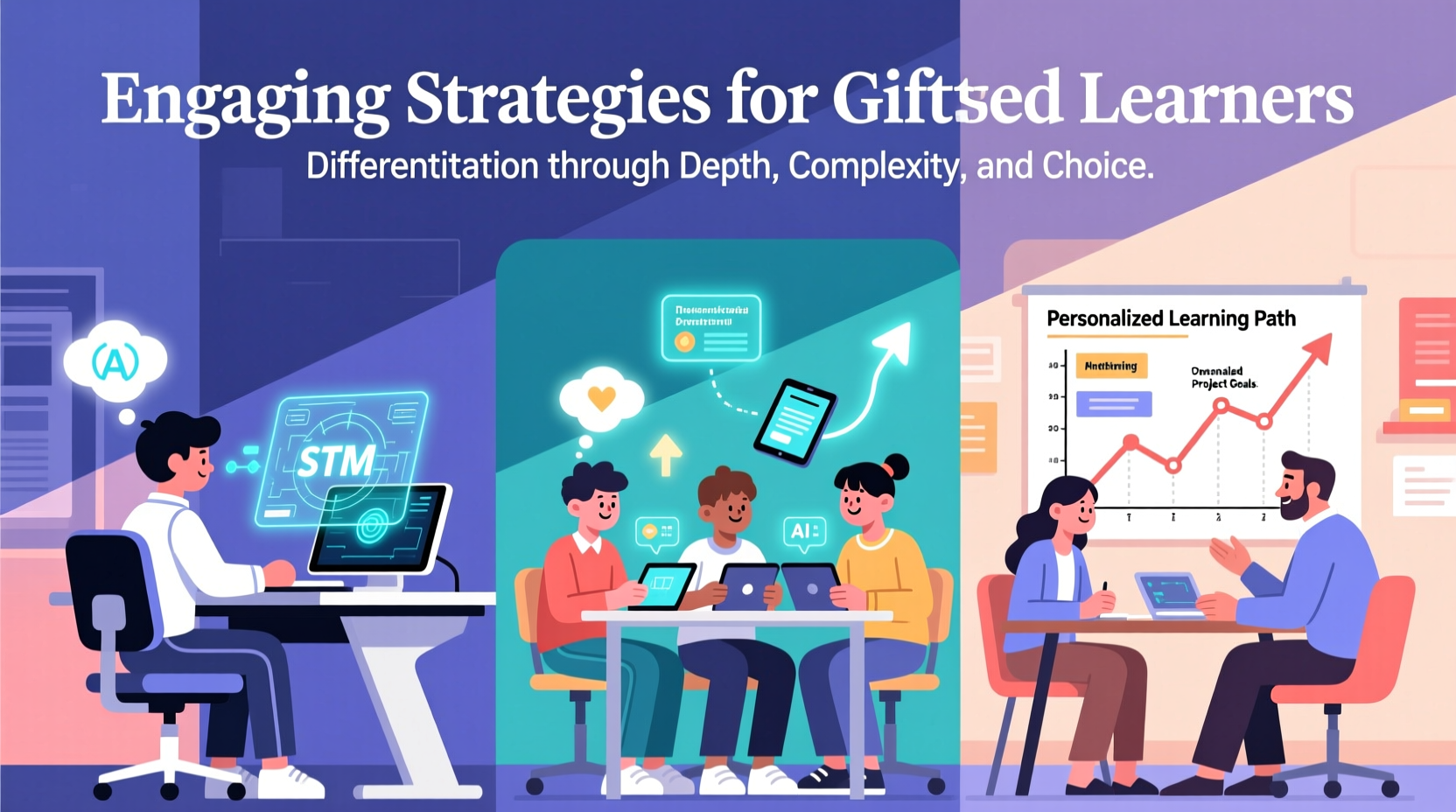
Giftedness is not simply about high test scores or quick recall. It often manifests as asynchronous development—advanced reasoning paired with emotional intensity—or a passion for complex topics beyond grade-level expectations. These students thrive on depth, abstraction, and open-ended inquiry. Without appropriate challenge, they may become passive learners or mask their abilities to fit in socially.
Differentiated instruction acknowledges that one-size-fits-all teaching fails gifted students. Instead, it emphasizes flexible grouping, tiered assignments, and enriched curricula that allow learners to explore concepts at greater complexity and pace. The goal isn’t to give more work, but better work—tasks that demand higher-order thinking, independent research, and authentic problem-solving.
“Differentiation for gifted learners isn’t about doing more worksheets. It’s about offering deeper questions, fewer boundaries, and opportunities to think like experts in real-world contexts.” — Dr. Susan Johnsen, Professor of Educational Leadership and Gifted Education
Five Engaging Strategies for Differentiating Instruction
1. Tiered Assignments Based on Readiness
Tiering allows all students to engage with the same core concept but at varying levels of complexity, abstraction, and independence. For gifted learners, this means designing tasks that require synthesis, evaluation, and creation rather than simple recall.
| Concept: Ecosystems | Grade-Level Task | Gifted Tier Task |
|---|---|---|
| Objective | Identify components of an ecosystem (producers, consumers, decomposers) | Analyze how human intervention disrupts energy flow and propose sustainable solutions |
| Process | Complete a worksheet labeling parts of a food web | Conduct a case study on a real-world environmental crisis using scientific data |
| Product | Create a poster of a local ecosystem | Design a policy brief for local lawmakers with evidence-based recommendations |
2. Curriculum Compacting and Acceleration
Many gifted students already know a significant portion of the standard curriculum. Curriculum compacting identifies mastered content through pre-assessment and replaces redundant instruction with enrichment or acceleration.
For example, if a fifth-grade student demonstrates mastery of multiplication and division concepts, they might skip repetitive drills and instead explore algebraic thinking, financial literacy projects, or coding applications that use mathematical logic. This strategy respects their time and maintains momentum in learning.
3. Independent Study and Passion Projects
Allowing gifted students to pursue self-directed investigations taps into intrinsic motivation. Teachers can guide students through developing research questions, locating credible sources, and presenting findings in creative formats such as documentaries, podcasts, or prototypes.
A middle school student fascinated by space exploration might spend six weeks researching Mars colonization efforts, interviewing scientists via email, and building a scale model of a sustainable habitat. The teacher acts as a facilitator, providing checkpoints and feedback while encouraging autonomy.
4. Flexible Grouping and Cluster Grouping
Rigid ability grouping can be problematic, but flexible grouping allows students to work with intellectual peers when appropriate. Cluster grouping places 3–5 gifted students in the same classroom with a trained teacher who can differentiate effectively. This provides social-emotional benefits and enables targeted instruction without full-time segregation.
During literature circles, for instance, a cluster group might analyze themes in dystopian fiction through a philosophical lens, debating ethics in surveillance states, while other groups focus on plot comprehension and character traits.
5. Problem-Based and Socratic Learning
Gifted learners excel when presented with ambiguous, real-world problems. Problem-based learning (PBL) challenges them to investigate complex issues like climate change policy, urban planning, or ethical dilemmas in artificial intelligence.
Socratic seminars further deepen understanding by promoting dialogue over lecture. Students prepare text-based questions, cite evidence, and build on each other’s ideas. A seminar on *To Kill a Mockingbird* might evolve into a discussion on systemic injustice, drawing parallels to contemporary events.
Step-by-Step Guide to Implementing Differentiation
- Assess student readiness: Use pre-tests, portfolios, or interest surveys to gather data.
- Set clear learning goals: Ensure all activities align with essential standards, even when paths differ.
- Design multiple pathways: Create tiered tasks, choice boards, or learning stations.
- Facilitate, don’t direct: Shift from lecturer to coach—ask probing questions and encourage metacognition.
- Monitor progress and adjust: Regular check-ins help ensure challenge remains appropriate and engagement stays high.
Mini Case Study: Transforming Engagement in a 4th Grade Classroom
In Ms. Rivera’s diverse 4th grade class, two students consistently finished math assignments in half the time and then distracted others. After administering a pre-assessment on fractions, she discovered both had already mastered equivalent fractions and basic operations.
She compacted the unit for them and introduced a project: design a “Fraction Café” menu where recipes had to be scaled up or down based on customer orders. They calculated ingredient costs, created visual fraction models for display, and presented their café to younger students. Their engagement soared, and peer interactions improved as they took on mentoring roles.
The rest of the class followed structured lessons, while Ms. Rivera rotated through small groups. By differentiating thoughtfully, she challenged the gifted learners without isolating them.
Checklist: Key Actions for Teachers
- Administer pre-assessments before new units
- Offer at least three levels of task complexity for major assignments
- Incorporate student choice in topics, processes, or products
- Provide access to advanced resources (e.g., scholarly articles, simulations)
- Encourage metacognitive reflection: “What did you learn about your thinking?”
- Use formative assessments to adjust instruction weekly
- Foster a classroom culture that values effort, curiosity, and revision over speed or perfection
FAQ
Isn’t differentiation just giving gifted students more homework?
No. Effective differentiation focuses on qualitative differences—greater depth, complexity, and autonomy—not quantity. Adding extra worksheets defeats the purpose. The aim is meaningful challenge, not busywork.
How can I differentiate in a mixed-ability classroom without overwhelming myself?
Start small: differentiate one subject or one unit. Use templates like choice boards or tiered rubrics. Leverage peer collaboration and student-led conferences to distribute responsibility. Planning time invested upfront reduces reteaching later.
Can differentiation benefit non-gifted students too?
Absolutely. While this article focuses on gifted learners, differentiation supports all students by addressing varied readiness levels and learning preferences. A well-differentiated classroom benefits everyone—from struggling learners to those who need extension.
Conclusion: Empower Potential Through Purposeful Teaching
Gifted learners deserve instruction that matches their intellectual appetite and emotional needs. Differentiated instruction isn’t a luxury—it’s an equity imperative. When teachers apply engaging strategies like tiering, compacting, and problem-based learning, they transform classrooms into dynamic spaces where curiosity is nurtured and potential is realized.




 浙公网安备
33010002000092号
浙公网安备
33010002000092号 浙B2-20120091-4
Comments
No comments yet. Why don't you start the discussion?