
In an era where digital downloads dominate entertainment—from music to movies to software—the gaming industry has followed suit. Major platforms like PlayStation, Xbox, and Steam now prioritize digital storefronts, pushing consumers toward instant access and cloud-based libraries. Yet, a growing number of gamers, particularly collectors, remain steadfast in their preference for physical copies. Despite the convenience of digital ownership, many refuse to let go of discs, cartridges, and boxed editions. The reasons run deeper than nostalgia—they touch on identity, value, autonomy, and the very nature of ownership in the digital age.
The Emotional Weight of Physical Ownership
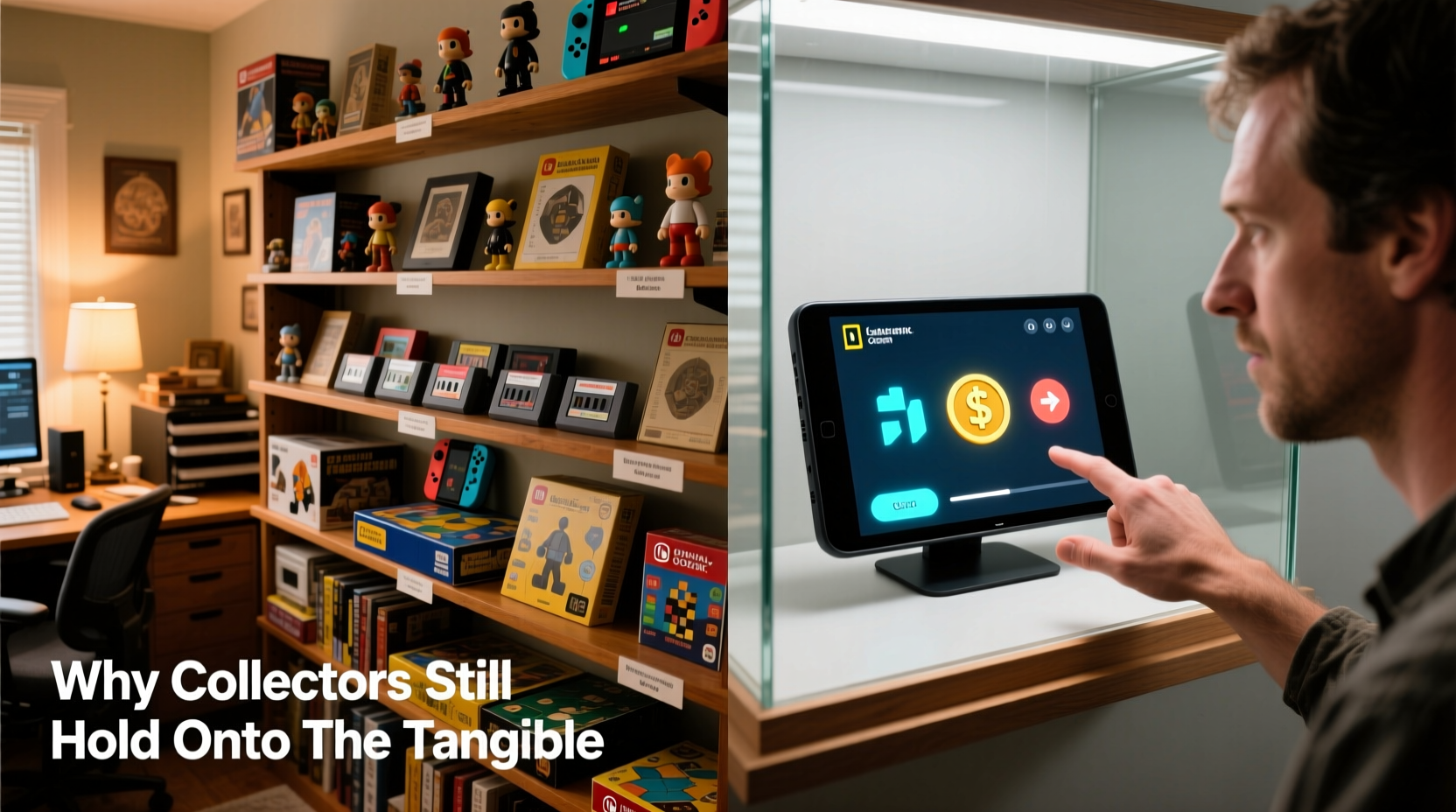
For many collectors, a game is more than just code on a server—it’s a tangible piece of personal history. Holding a game box, flipping through the manual, or admiring the artwork on the spine of a shelf brings a sense of connection that digital icons simply can’t replicate. This emotional resonance is rooted in how humans form attachments to objects. A physical game becomes a time capsule: perhaps it was bought with birthday money, shared with a sibling, or played during a pivotal life moment.
Unlike digital files, which exist as invisible data, physical games occupy space and demand attention. Their presence on a shelf acts as a visual autobiography of one’s gaming journey. As video game historian Carly Smith notes:
“Physical media creates a narrative arc. You don’t just play the game—you acquire it, preserve it, revisit it. That ritual builds meaning.” — Carly Smith, Digital Culture Researcher
This tactile experience fosters a deeper relationship between player and product. Unboxing a new release, organizing a collection alphabetically, or loaning a copy to a friend are all rituals lost in the shift to digital.
Ownership vs. Licensing: A Fundamental Divide
One of the most critical distinctions between physical and digital games lies in what consumers actually own. When you buy a physical disc or cartridge, you own a copy of the software. While copyright restrictions apply, the medium itself is yours to keep, sell, trade, or lend. In contrast, digital purchases are typically governed by End User License Agreements (EULAs) that grant only a revocable license to use the software—not ownership.
This legal nuance has real-world consequences. Digital games can be removed from storefronts, delisted due to licensing expirations, or rendered unplayable if a publisher shuts down servers. For example, when EA discontinued support for *Dante’s Inferno* and other older titles, players who had purchased them digitally found their access revoked. Meanwhile, those with physical copies could still boot up the game on compatible hardware.
Digital Risks vs. Physical Resilience
| Factor | Physical Games | Digital Games |
|---|---|---|
| Ownership Rights | Own the physical copy | Licensed access only |
| Resale Value | Possible via secondhand markets | Typically not allowed |
| Long-Term Access | Playable on supported hardware indefinitely | Dependent on platform stability and licensing |
| Offline Use | Generally full offline access | May require periodic online checks |
| Risk of Loss | Only if damaged or misplaced | Account bans, store delisting, or service shutdowns |
The table above illustrates why collectors view physical media as inherently more secure. They’re not just buying a game—they’re investing in permanence.
The Collector’s Mindset: Value Beyond Playability
Collectors don’t just play games—they curate them. Limited editions, steelbook cases, art books, posters, and exclusive figurines transform a simple purchase into a multi-sensory artifact. These extras are rarely replicated in digital versions, even in “deluxe” or “collector’s edition” downloads.
Consider the *The Legend of Zelda: Breath of the Wild* collector’s set, which included a Hyrule map, art book, and Master Sword replica. Or the *Final Fantasy VII Remake* Steelbook Edition with reversible cover art and soundtrack sampler. These items carry both sentimental and monetary value. Over time, rare physical releases can appreciate significantly. Sealed copies of *EarthBound* for the SNES have sold for thousands of dollars, while mint-condition *Chrono Trigger* cartridges command high prices among enthusiasts.
Digital versions offer none of this potential. There is no scarcity, no condition grading, and no secondary market. A $70 digital purchase today will never increase in value—and may vanish tomorrow.
Mini Case Study: The Rise of Retro Game Investing
Take Mark Tran, a 34-year-old software developer from Portland who began collecting retro Nintendo games in 2015. Starting with a handful of childhood favorites, he gradually built a catalog of over 200 cartridges, focusing on sealed and complete-in-box (CIB) titles. By 2022, his collection was appraised at over $28,000—not because he played them frequently, but because their rarity and preservation made them valuable.
“I tried switching to digital re-releases on the NES Classic and Switch Online,” Mark explains. “But it felt hollow. I wasn’t preserving anything. My physical games are like rare books—they tell a story about gaming history.”
His experience reflects a broader trend: physical games are increasingly treated as assets, not just entertainment. Platforms like eBay, Heritage Auctions, and specialized forums have created thriving economies around vintage and limited-run games—economies that exclude digital owners entirely.
Cultural Identity and Community
Gaming communities have long revolved around physical spaces: local game stores, flea markets, trade events, and conventions. These venues foster interaction, trust, and shared passion. Collectors swap stories, inspect each other’s finds, and negotiate trades face-to-face. The act of browsing shelves, discovering hidden gems, and walking away with a bag full of games is part of the culture.
Digital marketplaces lack this social texture. Purchasing a game online is solitary and instantaneous—a transaction without ceremony. While online forums exist, they often lack the immediacy and authenticity of in-person exchanges.
Moreover, physical collections serve as conversation starters. A well-organized shelf becomes a point of pride, a reflection of taste and dedication. Friends visiting a home might pause to admire a display of classic RPGs or rare imports. Digital libraries, hidden behind usernames and private profiles, rarely inspire such engagement.
Practical Challenges of Going Fully Digital
Beyond sentiment and value, there are logistical concerns with relying solely on digital games:
- Storage Limitations: Modern AAA games can exceed 100GB. Consoles come with limited internal storage, and expanding it often requires expensive proprietary drives.
- Bandwidth Constraints: Downloading large files consumes data. Rural users or those on metered connections may face delays or extra costs.
- Platform Dependency: Digital libraries are locked to specific ecosystems. If you switch from PlayStation to Xbox, your games don’t follow. Physical discs, however, can be sold or traded regardless of platform loyalty.
- Reinstallation Hassles: Rebuilding a digital library after a console failure can take hours—or days—depending on internet speed and server availability.
Meanwhile, physical games offer plug-and-play simplicity. Swap a disc, and the game runs. No downloads, no updates (unless required), no waiting.
Checklist: Preserving Your Physical Game Collection
To ensure longevity and value retention, follow these best practices:
- Store games upright in a cool, dry place to prevent warping.
- Keep cases away from direct sunlight to avoid discoloration.
- Handle discs by the edges to minimize scratches.
- Use anti-static sleeves for cartridges (especially for retro systems).
- Retain original packaging, manuals, and inserts—these boost resale value.
- Inventory your collection digitally (spreadsheet or app) for insurance purposes.
- Avoid writing on cases or labels; use removable tags instead.
FAQ: Addressing Common Concerns
Can’t I back up my digital games to stay safe?
Most platforms prohibit user-initiated backups of digital purchases. Even if technically possible, restoring a full library requires redownloading everything, which depends on continued server availability and your internet connection.
Don’t physical games get scratched or damaged easily?
Yes, but proper care minimizes risk. Scratches can often be polished out, and replacement cases are available. Damage is localized—one faulty disc doesn’t erase your entire library, unlike a corrupted digital account.
Are physical games really cheaper in the long run?
Not always upfront, but over time, yes. Physical games can be resold, traded, or rented. After recouping part of the cost, the net expense drops significantly. Digital games offer no return value.
Conclusion: A Stand for Autonomy and Legacy
The refusal of collectors to go fully digital isn’t mere resistance to change—it’s a principled stand for ownership, durability, and cultural continuity. While digital distribution offers undeniable convenience, it comes at the cost of control. Physical games represent autonomy: the freedom to lend, sell, preserve, and pass on. They are artifacts of creativity, craftsmanship, and personal memory.
As long as games are seen not just as disposable content but as meaningful cultural products, there will be collectors who protect their right to own them in tangible form. The future of gaming doesn’t have to be binary. A hybrid approach—embracing digital for accessibility while preserving physical for legacy—is not only possible but necessary for a balanced ecosystem.




 浙公网安备
33010002000092号
浙公网安备
33010002000092号 浙B2-20120091-4
Comments
No comments yet. Why don't you start the discussion?