
For Disney collectors and fans of themed merchandise, two popular options dominate the market: blind boxes and subscription boxes. Both promise excitement and exclusive items, but they differ significantly in cost structure, transparency, and long-term value. While blind boxes offer surprise collectibles at low upfront prices, subscription boxes deliver curated experiences over time—often at a premium. But when it comes to return on investment, which option actually wastes more of your money? The answer isn't always obvious, especially when emotional appeal clouds financial judgment.
Understanding the Models: Blind Boxes vs Subscription Boxes
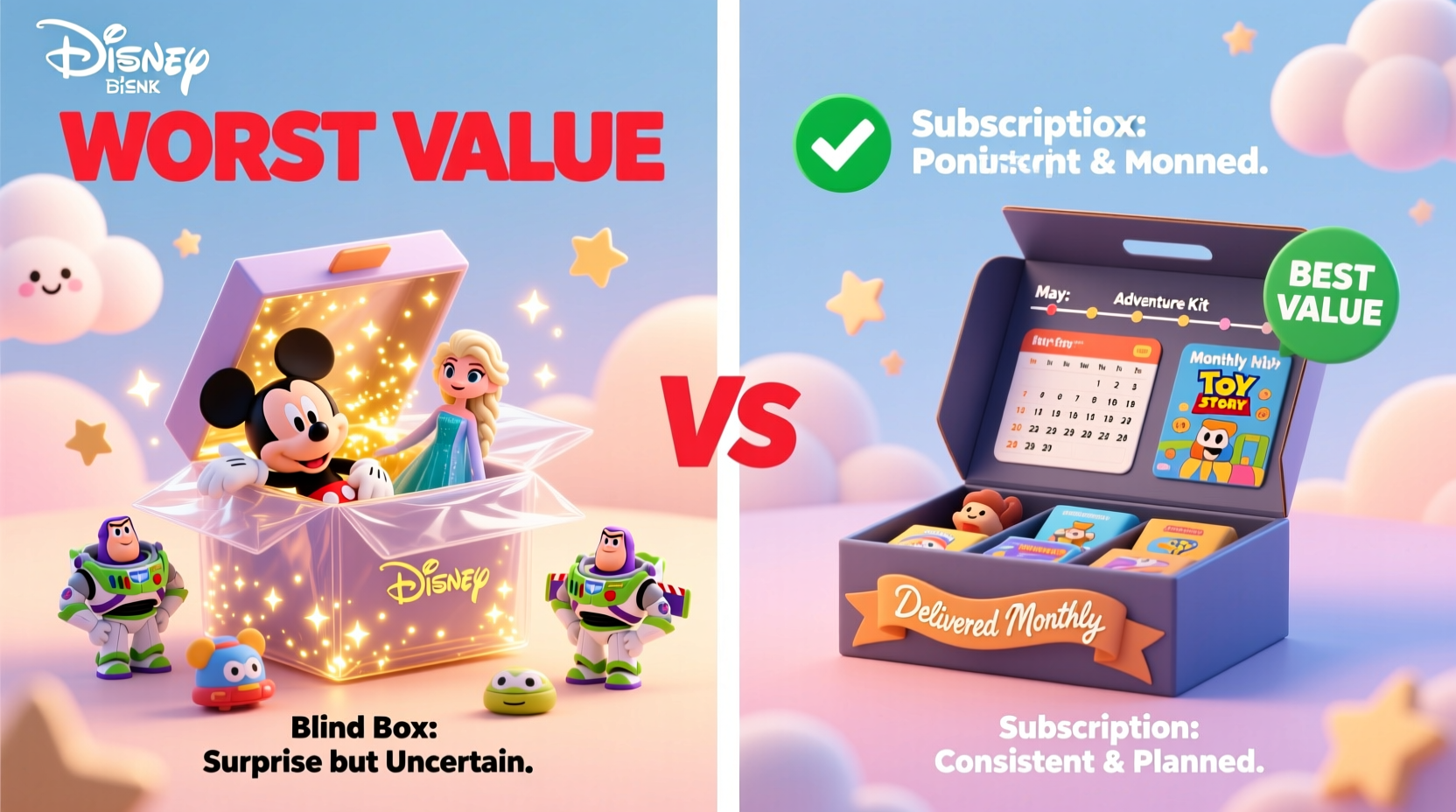
Before evaluating value, it's essential to understand what each product delivers.
Disney blind boxes are small, sealed packages containing a random figurine or accessory from a licensed series—such as Mickey & Friends, Pixar Pals, or Star Wars Galaxy. You pay a fixed price (typically $7–$12) per box with no knowledge of which item you’ll receive. Some figures are common; others are rare chase variants worth significantly more on the secondary market.
Disney subscription boxes, on the other hand, are recurring services that deliver themed merchandise monthly. These range from $30 to $60+ per shipment and may include apparel, accessories, stationery, snacks, and limited-edition collectibles. Brands like Disney Fanatical, MagicBands & More Club, or third-party fan boxes fall into this category. Subscribers often sign up for multi-month commitments, sometimes locked into auto-renewals.
The core difference lies in predictability. Blind boxes hide their contents but cost little individually. Subscription boxes advertise their themes in advance but charge consistently higher fees over time.
Cost Analysis: Long-Term Spending Patterns
At first glance, blind boxes seem harmless—a few dollars here and there. But for collectors aiming to complete a full set, costs add up quickly due to duplication and scarcity mechanics.
Consider a typical 12-figure blind box series. Statistically, acquiring all standard figures might require purchasing 20–25 boxes due to repeats. At $9.99 each, that’s nearly $250 spent for $120 worth of retail value. Add in the pursuit of a rare chase figure (odds often 1:60 or lower), and total spending can exceed $600.
In contrast, a 6-month Disney-themed subscription at $45/month totals $270—less than chasing a single blind box set. However, subscription box value depends heavily on included items. A box with a $10 t-shirt, $5 sticker sheet, and $2 candy isn’t just poor value—it’s exploitative if marketed as “exclusive” or “collector-focused.”
“Many subscription services rely on branding alone to justify pricing. When you strip away the Disney logo, some boxes contain generic goods worth less than half the cost.” — Laura Kim, Consumer Trends Analyst at Retail Insight Group
Value Comparison Table
| Factor | Blind Box | Subscription Box |
|---|---|---|
| Average Cost Per Unit | $7–$12 | $30–$60/month |
| Transparency of Contents | None (random) | Partial (theme announced) |
| Completion Cost (Full Set) | $180–$600+ | $180–$360 (6–12 months) |
| Risk of Duplication | High | Low |
| Secondary Market Resale Potential | High (for rares) | Very Low |
| Emotional Satisfaction | High (gamified thrill) | Moderate (anticipation) |
| Exit Flexibility | Immediate (no commitment) | Often difficult (auto-renewals) |
Real Collector Experience: Sarah’s Blind Box Regret
Sarah, a 34-year-old graphic designer and lifelong Disney fan, spent eight months collecting the \"Villains Through the Decades\" blind box series. Each box cost $11.99. She bought 32 units trying to complete the 14-figure set, including the elusive gold variant Maleficent (advertised as 1:72 odds).
She ended up with multiple duplicates of Hades and Cruella, never pulled the chase figure, and eventually paid $85 on eBay to finish the set. Total outlay: $428. When she displayed her collection, she realized most figures were made of brittle PVC and lacked articulation or detail.
“I thought I was being a smart collector,” she said. “But I was really paying for the dopamine hit of opening each box. If I’d spent that money on a single high-end statue, I’d have something truly special.”
Meanwhile, Sarah tried a six-month Disney Princess subscription box. Though initially excited by the theme previews, she found three of the six shipments contained items she already owned or wouldn’t use—like a child-sized tiara and a scented eraser. Only one box included a genuinely unique enamel pin she valued at $25. The rest felt like filler.
Her conclusion? “The subscription was predictable but underwhelming. The blind boxes were addictive but financially reckless. Between the two, blind boxes wasted more money—but subscriptions wasted more trust.”
When Each Option Fails Collectors
Blind boxes fail when manufacturers exploit psychological triggers—scarcity, randomness, and social proof—without delivering proportional value. Limited runs, artificial rarity, and lack of disclosure about pull rates make these products akin to gambling-lite, particularly dangerous for younger fans.
Subscription boxes fail when they prioritize frequency over quality. Many services reuse the same low-cost vendors, rotate minor variations of past items, and lock customers into contracts without offering cancellation ease. Worse, some brands inflate perceived value with “retail comparisons” that don’t reflect actual market prices.
Checklist: Avoiding Poor Value Purchases
- Research average resale prices of individual items before buying a full set.
- Verify whether a subscription allows month-to-month billing (no lock-in).
- Check unboxing videos or past box spoilers to assess true content value.
- Calculate the total cost of completing a blind box series using statistical averages.
- Ask: Would I still buy this if it didn’t have a Disney logo?
- Set a strict budget and stick to it—especially with blind boxes.
Expert Verdict: Which Is the Worst Value?
Based on cost efficiency, transparency, and long-term satisfaction, blind boxes generally offer worse value for money—but only for goal-oriented collectors seeking completeness. The math is brutal: chasing random figures almost always results in overspending due to probability inefficiencies.
However, subscription boxes pose a different kind of risk: they’re better suited for casual fans who enjoy variety and aren’t tracking ROI. Their value hinges on consistency and curation. A well-made Disney box featuring licensed apparel, authentic merch, and meaningful exclusives can justify its price. But many fall short.
The worst offenders are hybrid models—subscription services that include blind elements, such as mystery pins or random plushes. These combine the worst of both worlds: high recurring cost plus unpredictable content.
“The illusion of value is strongest in blind boxes because people focus on the ‘chance’ of winning big. In reality, the house always wins.” — Dr. Mark Tran, Behavioral Economist at UCLA Anderson School
Frequently Asked Questions
Can I resell blind box figures for profit?
Yes, but only select rare variants (e.g., chase, metallic, or flocked editions). Common figures rarely exceed original retail value. Profitability depends on timing, demand spikes, and condition. Most collectors lose money overall.
Are Disney subscription boxes worth it for kids?
Sometimes. If the child is highly engaged and uses every item, a few themed boxes can enhance fandom. However, many contain cheap plastics or single-use novelties. Consider gifting a single box first before committing to a subscription.
Do blind boxes support official Disney artists?
Some do—especially artist-exclusive releases at events like D23. However, mass-market blind boxes produced by third-party licensees (e.g., Funko, Kidrobot) typically don’t compensate individual creators. Your money supports corporate licensing, not independent art.
Final Thoughts: Make Informed Choices
Both Disney blind boxes and subscription boxes thrive on emotion rather than economics. They tap into nostalgia, fandom, and the joy of surprise. That doesn’t mean they’re inherently bad—but they demand scrutiny.
If you're drawn to blind boxes, treat them like entertainment expenses: budget a small amount for fun, not collection goals. For subscriptions, audit each box critically. Cancel if value dips. Never let auto-renewal trap you into continued spending.
Ultimately, the worst value isn’t defined by price alone—it’s when you pay more than what you gain in joy, utility, or lasting worth. Whether it’s a $10 plastic figure or a $50 box of trinkets, ask yourself: Is this enriching my experience, or just feeding a habit?




 浙公网安备
33010002000092号
浙公网安备
33010002000092号 浙B2-20120091-4
Comments
No comments yet. Why don't you start the discussion?