
Custom t-shirts have become a staple for personal expression, brand promotion, and event merchandising. Whether you're designing shirts for a family reunion, launching a small apparel line, or promoting your business at a trade show, the method you choose to produce them matters. The two most common paths are DIY (do-it-yourself) methods using home printers or heat transfer vinyl, and professional screen printing done by a print shop. While DIY seems cheaper upfront, many wonder: is the extra cost of professional screen printing actually worth it?
The answer depends on what you value—short-term savings or long-term quality, durability, and impact. Let’s examine both options in depth.
Understanding the Two Approaches
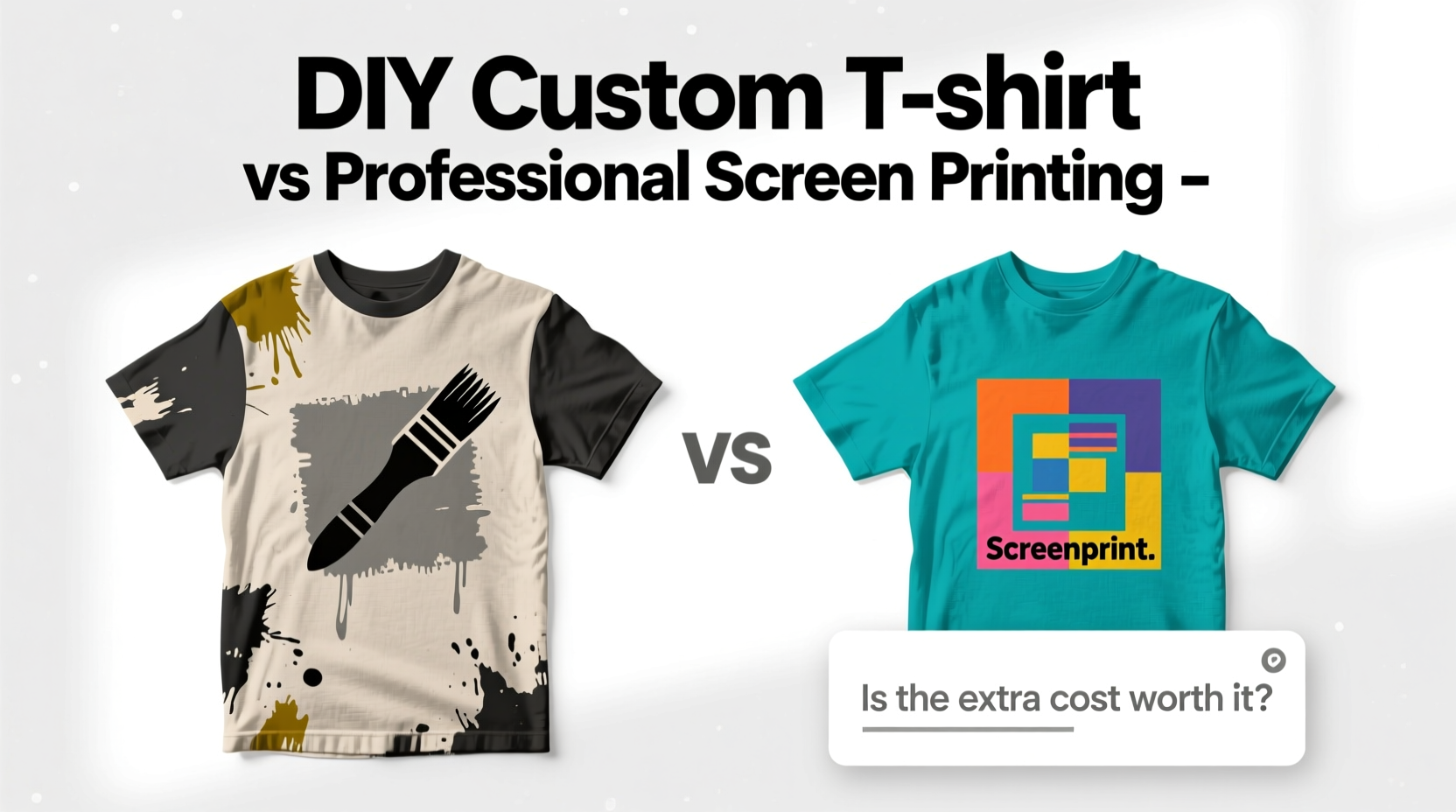
DIY custom t-shirts typically involve using consumer-grade tools like inkjet printers with transfer paper, Cricut machines with heat-transfer vinyl (HTV), or direct-to-garment (DTG) printers available to hobbyists. These methods allow full creative control from home and can be appealing for one-off projects or small batches.
Professional screen printing, on the other hand, uses a stencil-based technique where ink is pushed through fine mesh screens onto fabric. This industrial process requires specialized equipment, skilled labor, and setup time—but delivers consistent, high-volume output with superior feel and longevity.
Quality and Durability: The Real Differentiator
When comparing the final product, the difference in quality becomes immediately apparent after just a few washes.
| Factor | DIY (Heat Transfer/Inkjet) | Professional Screen Printing |
|---|---|---|
| Texture | Often plasticky, stiff coating on fabric | Soft, breathable ink that soaks into fibers |
| Fade Resistance | Prints begin fading after 5–10 washes | Colors remain vibrant after 50+ washes |
| Crack Resistance | Cracks and peels over time, especially on seams | Flexible ink resists cracking even with heavy use |
| Detail Accuracy | Limited; fine lines and gradients often blur | High precision, even with complex designs |
| Production Speed (per unit) | Slow—each shirt printed individually | Fast—multiple shirts printed simultaneously |
Cost Breakdown: Upfront vs. Long-Term Value
At first glance, DIY appears far cheaper. A basic Cricut machine costs around $250, transfer paper is $20 per ream, and blank shirts run $5–$8 each. Total cost for 10 shirts might be under $150.
Compare that to a professional print shop charging $8–$12 per shirt for screen printing, totaling $80–$120 for the same batch—plus a one-time setup fee of $30–$50 for screens. That brings the total closer to $130–$170.
But consider this: after six months of regular wear and washing, the DIY shirts may look worn, faded, or cracked. Recipients notice. Customers lose trust. Brand image suffers. In contrast, professionally printed shirts maintain their crisp appearance, reinforcing professionalism and attention to detail.
“Clients judge your credibility by the quality of your merch. A cracked logo on a flimsy shirt sends the wrong message.” — Marcus Lin, Owner of Urban Press Apparel
When DIY Makes Sense
DIY isn’t inherently inferior—it’s situational. Here are scenarios where it’s the smarter choice:
- One-time personal gifts: A birthday shirt for a friend with a funny quote doesn’t need commercial-grade durability.
- Prototyping designs: Test concepts before committing to bulk orders.
- Very small quantities: One or two shirts aren’t economical for screen printing due to setup fees.
- Budget constraints: When funds are tight and longevity isn’t a priority.
Step-by-Step: Choosing the Right Method for Your Project
- Define your purpose: Is this for resale, branding, gifting, or personal use?
- Determine quantity: Fewer than 12? DIY may suffice. More than 24? Screen printing likely saves time and improves quality.
- Evaluate design complexity: Full-color gradients favor DTG or screen printing. Simple text or silhouettes work well with HTV.
- Assess fabric type: 100% cotton holds screen ink best. Blends may require specialty inks.
- Calculate total lifetime cost: Factor in reprints, customer returns, and brand perception—not just initial price.
Real Example: The Local Band That Learned the Hard Way
A local indie band ordered 50 DIY-printed shirts using heat transfer vinyl for their first tour. They saved nearly $200 compared to screen printing quotes. Within three weeks on the road—constant wearing, washing, and stage lights—the prints began peeling. Fans complained. One shirt cracked completely after being folded in a suitcase.
For their next release, they invested in professionally screen-printed shirts. Though the upfront cost was higher, fans praised the soft feel and sharp design. They sold out within two shows and received repeat orders online. “We lost money the first time,” said lead singer Jess Tran. “The second round paid for itself twice over.”
Expert Tips for Maximizing Value
- Always pre-wash garments before printing (DIY or pro) to prevent shrinkage distortion.
- Ask print shops about \"burning screens\" fees—some waive them for repeat customers.
- Consider hybrid options: digital garment printing (DTG) offers photo-quality results without screens, ideal for small batches with complex art.
Checklist: DIY vs. Professional Decision Guide
Use this checklist to determine the best path:
- ☐ Need fewer than 12 shirts? → Lean toward DIY
- ☐ Design has multiple colors or fine details? → Choose screen printing or DTG
- ☐ Shirts will be worn frequently or washed often? → Prioritize professional printing
- ☐ Budget is under $100 total? → DIY may be your only option
- ☐ Representing a brand, team, or business? → Invest in professional quality
- ☐ Planning future reorders? → Build a relationship with a reliable print shop
FAQ
Can I mix DIY and professional printing?
Yes. Many creators use DIY for prototypes and limited editions, then scale to professional printing once demand grows. Just ensure color matching between methods.
Does screen printing only work on cotton?
No. Modern water-based and discharge inks work beautifully on cotton-poly blends. However, 100% cotton provides the best ink absorption and softness.
How long do DIY prints last?
With proper care—inside-out washing, low heat drying—heat transfer prints can last 20–30 washes. After that, fading and cracking accelerate. Screen prints routinely exceed 50 washes with minimal change.
Final Verdict: Is the Extra Cost Worth It?
For occasional, low-stakes projects, DIY custom t-shirts offer flexibility and affordability. But when quality, durability, and professional presentation matter, the extra cost of screen printing isn't an expense—it's an investment.
You’re not just paying for ink and labor. You’re paying for consistency, craftsmanship, and a product that reflects pride in your idea. Whether it’s a nonprofit fundraiser, a startup launch, or a community event, people respond to quality. They remember how something feels, not just how it looks.
The truth is, most people can’t tell the technical difference between a heat press and a squeegee stroke. But they can feel it. And that feeling shapes their impression of your brand, your cause, or your creativity.
Take Action Today
If you’ve been putting off professional printing because of perceived cost, reconsider. Request a quote from a local screen printer—even for 20 shirts. Compare samples side by side with your DIY version. Wash them. Wear them. See the difference for yourself.




 浙公网安备
33010002000092号
浙公网安备
33010002000092号 浙B2-20120091-4
Comments
No comments yet. Why don't you start the discussion?