
Dizziness is a common complaint that affects millions of people each year. It’s not a disease in itself but rather a symptom of an underlying condition. When dizziness becomes persistent or recurrent, it can interfere with daily activities, work performance, and overall quality of life. Understanding the root causes—and knowing when to consult a healthcare professional—is essential for effective management and recovery.
People often describe dizziness in different ways: lightheadedness, vertigo (a spinning sensation), imbalance, or feeling faint. Each description can point to a distinct cause, ranging from inner ear disorders to cardiovascular issues. This article explores the most frequent reasons behind constant dizziness, signs that warrant medical attention, and practical strategies to support diagnosis and relief.
Understanding the Types of Dizziness
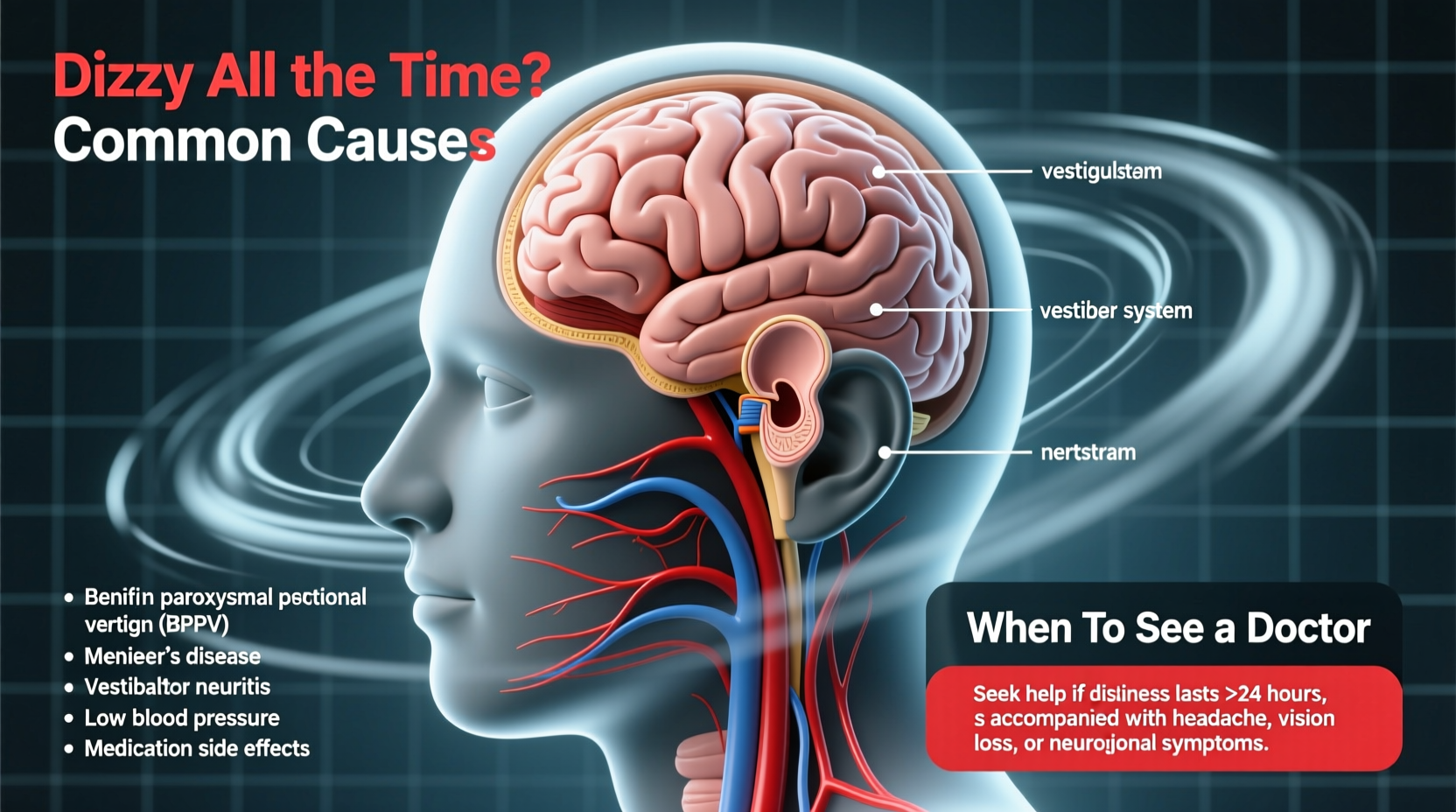
Before identifying causes, it helps to distinguish between the types of dizziness, as they stem from different systems in the body:
- Vertigo: A false sense of motion or spinning, often due to inner ear problems like benign paroxysmal positional vertigo (BPPV) or Meniere’s disease.
- Lightheadedness: A near-fainting sensation, commonly linked to low blood pressure, dehydration, or anxiety.
- Disequilibrium: A feeling of unsteadiness or imbalance, especially while walking, which may relate to neurological conditions or aging.
- Nonspecific dizziness: A vague sense of disorientation, sometimes tied to medication side effects or chronic health conditions.
Accurately describing your symptoms to a doctor can significantly improve diagnosis accuracy.
Common Causes of Persistent Dizziness
Chronic dizziness arises from various sources. Some are relatively harmless; others require prompt evaluation. Below are the most prevalent contributors:
Inner Ear Disorders
The inner ear plays a crucial role in balance. Conditions affecting this area are among the top causes of vertigo:
- Benign Paroxysmal Positional Vertigo (BPPV): Triggered by changes in head position, BPPV occurs when tiny calcium crystals in the inner ear become dislodged.
- Meniere’s Disease: Characterized by episodes of vertigo, hearing loss, tinnitus, and ear fullness, often due to fluid buildup in the inner ear.
- Labyrinthitis and Vestibular Neuritis: Inflammation of the inner ear or the nerves connecting it to the brain, usually following a viral infection.
Cardiovascular Issues
Poor circulation or heart-related conditions can reduce blood flow to the brain, leading to lightheadedness:
- Low blood pressure (especially upon standing—orthostatic hypotension)
- Arrhythmias (irregular heartbeats)
- Heart valve disorders or reduced cardiac output
Neurological Conditions
Problems within the central nervous system can disrupt balance signals:
- Migraine-associated vertigo (vestibular migraine)
- Multiple sclerosis
- Brainstem or cerebellar strokes (rare but serious)
Medication Side Effects
Many prescription and over-the-counter drugs list dizziness as a side effect. Common culprits include:
- Blood pressure medications
- Antidepressants
- Sedatives and anticonvulsants
- Some antibiotics and anti-seizure drugs
Metabolic and Systemic Factors
Body-wide imbalances can manifest as dizziness:
- Anemia (low red blood cell count)
- Low blood sugar (hypoglycemia)
- Dehydration or electrolyte disturbances
- Thyroid dysfunction
When to See a Doctor: Red Flags and Warning Signs
While occasional dizziness may resolve on its own, persistent or worsening symptoms demand medical evaluation. Certain “red flag” signs indicate a potentially serious condition requiring urgent attention.
| Symptom | Possible Cause | Action Required |
|---|---|---|
| Sudden, severe vertigo with vomiting | Vestibular neuritis, stroke | Seek emergency care |
| Dizziness with slurred speech or weakness | Stroke or TIA | Call emergency services immediately |
| Fainting or near-fainting episodes | Heart rhythm disorder | Consult cardiologist promptly |
| Hearing loss with dizziness | Meniere’s disease, acoustic neuroma | See an ENT specialist |
| Dizziness lasting days without improvement | Chronic vestibular dysfunction | Schedule doctor visit within 48 hours |
“Persistent dizziness should never be ignored. Even if tests come back normal initially, a thorough clinical assessment can uncover subtle but treatable causes.” — Dr. Lena Patel, Neurotologist at Boston Balance Clinic
Step-by-Step Guide to Managing and Diagnosing Dizziness
If you're experiencing ongoing dizziness, follow this structured approach to help identify the cause and guide treatment:
- Document Your Symptoms: Record frequency, duration, triggers, and accompanying symptoms (e.g., headache, nausea, vision changes).
- Review Medications: List all current prescriptions, supplements, and OTC drugs. Share them with your doctor.
- Visit Your Primary Care Physician: They can perform initial assessments, including blood pressure checks, blood tests (CBC, glucose, thyroid), and basic neurological screening.
- Get Referred if Needed: Depending on findings, you may be referred to an ENT (ear, nose, throat specialist), neurologist, or cardiologist.
- Undergo Diagnostic Testing: Possible tests include audiometry, electronystagmography (ENG), MRI/CT scans, ECG, or tilt-table testing.
- Begin Targeted Treatment: Whether it's canalith repositioning for BPPV, medication adjustment, or vestibular rehabilitation therapy, treatment depends on the diagnosis.
Mini Case Study: Recovering from Chronic Dizziness
Sarah, a 52-year-old teacher, experienced daily dizziness for over three months. She described it as a spinning sensation when rolling over in bed, lasting about 30 seconds. Initially dismissed as stress, her symptoms worsened until she avoided lying down altogether.
After seeing her primary care doctor, she was referred to an ENT specialist. An examination confirmed BPPV. The physician performed the Epley maneuver—a series of head movements to reposition inner ear crystals. Within two sessions, Sarah’s symptoms resolved completely.
This case highlights how a precise diagnosis, even for seemingly minor symptoms, can lead to rapid and effective treatment.
Practical Tips and Prevention Checklist
To reduce the risk of recurrent dizziness, use this actionable checklist:
- ✅ Monitor blood pressure regularly, especially if on medication
- ✅ Avoid sudden head movements, particularly if prone to vertigo
- ✅ Limit caffeine, alcohol, and salt intake—especially with Meniere’s symptoms
- ✅ Practice balance exercises like tai chi or vestibular rehab routines
- ✅ Review medications annually with your doctor for potential side effects
- ✅ Stay well-hydrated and eat regular meals to maintain blood sugar
Frequently Asked Questions
Can anxiety cause constant dizziness?
Yes. Chronic anxiety and panic disorders can trigger dizziness through hyperventilation, increased muscle tension, and altered perception of balance. While the sensation feels real, it’s often related to the body’s stress response rather than a structural issue. Cognitive behavioral therapy (CBT) and breathing techniques can be highly effective.
Is dizziness a sign of a brain tumor?
Rarely. Though tumors such as acoustic neuromas (on the hearing and balance nerve) can cause dizziness, they typically present with unilateral hearing loss, tinnitus, and gradual onset. Most cases of dizziness are not tumor-related, but persistent, one-sided symptoms should be evaluated with imaging.
What is vestibular rehabilitation?
It’s a specialized form of physical therapy designed to improve balance and reduce dizziness through customized exercises. These retrain the brain to compensate for inner ear deficits. It’s proven effective for conditions like BPPV, vestibular neuritis, and post-concussion dizziness.
Take Control of Your Health
Living with constant dizziness doesn’t have to be your new normal. With careful observation, timely medical consultation, and appropriate interventions, most causes of dizziness are manageable—or even curable. Don’t minimize your symptoms because they seem vague or intermittent. Early action leads to faster recovery and prevents complications like falls or social withdrawal.




 浙公网安备
33010002000092号
浙公网安备
33010002000092号 浙B2-20120091-4
Comments
No comments yet. Why don't you start the discussion?