
Finding the right shoe size should be simple, but for many, it’s a constant frustration. You order your usual size, only to discover the shoes are too tight, too loose, or pinch in all the wrong places. If you’ve ever wondered, “Do Adidas run bigger than Nike?” or “Why are my shoes always the wrong size?” you’re not alone. Sizing inconsistencies across brands—and even within them—make footwear shopping a guessing game. Understanding the reasons behind these discrepancies can save time, money, and foot pain.
The Hidden Truth About Shoe Sizing Standards
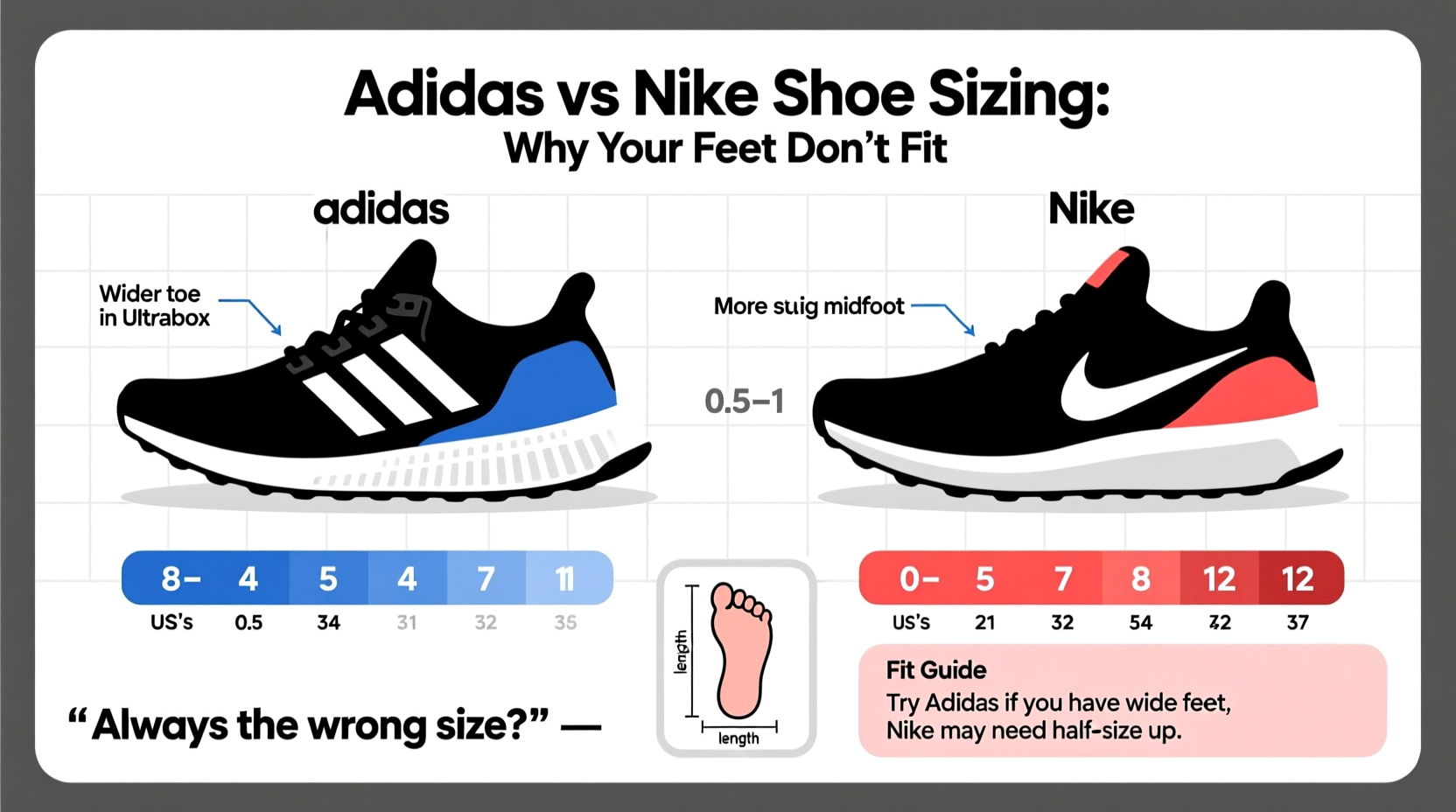
There is no universal standard for shoe sizing. While countries use systems like US, UK, or EU measurements, these are based on foot length and don’t account for width, volume, or shape. What’s labeled a size 9 in one brand may fit like a 9.5 in another. This lack of consistency stems from historical practices and regional preferences. For example, American brands often cater to wider feet, while European labels like Adidas tend to follow narrower, more structured lasts.
A “last” is the mold used to shape a shoe during manufacturing. Each brand uses different last designs, which directly affect fit. Nike, for instance, commonly uses a slightly tapered toe box, while Adidas favors a roomier forefoot. These subtle differences explain why someone might wear a size 10 in Adidas but need a 10.5 in Nike for comfort.
Do Adidas Run Bigger Than Nike? A Direct Comparison
The common belief that \"Adidas runs bigger than Nike\" holds some truth—but it’s not universal. On average, Adidas sneakers tend to run half a size larger than Nike equivalents. However, this varies significantly by model. For example:
| Shoe Model | True to Size? | Recommended Adjustment |
|---|---|---|
| Adidas Ultraboost | No | Size down by 0.5 |
| Nike Air Force 1 | Yes | No adjustment needed |
| Adidas Stan Smith | No | Size down by 0.5 |
| Nike Air Max 90 | Slightly large | Consider sizing down 0.5 if narrow feet |
| Adidas Samba | No | Size down by 0.5–1 full size |
The table illustrates that generalizations can mislead. The Adidas Samba, for instance, is notorious for running large, especially in the toe box. Meanwhile, Nike’s React Infinity Run is designed with a wide midfoot and may require no size change at all. Fit depends on design intent: performance running shoes prioritize secure lockdown, while casual models may allow extra room.
Real Example: Sarah’s Sneaker Struggle
Sarah, a fitness instructor from Portland, ordered a pair of Nike Free Runs in her usual size 8. They felt snug, especially across the ball of her foot. Assuming Nike ran small, she bought Adidas SolarGlide running shoes in an 8.5—only to find them slipping at the heel. After returning both pairs, she measured her feet and discovered her left foot was half a size longer than her right. She also learned that Nike’s Free series has a snug, sock-like fit, while Adidas running shoes often have deeper toe boxes. By choosing the Nike in size 8.5 and the Adidas in size 8, she finally found comfort.
“Fit is more important than size. Two people wearing the same size can have completely different experiences based on foot shape and shoe last.” — Marcus Lin, Footwear Fit Specialist at RunLab Austin
Why Your Shoes Always Feel Wrong: 5 Common Causes
- Inconsistent foot measurement: Most people haven’t had their feet measured in years. Feet can grow over time due to aging, weight gain, or pregnancy.
- Ignoring foot width: Standard sizes assume medium width (D for men, B for women). Those with wide or narrow feet often need specialty sizing.
- Brand-specific lasts: As mentioned, each brand molds shoes differently. Even within Nike, the Air Jordan 1 fits tighter than the Pegasus line.
- Material stretch: Knit uppers (like Nike Flyknit) stretch over time; leather uppers (common in Adidas) soften but maintain structure.
- Purchasing online without trying: Without testing the fit, you’re relying on reviews and guesswork.
Step-by-Step Guide to Finding Your Perfect Shoe Size
- Measure your feet at home: Place a piece of paper against a wall, stand on it with your heel touching the wall, and mark the longest toe. Measure from heel to mark in centimeters or inches. Repeat for both feet.
- Check brand-specific size charts: Visit the official website and compare your measurement to their size guide. Don’t rely on conversion tools alone.
- Read fit reviews: Look for comments like “runs long,” “narrow toe box,” or “best for wide feet” on retail sites or forums like Reddit’s r/running or r/sneakers.
- Order multiple sizes when possible: If buying online, choose two sizes if return shipping is free. Try them on carpeted surfaces to avoid sole damage.
- Test at the end of the day: Feet swell throughout the day. Wear the socks you plan to use with the shoes and walk around for at least 10 minutes.
Checklist: Before You Buy Any Pair of Shoes
- ✅ Measure both feet (left and right)
- ✅ Confirm if the model runs large, small, or true to size
- ✅ Check customer reviews for fit feedback
- ✅ Know your preferred brand’s last profile (e.g., Nike = snug, Adidas = roomy)
- ✅ Ensure the retailer offers free returns
- ✅ Try them on late in the day with appropriate socks
- ✅ Walk, squat, and simulate movement to test comfort
FAQ: Common Questions About Shoe Sizing
Should I size up in Adidas shoes?
Not necessarily. While some Adidas models like the Samba or Superstar run large, others like the Ultraboost are better sized down by half. Always research the specific model before purchasing.
Why do Nike shoes feel tighter than Adidas?
Nike often uses slimmer lasts with a more contoured fit, especially in lifestyle and basketball models. Adidas typically provides more room in the forefoot and toe box, giving a looser initial feel that some interpret as “larger.”
Can foot shape affect shoe fit more than size?
Absolutely. People with high arches, wide forefeet, or bunions may struggle with standard sizes regardless of brand. Brands like Altra or New Balance offer wider widths and foot-shaped designs that accommodate natural anatomy better.
Final Thoughts: Stop Guessing, Start Measuring
The question “Do Adidas run bigger than Nike?” doesn’t have a one-size-fits-all answer. What matters most is understanding your own foot dimensions and how different brands engineer their footwear. Instead of memorizing brand rules, build a personal fit database: note which models worked, what size you wore, and why. Over time, you’ll develop intuition that beats any generic guideline.
Never underestimate the value of accurate measurement and real-world testing. Whether you're buying performance runners or classic streetwear kicks, the right fit prevents blisters, improves posture, and enhances overall comfort. Don’t let poorly fitting shoes derail your day—or your stride.




 浙公网安备
33010002000092号
浙公网安备
33010002000092号 浙B2-20120091-4
Comments
No comments yet. Why don't you start the discussion?