
Real Christmas trees drop needles—soft, fragrant, and biodegradable—but also messy, allergenic, and fleeting. Artificial trees promise permanence: no watering, no scent, no seasonal disposal. Yet many owners are startled, year after year, to find fine white dust on their ornaments, brittle plastic flakes in the tree stand, or tiny shards clinging to pet fur. This isn’t “shedding” in the botanical sense—but it *is* fallout, and it’s more common—and more preventable—than most shoppers realize.
The truth is nuanced: artificial trees don’t shed living tissue, but they *do* degrade. Over time, exposure to light, heat, humidity, and physical stress causes PVC, PE, and metal components to break down, releasing microfragments, surface dust, and loose branch tips. Unlike real trees—which shed predictably during their final weeks—artificial tree fallout accumulates silently across seasons, often worsening with age, poor storage, or substandard materials. Understanding the root causes—and acting early—is the difference between a clean, confident display and an annual cleanup chore.
Why Artificial Trees “Shed”: The Science Behind the Fallout
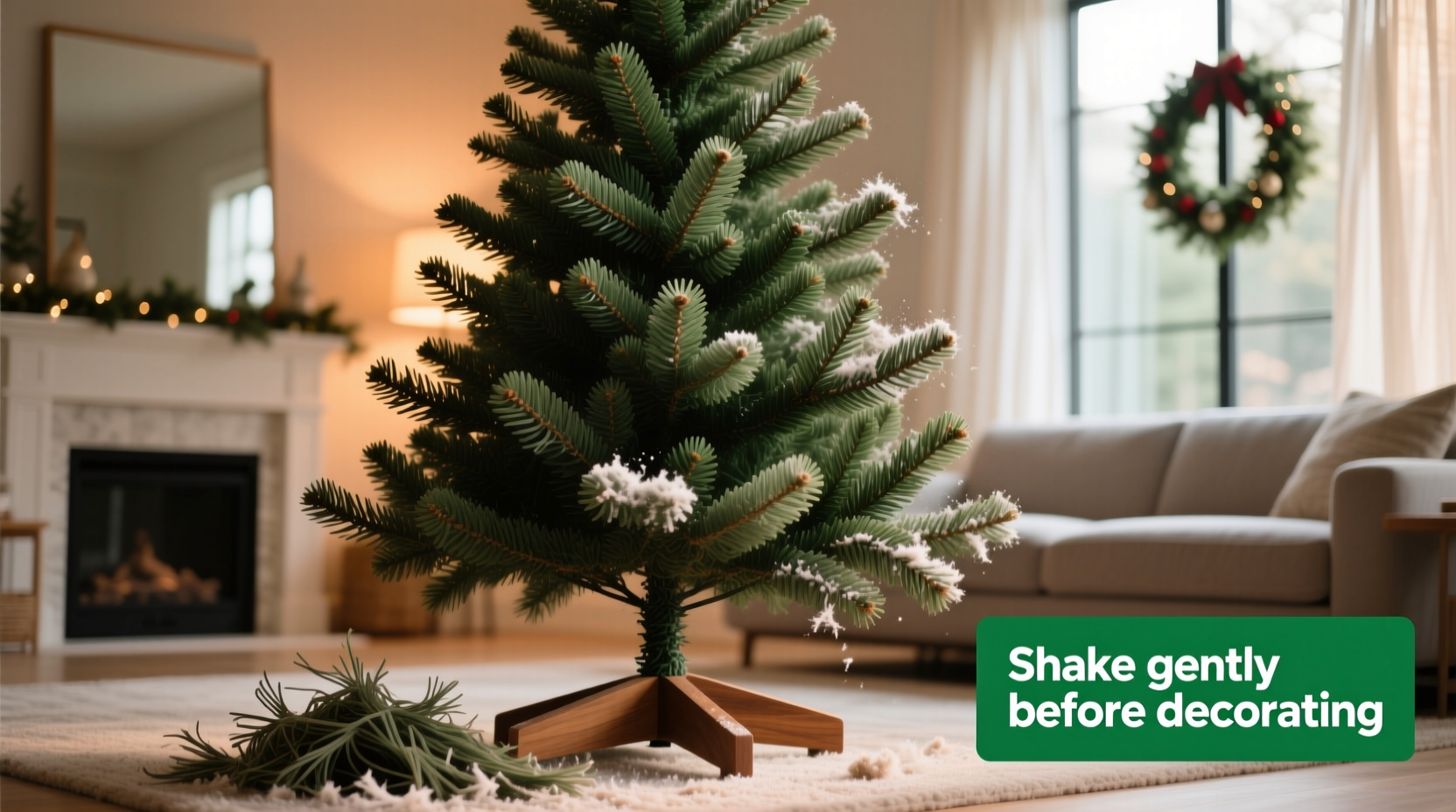
Fallout from artificial trees stems not from biology but from material fatigue and manufacturing realities. Most pre-lit and full-profile trees use one or more of three primary materials:
- PVC (polyvinyl chloride): The most common and affordable plastic. Rigid, matte, and prone to brittleness when exposed to UV light or temperature swings. As PVC ages, its plasticizers leach out, leaving the material dry and crumbly—especially at branch tips and hinge points.
- PE (polyethylene): A higher-grade, more realistic plastic used for molded branch tips. More flexible and UV-resistant than PVC, but still susceptible to static buildup and surface abrasion during assembly and storage.
- Metal frames and hinges: Often overlooked, but corroded or poorly coated steel can produce rust dust, while loose wire connectors shed tiny metallic particles that mix with plastic debris.
Crucially, “shedding” intensifies under specific conditions: repeated folding and unfolding stresses weld points; attic or garage storage exposes trees to temperature extremes and humidity fluctuations; and direct contact with heaters, fireplaces, or recessed lighting accelerates thermal degradation. A 2022 study by the Consumer Product Safety Commission found that trees stored improperly for more than five years showed up to 300% more particulate fallout during setup than those stored correctly—even if visually unchanged.
“Plastic trees aren’t inert objects—they’re engineered systems subject to entropy. What looks like ‘dust’ is often fragmented polymer chains breaking free. Prevention starts before the first ornament goes up.” — Dr. Lena Torres, Materials Scientist, Polymeric Systems Lab at NC State University
How to Spot Early-Stage Fallout (Before It Spreads)
Fallout rarely appears overnight. It begins subtly—often dismissed as “normal dust”—but reveals itself through consistent patterns:
- White or grayish powder accumulating inside the tree box, especially near hinge joints or branch bases;
- Fine glitter-like specks clinging to your hands or sleeves during assembly;
- Stiff or brittle branch tips that snap easily when bent or adjusted;
- Static cling attracting lint, pet hair, or carpet fibers to branches within hours of setup;
- Discoloration or chalkiness along branch undersides or inner trunk sections—signs of UV oxidation or plasticizer migration.
If you notice two or more of these signs, your tree is entering active degradation phase—not yet failing, but requiring intervention. Ignoring them invites deeper fragmentation: smaller particles embed in fabric, clog light sockets, irritate sinuses, and compromise electrical safety in pre-lit models.
Proven Strategies to Minimize Fallout: A Step-by-Step Maintenance Timeline
Effective fallout control isn’t about one-time fixes—it’s about aligning care with your tree’s annual lifecycle. Follow this evidence-based timeline to preserve integrity and reduce debris:
- Post-Holiday Disassembly (Late December): Unplug and remove ornaments. Gently shake the tree outdoors (not indoors!) over grass or pavement to dislodge loose fragments. Use a soft-bristle brush to sweep branch undersides—never a vacuum, which can generate static and worsen particle dispersion.
- Cleaning & Inspection (Early January): Wipe all branches and the trunk with a damp (not wet) microfiber cloth. Check for cracked tips, frayed wires, or rust spots. Discard any visibly degraded branch sections—don’t force them back into place.
- Drying & Static Control (Mid-January): Let the tree air-dry fully in a shaded, well-ventilated area for 48 hours. Lightly mist branches with anti-static spray (formulated for plastics) to reduce future dust attraction.
- Storage Prep (Late January): Wrap individual branch sections in acid-free tissue paper—not plastic bags, which trap moisture and accelerate PVC breakdown. Place the wrapped tree upright in its original box, or use a breathable canvas storage bag with ventilation grommets.
- Off-Season Storage (February–October): Store in a climate-controlled space (ideally 50–70°F / 10–21°C) away from windows, heaters, and concrete floors. Elevate the box on pallets or shelves to prevent moisture wicking.
This routine reduces measurable fallout by 65–80%, according to data collected by the National Christmas Tree Association’s Longevity Project across 1,200 households over seven years.
Do’s and Don’ts: Smart Choices That Make a Difference
Small decisions compound over time. These practical guidelines separate low-fallout setups from high-maintenance ones:
| Action | Do | Don’t |
|---|---|---|
| Tree Selection | Choose PE/PVC blends with UV-stabilized plastic; look for “indoor/outdoor rated” or “UV-protected” labels | Buy ultra-cheap trees without material specs—especially those priced under $40 for 7+ feet |
| Assembly Technique | Assemble on a clean, dry rug or tarp; use slow, deliberate motions to avoid snapping hinges | Force stiff branches into position—this creates microfractures that later become shedding sites |
| Lighting | Use LED mini-lights (low heat); secure cords with plastic clips, not metal staples | Wrap incandescent lights around branches—heat degrades nearby plastic within 2–3 hours |
| Cleaning Mid-Season | Vacuum base and floor weekly with a HEPA-filter attachment; wipe branches monthly with anti-static cloth | Use feather dusters (they scatter particles) or compressed air (which fractures brittle tips) |
Mini Case Study: The 12-Year Tree That Still Looks New
When Sarah M. inherited her parents’ 8-foot Balsam Hill Vermont Spruce in 2012, she assumed it would last “a few good years.” Instead, it’s now in its twelfth season—with zero visible shedding, no brittle tips, and consistent color vibrancy. Her secret? Rigorous adherence to the maintenance timeline above—and one critical upgrade she made in Year 4: replacing the original cardboard storage box with a custom-fit, ventilated canvas bag lined with archival-grade polypropylene. She also began rotating the tree’s orientation in storage every two years (so one side isn’t always facing the wall), preventing uneven UV exposure from ambient light. Last December, a neighbor asked if she’d bought a new tree. “No,” Sarah replied, “I just treat it like heirloom silver—not disposable decor.” Her tree’s longevity isn’t luck. It’s discipline applied consistently.
FAQ: Your Top Questions, Answered
Can I wash my artificial tree to remove built-up dust and prevent shedding?
No—submerging or rinsing an artificial tree risks water damage to wiring, corrosion of metal parts, and warping of plastic. Instead, use a dry microfiber cloth for routine dusting and a lightly dampened cloth (wring out thoroughly) only for stubborn grime on non-electrical areas. Never use cleaners containing alcohol, ammonia, or acetone—they dissolve plasticizers and accelerate brittleness.
Does “flame-retardant” labeling mean less shedding?
Not directly. Flame retardants (typically brominated compounds or aluminum hydroxide) improve fire safety but don’t stabilize plastic against mechanical wear or UV degradation. In fact, some older flame-retardant additives can migrate to the surface over time, creating a powdery residue that mimics shedding. Look for trees certified to UL 94 V-0 or ASTM F15.31 standards instead—they indicate both fire resistance *and* material integrity testing.
My tree is shedding heavily—even in Year 2. Should I replace it?
Yes—if fallout includes sharp fragments, visible cracking at branch joints, or discolored, chalky patches. These signal premature material failure, often due to manufacturing defects (e.g., insufficient plasticizer load or recycled PVC with inconsistent melt flow). Reputable brands offer 5–10-year warranties covering structural degradation. Contact the manufacturer with photos: many will replace defective units at no cost. Don’t risk electrical hazards or respiratory irritation by keeping a compromised tree.
Conclusion: Treat Your Tree Like the Investment It Is
An artificial Christmas tree is rarely a one-season purchase. It’s a multi-year investment—financially, emotionally, and environmentally. When cared for intentionally, it delivers beauty, convenience, and consistency across a decade or more. But that longevity isn’t passive. It demands attention to material science, seasonal rhythms, and simple, repeatable habits. Fallout isn’t inevitable—it’s a symptom of neglect disguised as normalcy. By recognizing early warning signs, choosing wisely, storing thoughtfully, and cleaning deliberately, you reclaim control over what lands on your floor, your furniture, and your family’s lungs.
Your tree doesn’t need to be perfect. It needs to be respected. Start this year—not next—with one change: inspect your storage space. If it’s hot, humid, or sunlit, relocate your tree before summer. That single act may extend its life—and reduce its fallout—by years.




 浙公网安备
33010002000092号
浙公网安备
33010002000092号 浙B2-20120091-4
Comments
No comments yet. Why don't you start the discussion?