
As holiday traditions evolve, the choice between real and artificial Christmas trees has become a point of environmental concern. Many assume that reusing an artificial tree year after year makes it the greener option. However, when examining the full lifecycle—from production and transportation to disposal—the reality is more complex. The answer to whether artificial trees contribute more to carbon emissions than real ones depends on usage duration, materials, and end-of-life handling. This article breaks down the data, compares environmental impacts, and offers practical guidance for making a sustainable holiday choice.
Lifecycle Emissions: The Big Picture
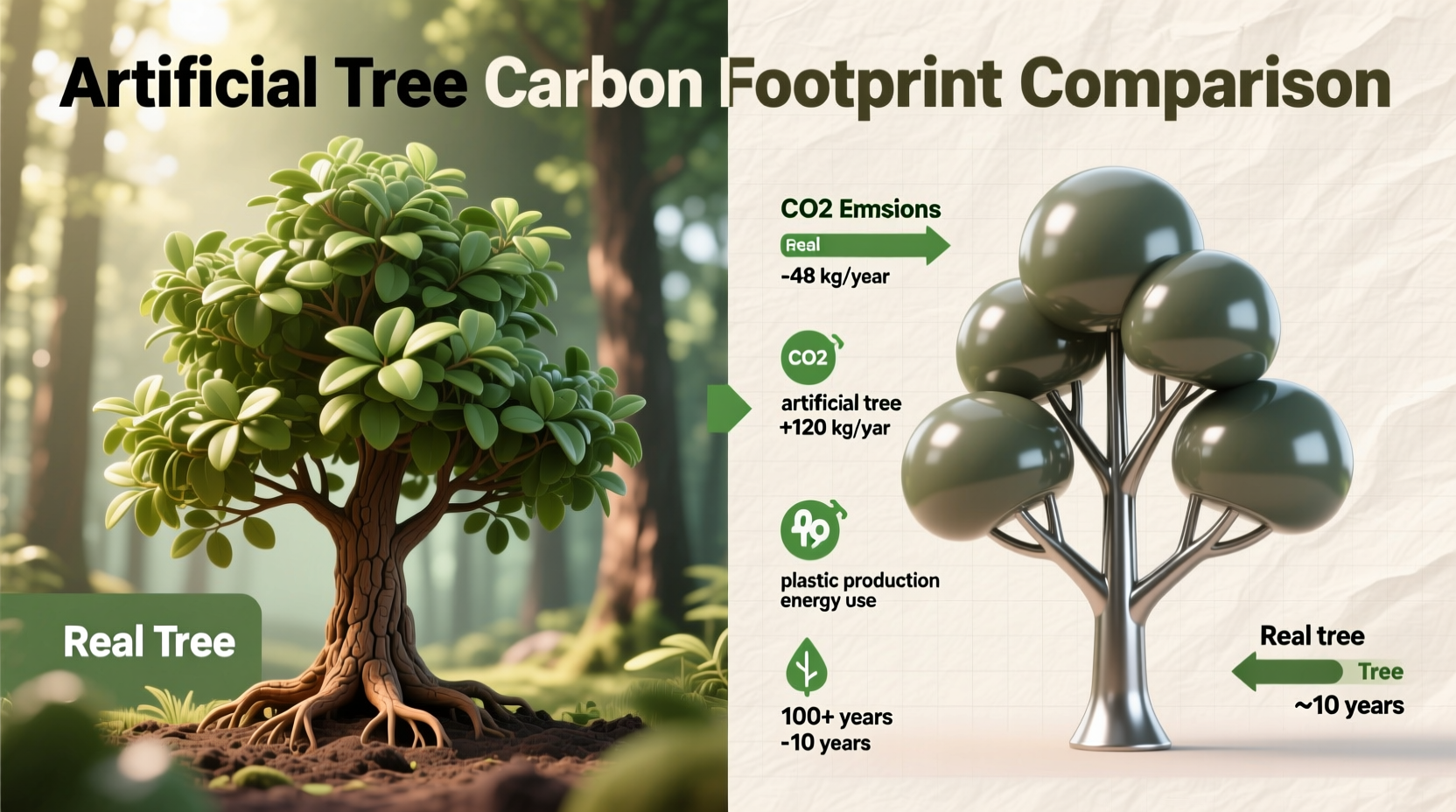
The environmental cost of a Christmas tree isn't measured at purchase alone. It includes raw material extraction, manufacturing, shipping, use phase, and disposal. Studies from sources like the Carbon Trust and Ellipsos, an environmental consulting firm, have analyzed both types across these stages.
A typical artificial tree is made primarily from polyvinyl chloride (PVC), a petroleum-based plastic, and metal components. Manufacturing occurs mostly in China and other parts of Asia, where energy grids rely heavily on coal. The production and long-distance shipping of one artificial tree generate approximately 40 kilograms (88 pounds) of CO₂ equivalent emissions before it even reaches your home.
In contrast, a real Christmas tree is grown on farms, absorbing CO₂ during its 7–10 year growth cycle. While farming involves diesel-powered machinery, fertilizers, and pesticides, the net carbon impact is significantly lower per tree. According to the American Christmas Tree Association, the average real tree produces about 3.1 kg (6.8 lbs) of CO₂ when factoring in cultivation, transport, and post-holiday disposal—especially if composted.
“An artificial tree must be reused for at least 10 to 20 years to match the carbon footprint of purchasing a new real tree annually.” — Dr. Larry Wineland, Environmental Scientist, University of Vermont
Breakdown by Environmental Stage
| Stage | Artificial Tree (CO₂ eq) | Real Tree (CO₂ eq) | Notes |
|---|---|---|---|
| Production | ~30 kg | ~1.5 kg | Plastic and metal manufacturing are energy-intensive. |
| Transportation | ~10 kg | ~1.0 kg | Overseas shipping adds significant emissions. |
| Use Phase | 0 kg (per year) | ~0.6 kg/year | Assumes annual real tree purchase; artificial emits nothing during use. |
| Disposal | ~5 kg | ~0.1 kg (if composted) | PVC does not biodegrade; incineration releases toxins. |
| Total (annualized over 10 years) | ~4.5 kg/year | ~3.1 kg/year | Artificial only becomes favorable with long reuse. |
The table shows that while artificial trees emit far more upfront, their impact diminishes over time through reuse. However, most households keep artificial trees for only 6 to 9 years, according to consumer surveys. At that rate, they never offset their initial carbon debt.
Material and Disposal Realities
One of the most overlooked aspects of artificial trees is their end-of-life fate. Made from PVC, these trees are nearly impossible to recycle. When discarded, they sit in landfills for centuries. Burning them releases dioxins and other hazardous chemicals, posing health and environmental risks.
Real trees, on the other hand, can be sustainably managed. Many communities offer curbside pickup for mulching programs. Composted trees return nutrients to the soil and support erosion control or habitat restoration projects. Some farms even allow “tree recycling” by replanting donated trees in conservation areas.
Even when real trees are incinerated, their carbon impact remains relatively low because the CO₂ released was recently absorbed from the atmosphere—a closed loop. Artificial trees, however, release ancient carbon trapped in fossil fuels, contributing directly to atmospheric accumulation.
Case Study: The Johnson Family’s Holiday Decision
The Johnsons, a family of four in Portland, Oregon, had used the same artificial tree for 12 years. Proud of their consistency, they believed they were making an eco-friendly choice. But after attending a local sustainability workshop, they examined their decision more critically.
They learned that their tree was manufactured in Guangdong, China, shipped by container vessel across the Pacific, then trucked to a regional distribution center. Factoring in those emissions, their tree had generated about 40 kg of CO₂ upfront. Over 12 years, that averaged to roughly 3.3 kg/year—only slightly better than buying a real tree annually.
Still, they realized that discarding it now would waste the embedded energy. Instead of switching, they committed to keeping it for five more years and supporting local reforestation efforts to offset past emissions. They also began decorating with LED lights and homemade ornaments to further reduce their holiday footprint.
Their story illustrates a key principle: sustainability isn’t just about choosing the theoretically best option—it’s about maximizing the value of what you already have.
How Long Must You Keep an Artificial Tree?
The breakeven point—the number of years an artificial tree must be reused to surpass the environmental performance of buying a real tree annually—is a critical metric. Based on lifecycle assessments:
- If a real tree is landfilled after use, the artificial tree breaks even after about 4 to 6 years due to methane emissions from decomposition.
- If the real tree is composted or mulched, the breakeven rises to 10–20 years.
Most consumers replace artificial trees within a decade due to shedding needles, bent branches, or changing tastes. This short lifespan negates any long-term benefit. In contrast, choosing a real tree from a local farm reduces transport emissions and supports regenerative agriculture.
Step-by-Step Guide: Making a Sustainable Tree Choice
- Assess your current setup: Do you already own an artificial tree? If so, commit to using it for at least 15 years.
- Evaluate local availability: Are there nearby tree farms offering pick-your-own or delivery options within 50 miles?
- Check recycling programs: Does your city compost trees post-holidays? Look for drop-off locations or municipal services.
- Consider potted living trees: Some nurseries sell evergreens in pots that can be replanted outdoors after the holidays.
- Calculate usage duration: If switching to artificial, plan to keep it for 15+ years to justify the environmental cost.
- Minimize ancillary impacts: Use energy-efficient lights, avoid aerosol snow sprays, and donate decorations instead of trashing them.
Common Misconceptions Debunked
Misconception 1: “Cutting down trees kills forests.”
Christmas trees are typically grown on farms specifically for harvest, much like crops. For every tree cut, farmers plant 1–3 seedlings. These farms also provide wildlife habitat and prevent urban sprawl on rural land.
Misconception 2: “Artificial trees are plastic, but they’re reusable—so they’re better.”
Reusability helps, but only if the item lasts long enough to offset initial production emissions. Most artificial trees fail this test due to short ownership periods and non-recyclable materials.
Misconception 3: “Real trees cause allergies and mess.”
While some people react to pine sap or mold spores, shaking the tree before bringing it indoors and using a damp cloth to wipe branches can reduce allergens. The mess is manageable with a good tree stand and regular vacuuming.
Expert Insights on Sustainable Holidays
“The biggest mistake people make is thinking in binaries—real vs. fake. The real question is, ‘How do we celebrate with minimal long-term impact?’ That means reusing, recycling, and rethinking consumption.” — Dr. Naomi Feldman, Sustainable Living Researcher, Stanford University
Experts agree that behavioral habits matter more than the tree type itself. Using LED lights instead of incandescent bulbs saves up to 90% in energy use. Turning off decorations when not in view cuts emissions further. And storing artificial trees properly—in breathable bags, away from heat—can extend their life and improve their environmental ROI.
FAQ: Your Top Questions Answered
Is it better to burn an old artificial tree than throw it away?
No. Burning PVC releases toxic chemicals like dioxins and hydrochloric acid. Landfilling is harmful but less immediately dangerous than incineration without proper filtration. Never burn an artificial tree at home.
Can I recycle my real Christmas tree?
Yes, in most cases. Many cities offer seasonal collection programs that turn trees into mulch. Some organizations host “tree adoption” events for shoreline stabilization or fish habitat projects. Check with your local waste authority or parks department.
Are living potted trees the most sustainable option?
Potted trees can be sustainable if cared for properly. However, survival rates after indoor display are low—evergreens need cold dormancy, and central heating disrupts their biology. If you choose this route, limit indoor time to 7–10 days and acclimate the tree gradually before planting.
Final Checklist: Choosing Wisely This Holiday Season
- ✅ Already own an artificial tree? Keep using it for at least 15 years.
- ✅ Buying new? Opt for a locally grown real tree if you won’t reuse artificial long-term.
- ✅ Confirm access to composting or mulching programs in your area.
- ✅ Avoid artificial trees with heavy flocking (simulated snow), which contains adhesives and microplastics.
- ✅ Use energy-efficient LED lights and a timer to reduce electricity use.
- ✅ Store artificial trees in a cool, dry place in breathable storage bags.
- ✅ Support farms with sustainable certifications and low-impact practices.
Conclusion: Sustainability Starts with Mindful Choices
The question of whether artificial trees contribute more to carbon emissions than real ones doesn’t have a one-size-fits-all answer. But the data clearly shows that longevity is key. An artificial tree only becomes environmentally justifiable after a decade or more of reuse. For most people, especially those who replace their trees frequently, a real, locally sourced, and properly recycled tree is the lower-impact option.
Ultimately, sustainability isn’t about perfection—it’s about progress. Whether you string lights on a Fraser fir or unfold a pre-lit aluminum spruce, the most eco-conscious choice is the one that respects resources, minimizes waste, and aligns with long-term habits. This holiday season, consider not just the tree you bring home, but how you care for it, how long you keep it, and how you let it go.




 浙公网安备
33010002000092号
浙公网安备
33010002000092号 浙B2-20120091-4
Comments
No comments yet. Why don't you start the discussion?