
In an age where mental sharpness is as prized as physical fitness, brain training apps have surged in popularity. From Lumosity to Elevate and Peak, millions use these tools daily, hoping to sharpen focus, boost recall, and stave off cognitive decline. But beneath the sleek interfaces and progress dashboards lies a critical question: Are these apps genuinely improving memory, or are users simply getting better at taking the same kinds of tests?
The answer isn’t straightforward. While some studies suggest measurable cognitive gains, others reveal that improvements may be narrow—limited to the specific tasks practiced rather than translating into real-world memory or problem-solving ability. To understand what’s really happening in your mind when you tap through a series of puzzles, it’s essential to examine the science, separate hype from hope, and determine how (or whether) these tools can contribute meaningfully to long-term brain health.
The Science Behind Brain Plasticity and Training
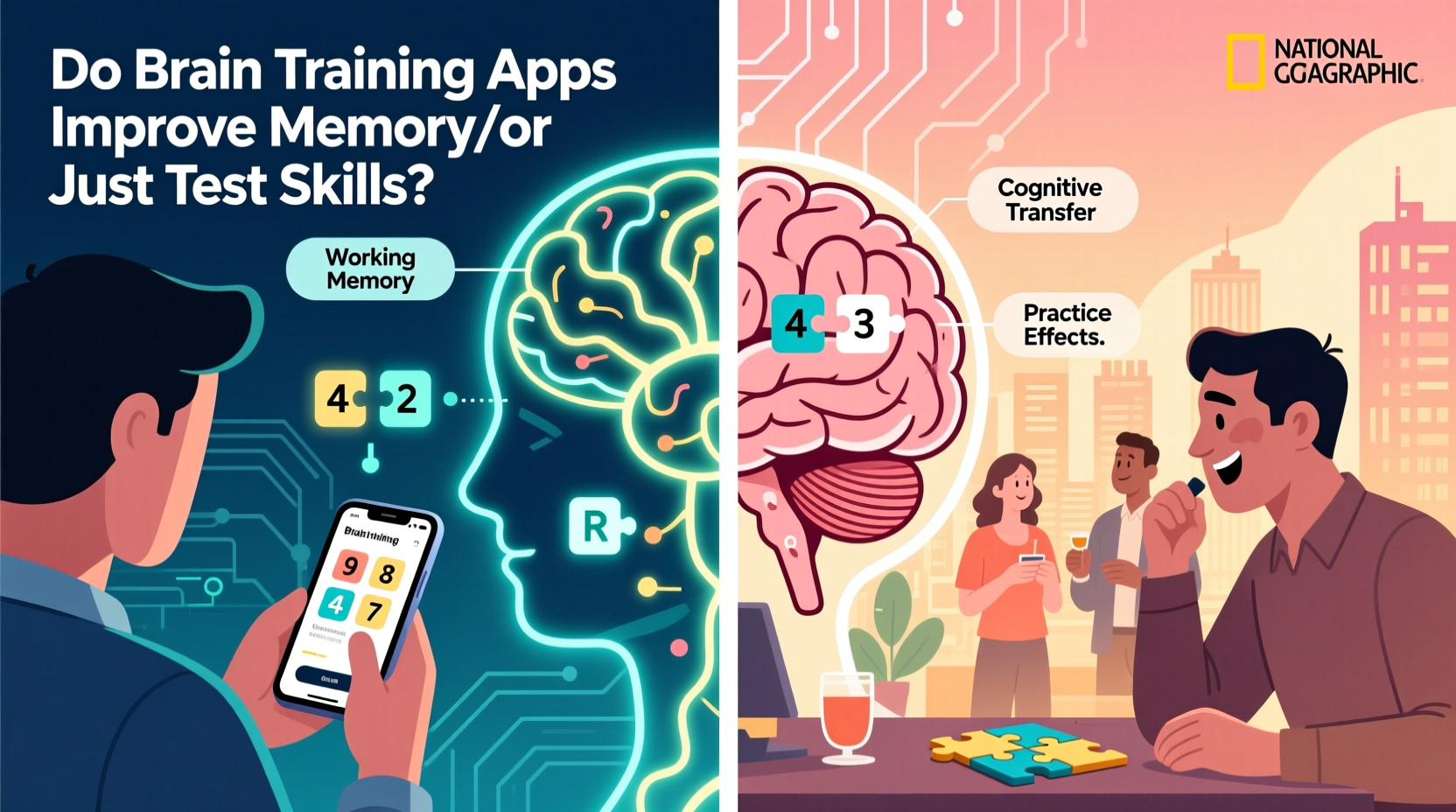
At the heart of the brain training movement is the concept of neuroplasticity—the brain's ability to reorganize itself by forming new neural connections throughout life. This phenomenon allows us to learn new skills, adapt to injuries, and refine thinking patterns. The promise of brain training apps hinges on this principle: if the brain can change, then structured mental exercises should, in theory, enhance cognitive functions like working memory, attention, and processing speed.
Researchers have documented cases where targeted cognitive training leads to measurable changes. For example, a 2008 study published in Proceedings of the National Academy of Sciences found that older adults who underwent intensive working memory training showed significant improvement—not only on trained tasks but also on untrained measures of fluid intelligence. This sparked optimism about transfer effects, where practicing one skill improves others.
However, subsequent research has tempered expectations. A large-scale 2016 review by the Stanford Center on Longevity and the Max Planck Institute concluded that while people get better at the games they play, there is little evidence these gains extend to everyday functioning, such as remembering names, following conversations, or managing daily tasks more efficiently.
“Improvement on a cognitive task doesn’t necessarily mean improved cognition overall. Transfer remains the holy grail—and most apps fall short.” — Dr. Monica Fabiani, Cognitive Neuroscientist, University of Illinois
What Brain Apps Actually Improve
Most brain training platforms target core cognitive domains:
- Working Memory: Holding and manipulating information temporarily (e.g., remembering a sequence of numbers).
- Processing Speed: How quickly you perceive and respond to stimuli.
- Attention Control: Sustaining focus and resisting distractions.
- Problem-Solving: Logical reasoning and pattern recognition.
Users often see progress in these areas because repetition builds familiarity. You’re not just strengthening memory—you're learning strategies, recognizing patterns, and becoming faster at decoding game mechanics. This is known as \"near transfer\": improvement on similar tasks. The challenge arises with \"far transfer\"—applying those gains to unrelated real-life situations.
For instance, mastering a dual n-back task (where you recall auditory and visual stimuli from several steps back) might make you better at that exact exercise, but it won’t necessarily help you remember where you left your keys or retain details from a work presentation.
Limitations of Current Brain Training Models
Despite their polished design, many brain training apps suffer from key scientific and practical shortcomings:
- Lack of Personalization: Most programs follow fixed difficulty curves, not adapting deeply to individual cognitive profiles.
- Overemphasis on Speed: Fast responses are rewarded, which may encourage guessing over thoughtful processing.
- Narrow Task Variety: Repetitive formats limit exposure to diverse cognitive challenges.
- Commercial Bias: Companies often highlight favorable results while downplaying contradictory evidence.
A telling example comes from Lumosity, which in 2016 settled with the Federal Trade Commission (FTC) over claims that its program could reduce cognitive decline and lower the risk of dementia. The FTC found insufficient scientific support for these assertions, resulting in a $2 million settlement and a requirement to back future claims with rigorous clinical trials.
This case underscores a broader issue: marketing often outpaces evidence. While apps may offer entertainment and mild cognitive stimulation, equating high scores with meaningful brain enhancement risks misleading consumers.
When Brain Training Works—And When It Doesn’t
Not all cognitive training is created equal. Certain conditions and approaches yield better outcomes:
| Scenario | Effectiveness | Why It Works (or Doesn’t) |
|---|---|---|
| Healthy adults seeking mental engagement | Moderate | Can improve motivation and short-term task performance; limited far transfer. |
| Older adults preventing mild cognitive decline | Low to moderate | Some studies show delayed decline in specific domains when combined with lifestyle changes. |
| Post-stroke or brain injury rehabilitation | High (under supervision) | Clinically guided cognitive rehab shows strong functional recovery benefits. |
| Children with ADHD or learning differences | Mixed | Working memory training shows modest attention gains, but effects may not persist. |
| General population expecting IQ boosts | Low | No robust evidence that apps increase general intelligence or creativity. |
The distinction between self-guided app use and structured, clinically validated interventions is crucial. In therapeutic settings, cognitive training is tailored, monitored, and integrated with other treatments—conditions rarely replicated in consumer apps.
Mini Case Study: Maria’s Experience with Daily Brain Training
Maria, a 54-year-old teacher, began using a popular brain training app after noticing she was forgetting students’ names more frequently. She committed to 15 minutes a day, six days a week, tracking her “brain score” diligently. After three months, her app performance improved by 40%, particularly in memory matching and number recall games.
But when asked if she felt sharper at work, she hesitated. “I’m better at the games,” she said, “but I still walk into a room and forget why I’m there.” She noticed one benefit: she was more mindful of her mental habits and started using a notebook consistently, which helped more than the app ever did.
Maria’s experience reflects a common outcome—engagement and practice lead to in-app improvement, but without integration into daily life, real-world impact remains limited.
How to Use Brain Training Apps Wisely
If you choose to use a brain training app, doing so strategically increases the chances of meaningful benefit. Consider the following checklist to maximize value:
📋 **Brain Training Best Practices Checklist**- ✅ Set realistic goals (e.g., “improve focus during meetings” vs. “get smarter”)
- ✅ Limit sessions to 10–20 minutes to avoid fatigue
- ✅ Combine app use with real-world cognitive activities (reading, puzzles, learning instruments)
- ✅ Monitor actual behavior changes, not just app metrics
- ✅ Prioritize apps backed by peer-reviewed research (e.g., CogniFit, BrainHQ)
- ✅ Avoid multitasking during training—full attention enhances learning
- ✅ Pair mental exercise with physical activity and quality sleep
Additionally, consider integrating training into a broader brain-healthy lifestyle. Research consistently shows that aerobic exercise, social engagement, healthy diet (particularly Mediterranean-style), and adequate sleep have stronger and more durable effects on memory and cognition than any app alone.
Step-by-Step: Building a Balanced Cognitive Routine
- Assess Your Needs: Identify specific concerns—memory lapses, distractibility, slow thinking.
- Select One App: Choose a reputable platform with adaptive challenges and progress tracking.
- Start Small: Begin with 5–10 minutes per day, 3–4 times weekly.
- Track Real-Life Indicators: Note improvements in concentration, recall, or mental clarity.
- Add Complementary Activities: Include crossword puzzles, language learning, or chess.
- Evaluate After 8 Weeks: Decide whether to continue based on tangible benefits, not just scores.
- Rotate or Retire: If stagnation occurs, switch to a new challenge or pause usage.
Frequently Asked Questions
Can brain training prevent dementia?
There is no conclusive evidence that brain training apps prevent Alzheimer’s disease or other forms of dementia. However, engaging in lifelong cognitive activity is associated with delayed onset of symptoms. Apps may contribute to cognitive reserve—the brain’s resilience to damage—but should not be relied upon as a preventive measure alone.
Are some apps more effective than others?
Yes. Apps developed with input from neuroscientists and validated in clinical trials (such as BrainHQ by Posit Science) tend to have stronger evidence behind them. Look for studies published in journals like Neuropsychological Rehabilitation or Journal of Cognitive Enhancement. Free apps with gamified quizzes often lack scientific rigor.
How much time should I spend on brain training?
Most experts recommend 10–20 minutes per day, 3–5 times per week. Excessive use can lead to mental fatigue and diminishing returns. Quality and consistency matter more than duration.
Conclusion: Tools, Not Transformations
Brain training apps are neither miracle workers nor complete gimmicks. They can enhance specific skills and provide enjoyable mental stimulation, particularly for individuals seeking structured ways to stay mentally active. However, the idea that these apps significantly improve broad memory or general intelligence lacks robust scientific backing.
The most effective approach to cognitive health is holistic: combine light digital training with real-world challenges, physical exercise, social interaction, and good sleep hygiene. View brain apps as supplements, not substitutes, for a cognitively rich life.
If you enjoy the sense of progress these platforms offer, continue using them—but pair that habit with actions that engage your brain more deeply: learning a new skill, having meaningful conversations, navigating without GPS, or reading complex material. These activities demand flexible thinking and emotional engagement, offering richer neural stimulation than any algorithm-driven puzzle.




 浙公网安备
33010002000092号
浙公网安备
33010002000092号 浙B2-20120091-4
Comments
No comments yet. Why don't you start the discussion?