
Backyard chicken keepers often look for safe, nutritious ways to supplement their flock’s diet using kitchen scraps. One common question arises frequently: Can chickens eat celery? The short answer is yes—chickens can eat celery, but not without precautions. While celery offers hydration and some nutrients, its fibrous structure and low caloric density mean it should be fed in moderation and prepared properly. Understanding how, when, and how much celery to offer ensures your chickens benefit without risking digestive issues or nutritional imbalances.
As a poultry nutrition-conscious food writer and culinary educator, I’ve worked with small-scale farmers and homesteaders to refine feeding practices that support both bird health and sustainable kitchen waste use. This guide breaks down everything you need to know about feeding celery to chickens—from safety considerations and nutritional value to preparation techniques and portion control.
Definition & Overview: What Is Celery?
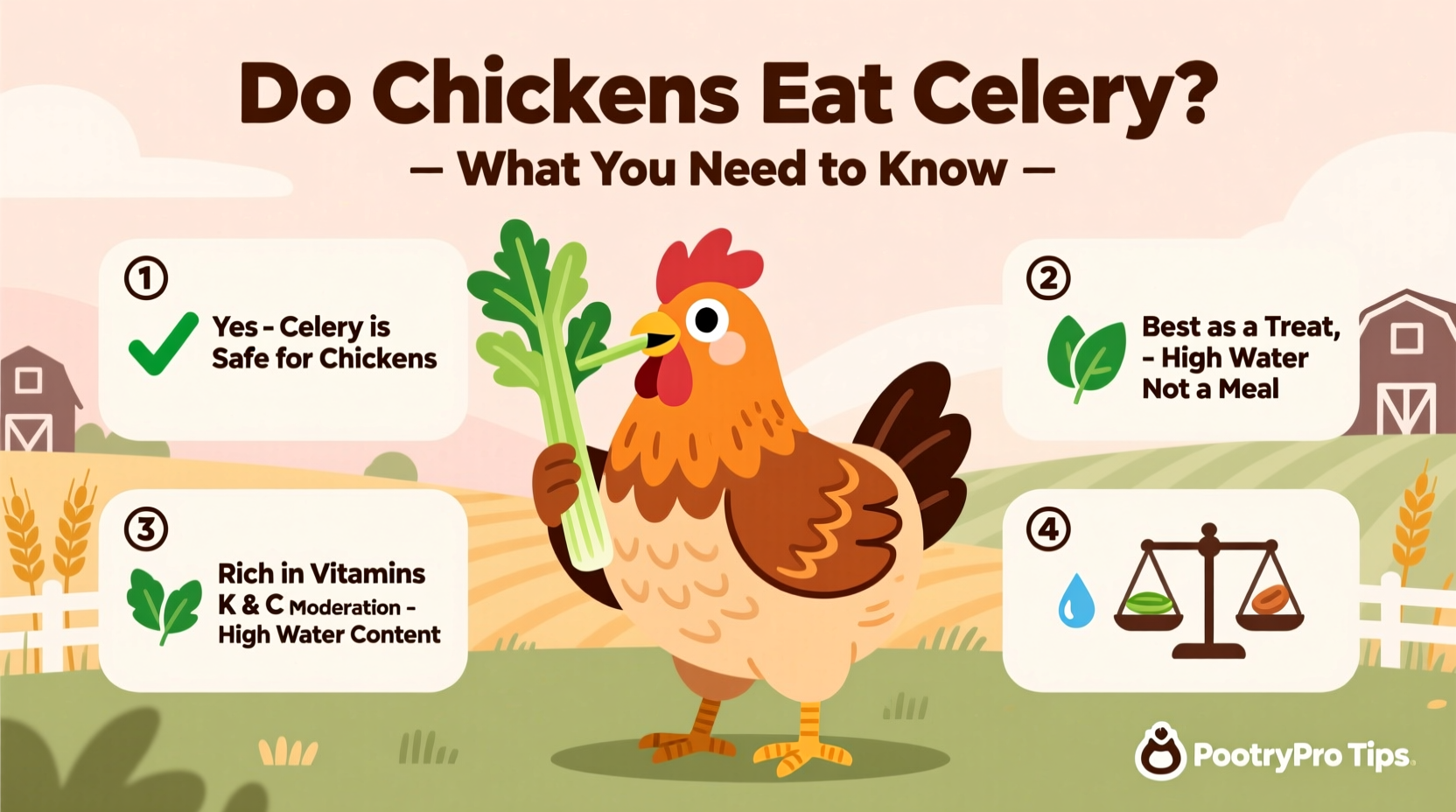
Celery (Apium graveolens) is a marshland plant species in the family Apiaceae, cultivated as a vegetable for its crisp stalks, leaves, and seeds. Native to the Mediterranean and Western Asia, celery has been used for medicinal and culinary purposes for thousands of years. Today, it's a staple in mirepoix (the French aromatic base), stocks, salads, and stir-fries.
The part most commonly consumed by humans—the pale green stalk—is composed largely of water (about 95%) and dietary fiber, particularly insoluble cellulose. It also contains modest amounts of vitamin K, potassium, folate, and antioxidants like apigenin. While low in calories and macronutrients, celery contributes to hydration and provides trace micronutrients.
For chickens, celery falls into the category of \"treat\" or \"supplemental feed,\" not a dietary staple. Unlike commercial layer pellets—which are formulated to meet all nutritional requirements—celery lacks sufficient protein, energy, calcium, and other critical nutrients needed for egg production and overall health.
Key Characteristics of Celery Relevant to Chicken Diets
| Characteristic | Detail |
|---|---|
| Flavor Profile | Mildly bitter, slightly salty, with herbal notes |
| Fiber Content | High in insoluble fiber (cellulose), difficult to digest |
| Moisture Level | Very high (~95%), excellent for hydration |
| Nutritional Value | Low in calories, moderate in vitamin K, potassium, and flavonoids |
| Digestibility (for chickens) | Poor unless finely chopped or cooked; whole strings pose choking risk |
| Shelf Life (raw) | 1–2 weeks refrigerated; spoils quickly at room temperature |
| Toxicity Risk | Non-toxic when fresh; avoid moldy, wilted, or pesticide-coated pieces |
These characteristics determine whether and how celery should be included in a chicken’s diet. Its high water content makes it useful during hot weather, while its stringy texture demands careful preparation to prevent crop impaction—a serious condition where undigested material blocks the digestive tract.
Practical Usage: How to Safely Feed Celery to Chickens
Feeding celery to chickens isn’t just about saying “yes” or “no”—it’s about method, frequency, and form. Here’s how to incorporate celery safely and effectively:
Step-by-Step Guide to Preparing Celery for Chickens
- Wash thoroughly: Rinse under cool running water to remove dirt, pesticides, or wax coatings. Organic celery reduces chemical exposure risks.
- Chop finely: Cut stalks into very small pieces (¼ inch or less). Remove long fibrous strings, which can tangle in the crop.
- Include leaves: Celery leaves are more nutrient-dense than stalks and easier for chickens to peck at. They contain higher levels of calcium, iron, and vitamins A and C.
- Limit quantity: Offer no more than one tablespoon per chicken, once or twice a week. Treats should make up no more than 10% of total daily intake.
- Monitor response: Watch for signs of digestive upset, reduced egg production, or changes in droppings after introducing celery.
Pro Tip: To further reduce fiber risk, lightly steam or blanch chopped celery before offering it. This softens the cellulose without removing nutrients. Cool completely before feeding.
When Celery Works Best in a Flock’s Diet
- Summer months: High moisture content helps keep chickens hydrated during heat stress.
- As enrichment: Scattering small pieces encourages natural foraging behavior.
- In combination with other treats: Mix diced celery with leafy greens, cucumber, or zucchini for a balanced veggie mix.
- For overweight birds: Low-calorie vegetables like celery can help manage weight when replacing higher-energy scraps like bread or grains.
Avoid feeding celery to young chicks under six weeks old. Their digestive systems are still developing, and fibrous foods increase the risk of blockages. Wait until pullets are fully feathered and eating grower feed consistently before introducing any table scraps.
Variants & Types of Celery: Which Are Safe for Chickens?
Not all forms of celery are equally suitable for poultry. Below is an overview of common types and their appropriateness:
| Type of Celery | Suitable for Chickens? | Notes |
|---|---|---|
| Raw stalks (finely chopped) | Yes (with caution) | Must be cut extremely small; avoid strings |
| Celery leaves | Yes | Nutrient-rich and easily consumed; preferred over stalks |
| Cooked celery | Yes (best option) | Softer texture reduces impaction risk; do not add salt or butter |
| Canned celery | No | High sodium content; preservatives may harm birds |
| Celery seed | No (not recommended) | Concentrated compounds; potential hormonal effects; unnecessary |
| Celery juice pulp | Yes (if fresh) | Less fibrous than raw stalks; ensure no added ingredients |
| Wild celery (smallage) | Yes (rare) | More aromatic; similar safety profile; confirm correct identification |
The safest form is **fresh, organic celery leaves and finely diced stalks**, offered raw or lightly cooked. Avoid processed versions such as canned, pickled, or seasoned products, which often contain salt, vinegar, sugar, or spices—all harmful to chickens.
Comparison with Similar Ingredients
Celery is often grouped with other crunchy vegetables that people consider feeding to chickens. However, key differences affect safety and nutritional value.
| Vegetable | Similarities to Celery | Differences | Chicken Safety |
|---|---|---|---|
| Bok choy | Crunchy texture, high water content | Higher in calcium and vitamin A; softer fibers | Yes – safer and more nutritious |
| Cucumber | Very high water content, cooling effect | Lower fiber, easier digestion, no strings | Yes – excellent summer treat |
| Green bell pepper | Crunchy, non-starchy | Richer in vitamin C; denser nutrition | Yes – well tolerated |
| Rhubarb | Long red stalks resemble celery | Leaves are toxic; stalks contain oxalic acid | No – dangerous even in small amounts |
| Fennel | Same plant family; feathery leaves | Sweeter flavor; contains anethole (safe in moderation) | Yes – palatable and digestible |
This comparison highlights that while celery is acceptable, **cucumber and leafy brassicas like bok choy are superior choices** due to better digestibility and higher nutrient density. Reserve celery for occasional variety rather than regular inclusion.
“In my experience managing urban flocks, chickens prefer the leaves of celery over the stalks. They’ll peck at them like herbs, ignoring the tough ribs altogether. That tells you something about palatability and ease of consumption.”
— Sarah Lin, Urban Poultry Consultant, Homestead Habit
Practical Tips & FAQs
Q: Can too much celery hurt my chickens?
A: Yes. Excessive celery can lead to crop impaction due to indigestible fibers. Because it's low in nutrients, overfeeding displaces space that should be filled with balanced layer feed, potentially causing deficiencies in protein or calcium—critical for strong eggshells.
Q: Can chickens eat celery roots (celeriac)?
A: Yes, in moderation. Celeriac (also called turnip-rooted celery) is a cultivar grown for its edible bulb. It’s starchy and more energy-dense than stalks. Peel and cook it before feeding to improve digestibility. Serve in pea-sized pieces.
Q: Is wild celery safe?
A: Only if positively identified. True wild celery (Vallisneria americana) grows in freshwater and is eaten by waterfowl—but it's not the same as garden celery. Misidentification could lead to poisoning from look-alikes such as water hemlock. Stick to cultivated varieties unless you're an expert forager.
Q: How should I store leftover celery intended for chickens?
A: Store unwashed stalks in a sealed container or wrapped in aluminum foil in the refrigerator crisper drawer. Use within 7–10 days. Discard if limp, slimy, or discolored. Never feed spoiled produce.
Q: Can I compost uneaten celery instead?
A: Absolutely—and wisely. If your chickens reject celery or leave scraps, composting returns nutrients to the soil. Just remember: avoid composting large quantities of fibrous materials together (like corn cobs and celery), as they break down slowly.
Q: Are there any health benefits to feeding celery?
A: Minimal direct benefits. Celery contains antioxidants like luteolin and apigenin, which have anti-inflammatory properties in mammals. Whether these translate meaningfully to avian health remains unproven. Hydration support is the clearest advantage.
Checklist: Safe Celery Feeding Protocol
- ☐ Wash celery thoroughly
- ☐ Chop into tiny pieces (<¼ inch)
- ☐ Remove fibrous strings
- ☐ Include nutrient-rich leaves
- ☐ Limit to 1 tbsp per bird, max twice weekly
- ☐ Do not season, salt, or oil
- ☐ Observe flock for adverse reactions
- ☐ Discard uneaten portions after 2 hours (to prevent bacterial growth)
Summary & Key Takeaways
Chickens can eat celery—but only under specific conditions. While non-toxic and hydrating, celery poses real risks if improperly prepared or overfed. Its high fiber and low nutrient content mean it should never replace a balanced poultry diet based on quality layer feed.
The safest approach is to offer **finely chopped, fresh celery leaves and tender inner stalks** in small amounts, no more than once or twice a week. Cooking or steaming reduces physical hazards, making it gentler on the digestive system. Always prioritize cleanliness, freshness, and portion control.
Among vegetable scraps, celery ranks lower in value compared to options like cucumber, squash, leafy greens, or cooked pumpkin. Use it sparingly for variety and hydration, especially in warm weather, but don't rely on it for nutrition.
Ultimately, responsible feeding means understanding not just what chickens *can* eat, but what they *should* eat. By treating celery as an occasional supplement—not a staple—you protect your flock’s health while reducing kitchen waste sustainably.




 浙公网安备
33010002000092号
浙公网安备
33010002000092号 浙B2-20120091-4
Comments
No comments yet. Why don't you start the discussion?