
Decorating trees with festive lights is a beloved tradition during the holiday season. Whether it's a towering evergreen in the front yard or a mature shade tree along a garden path, wrapping them in soft, glowing strings creates ambiance and warmth. But many homeowners overlook a critical question: do clip-on tree lights actually harm the branches they adorn? The answer isn't always obvious — while the damage may seem minimal at first, repeated or improper use of clip-style lights can lead to long-term stress on trees. Understanding the risks and knowing what to use instead can preserve both your landscape’s health and its beauty year after year.
How Clip-On Lights Interact with Tree Branches
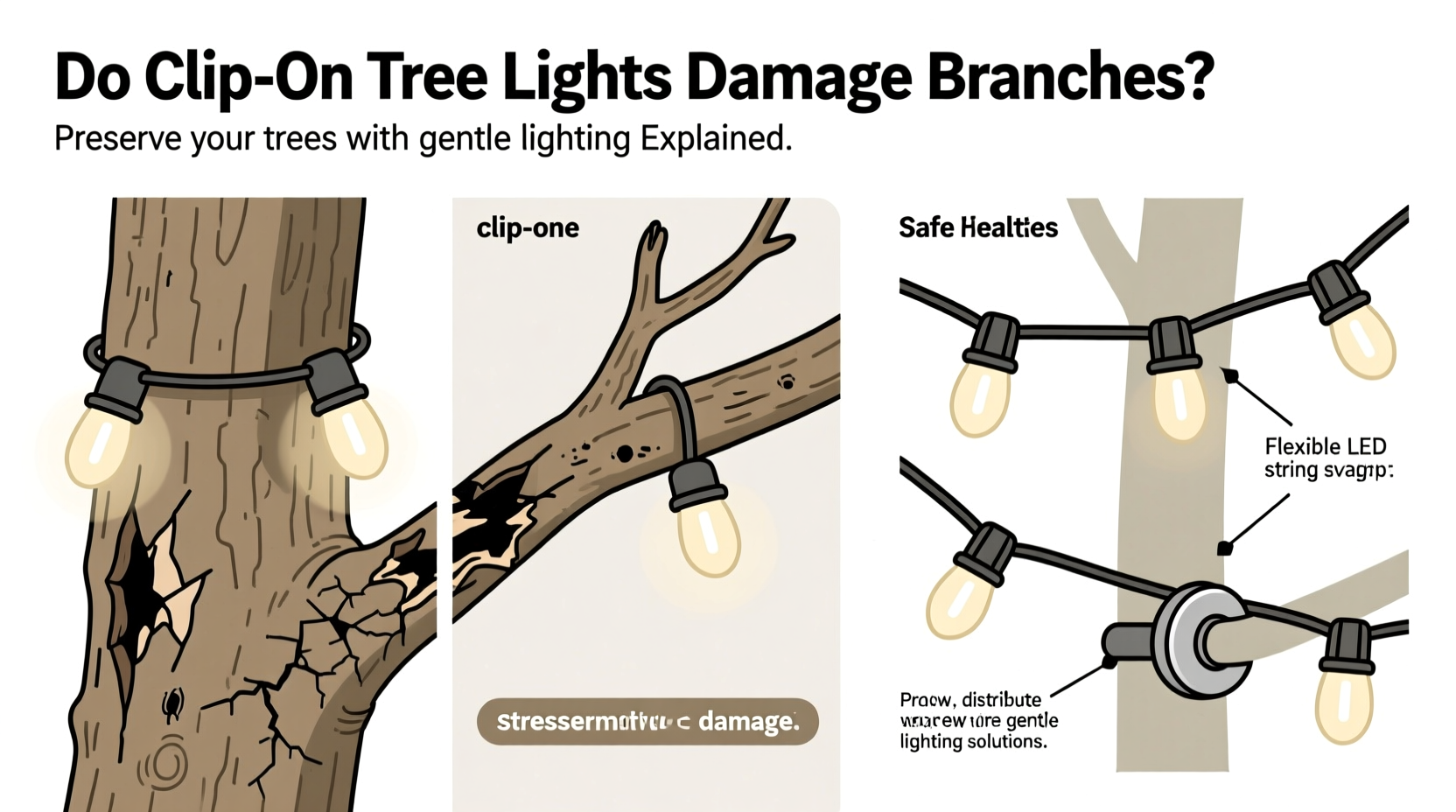
Clip-on Christmas lights are designed with small plastic hooks or clips that snap directly onto tree limbs. These fixtures make installation fast and secure, especially on conifers like pines and firs where branches are thick and spaced apart. However, the very mechanism that makes them convenient is also what poses risk.
When attached, the clips compress bark and cambium tissue — the living layer beneath the bark responsible for transporting water and nutrients. Over time, especially when left up for weeks or months, this pressure can:
- Restrict vascular flow in smaller branches
- Create entry points for pests and diseases
- Cause scarring or girdling if not removed before growth resumes in spring
- Break brittle twigs during installation or high winds
Younger trees and saplings are particularly vulnerable. Their bark is thinner and more pliable, making it easier for clips to cut into the surface. Even mature trees aren’t immune — seasonal swelling from moisture changes can cause once-loose clips to tighten unexpectedly.
The Hidden Long-Term Impact on Tree Health
While one season of clipped lights may not kill a tree, cumulative stress weakens its resilience. Arborists often see patterns in urban and suburban landscapes where otherwise healthy trees decline due to repeated mechanical injury from decorations.
A study by the International Society of Arboriculture noted that “chronic wounding from non-structural attachments” — including lights, hammocks, and signage — contributes to premature aging in ornamental trees. This type of damage rarely makes headlines but plays a quiet role in reduced canopy density, stunted growth, and increased susceptibility to environmental stressors like drought or extreme temperatures.
“Even minor wounds become gateways for pathogens. A single clip left too tight over winter can initiate a decay process that spreads internally for years.” — Dr. Alan Reyes, Urban Forestry Specialist, University of Washington
Additionally, clip-on lights encourage people to force wires into unnatural positions. Bending flexible young shoots to accommodate spacing between bulbs leads to microfractures in wood fibers. These don’t always heal cleanly, especially in species like maples or birches known for delicate branching structures.
Better Alternatives to Clip-On Tree Lights
Fortunately, there are several safer, more sustainable ways to illuminate trees without risking their health. The key is shifting from attachment-based methods to support systems that distribute weight evenly and avoid direct contact with living tissue.
1. Wrap Lights Around Branches (No Clips)
Instead of clipping, gently wrap string lights around larger, sturdy limbs using a loose spiral pattern. Use low-tension LED strands, which are lighter and generate less heat than older incandescent models. Start at the base of a branch and work outward, letting gravity help position the lights naturally.
This method avoids puncturing bark and allows room for expansion. When done carefully, it produces an even glow without stressing the tree.
2. Use Mesh Net Lights for Shrubs and Dense Foliage
For smaller trees, hedges, or shrubs with dense foliage (like boxwoods or junipers), net lights offer full coverage with minimal handling. These pre-wired grids drape over the plant like a blanket, eliminating the need to handle individual branches.
They’re especially useful for broadleaf evergreens such as holly or laurel, where fine twigs are easily snapped. After the season, fold and store them flat for reuse.
3. Install Ground-Based Uplighting
One of the most elegant and safest solutions is placing waterproof LED spotlights at the base of the tree. Aimed upward, these create dramatic silhouettes and highlight natural form without touching a single branch.
Solar-powered options are increasingly effective, offering automatic dusk-to-dawn operation with no wiring required. Position them among mulch or ground cover, ensuring cables (if applicable) are protected from foot traffic or mowing.
4. Suspend Lights from Nearby Structures
If you have a porch, pergola, or fence near the tree, consider hanging lights overhead and allowing them to dangle gently into the canopy. Use clear monofilament line or coated steel wire rated for outdoor use to suspend strands from above.
This technique works well for creating a “starlight” effect in large deciduous trees during winter dormancy. It keeps hardware off the tree entirely and simplifies removal.
5. Choose Lightweight Fiber Optic Displays
For temporary installations, fiber optic tree toppers or freestanding light stakes provide radiant effects without any physical connection to the tree. These plug-in units emit shimmering beams through thin glass or plastic filaments, mimicking stars or snowfall.
Place them at the trunk base or just outside the drip line. No climbing, no clipping, no risk.
Comparison Table: Lighting Methods vs. Tree Safety
| Method | Risk Level | Ease of Installation | Best For |
|---|---|---|---|
| Clip-on string lights | High | Easy | Temporary use on thick-barked conifers only |
| Wrap-around string lights | Low | Moderate | Most tree types; best with soft-touch LEDs |
| Net lights | Low | Very Easy | Shrubs, small evergreens, dense foliage |
| Uplighting (ground-based) | None | Easy | All mature trees; dramatic evening effect |
| Suspended from structure | Medium (if misinstalled) | Moderate | Trees near buildings or supports |
Step-by-Step Guide: Safely Lighting a Tree Without Damaging Branches
- Assess the tree’s condition – Look for signs of disease, weak limbs, or previous damage before installing anything.
- Choose the right light type – Opt for lightweight LEDs or net lights based on tree size and foliage density.
- Plan your layout – Decide whether to wrap, drape, or uplight. Avoid crossing wires over thin twigs.
- Install without clipping – Use gentle loops or ties made from soft garden tape or old pantyhose to secure wraps (never use wire or zip ties).
- Test placement at night – Turn on lights after dark to evaluate brightness and shadow distribution.
- Set a removal date – Mark your calendar to take down lights within two weeks of New Year’s Day to prevent spring growth interference.
- Store properly – Wind lights carefully around a cardboard reel and keep in a dry container to prevent tangles and corrosion.
Real Example: A Homeowner’s Lesson in Tree-Friendly Lighting
In Portland, Oregon, homeowner Maria Tran decorated her 15-year-old Japanese maple with clip-on lights every December for nearly a decade. Each year, she noticed fewer leaves in summer and slower growth, but assumed it was due to weather. In 2022, a certified arborist diagnosed localized dieback caused by girdling from forgotten clips embedded in secondary branches.
After removing damaged sections and switching to ground-level LED uplights, Maria observed improved vigor within one growing season. “I didn’t realize something so festive could hurt the tree I love,” she said. “Now I get compliments on the lighting effect — and the tree has never looked healthier.”
Checklist: Tree-Safe Holiday Lighting
- ✅ Inspect all branches for existing damage before decorating
- ✅ Use only LED lights (cooler, lighter, energy-efficient)
- ✅ Avoid metal wires, staples, nails, or zip ties
- ✅ Never staple or nail into trunks or main limbs
- ✅ Remove all lights before bud break in early spring
- ✅ Consider solar uplights for zero-contact illumination
- ✅ Store lights properly to extend lifespan and reduce waste
Frequently Asked Questions
Can I leave clip-on lights on my tree all year?
No. Leaving any decorative lights on a tree year-round increases the risk of girdling, pest infestation, and electrical hazards. Seasonal removal is essential for tree health and safety. Most manufacturers also void warranties if used beyond temporary display periods.
Are battery-operated lights safe for trees?
Yes, battery-powered lights pose minimal risk since they’re typically used on smaller branches or within containers and require little to no attachment. Just ensure the housing doesn’t press tightly against bark for extended periods, and remove promptly after use.
What should I do if a clip has already damaged a branch?
Remove the clip immediately. If the wound is shallow, the tree may seal it naturally. For deeper cuts or signs of rot, consult a certified arborist. Do not apply sealants unless advised — modern research shows they often trap moisture and worsen decay.
Conclusion: Light Up Your Landscape Responsibly
The charm of a softly lit tree at night is undeniable, but tradition shouldn’t come at the cost of your landscape’s long-term health. Clip-on lights, while convenient, carry real risks that accumulate silently over seasons. By choosing gentler alternatives — from draping techniques to smart uplighting — you protect your trees while enhancing their natural beauty.
Every decision we make in our yards echoes through the years. A tree planted today might stand for generations; let’s ensure our holiday habits honor that legacy. This season, decorate with care, innovate with intention, and shine bright — without leaving a mark.




 浙公网安备
33010002000092号
浙公网安备
33010002000092号 浙B2-20120091-4
Comments
No comments yet. Why don't you start the discussion?