
Essential oil diffusers have become a staple in homes, spas, and wellness spaces across the world. Their soft mist, subtle scents, and ambient glow promise relaxation, focus, and emotional balance. But behind the calming lavender haze lies a critical question: do these devices genuinely influence our mood through biochemical mechanisms, or are their effects primarily rooted in perception and expectation?
The answer isn’t binary. While scent undeniably interacts with the brain’s limbic system—central to emotion and memory—the extent to which diffusers produce measurable mood improvements versus placebo-driven comfort remains a nuanced discussion. This article explores the science of smell, the psychology of scent, and real-world applications to determine whether essential oil diffusers offer tangible emotional benefits.
The Science of Scent and the Brain
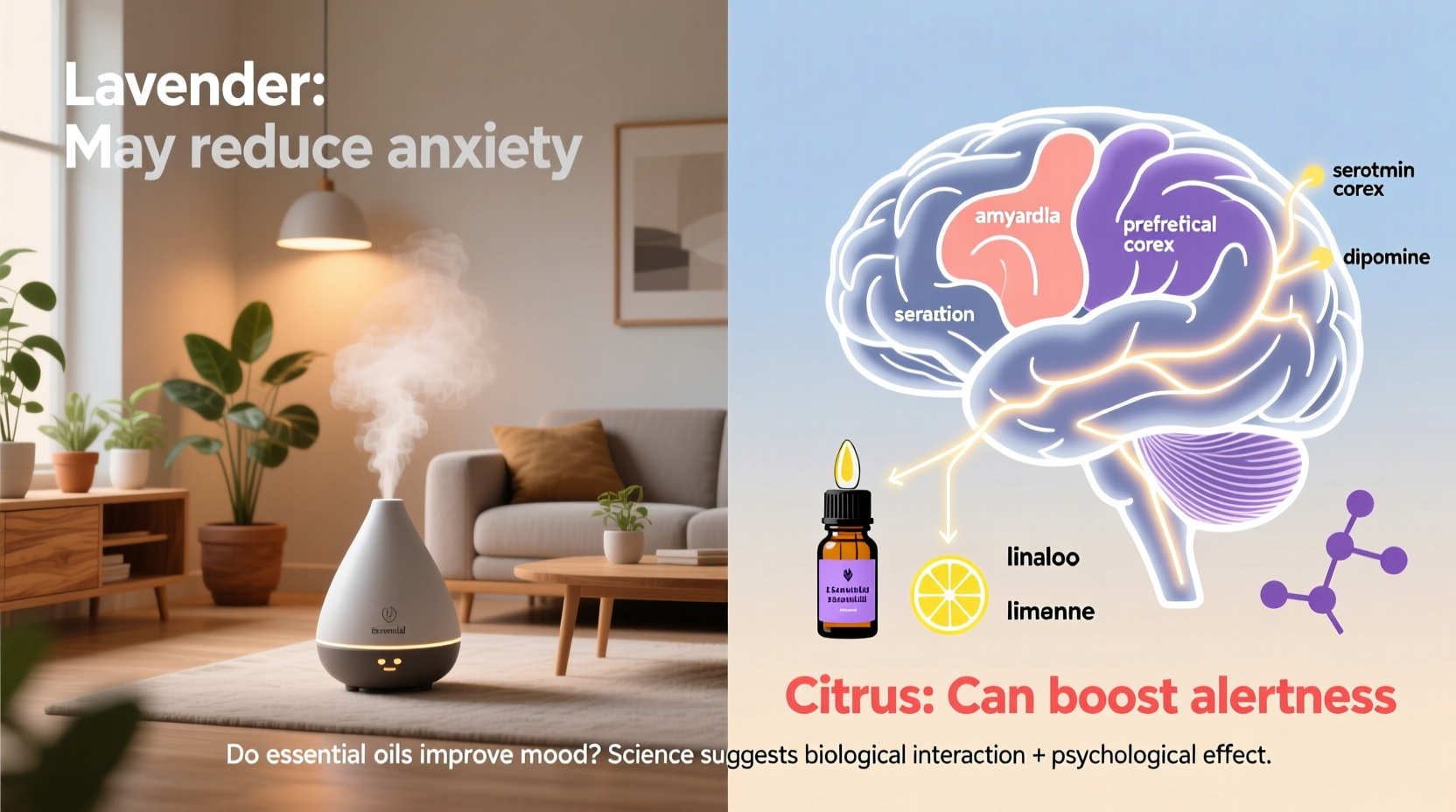
When you inhale the aroma from an essential oil diffuser, volatile compounds travel through the nasal passages and bind to olfactory receptors. These signals are transmitted directly to the limbic system, a network of brain structures including the amygdala, hippocampus, and hypothalamus—all deeply involved in emotion, stress response, and memory formation.
This direct neural pathway explains why certain smells can instantly evoke strong feelings or memories. For example, the scent of citrus may trigger alertness due to its stimulating effect on the central nervous system, while sandalwood might promote calm by reducing physiological markers of stress.
“Olfaction is one of the few senses that bypasses the thalamus and connects straight to emotional centers in the brain. That gives scent a unique power to influence how we feel—sometimes before we’re even consciously aware of it.” — Dr. Rachel Herz, Cognitive Neuroscientist and Author of *The Scent of Desire*
Studies support this connection. A 2014 meta-analysis published in *Phytotherapy Research* reviewed 16 clinical trials and found consistent evidence that aromatherapy reduced anxiety levels, particularly when using lavender, bergamot, and chamomile. Another study from Korea showed that participants exposed to sweet orange oil during dental procedures reported significantly lower anxiety scores than controls.
These findings suggest that essential oils aren’t merely “smelling nice”—they initiate measurable neurochemical changes. For instance, linalool (a compound in lavender) has been shown to modulate GABA receptors, similar to how anti-anxiety medications function, albeit at much milder levels.
The Role of Psychological Expectation
Despite biological plausibility, the placebo effect plays a substantial role in perceived mood enhancement. If someone believes lavender promotes relaxation, simply turning on a diffuser may trigger anticipatory calm—even if the oil used is inert.
In double-blind studies where participants couldn’t distinguish between real and sham aromatherapy, subjective reports of improved mood were often similar across groups. This doesn’t invalidate the experience but highlights that belief systems shape outcomes as much as chemistry.
Context amplifies this effect. The ritual of using a diffuser—dimming lights, choosing a favorite scent, carving out quiet time—creates a conditioned response. Over time, the act itself becomes a cue for relaxation, independent of the oil’s properties.
Common Essential Oils and Their Mood Effects
Not all essential oils affect mood equally. Some are backed by stronger research; others rely more on tradition and anecdote. Below is a comparison of popular oils used for emotional well-being:
| Essential Oil | Reported Mood Effect | Scientific Support | Key Compounds |
|---|---|---|---|
| Lavender (Lavandula angustifolia) | Calming, reduces anxiety | High – multiple RCTs show efficacy | Linalool, linalyl acetate |
| Bergamot (Citrus bergamia) | Uplifting, reduces stress | Moderate – supported in small trials | Limonene, linalool |
| Peppermint (Mentha piperita) | Alertness, mental clarity | Moderate – improves cognitive performance | Menthol, menthone |
| Ylang Ylang (Cananga odorata) | Relaxation, lowers heart rate | Low-Moderate – some physiological data | Linalool, geranyl acetate |
| Frankincense (Boswellia spp.) | Spiritual grounding, meditation aid | Low – mostly anecdotal/traditional | Boswellic acids, incensole acetate |
While lavender and bergamot have demonstrated measurable impacts on cortisol levels and heart rate variability, oils like frankincense or patchouli lack robust clinical validation. This doesn’t mean they’re ineffective—many users report profound emotional shifts—but suggests their benefits may stem more from personal meaning and ritual than pharmacological action.
A Real-World Example: Managing Work Stress with Diffusers
Consider Sarah, a project manager working remotely in a high-pressure tech firm. She began experiencing afternoon fatigue and irritability after back-to-back Zoom calls. On a friend’s recommendation, she started using a diffuser with a blend of grapefruit and rosemary oil during her midday break.
Within a week, she noticed improved focus and a reduction in mental fog. Was it the oils? Possibly. Grapefruit contains limonene, known to elevate dopamine and norepinephrine. Rosemary has 1,8-cineole, linked to enhanced concentration.
But equally important was the behavioral shift: diffusing became a signal to step away from her desk, stretch, and reset. The scent acted as a cue for self-care, interrupting the autopilot mode of overwork. In this case, both biochemical and psychological factors contributed to her improved mood.
“It’s not just what you smell—it’s what you do when you smell it. Ritual matters as much as chemistry.” — Dr. Alan Hirsch, Founder of the Smell & Taste Treatment and Research Foundation
Maximizing the Benefits: A Step-by-Step Guide
To get the most out of your essential oil diffuser—not just emotionally, but cognitively and behaviorally—follow this structured approach:
- Choose Evidence-Based Oils: Start with oils that have documented effects, such as lavender for relaxation or citrus blends for energy.
- Use Consistently at Key Times: Diffuse in the morning to energize, during work breaks to refocus, or before bed to wind down.
- Pair with Intentional Habits: Combine diffusion with breathing exercises, stretching, or shutting off screens to enhance mindfulness.
- Control the Environment: Use in a clean, uncluttered space with low lighting to amplify the sensory impact.
- Rotate Scents Weekly: Prevent olfactory fatigue and maintain sensitivity by changing oils every 5–7 days.
- Monitor Your Response: Keep a brief journal noting mood, focus, and sleep quality to identify patterns.
Common Misconceptions and Limitations
Despite growing popularity, several myths surround essential oil diffusers:
- Misconception: They can cure depression or replace therapy.
Reality: While they may support emotional wellness, they are not substitutes for clinical treatment. - Misconception: All-natural means completely safe.
Reality: Some oils can irritate lungs, especially in asthmatics or pets. Eucalyptus and tea tree, for example, are toxic to cats. - Misconception: Stronger scent equals better results.
Reality: Overpowering aromas can cause nausea or anxiety. Subtlety is more effective.
Additionally, product quality varies widely. Synthetic fragrances marketed as “essential oils” lack therapeutic compounds and may trigger negative reactions. Always opt for 100% pure, third-party tested oils from reputable brands.
Frequently Asked Questions
Can essential oil diffusers help with anxiety?
Yes, for some individuals. Clinical studies show that oils like lavender and bergamot can reduce subjective anxiety and physiological markers such as heart rate and cortisol. However, effects vary by person, and diffusers should complement—not replace—professional care for chronic anxiety.
Is there a difference between psychological and biological mood improvement?
Biologically, certain oils interact with neurotransmitter systems. Psychologically, expectation and ritual amplify perceived benefits. In practice, both pathways coexist. Even if part of the effect is placebo, the outcome—reduced stress, improved calm—is real and valuable.
How long does it take to notice mood changes from diffusing?
Some people report immediate shifts in alertness or relaxation within minutes. Others notice gradual improvements in sleep or stress resilience after consistent use over 1–2 weeks. Tracking your experience helps identify what works best.
Checklist: Using Diffusers for Optimal Mood Support
- ✅ Choose high-quality, pure essential oils
- ✅ Select oils based on desired mood effect (e.g., lavender for calm, citrus for energy)
- ✅ Diffuse for 30–60 minutes at strategic times (morning, pre-sleep, work breaks)
- ✅ Combine with mindful pauses or breathing exercises
- ✅ Keep usage consistent for at least one week before evaluating results
- ✅ Monitor for any adverse reactions, especially in children or pets
- ✅ Rotate scents to prevent olfactory fatigue
Conclusion: Beyond Placebo—Toward Integrated Well-Being
Essential oil diffusers sit at the intersection of neuroscience and psychology. While their mood-enhancing effects are partly psychological, dismissing them as “just placebo” overlooks the power of sensory rituals in modern life. In a world of constant stimulation, the simple act of pausing to breathe in a calming aroma can reset the nervous system, restore focus, and foster emotional awareness.
The most effective use of a diffuser isn’t passive—it’s intentional. When paired with self-awareness and healthy habits, essential oils become tools for emotional regulation, not magic cures. Whether the mechanism is biochemical, behavioral, or both, the result is meaningful: a greater sense of balance in daily life.




 浙公网安备
33010002000092号
浙公网安备
33010002000092号 浙B2-20120091-4
Comments
No comments yet. Why don't you start the discussion?