
Facial rollers have surged in popularity over the past decade, becoming a staple in skincare routines from Seoul to Los Angeles. Touted for their ability to depuff, sculpt, and refresh tired skin, these handheld tools—often made of jade or rose quartz—are frequently seen in morning and nighttime regimens. But behind the glossy Instagram reels and celebrity endorsements lies a pressing question: Do facial rollers actually reduce puffiness, or is the effect merely a fleeting result of cold temperature on the skin?
The answer isn’t as simple as yes or no. While there’s no magic in a piece of polished stone, there’s real physiology at play. Understanding how facial rollers work requires separating marketing claims from scientific principles, temporary sensations from lasting results, and ritual from reality.
The Science Behind Puffiness and Fluid Retention
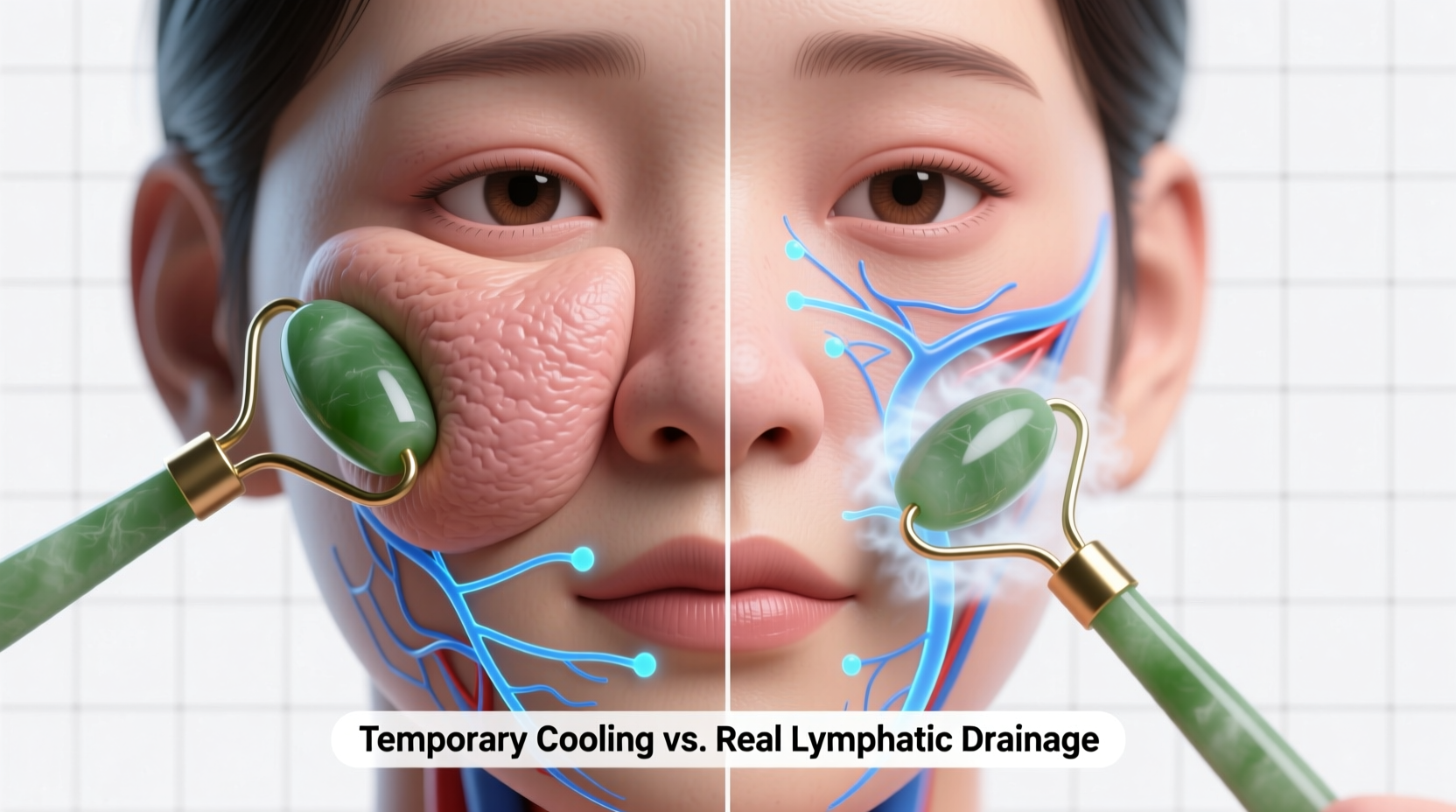
Puffiness, especially around the eyes and cheeks, often stems from fluid accumulation in the soft tissues—a condition known as periorbital edema when localized under the eyes. This buildup can be caused by several factors:
- Lack of sleep or poor sleep quality
- High sodium intake leading to water retention
- Allergies or sinus congestion
- Hormonal fluctuations
- Aging-related loss of skin elasticity and lymphatic efficiency
The face, like the rest of the body, relies on the lymphatic system to drain excess fluid and waste. Unlike blood circulation, which has the heart as a pump, the lymphatic system depends on muscle movement and external pressure to move fluid. When circulation slows—due to inactivity, aging, or inflammation—fluid can pool, particularly in gravity-dependent areas like the lower eyelids and jawline.
This is where facial rolling enters the picture. The mechanical action of rolling applies gentle pressure that may stimulate lymphatic drainage, encouraging fluid to move toward lymph nodes in the neck and collarbone area.
“Facial massage, including tool-assisted techniques like rolling, can support lymphatic flow. It won't replace medical treatments for chronic swelling, but it can offer mild, temporary decongestion.” — Dr. Nina Patel, Board-Certified Dermatologist
Cooling vs. Lymphatic Drainage: What’s Really Happening?
Most people store their facial rollers in the refrigerator before use. The cool sensation against the skin feels instantly soothing, especially in the morning when puffiness is most noticeable. But this raises a critical distinction: Is the reduction in puffiness due to the roller’s material and motion, or simply because it's cold?
Cold therapy causes vasoconstriction—the narrowing of blood vessels—which reduces blood flow temporarily and minimizes inflammation. This leads to a tightening effect and decreased appearance of swelling. However, once the skin warms back up, some of that puffiness may return. That’s why many describe the results as “temporary” or “cosmetic.”
On the other hand, the physical act of rolling—especially when done with proper technique—can create directional pressure that mimics manual lymphatic drainage (MLD), a therapeutic massage technique used clinically to reduce edema. When performed correctly, rolling from the center of the face outward and downward toward the lymph nodes may encourage fluid mobilization.
What the Research Says
Scientific studies specifically on facial rollers are limited. Most evidence remains anecdotal or derived from broader research on facial massage and lymphatic stimulation. However, some findings are telling:
- A 2020 study published in *Journal of Cosmetic Dermatology* found that consistent facial massage improved skin elasticity and reduced under-eye puffiness over four weeks.
- Research on manual lymphatic drainage shows measurable reductions in facial edema post-surgery, suggesting that controlled pressure can influence fluid dynamics.
- Ultrasound imaging in small pilot studies has shown increased microcirculation after facial massage, which may support detoxification and nutrient delivery.
While these don’t directly validate jade or rose quartz rollers, they do support the underlying mechanism: mechanical stimulation enhances circulation and lymph flow. The material of the roller matters less than the motion and consistency.
That said, placebo and ritual also play roles. The mindfulness of a nightly routine, the tactile sensation of smooth stone, and the cooling effect all contribute to perceived improvement—even if some benefits are psychological or short-lived.
Step-by-Step Guide to Effective Facial Rolling
To maximize potential benefits, technique is crucial. Random rolling won’t yield significant results. Follow this dermatologist-approved sequence for optimal lymphatic support:
- Prep Your Skin: Cleanse your face and apply a serum or facial oil to reduce friction.
- Start Cold: Remove your roller from the fridge (not freezer) for a mild cooling effect.
- Begin at the Center: Start between the eyebrows and roll upward toward the hairline using the smaller end.
- Move Outward: From the inner corners of the eyes, roll along the orbital bone toward the temples.
- Cheeks and Jawline: Place the roller at the nose, glide outward along the cheekbones, then down toward the lymph nodes below the ears.
- Neck and Collarbone: Finish by rolling downward along the sides of the neck and across the collarbone to encourage drainage.
- Duration: Spend 3–5 minutes total. Over-rolling can irritate sensitive skin.
Repeat this routine daily, ideally in the morning to combat overnight fluid buildup. Consistency over time increases the likelihood of visible, sustained improvements.
Do’s and Don’ts of Facial Rolling
| Do’s | Don’ts |
|---|---|
| Use light to moderate pressure—let the tool do the work | Press too hard; avoid dragging or tugging skin |
| Roll in upward and outward motions, finishing at lymph nodes | Roll upward on the neck (go downward to promote drainage) |
| Clean your roller weekly with mild soap and water | Share your roller without sanitizing (risk of bacterial transfer) |
| Store in the fridge for cooling benefits | Leave in direct sunlight or extreme heat (can damage stone) |
| Pair with a hydrating serum or facial oil | Use on active acne or broken skin (may spread bacteria) |
Real-World Example: Morning Routine Transformation
Sophie, a 34-year-old graphic designer from Portland, struggled with persistent under-eye puffiness. She attributed it to late nights and screen fatigue. After seeing influencers use facial rollers, she purchased a rose quartz set and committed to a 30-day trial.
Each morning, she rolled her face for five minutes after applying a vitamin C serum. She focused on the orbital area and jawline, following online tutorials. By day 10, she noticed her eyes looked “less swollen,” and makeup applied more smoothly. After a month, her partner remarked, “You look more awake.”
Sophie acknowledges the cooling sensation helps, but believes the ritual itself—taking time for self-care—reduces stress-related puffiness. Her experience aligns with what experts observe: while physiological changes occur, behavioral shifts amplify results.
Expert Insights on Long-Term Benefits
Dr. Lena Cho, a cosmetic dermatologist based in New York, emphasizes moderation and realistic expectations.
“The facial roller isn’t a miracle device. It won’t tighten loose skin or eliminate deep wrinkles. But when used properly, it can support microcirculation and provide mild depuffing. Think of it like stretching—it feels good, improves function slightly, and works best when done regularly.” — Dr. Lena Cho, MD
She cautions against overhyping results, especially for those with medical conditions like thyroid eye disease or chronic allergies, where puffiness has systemic causes. In such cases, topical tools offer only superficial relief.
Checklist: Maximizing Your Facial Roller Results
- ✅ Store your roller in the refrigerator for added cooling
- ✅ Use a slip-resistant product like facial oil or gel
- ✅ Roll in upward and outward motions, ending at the neck
- ✅ Limit sessions to 3–5 minutes to avoid irritation
- ✅ Clean your roller weekly with soapy water
- ✅ Be consistent—use daily for at least 4 weeks to assess results
- ✅ Avoid rolling over active breakouts or sunburned skin
Frequently Asked Questions
Can facial rollers permanently reduce puffiness?
No single session provides permanent results. Puffiness reduction is typically temporary, lasting a few hours. However, consistent use over weeks may improve lymphatic tone and skin resilience, leading to less frequent or severe puffiness.
Is jade better than rose quartz for reducing puffiness?
There’s no scientific evidence that one stone outperforms the other. Both retain coolness similarly. Jade is traditionally linked to balance in Chinese medicine, while rose quartz symbolizes self-love in crystal healing—but these are cultural, not clinical, distinctions. Choose based on preference, not promised efficacy.
Can I use a facial roller if I have sensitive skin?
Yes, but with caution. Use the larger end for gentler pressure, avoid inflamed areas, and sanitize the roller regularly. If you experience redness or irritation, discontinue use. Sensitive skin types may benefit more from room-temperature rolling rather than chilled tools.
Conclusion: Ritual Meets Reality
Facial rollers do reduce puffiness—but not in the way many assume. The cooling effect provides immediate, surface-level relief, while the mechanical motion supports lymphatic drainage for more meaningful, albeit subtle, results. It’s not a replacement for sleep, hydration, or medical treatment, but it can be a valuable adjunct to a holistic skincare routine.
The true power of the facial roller may lie in its ability to merge science with self-care. In a world of fast fixes and digital overload, taking five minutes to gently massage your face can reset both your skin and your mindset. Whether the depuffing lasts three hours or three days, the ritual itself fosters presence, awareness, and intentionality.




 浙公网安备
33010002000092号
浙公网安备
33010002000092号 浙B2-20120091-4
Comments
No comments yet. Why don't you start the discussion?