
Cats are creatures of habit, and their behaviors often carry deep roots in both biology and emotion. One of the most endearing — and sometimes perplexing — actions they display is kneading: rhythmically pressing their paws in and out against soft surfaces, much like a baker working dough. This behavior, commonly referred to as \"making biscuits,\" is frequently observed in adult cats, even though it originates in kittenhood. Understanding why cats continue to knead well into adulthood requires exploring both instinctual survival mechanisms and complex emotional responses. From nursing instincts to territorial signaling and stress relief, kneading serves multiple purposes that reveal much about a cat’s inner world.
The Origins of Kneading: A Kittenhood Survival Mechanism
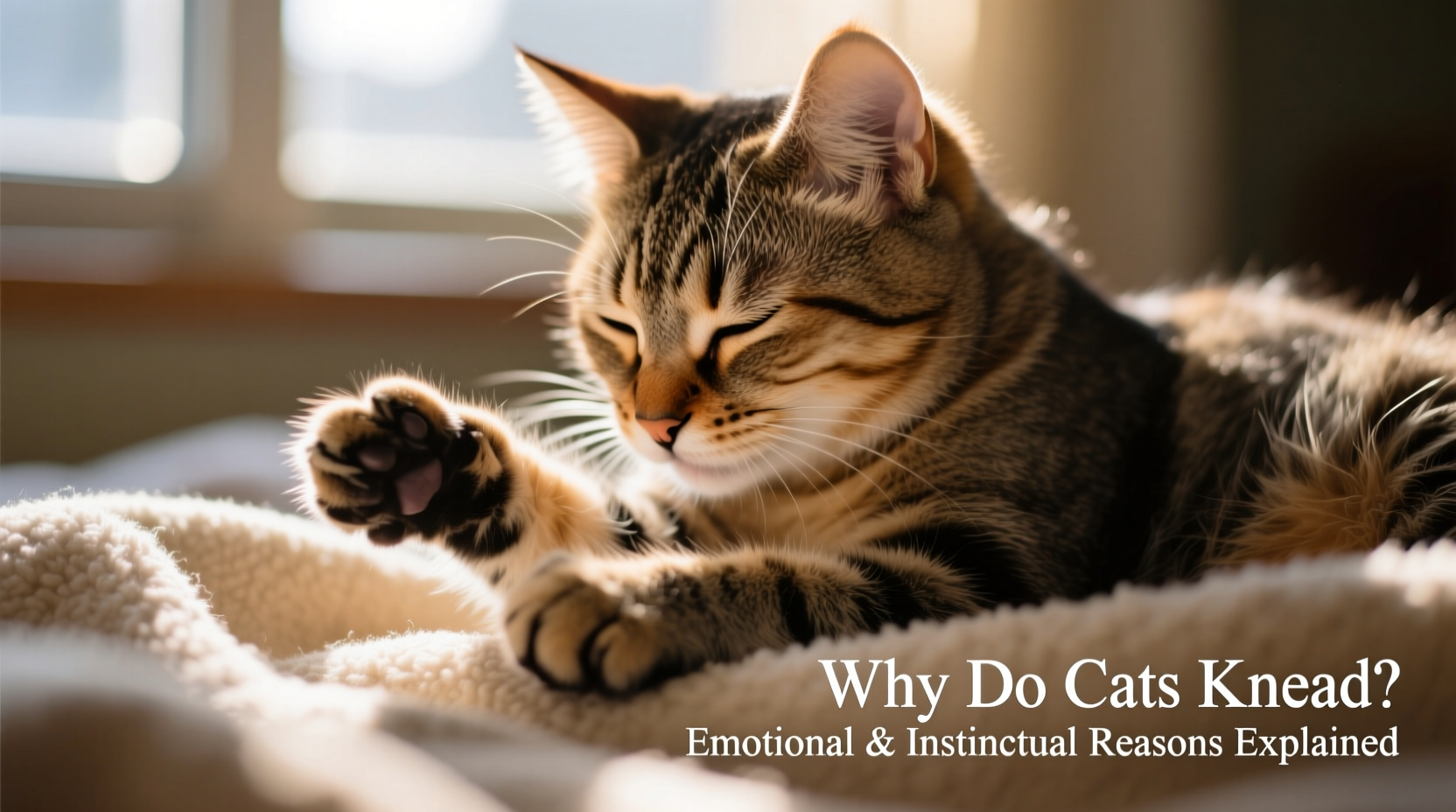
Kneading begins when kittens are just days old. During nursing, newborn kittens press their tiny paws against their mother’s mammary glands to stimulate milk flow. This action is not merely reflexive—it’s essential for survival. The rhythmic motion increases blood circulation in the mother’s tissue, encouraging milk letdown. Over time, this behavior becomes associated with warmth, nourishment, safety, and comfort.
Because the experience of nursing is so deeply tied to positive emotions, the act of kneading becomes imprinted in a cat’s behavioral memory. Even after weaning, many cats retain this motion as a self-soothing mechanism. When an adult cat kneads a blanket, a lap, or a favorite human, it may be mentally transported back to the security of early life. This regression isn’t a sign of immaturity; rather, it reflects emotional well-being and trust.
Emotional Triggers Behind Adult Kneading
While the origins of kneading are rooted in survival, its persistence in adult cats is largely emotional. Cats use kneading as a way to express comfort, relaxation, and attachment. It often occurs in moments of calm—when settling into a nap, receiving gentle strokes, or preparing a sleeping spot.
One key emotional driver is the association between kneading and maternal bonding. For cats, the sensation of pushing against a soft surface triggers memories of closeness with their mother. In domestic settings, humans often become surrogate caregivers, which explains why cats frequently knead on their owners’ laps or arms. This behavior signifies deep trust and emotional connection.
Additionally, kneading can serve as a form of emotional regulation. Just as humans might rock, fidget, or engage in repetitive motions when anxious or overstimulated, cats may knead to soothe themselves. The rhythmic nature of the movement has a meditative quality, helping lower heart rate and reduce stress. Observant pet owners often notice increased kneading during transitions—such as moving homes, introducing new pets, or changes in routine—suggesting its role in coping with uncertainty.
“Kneading is more than a leftover kitten behavior—it’s a window into a cat’s emotional state. When a cat kneads, it’s communicating safety, satisfaction, and social bonding.” — Dr. Elena Martinez, Feline Behavior Specialist
Instinctual and Territorial Functions of Kneading
Beyond emotion, kneading also fulfills several instinctual purposes tied to a cat’s evolutionary past. One of the most significant is scent marking. Cats have scent glands located in the soft pads of their paws, which release pheromones when pressure is applied. By kneading a surface, a cat subtly marks it as familiar and safe.
This territorial behavior helps cats establish a sense of ownership and comfort within their environment. Whether it's a favorite armchair, a bed pillow, or a human companion, repeated kneading reinforces the cat’s claim. Unlike aggressive marking (such as spraying), paw kneading is a passive, low-intensity method of leaving olfactory signals that say, “This space is mine, and I feel secure here.”
Another practical function relates to nest-building. In the wild, cats would knead tall grass or leaves to flatten them into a cozy resting spot. This instinct remains active in domestic cats, who often knead before lying down. The behavior may help assess the texture and stability of a surface while simultaneously preparing it for rest. Even on plush modern furniture, the ritual persists—a testament to how deeply ingrained these patterns are.
Do’s and Don’ts of Managing Kneading Behavior
| Do’s | Don’ts |
|---|---|
| Provide soft blankets or cushions for kneading | Reprimand or punish your cat for kneading |
| Trim your cat’s claws regularly to minimize discomfort | Push the cat away abruptly when it kneads on you |
| Use nail caps to protect skin and furniture | Assume kneading means the cat wants continued petting—watch body language |
| Observe context to understand emotional triggers | Ignore signs of overstimulation (tail flicking, flattened ears) |
Physical Comfort and Muscle Memory
The physical sensation of kneading also contributes to its persistence. The motion engages muscles in the shoulders, forelegs, and paws, providing mild exercise and stimulation. For indoor cats with limited opportunities for natural behaviors like climbing or hunting, kneading offers a small but meaningful outlet for motor activity.
Muscle memory plays a crucial role as well. Neural pathways formed during kittenhood remain active throughout life. Each time a cat kneads, it reinforces these connections, making the behavior more automatic. This is especially evident in cats who begin kneading without apparent trigger—often mid-purr or just before falling asleep. The action has become so integrated into their relaxation routine that it unfolds almost unconsciously.
In some cases, medical factors can influence kneading frequency. Older cats with arthritis or joint pain may knead less due to discomfort, while those experiencing hormonal shifts (such as unspayed females in heat) may exhibit increased kneading as part of nesting behavior. Always consider health when evaluating sudden changes in behavior.
Real-Life Example: Bella and Her Evening Ritual
Consider Bella, a 7-year-old domestic shorthair living with her owner, Mark. Every evening at 8 p.m., without fail, Bella jumps onto the couch, circles twice, then settles into Mark’s lap. She begins purring and starts kneading slowly, claws retracted, eyes half-closed. Mark initially found the claw pricks uncomfortable, but after trimming her nails and placing a fleece blanket over his legs, he came to cherish the ritual.
What Mark didn’t realize was that Bella’s kneading wasn’t random. It began shortly after he adopted her from a shelter where she had been rescued as a stray. Veterinarians believe she likely never experienced stable kittenhood care. Her nightly kneading may represent a reconstructed sense of safety—one she now associates with Mark’s presence. Over time, the behavior became a mutual bond: Mark feels needed, and Bella feels protected.
This case illustrates how kneading can transcend instinct, evolving into a personalized emotional language between cat and human. It’s not merely a throwback to infancy; it’s a living expression of trust built through consistent care.
Step-by-Step: How to Respond to Kneading Appropriately
Understanding why your cat kneads is only half the equation. Knowing how to respond ensures both comfort and boundary-setting. Follow this sequence to manage kneading positively:
- Observe the context. Is your cat relaxed? Overexcited? Approaching sleep? Context reveals intent.
- Check claw condition. Long or sharp claws can cause pain. Regular trimming every 2–3 weeks minimizes discomfort.
- Protect surfaces. Use washable throws on furniture or designate a kneading-only blanket.
- Respect limits. Some cats stop kneading if gently redirected; others become upset. Avoid forceful interruption.
- Encourage alternatives if needed. Offer a plush toy or heated bed to redirect the behavior when necessary.
- Reinforce positive interactions. Soft speech or gentle stroking during calm kneading strengthens emotional bonds.
This approach balances empathy with practicality, ensuring that kneading remains a joyful ritual rather than a source of tension.
Frequently Asked Questions
Is kneading a sign of anxiety or stress?
Not necessarily. While some cats knead more when stressed, the behavior itself is typically linked to comfort. However, excessive or frantic kneading—especially paired with vocalization or restlessness—may indicate underlying anxiety and should be evaluated alongside other behaviors.
Why does my cat drool when kneading?
Drooling during kneading is common and usually a sign of deep relaxation. It harks back to kittenhood, when sucking and swallowing accompanied nursing. In adult cats, drooling suggests extreme contentment, similar to how humans might sigh or smile in their sleep.
Should I discourage my cat from kneading on me?
Only if it causes pain or damage. Kneading is a natural, emotionally significant behavior. Instead of discouragement, consider management strategies like nail trims, protective layers, or redirection. Punishing the behavior can erode trust.
Actionable Checklist: Supporting Healthy Kneading Behavior
- ✅ Trim your cat’s claws every 2–3 weeks
- ✅ Provide designated soft surfaces for kneading (blankets, beds)
- ✅ Observe when and where kneading occurs to identify emotional triggers
- ✅ Use nail caps if scratching becomes an issue
- ✅ Avoid startling or scolding your cat during kneading episodes
- ✅ Monitor for changes in frequency or intensity that could signal health issues
- ✅ Respect your cat’s boundaries—even during affectionate moments
Conclusion: Embracing the Language of Kneading
Kneading is far more than a quirky habit—it’s a multifaceted behavior woven from threads of survival, emotion, and communication. When a cat presses its paws into your leg, it’s not just reliving kittenhood; it’s sharing a moment of vulnerability, claiming you as part of its safe space, and expressing profound contentment. Recognizing the depth behind this simple act transforms how we interact with our feline companions.
Rather than viewing kneading as a nuisance to be managed, consider it a gift—an intimate gesture passed down through generations of cats, preserved because it works. With mindful care, proper maintenance, and emotional awareness, you can honor this behavior while keeping both your cat and your furniture comfortable.




 浙公网安备
33010002000092号
浙公网安备
33010002000092号 浙B2-20120091-4
Comments
No comments yet. Why don't you start the discussion?