
Modern smartphones are built to endure more than ever. With rugged designs, reinforced glass, and shockproof cases now standard, many users wonder: is a screen protector still necessary? After all, if your phone case absorbs impact from drops, doesn’t that offer enough protection? The answer isn’t as straightforward as it seems. While a high-quality shockproof case significantly reduces the risk of damage from falls, it doesn't fully shield your screen from scratches, pressure cracks, or everyday wear. Understanding the distinct roles of cases and screen protectors is key to making an informed decision about safeguarding your device.
The Role of a Shockproof Phone Case
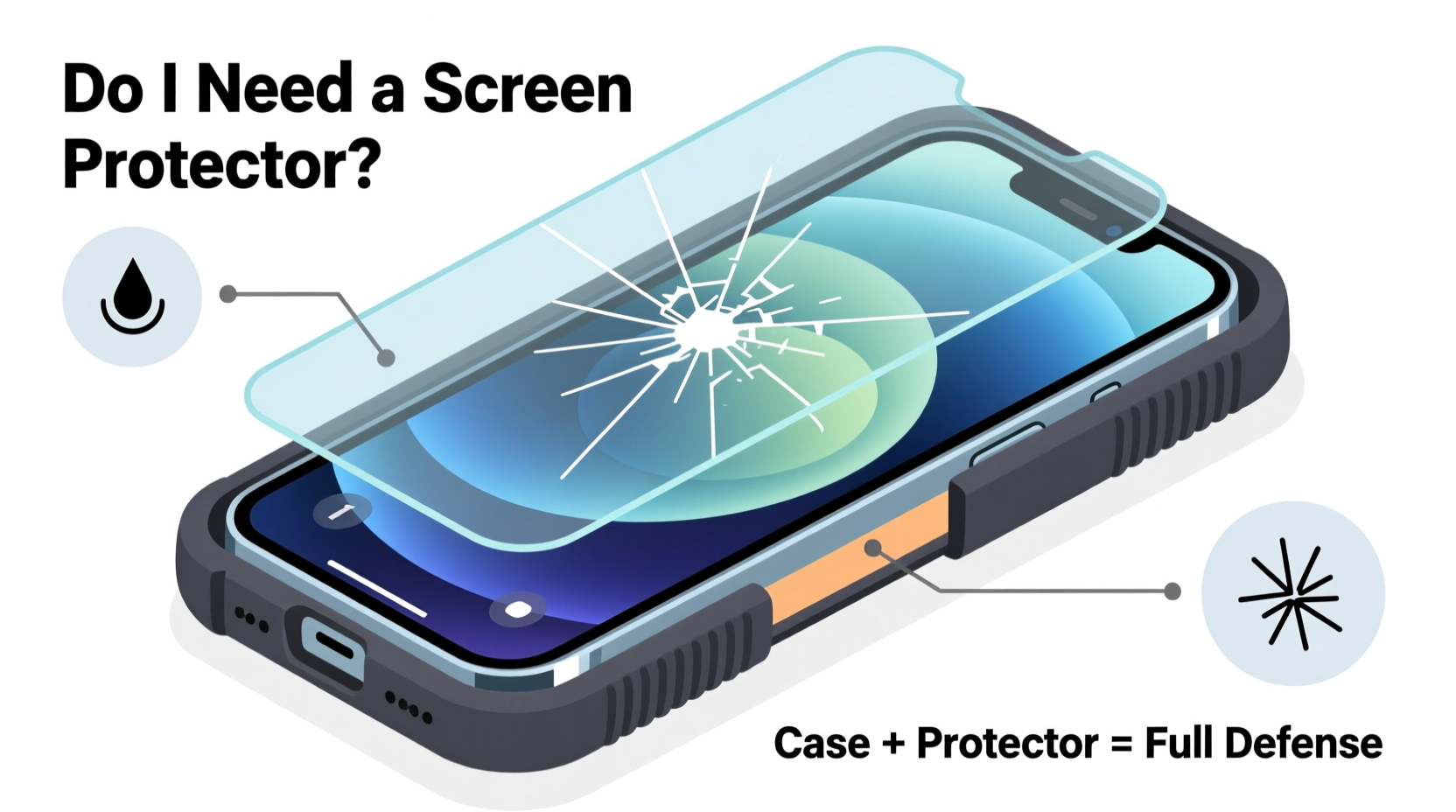
A shockproof phone case is engineered primarily to absorb and disperse impact energy during drops. These cases typically feature multi-layer construction—often combining soft silicone interiors with hard polycarbonate exteriors. Some even include air cushion corners or raised bezels that extend slightly above the screen and camera lens.
When dropped face-down on a hard surface, a well-designed case with a raised edge can prevent direct contact between the screen and the ground. However, this protection has limits. A case cannot guard against lateral pressure (like sitting on your phone in a pocket), abrasions from keys or coins in a bag, or fine scratches from dust particles. Additionally, not all “shockproof” cases are created equal—marketing claims often exaggerate real-world performance.
What Screen Protectors Actually Do
Screen protectors serve a different purpose: they act as a sacrificial layer. Whether made from tempered glass or plastic film, their job is to take the brunt of scratches, scuffs, and minor impacts so your actual display remains unharmed.
Tempered glass protectors, which are the most popular today, offer excellent clarity and touch sensitivity while providing meaningful resistance to scratches and light drops. They’re designed to crack instead of your phone’s screen, absorbing localized force. Even if they shatter, they often hold together due to adhesive layers, preserving usability until replacement.
Film-based protectors, such as TPU (thermoplastic polyurethane), are thinner and more flexible. They’re less effective against sharp impacts but excel at resisting daily abrasion and maintaining a smooth feel. Some advanced models even offer self-healing properties for minor scuffs.
“Cases save phones from catastrophic drops, but screen protectors defend against the slow, invisible degradation of daily use.” — David Lin, Mobile Device Engineer at TechShield Labs
Real-World Scenarios: When Protection Matters Most
Consider this common situation: Sarah uses a rugged OtterBox Defender on her smartphone. She feels confident walking through crowded streets, tossing her phone into her backpack, or setting it down on gritty outdoor tables. One day, she places her phone face-down on a concrete bench while waiting for coffee. Moments later, she hears a faint crack. Upon inspection, the screen has a spiderweb fracture—despite never being dropped.
Why did this happen? The shockproof case protected against vertical impacts, but the uneven texture of the concrete applied pressure across multiple points on the screen. Without a screen protector, the full force transferred directly to the display glass.
This scenario illustrates a critical gap: cases don’t eliminate surface pressure risks. Similarly, sliding your phone into a jeans pocket with keys or coins can introduce micro-scratches over time—damage that accumulates invisibly but degrades visual quality and resale value.
Comparing Protection Levels: Case vs. Screen Protector
| Threat Type | Shockproof Case Effectiveness | Screen Protector Effectiveness |
|---|---|---|
| Dropping phone face-down | Moderate (if raised bezel present) | High (absorbs impact) |
| Sitting on phone in pocket | Low (pressure bypasses case) | High (distributes pressure) |
| Scratches from keys/dust | None | Very High |
| Side or corner drop | Very High | Low |
| Long-term surface wear | None | Very High |
As shown, each component addresses different vulnerabilities. Relying solely on a case leaves your screen exposed to several common forms of damage that occur outside of dramatic drops.
Step-by-Step Guide to Assessing Your Need
Follow this simple process to determine whether you should use a screen protector alongside your shockproof case:
- Evaluate your case design: Does it have a raised bezel that extends at least 0.3mm above the screen? If not, your display touches surfaces directly.
- Assess your usage habits: Do you frequently place your phone face-down, carry it loosely in bags, or use it outdoors on rough surfaces?
- Check your environment: Are you often in sandy, dusty, or abrasive settings (beaches, construction sites, workshops)?
- Consider resale value: Even minor scratches reduce perceived condition. If you upgrade every 1–2 years, pristine screens matter.
- Test with a temporary protector: Apply a budget-friendly tempered glass protector for two weeks. Notice any changes in confidence or usability.
Expert-Recommended Checklist for Maximum Protection
- ✅ Use a case with a raised screen edge
- ✅ Pair it with a high-quality tempered glass screen protector
- ✅ Avoid stacking phone with keys or metal objects
- ✅ Replace cracked or bubbling protectors immediately
- ✅ Clean screen and protector weekly with microfiber cloth
- ✅ Store phone face-up when possible
Frequently Asked Questions
Can a screen protector interfere with facial recognition or fingerprint sensors?
No, modern screen protectors—especially those designed for your specific phone model—are engineered to be compatible with biometric systems. However, low-quality or poorly aligned protectors may cause occasional delays. Always choose OEM-recommended or trusted third-party brands.
Won’t a screen protector make the phone too bulky?
Not anymore. Premium tempered glass protectors add less than 0.3mm of thickness and maintain excellent touch sensitivity. Most users forget they’re there after installation. The added protection far outweighs any negligible change in feel.
If my phone has Gorilla Glass, do I still need a protector?
Glass strength improvements like Corning Gorilla Glass enhance durability, but they don’t make screens scratch-proof. Sand particles (which contain quartz) are harder than Gorilla Glass and can cause micro-scratches. A protector preserves the original finish and provides an extra buffer against cracks under pressure.
Final Thoughts: Redundancy Is Smart, Not Excessive
In personal electronics, redundancy is a feature, not a flaw. Just as seatbelts complement airbags in cars, screen protectors and cases work best together. A shockproof case dramatically improves survival rates during drops, but it cannot replace the targeted defense a screen protector offers against abrasion, pressure, and environmental wear.
Think of it this way: would you drive a new car without both bumpers and windshield wipers just because it has strong frame construction? Protection layers serve different functions. Omitting one increases avoidable risk.
“The best phone protection strategy is layered: case for structure, screen protector for surface integrity.” — Dr. Lena Patel, Consumer Electronics Safety Researcher
Take Action Today
Your smartphone is likely one of your most-used and valuable personal devices. Investing $10–$20 in a quality screen protector is a minimal cost compared to repair bills or diminished resale value. Whether you're a cautious user or someone who lives on the move, combining a shockproof case with a reliable screen protector gives you comprehensive coverage against both sudden accidents and gradual wear.




 浙公网安备
33010002000092号
浙公网安备
33010002000092号 浙B2-20120091-4
Comments
No comments yet. Why don't you start the discussion?