
There’s nothing quite like the scent of a freshly cut Christmas tree filling your home with warmth and nostalgia. For many, that rich, woodsy aroma is as essential to the holiday season as carols or cookies. But if you’ve noticed your tree doesn’t carry the same bold fragrance it once did—no matter how much you remember from childhood—it’s not just your imagination. Several factors influence how strongly a Christmas tree releases its signature scent, and understanding them can help you reclaim that beloved pine perfume.
The diminished fragrance isn’t always due to poor care. It often stems from biological, environmental, and logistical changes in how trees are grown, harvested, transported, and maintained. By identifying the root causes, you can take meaningful steps to enhance your tree’s natural aroma—or make better choices next year.
Tree Species and Natural Oil Content
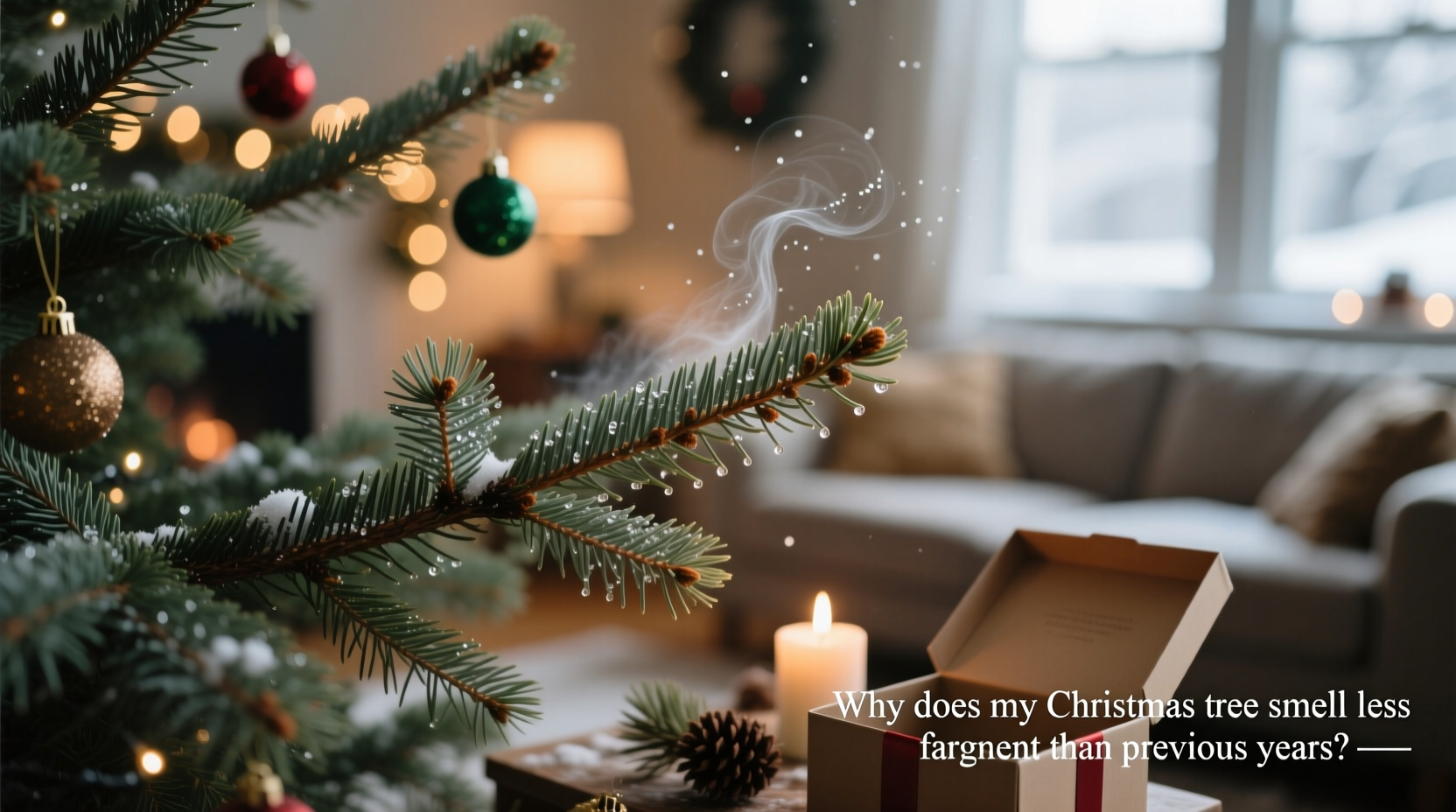
Not all Christmas trees are created equal when it comes to scent. The strength and persistence of a tree’s fragrance depend largely on its species and the concentration of volatile organic compounds (VOCs) in its needles and bark. These oils, primarily found in resin canals within the tree, evaporate into the air when warmed, releasing that familiar evergreen bouquet.
Some species are renowned for their powerful aroma:
- Balsam Fir – Often considered the gold standard for fragrance, with a sweet, sharp pine scent.
- Nordmann Fir – Popular for its full shape and needle retention, but milder in scent.
- Frasier Fir – Strong citrus-pine notes, commonly used in wreaths and garlands for their aromatic punch.
- Scotch Pine – Earthy and long-lasting, though less intense than balsam.
If your current tree is a Nordmann or Douglas Fir, you may be experiencing a natural trade-off: excellent needle retention and appearance at the cost of lower oil content. Many commercial growers now favor these low-scent varieties because they ship better and last longer in homes without shedding—but they sacrifice olfactory impact.
“Fragrance is directly tied to resin production. Trees bred for aesthetics and durability often lose some of their aromatic potency.” — Dr. Alan Reeves, Forest Botanist, University of Vermont
Harvest Time and Transport Delays
One of the most overlooked reasons for weak scent is time between harvest and setup. Most real Christmas trees are cut weeks before they reach retail lots. During this period, especially if stored improperly, the tree begins to dry out, and its essential oils degrade or evaporate.
Trees shipped long distances—from farms in the Pacific Northwest to urban centers in the East—are particularly vulnerable. Cold storage helps preserve freshness, but prolonged transit reduces overall vitality. A tree that spends five days in a semi-truck loses significantly more volatile oils than one cut locally and set up within 48 hours.
A study by the National Christmas Tree Association found that trees displayed for more than 10 days post-harvest lost up to 60% of their detectable fragrance compounds, even with adequate watering.
How Harvest Timing Affects Scent
| Time Since Cut | Fragrance Level | Oil Retention Estimate |
|---|---|---|
| 0–2 days | Strong, vibrant | 90–100% |
| 3–5 days | Moderate | 70–80% |
| 6–10 days | Noticeably weaker | 40–60% |
| 10+ days | Faint or absent | Below 30% |
This decline accelerates in warm or dry environments. If your tree sat outdoors on a lot under winter sun during a thaw, its surface resins likely began breaking down quickly.
Indoor Conditions That Suppress Fragrance
Once inside, your home environment plays a crucial role in whether the tree’s scent is released—or suppressed. Contrary to instinct, extremely cold rooms don’t preserve scent; they inhibit evaporation of aromatic oils. Conversely, overly warm, dry air dehydrates the tree too fast, causing oils to dissipate prematurely.
Ideally, temperatures between 65°F and 70°F (18°C–21°C) with moderate humidity (40–50%) allow for optimal fragrance release without accelerating needle drop. However, modern heating systems often create arid indoor climates, especially in tightly sealed homes.
Additional factors include:
- Proximity to heat sources – Placing the tree near radiators, fireplaces, or vents dries it out rapidly.
- Poor hydration – A tree that doesn’t drink enough water seals its cut stump, stopping sap flow and reducing oil circulation.
- Airflow – Stagnant air prevents scent dispersion. A gentle ceiling fan can help distribute aroma without drying the tree.
Step-by-Step Guide to Maximize Your Tree’s Scent
You can still boost your current tree’s aroma, even if it started off weak. Follow this timeline to extract every possible note of pine:
- Re-cut the Base (Day 1)
Make a fresh horizontal cut of at least ½ inch from the bottom of the trunk. This opens clogged vascular tissues and restores water uptake, which helps circulate remaining oils. - Use Lukewarm Water (Ongoing)
Fill the stand with lukewarm water—never cold. Warm water is absorbed faster, helping the tree stay hydrated and active. - Add Natural Enhancers (Optional)
Mix one teaspoon of sugar or corn syrup per quart of water to feed residual living cells. Avoid commercial additives with alcohol or bleach, which can block absorption. - Warm the Tree Gently (Daily)
For short periods (10–15 minutes), direct a low-speed hairdryer over the branches from a distance. Heat encourages resin evaporation. Do not overheat. - Crush or Rub Needles (As Needed)
Gently crush a few clusters of needles between your fingers near the trunk. This ruptures oil sacs and releases trapped fragrance instantly. - Refresh Every Few Days
Check water levels daily. Refill as needed. On day 5 and 9, consider another small trim if the tree has been standing more than 10 days.
“The key isn’t forcing scent—it’s supporting the tree’s natural ability to emit it. Hydration and temperature are everything.” — Karen Mele, Holiday Horticulturist & Sustainable Tree Advocate
Common Mistakes That Kill Christmas Tree Aroma
Even well-intentioned actions can unintentionally mute your tree’s fragrance. Here are frequent errors and what to do instead:
| Mistake | Why It Hurts Fragrance | What To Do Instead |
|---|---|---|
| Waiting to water after setup | Trunk seals within hours, blocking water intake | Set up stand and fill immediately after cutting |
| Using old or dirty water | Bacteria clog stem pores | Empty and refill with fresh water every 3–4 days |
| Storing tree in garage overnight | Cold exposure without water causes shock | Bring indoors quickly and hydrate right away |
| Adding aspirin, vodka, or soda | No proven benefit; may harm uptake | Stick to plain water or sugar solution |
Real Example: How One Family Restored Their Tree’s Scent
The Thompsons in Portland, Maine, were disappointed when their pre-lit Nordmann fir barely emitted any scent after two weeks in the living room. They had bought it early for convenience, but by mid-December, it felt more decorative than sensory.
After reading about re-cutting techniques, they removed the tree from its stand late one evening and made a fresh ¾-inch cut. They refilled the stand with lukewarm water mixed with a tablespoon of sugar. Within 24 hours, the water level dropped two inches—proof the tree was drinking again.
They also began lightly rubbing handfuls of needles each morning. By day three, family members reported “a faint but distinct pine smell” returning. By Christmas Eve, the aroma was noticeable upon entering the house. It wasn’t as strong as a balsam, but it was present—and meaningful.
“It reminded us that even small efforts can revive something we thought was gone,” said Sarah Thompson. “Now we plan to buy later and choose based on scent, not just looks.”
FAQ: Common Questions About Christmas Tree Fragrance
Can I make a fake tree smell like a real one?
Yes, but only temporarily. Spray artificial tree scents or use essential oil diffusers with pine, spruce, or fir oil. You can also tuck sachets of dried evergreen clippings into branches. However, these won’t replicate the dynamic, evolving scent of a living tree.
Does tree age affect smell?
Yes. Older trees generally have denser wood and more resin, meaning potentially stronger scent—provided they’re fresh. However, age in storage matters more: a young tree kept cool and wet for a week will smell better than an older one sitting for two weeks in freezing wind.
Why does my tree smell stronger at certain times of day?
Fragrance fluctuates with temperature and activity. It’s often strongest in the afternoon when indoor heat peaks, or after someone brushes against the branches, releasing trapped oils. Turning on nearby lights (especially incandescent) can also gently warm the tree and enhance aroma.
Checklist: How to Ensure a Fragrant Christmas Tree Next Year
To avoid disappointment next holiday season, follow this actionable checklist:
- ✅ Choose a high-scent species (e.g., Balsam or Frasier Fir)
- ✅ Buy later in the season—ideally within 7–10 days of display
- ✅ Inspect for freshness: needles should be springy, not brittle
- ✅ Smell the trunk base before purchase—strong pine indicates oil presence
- ✅ Re-cut the trunk within 4 hours of purchase
- ✅ Keep the tree hydrated 24/7—check water twice daily
- ✅ Place away from heat sources and direct sunlight
- ✅ Consider local farms or choose “cut-your-own” options for maximum freshness
Conclusion: Bring Back the Spirit of the Season
The fading scent of your Christmas tree isn’t just a minor inconvenience—it can dull the emotional resonance of the holidays. That pine fragrance is deeply linked to memory, comfort, and tradition. When it’s missing, something feels incomplete.
But the good news is that with informed choices and simple care practices, you can reclaim that crisp, uplifting aroma. Whether it’s choosing a more fragrant species, optimizing hydration, or simply giving the branches a gentle rub to awaken dormant oils, every action brings you closer to the experience you remember.
Next year, don’t settle for a silent centerpiece. Seek out scent. Prioritize freshness. And let your tree do what it’s meant to: fill your home not just with lights, but with life.




 浙公网安备
33010002000092号
浙公网安备
33010002000092号 浙B2-20120091-4
Comments
No comments yet. Why don't you start the discussion?