
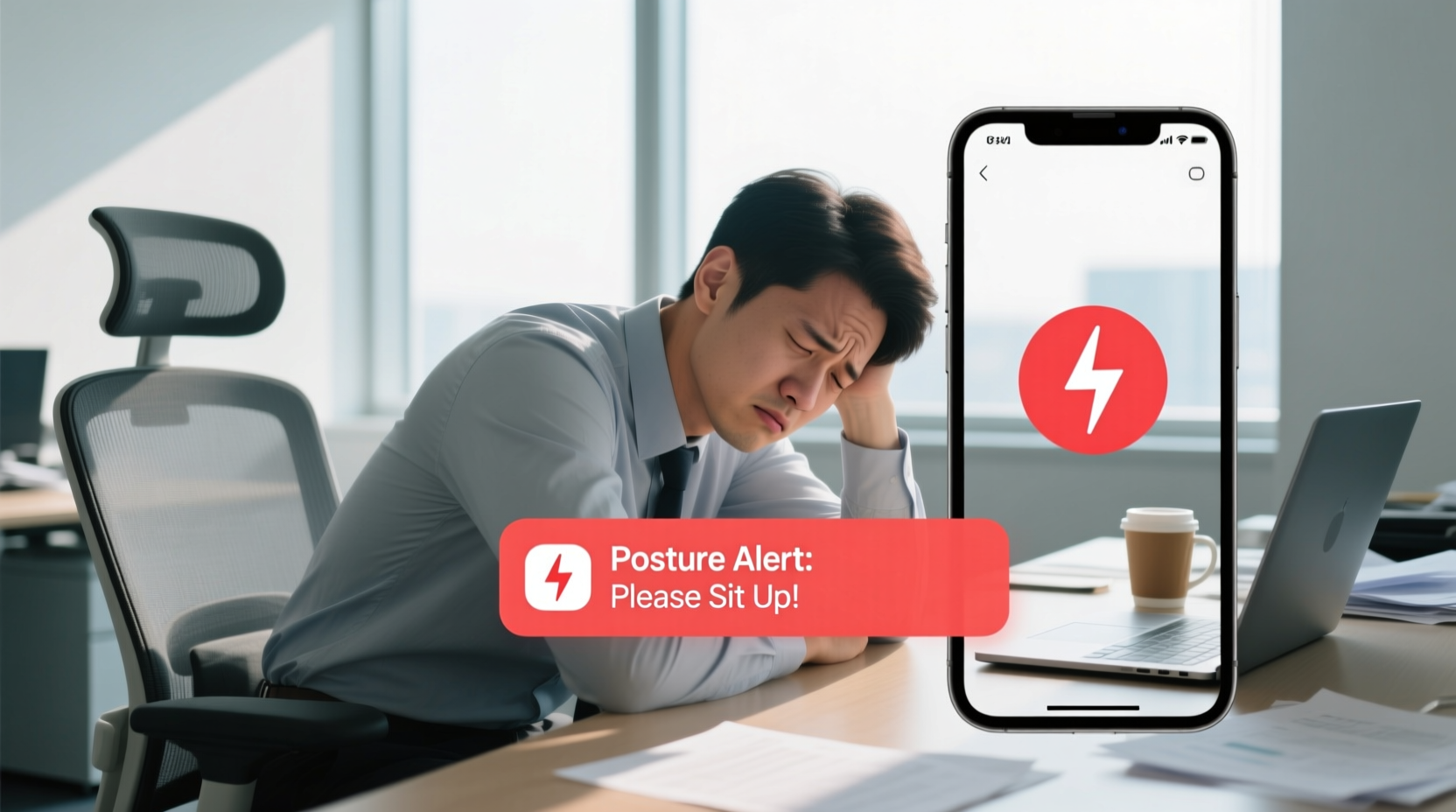
In an age where most people spend hours each day hunched over laptops, phones, and tablets, poor posture has become a silent epidemic. Neck pain, shoulder stiffness, chronic backaches—these are no longer just complaints of the elderly but common among desk workers in their 20s and 30s. Enter posture apps: digital tools promising to correct your slouching with gentle reminders, real-time tracking, and posture coaching. But do they actually work, or are they just another source of digital noise, buzzing your phone every few minutes with nagging alerts?
The truth lies somewhere in between. Posture apps can be helpful—but only under the right conditions. Like any tool, their effectiveness depends on how they're used, what kind of feedback they offer, and whether they’re paired with actual behavioral change.
The Science Behind Posture Awareness
Good posture isn’t just about looking confident—it’s about aligning your spine to reduce strain on muscles, joints, and nerves. The human spine has natural curves designed to absorb shock and support movement. When we slouch, especially for prolonged periods, these curves flatten or exaggerate, leading to muscular imbalances and increased pressure on intervertebral discs.
According to Dr. Rebecca Wong, a physical therapist specializing in ergonomic rehabilitation, “Awareness is the first step toward correction. Most people don’t even realize they’re slouching until they feel pain. That’s where technology can play a role.”
“Consistent postural awareness—even for short intervals—can retrain muscle memory over time.” — Dr. Rebecca Wong, DPT, Physical Therapy Specialist
Posture apps operate on this principle: by interrupting habitual slouching with alerts, they aim to create mindfulness. Over time, repeated cues may help users internalize better alignment habits. However, awareness alone isn't enough. Without corrective exercises, ergonomic adjustments, or conscious effort, alerts quickly become background noise.
How Posture Apps Work (And Where They Fall Short)
Most posture apps fall into two categories:
- Phone-based apps: Use your smartphone’s accelerometer and gyroscope to detect body tilt when placed in your pocket or clipped to clothing.
- Wearable-integrated apps: Pair with devices like smartwatches, posture braces, or sensor clips that attach to your upper back.
These tools typically monitor spinal alignment and trigger vibrations or notifications when deviation from ideal posture exceeds a set threshold. Some advanced versions include posture scoring, daily reports, and guided exercises.
Yet limitations abound. Phone-based detection is often inaccurate—your device might misinterpret walking as slouching, or fail to notice subtle forward head posture. Wearables improve accuracy but come at a cost: both financial and comfort-wise. A $150 smart posture collar may track data precisely, but if it's uncomfortable or socially awkward to wear, long-term compliance drops sharply.
Do Alerts Actually Change Behavior?
This is the core question. Do constant pings make us sit up straighter—or do we simply mute them after three days?
A 2022 study published in the Journal of Ergonomics and Digital Health tracked office workers using posture apps over six weeks. Initially, participants reported improved self-awareness and reduced midday back discomfort. But by week five, nearly 70% had disabled notifications or stopped wearing sensors altogether. The researchers concluded: “Alerts are effective in the short term, but habituation occurs rapidly without complementary behavioral strategies.”
In other words, alerts work best when combined with intentional practice—not passive monitoring.
Why Alert Fatigue Undermines Results
Imagine sitting at your desk, deep in focus, when your watch buzzes: “You’re slouching.” You adjust. Five minutes later, it buzzes again. By lunchtime, you’ve been interrupted 18 times. Eventually, you silence the app. This is known as alert fatigue—a phenomenon well-documented in healthcare, aviation, and now digital wellness.
Over-alerting trains users to ignore warnings rather than respond. Worse, it can foster resentment toward the very behavior the app is trying to promote. Instead of feeling empowered, users feel policed.
Better Than Alerts: Feedback Loops
More effective apps use delayed, reflective feedback instead of real-time nagging. For example:
- Daily summary emails showing posture trends
- Weekly progress charts comparing upright vs. slouched time
- Streak counters rewarding consistent good posture
These methods tap into behavioral psychology—specifically, the principles of positive reinforcement and goal-setting. Seeing measurable improvement motivates continued effort far more than constant correction.
Real-World Case: Can an App Fix Years of Slouching?
Meet Daniel, 34, a software developer who spent eight years working remotely. He began experiencing chronic tension headaches and numbness in his left arm. After visiting a physiotherapist, he was diagnosed with forward head posture and thoracic kyphosis—essentially, a tech-induced hunchback.
His therapist recommended a combination approach: ergonomic workstation setup, daily mobility exercises, and a posture app paired with a wearable sensor. Daniel chose one that offered gentle vibrations every 30 minutes, along with a weekly report.
At first, the alerts were jarring. He found himself adjusting constantly, sometimes forgetting why his back was vibrating. But after two weeks, he started noticing patterns—his worst slouching occurred during late-night coding sessions and Zoom calls.
He made changes: raised his monitor to eye level, started doing shoulder rolls hourly, and limited app alerts to two-hour intervals. Over four months, his posture score improved by 62%, and his headaches diminished significantly.
Crucially, Daniel didn’t rely on the app alone. “The alerts got my attention,” he said, “but the stretches and desk changes actually fixed the problem.”
What Works—and What Doesn’t
To assess whether a posture app can help *you*, consider not just its features, but how it fits into your lifestyle. The following table compares effective versus ineffective usage patterns.
| Effective Use | Ineffective Use |
|---|---|
| Using the app during focused work hours only | Leaving alerts on 24/7 |
| Pairing alerts with stretching or ergonomic adjustments | Only reacting to alerts without making environmental changes |
| Reviewing weekly reports to track progress | Ignoring data and relying solely on real-time feedback |
| Using wearable sensors intermittently for calibration | Relying on phone-in-pocket detection for precision |
| Combining app use with strength and mobility training | Expecting alerts alone to correct posture |
Step-by-Step: How to Use a Posture App Effectively
If you're considering trying a posture app, follow this timeline to maximize benefit and minimize annoyance:
- Week 1: Baseline Assessment
Use the app passively to gather data. Don’t react to alerts yet. Observe when and how often you slouch. Note patterns (e.g., after meals, during video calls). - Week 2: Introduce Gentle Alerts
Enable notifications at 30- to 60-minute intervals. Respond immediately by resetting posture: roll shoulders back, tuck chin slightly, engage core. - Week 3: Optimize Your Environment
Adjust chair height, screen position, and lighting. Ensure your elbows are at 90 degrees and eyes level with the top third of your monitor. - Week 4: Add Movement Breaks
Every hour, stand and perform 2–3 posture-correcting moves: wall angels, chin tucks, scapular squeezes. - Week 5–6: Reduce Dependency
Turn off frequent alerts. Use the app only for periodic check-ins or weekly summaries. Focus on internal cues—how your body feels—rather than external prompts.
Checklist: Is a Posture App Right for You?
Before downloading the next trending posture tracker, ask yourself the following:
- ✅ Do I spend more than 4 hours a day sitting?
- ✅ Have I noticed neck, shoulder, or upper back discomfort?
- ✅ Am I willing to make ergonomic changes to my workspace?
- ✅ Can I commit 5–10 minutes daily to posture exercises?
- ✅ Am I open to using feedback constructively, not reactively?
If you answered yes to most of these, a posture app could be a useful addition to your wellness toolkit. If not, you risk turning it into just another silenced notification.
Frequently Asked Questions
Can posture apps cure back pain?
No single app can “cure” back pain. However, when used as part of a broader strategy—including ergonomic adjustments, targeted exercises, and professional guidance—posture apps can reduce strain and prevent worsening symptoms. They are supportive tools, not medical treatments.
Are free posture apps worth using?
Some free apps offer basic functionality, such as timer-based reminders or simple posture tips. However, they often lack accurate tracking, customization, or insightful analytics. Paid apps or those bundled with wearables tend to provide more reliable data and meaningful feedback. That said, even a simple reminder to sit up straight can be beneficial if used mindfully.
How long does it take to see results?
Most users report increased awareness within the first week. Measurable improvements in posture—such as reduced forward head position or decreased discomfort—typically appear after 4 to 6 weeks of consistent use combined with lifestyle changes. Lasting change requires ongoing practice, much like building any new habit.
Conclusion: Tools Are Only as Good as the User
So, do posture apps really help fix slouching, or are they just annoying?
The answer is both. Used poorly, they’re digital irritants—buzzing endlessly while doing little to change ingrained habits. But used wisely, they serve as valuable mirrors, reflecting behaviors we’re otherwise blind to.
The key isn’t the technology itself, but how you integrate it. An app won’t magically straighten your spine. But it can help you notice the moment you start to slump, giving you the chance to reset. Over time, those small corrections add up. Muscles strengthen, neural pathways rewire, and better posture becomes second nature.
If you're tired of waking up with stiff shoulders or spending workdays massaging your neck, don’t dismiss posture apps outright. Try one—with intention. Pair it with real changes. Give it six weeks. Then decide whether it helped or just annoyed you.




 浙公网安备
33010002000092号
浙公网安备
33010002000092号 浙B2-20120091-4
Comments
No comments yet. Why don't you start the discussion?