
A well-stocked kitchen is only as efficient as its organization. No matter how skilled you are with a knife or how perfectly you sear a steak, fumbling through a cluttered spice drawer slows you down and adds unnecessary stress. Disorganized spices lead to duplicate purchases, expired ingredients, and wasted time. But with a thoughtful approach, your spice collection can become a streamlined tool that enhances your cooking rather than hinders it. The goal isn’t just neatness—it’s functionality. A smartly organized spice rack saves minutes every time you cook, reduces kitchen clutter, and helps you make better use of what you already have.
Assess Your Current Spice Collection
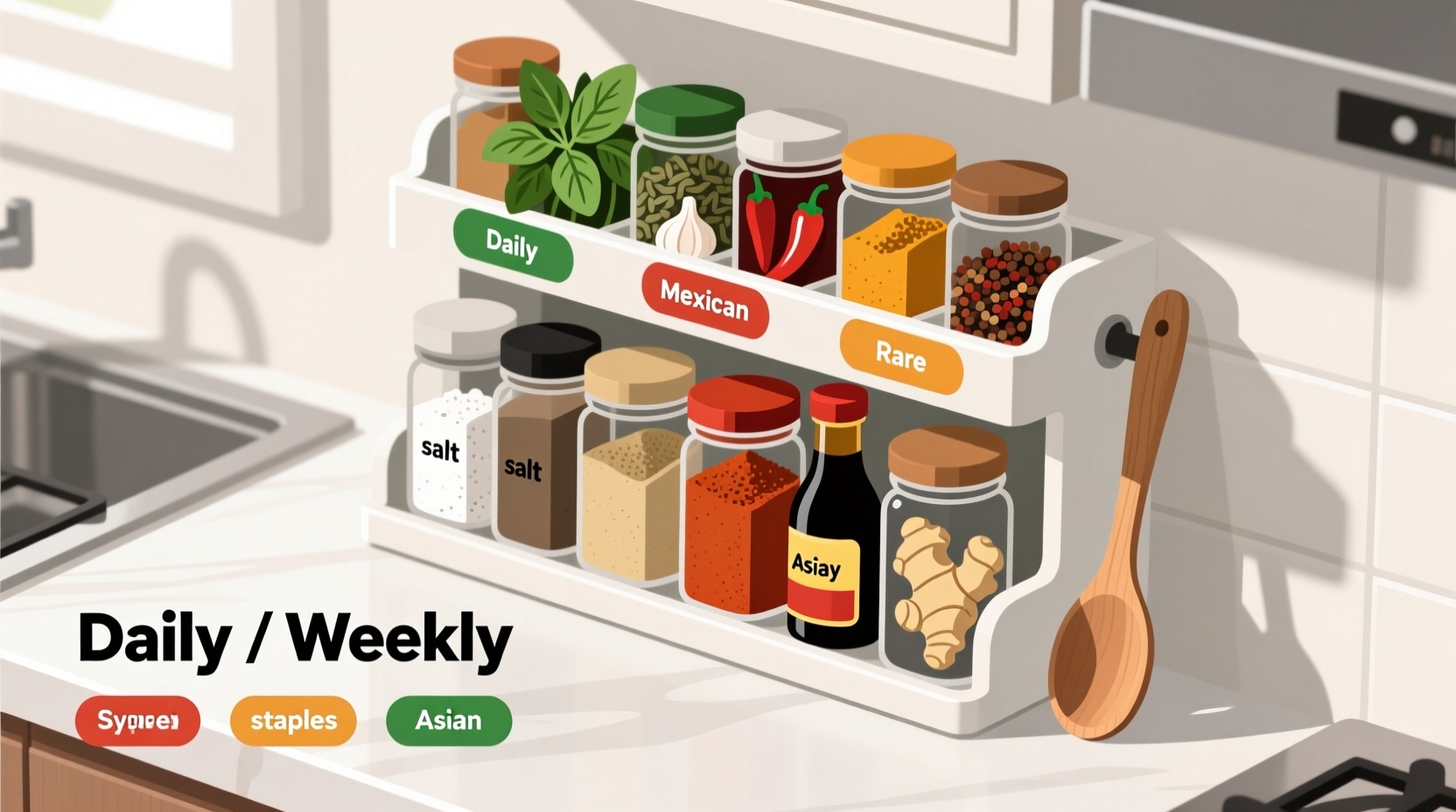
The first step in organizing your spice rack is understanding exactly what you have. Begin by removing all spices from their current storage location—whether it’s a drawer, cabinet, or countertop shelf. Lay them out on a clean surface where you can see everything at once. As you do this, check expiration dates. Most ground spices lose potency within 2–3 years, while whole spices can last up to 4 years. Discard any that are stale, clumped, or discolored.
Categorize each spice as you go. Group them into broad families: baking spices (cinnamon, nutmeg), savory herbs (oregano, thyme), heat elements (cayenne, chili flakes), salt and pepper variants, international blends (curry powder, za’atar), and specialty items (saffron, truffle salt). This initial sorting will inform how you structure your final system.
Create a Logical Organizational System
There’s no single “right” way to organize spices, but the most effective systems align with how you cook. Alphabetical order may seem intuitive, but it doesn’t reflect culinary usage. Instead, consider grouping by function or cuisine type. For example, if you often make Italian dishes, keep oregano, basil, rosemary, and garlic powder together. If you regularly cook Thai food, group lemongrass, galangal, fish sauce seasoning, and red curry paste nearby.
Another effective method is frequency-based organization. Designate a “daily use” section for staples like salt, black pepper, paprika, cumin, and garlic powder. Reserve harder-to-reach spots for occasional-use items like sumac or fenugreek. This reduces the number of containers you need to shift when reaching for common spices.
| Organization Method | Best For | Drawbacks |
|---|---|---|
| By Cuisine (e.g., Mexican, Indian) | Cooks who specialize in regional dishes | May not work for fusion or varied weekly menus |
| By Frequency of Use | Busy home cooks needing speed | Requires periodic re-evaluation |
| Alphabetical | Large collections with diverse users | Ignores cooking logic and workflow |
| By Ingredient Type (herbs, seeds, chilies) | Those who understand flavor profiles | Less intuitive for beginners |
Choose the Right Storage and Layout
Your spice storage solution should match your space, cooking habits, and quantity of spices. Common options include tiered racks, drawer inserts, magnetic tins, turntables (lazy Susans), and wall-mounted systems. Each has advantages depending on your kitchen layout.
Tiered racks allow visibility and access without pulling containers forward. Drawer inserts with labeled slots prevent tipping and keep labels readable. Lazy Susans maximize corner cabinet usability. Magnetic tins free up shelf space and add a modern aesthetic. Glass jars with uniform lids create visual harmony and make labeling easier.
Regardless of container type, ensure consistency in size and shape. Mixing tall bottles with short jars creates inefficient spacing and obstructs labels. Standard 4 oz or 6 oz glass jars with wide mouths simplify refilling and scooping. If using original packaging, transfer to uniform containers for visual clarity and longevity.
“Uniform storage isn’t just about aesthetics—it reduces decision fatigue and speeds up meal prep.” — Chef Lena Patel, Culinary Organizer & Author of *Efficient Kitchens*
Step-by-Step Guide to Building Your Ideal Spice Rack
Follow this sequence to transform your spice storage from chaotic to optimized:
- Empty and audit: Remove all spices, discard expired or unusable ones, and inventory what remains.
- Group logically: Sort spices into categories based on your preferred system (frequency, cuisine, or type).
- Select containers: Choose uniform, airtight jars or tins. Consider clear glass for visibility or opaque for light-sensitive spices like paprika.
- Label clearly: Use consistent font and placement. Include both name and purchase/expiry date on the back or side.
- Assign locations: Place daily-use spices at eye level or front row. Store backups or rare items behind or above.
- Install the system: Arrange in drawers, on shelves, or via wall mounts. Ensure easy access and readability.
- Maintain monthly: Wipe containers, check for clumping, and update labels as needed.
Real Example: From Chaos to Clarity in One Weekend
Sarah, a working parent of two, used to dread weeknight dinners. Her spices were scattered across three cabinets, some in crumbling cardboard boxes, others in mismatched jars. She’d often start cooking only to realize she was out of cumin—or worse, pour old, flavorless turmeric into a curry.
Over one Saturday morning, she pulled everything out, tossed 12 expired spices, and grouped the rest by cuisine: Mediterranean, Asian, and Pan-American. She invested in 20 identical amber glass jars with shaker lids and labeled them using a handheld label maker. She installed a two-tier bamboo rack inside a kitchen cabinet door, placing her most-used trio—salt, pepper, garlic powder—at the front.
The result? She now spends 30 seconds less per meal locating spices. She’s reduced impulse buys by 60%, according to her grocery logs, and her kids can help prepare meals because they can read the labels. “It’s not just about neatness,” she says. “It made cooking feel possible again on busy nights.”
Essential Checklist for a Functional Spice Rack
- ✅ Remove all spices from current storage
- ✅ Discard expired, clumped, or odorless spices
- ✅ Sort spices by usage frequency or cuisine
- ✅ Choose uniform, airtight containers
- ✅ Label each container clearly and consistently
- ✅ Select an accessible storage solution (rack, drawer, turntable)
- ✅ Position high-use spices within easy reach
- ✅ Clean and wipe containers monthly
- ✅ Reassess organization every 6 months
Frequently Asked Questions
How do I prevent spices from clumping?
Clumping is usually caused by moisture. Always use dry spoons when measuring, avoid storing spices above the stove or near the sink, and consider adding a tiny silica gel packet inside containers prone to humidity (like garlic powder or onion salt). For long-term storage, keep spices in a cool, dark pantry away from heat sources.
Should I keep spices in their original packaging?
Original packaging is often inconsistent in size and degrades over time. Transferring to uniform, airtight glass or BPA-free plastic containers preserves freshness longer and improves accessibility. It also allows for standardized labeling and prevents confusion between similar-looking packets.
What’s the best place to store spices in a small kitchen?
In compact spaces, vertical solutions work best. Use magnetic tins on the side of a refrigerator, install a narrow wall-mounted rack beside the stove, or utilize the inside of a cabinet door with adhesive hooks or a tiered organizer. Drawer dividers are excellent for keeping spices flat and visible. Avoid under-sink storage due to moisture and temperature fluctuations.
Final Thoughts: Turn Organization Into Habit
An organized spice rack isn’t a one-time project—it’s the foundation of a more efficient kitchen. When your tools are arranged with intention, cooking becomes less about searching and more about creating. The time saved may seem minor at first, but over weeks and months, those seconds add up to real freedom in the kitchen.
Start small. You don’t need to buy new containers or install shelves right away. Just take out your spices, toss the old ones, and group what’s left in a way that makes sense for how you actually cook. Even a simple reordering can dramatically improve your experience.




 浙公网安备
33010002000092号
浙公网安备
33010002000092号 浙B2-20120091-4
Comments
No comments yet. Why don't you start the discussion?