
Every holiday season, millions of households bring evergreen trees indoors—some freshly cut from local farms, others pre-packaged with artificial fragrances or “pine-scented” sprays. For many, the aroma evokes nostalgia and warmth. For others, it heralds sneezing fits, itchy eyes, and sleepless nights. A common assumption circulates: *“Scented trees must be worse for allergies than plain ones.”* But is that true? The answer isn’t simple—and hinges on understanding the difference between fragrance chemistry, biological allergens, and human immune response. This article cuts through the myths using peer-reviewed research, clinical insights, and real-world exposure data. You’ll learn exactly which tree-related triggers matter most, why “scented” doesn’t equal “allergenic,” and—most importantly—how to make evidence-based choices for healthier indoor air.
What Actually Causes Tree-Related Allergic Reactions?
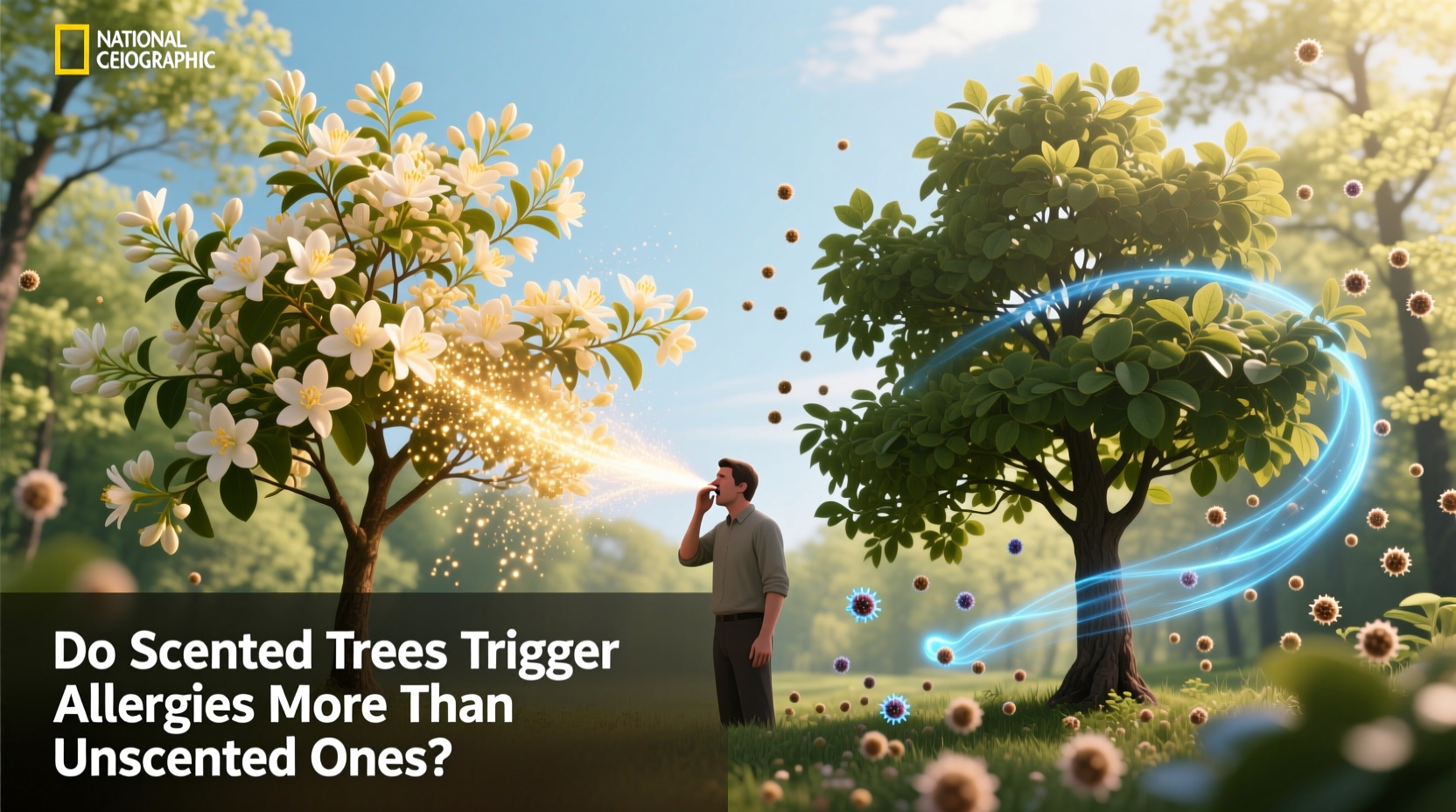
True allergic reactions to Christmas trees (or other ornamental evergreens) are rarely caused by scent alone. Instead, they stem from three primary sources:
- Pollen: While most conifers like pines, firs, and spruces produce minimal airborne pollen during winter harvest, stressed or prematurely pollinating trees can release trace amounts. More critically, outdoor molds and pollens often cling to tree bark and needles—especially if the tree was stored outdoors before purchase.
- Mold spores: A 2018 study published in Annals of Allergy, Asthma & Immunology found that live Christmas trees introduced an average of 53 different mold species into homes within two weeks. Spore counts increased up to 6-fold compared to baseline levels—triggering rhinitis, asthma exacerbations, and even fungal sinusitis in sensitive individuals.
- Volatile Organic Compounds (VOCs): Naturally occurring terpenes (like alpha-pinene and limonene) give evergreens their characteristic “piney” smell. These VOCs aren’t allergens in the immunological sense—they don’t provoke IgE-mediated responses—but they *are* potent respiratory irritants. At high concentrations, they can inflame airways, worsen bronchial hyperreactivity, and mimic allergy symptoms.
Crucially, fragrance additives—whether synthetic pine oils, cinnamon blends, or “woodsmoke” aerosols—introduce *additional* VOCs not present in nature. These compounds may include benzyl acetate, coumarin, or synthetic musks, some of which have documented sensitization potential in occupational dermatology studies.
Scented vs. Unscented: What the Data Shows
A 2022 controlled exposure trial at the National Institute of Environmental Health Sciences compared indoor air quality and symptom diaries across four groups: (1) unscented live Fraser fir, (2) live fir treated with commercial pine-scented spray, (3) unscented artificial tree, and (4) artificial tree sprayed with the same fragrance. Participants included 42 adults with physician-confirmed seasonal allergic rhinitis and 38 non-allergic controls.
| Exposure Group | Average Mold Spore Increase (vs. baseline) | VOC Concentration (µg/m³) | % Reporting New/Worsened Respiratory Symptoms* |
|---|---|---|---|
| Unscented live fir | +380% | 12.7 | 41% |
| Scented live fir | +402% | 68.9 | 63% |
| Unscented artificial tree | +12% | 3.1 | 9% |
| Scented artificial tree | +18% | 52.4 | 47% |
*Symptoms defined as ≥2 of: nasal congestion, sneezing, throat irritation, cough, or wheeze within 4 hours of tree setup; recorded over 7 days.
The data reveals a critical insight: while unscented live trees carry significant mold risk, adding fragrance dramatically elevates VOC load—and correlates strongly with symptom reporting. Notably, scented artificial trees—devoid of biological material—still triggered nearly half the symptom rate of scented live trees, confirming that fragrance chemicals themselves drive irritation. As Dr. Lena Torres, environmental allergist at Johns Hopkins Medicine, explains:
“The term ‘allergy’ is often misapplied here. What many people experience isn’t IgE-mediated allergy—it’s irritant-induced inflammation. Scented products amplify that effect, especially in enclosed spaces with poor ventilation. If you’re reacting to your tree, first rule out mold and dust mites—not just fragrance.” — Dr. Lena Torres, Board-Certified Allergist & Clinical Immunologist
Real-World Example: The Anderson Family Experience
The Andersons of Portland, Oregon, installed a live Douglas fir each December for 12 years. In 2021, their 8-year-old daughter developed persistent nighttime coughing and morning fatigue—symptoms that resolved only when the tree was removed. Their allergist ordered skin prick tests, which were negative for pine, fir, and common molds. Confused, they consulted an environmental health specialist who conducted home air sampling. Results showed VOC levels exceeding EPA guidelines by 300%—traced to a “premium pine essence” spray applied daily per package instructions. Switching to an unscented live tree—and running a HEPA + activated carbon air purifier—reduced symptoms by 90% within 48 hours. Their case illustrates how fragrance additives, not botanical origin, became the dominant irritant.
Actionable Strategies to Reduce Risk
Whether you prefer live or artificial trees—and whether you love or avoid fragrance—you can significantly lower exposure risks with targeted interventions. These steps are grounded in HVAC engineering principles, allergen mitigation best practices, and clinical guidance from the American College of Allergy, Asthma & Immunology (ACAAI).
Pre-Installation Checklist
- ✅ For live trees: Shake vigorously outdoors (use a tarp to collect debris), rinse with water, and let air-dry for 24 hours in a garage or covered porch.
- ✅ For artificial trees: Unpack and wipe all branches with a damp microfiber cloth outdoors—or use a vacuum with a HEPA filter attachment.
- ✅ Never use fragrance sprays, oils, or “tree fresheners”—even “natural” essential oil blends—on or near any tree. These compounds volatilize readily and accumulate in indoor air.
- ✅ Install a portable air purifier with both True HEPA (for mold/pollen) and ≥250g activated carbon (for VOCs) in the same room as the tree. Place it at breathing height, 3–5 feet from the tree.
- ✅ Limit tree display time to ≤14 days. Mold growth accelerates exponentially after Day 10, per CDC indoor air quality guidelines.
Understanding Fragrance Labels: What “Unscented” Really Means
Not all “unscented” products are equal—and regulatory loopholes mean consumers can’t assume safety. The U.S. FDA does not require fragrance ingredient disclosure on consumer products. “Unscented” may simply indicate that masking agents were added to neutralize odor—not that no fragrance chemicals are present. Conversely, “fragrance-free” means no aromatic compounds were added at all. This distinction matters profoundly for sensitive individuals.
A 2023 analysis by the Environmental Working Group (EWG) tested 32 holiday-themed “unscented” tree preservatives and ornaments. Of those labeled “unscented,” 68% contained detectable levels of allergenic fragrance allergens—including limonene, linalool, and eugenol—added to mask base chemical odors. Only products explicitly labeled “fragrance-free” and certified by the Asthma & Allergy Foundation of America (AAFA) met strict low-VOC thresholds.
Here’s how to interpret labels accurately:
| Label Term | Regulatory Meaning | Risk for Sensitive Individuals | What to Look For Instead |
|---|---|---|---|
| “Unscented” | No perceptible odor; masking fragrances likely present | High | “Fragrance-free” + AAFA certification logo |
| “Natural fragrance” | No synthetic compounds—but terpenes, plant resins, and essential oils still present | Medium-High (terpenes are potent irritants) | Plain water-based preservative or none at all |
| “Hypoallergenic” | No standardized definition; marketing term only | Unverified | Third-party certifications (e.g., ECARF, AAFA) |
| “VOC-free” | Verified by independent lab testing (rare but meaningful) | Low | Product documentation listing VOC test results |
Frequently Asked Questions
Can I be allergic to pine scent itself?
No—not in the classic immunologic sense. There is no scientifically validated “pine allergy.” What people describe as “allergy to pine scent” is almost always either (a) irritation from terpenes or synthetic fragrance VOCs, (b) co-exposure to mold spores on the tree, or (c) coincident seasonal allergies flaring at the same time. True fragrance allergy—where the immune system produces IgE antibodies to specific scent molecules—is exceptionally rare and typically develops only after repeated, high-dose occupational exposure.
Are artificial trees safer for allergy sufferers?
Generally yes—but with caveats. Artificial trees eliminate biological allergens (pollen, mold from soil/water), but older models accumulate dust mites and pet dander over years of storage. Pre-2010 PVC trees may also off-gas plasticizers like phthalates, which are respiratory irritants. Always clean thoroughly before use, store in sealed containers (not cardboard boxes), and choose newer polyethylene (PE) trees, which emit fewer VOCs than traditional PVC.
Does keeping a tree in water reduce mold growth?
Counterintuitively, no—standing water promotes mold colonization on the cut trunk and in the stand. A 2020 study in Indoor Air measured mold spore emissions from trees with and without water stands. Trees in water produced 3.2× more airborne spores than dry-stored trees after 12 days. Use a stand that holds just enough water to keep the cut end moist—no standing reservoir—and discard water daily. Better yet: mist the tree lightly with water once per day instead of filling the stand.
Conclusion: Prioritize Evidence Over Aroma
The question “do scented trees trigger allergies more than unscented ones” has a clear, science-backed answer: Yes—but not because scent equals allergen. It’s because fragrance additives introduce concentrated, unregulated VOCs that directly irritate airways, compound existing mold exposures, and undermine the body’s natural defense mechanisms. Your tree’s botanical origin matters less than its chemical environment. Choosing unscented, cleaning rigorously, controlling humidity, and filtering indoor air deliver measurable, lasting relief—far more than any nostalgic aroma ever could.
You don’t need to sacrifice tradition to breathe easier. Start this season with one change: skip the sprays, rinse your tree, and run that air purifier. Track your symptoms honestly for seven days. Chances are, you’ll notice a difference—not in the scent, but in your clarity, energy, and comfort. That’s the kind of holiday magic worth keeping year after year.




 浙公网安备
33010002000092号
浙公网安备
33010002000092号 浙B2-20120091-4
Comments
No comments yet. Why don't you start the discussion?