
As holiday traditions blend with modern technology, smart Christmas lights have become a popular way to add flair, automation, and color coordination to seasonal décor. With smartphone apps, voice control, and scheduling features, these festive gadgets offer convenience and creativity. But beneath the twinkling surface lies a growing concern: could your holiday lights be an open door for cybercriminals?
The short answer is yes—unsecured smart Christmas lights can indeed attract hackers. While they may seem harmless, any internet-connected device expands your home’s digital footprint and potentially introduces vulnerabilities. In recent years, security researchers have demonstrated how poorly configured smart devices, including decorative lighting, can be exploited to access Wi-Fi networks, spread malware, or even serve as entry points into more sensitive systems.
This isn’t science fiction. Real-world incidents and penetration tests have shown that hackers don’t discriminate based on device purpose—if it’s online and unprotected, it’s a target.
How Smart Christmas Lights Work—and Where They’re Vulnerable
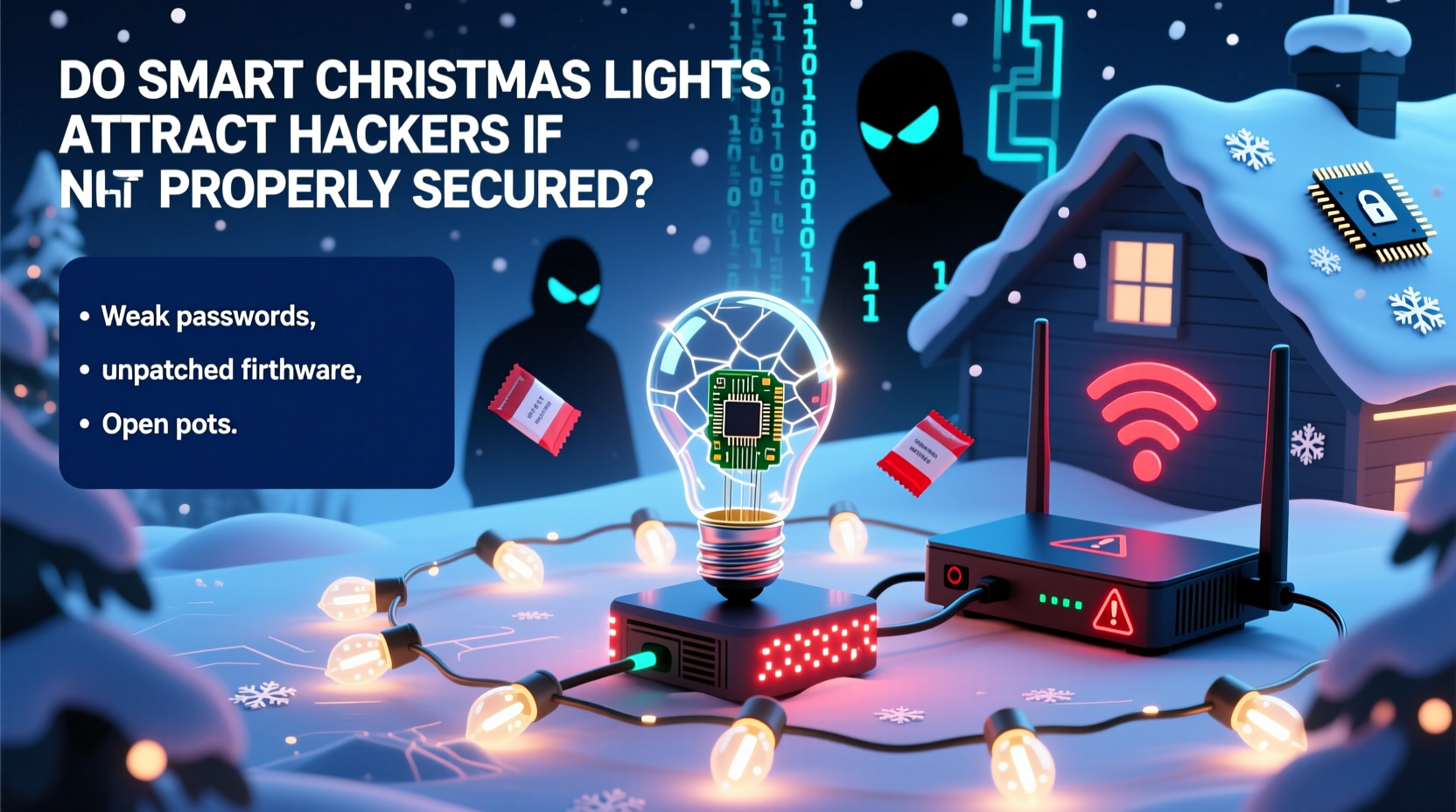
Smart Christmas lights connect to your home network via Wi-Fi, Bluetooth, or through a hub using protocols like Zigbee or Z-Wave. Once connected, they allow remote control through mobile apps, integration with platforms like Alexa or Google Assistant, and automation based on time, motion, or music. These conveniences rely on continuous communication between the device, app servers, and your router.
However, this connectivity creates multiple potential attack vectors:
- Insecure firmware: Many budget-friendly smart light brands skip regular software updates, leaving known security flaws unpatched.
- Weak authentication: Default passwords, lack of two-factor authentication (2FA), or easily guessable login credentials make accounts easy targets.
- Unencrypted data transmission: If data between the app and device isn’t encrypted, hackers on the same network can intercept commands or steal login tokens.
- Third-party app risks: Some companion apps request excessive permissions or are developed by unknown entities with questionable privacy practices.
- Network exposure: Devices on the same network as computers, phones, or smart home hubs can act as stepping stones for lateral movement during an attack.
Security researcher Marcus Holloway, who specializes in IoT vulnerability testing, puts it bluntly:
“Hackers aren’t after your lights—they’re after what your lights can reach. A strand of $30 RGB bulbs might be the weakest link in your network. Once inside, attackers pivot to more valuable targets.” — Marcus Holloway, IoT Security Analyst
Real Example: The Holiday Hack That Took Down a Home Network
In December 2022, a family in Austin, Texas, noticed unusual activity on their home Wi-Fi: slow speeds, unrecognized devices, and intermittent outages. After contacting their ISP, a technician discovered that their smart Christmas lights—purchased from an online marketplace—were communicating with a server in Eastern Europe.
An investigation revealed the lights were running outdated firmware with a known exploit allowing remote command execution. The attacker had used the lights to join the internal network, then scanned for other devices. They accessed the family’s shared photo drive and installed cryptocurrency-mining software on an old desktop left running in the basement.
Though no financial data was stolen, the breach required a full network reset, firmware updates across all devices, and the replacement of the compromised lighting system. The cost? Over $400 in labor and new equipment—not to mention lost holiday peace of mind.
This case wasn’t unique. In 2021, cybersecurity firm Kaspersky reported a 37% year-over-year increase in attacks targeting consumer IoT devices during the holiday season, with smart lighting among the most commonly exploited.
Do All Smart Lights Pose the Same Risk?
No. Not all smart Christmas lights carry equal risk. The level of threat depends on several factors, including brand reputation, update frequency, encryption standards, and network configuration.
The table below compares high-risk vs. low-risk smart lighting options:
| Risk Level | Brand Type | Firmware Updates | Encryption | App Permissions | Recommended? |
|---|---|---|---|---|---|
| High Risk | Unknown brands from third-party marketplaces | Rare or none | None or weak (HTTP) | Full device access, location, contacts | No |
| Medium Risk | Budget brands with basic apps | Occasional | Basic (HTTPS) | Email only, limited access | With precautions |
| Low Risk | Established brands (e.g., Philips Hue, LIFX, Nanoleaf) | Regular, automatic | End-to-end encryption | Minimal, role-based | Yes |
Brands like Philips Hue and LIFX invest heavily in security infrastructure, including secure boot processes, encrypted cloud communication, and frequent over-the-air updates. Meanwhile, off-brand lights sold under names like “GlowStar” or “FestiveBrite” often lack even basic safeguards.
Step-by-Step: Securing Your Smart Christmas Lights
Protecting your network doesn’t require technical expertise—just consistent habits. Follow this timeline to minimize risk before, during, and after the holiday season.
- Before Purchase: Research the Brand (Week 1)
- Check reviews on trusted tech sites (e.g., Wirecutter, CNET).
- Verify if the manufacturer provides firmware updates.
- Avoid products with vague descriptions or no support website.
- Upon Arrival: Isolate and Update (Day of Setup)
- Connect the lights to a guest or IoT-only Wi-Fi network, not your primary one.
- Immediately check for firmware updates in the app.
- Change default passwords and enable two-factor authentication if available.
- Daily Use: Monitor Activity (Throughout Season)
- Use a network monitoring tool (like Fing or GlassWire) to detect unusual traffic.
- Review connected devices on your router weekly.
- Disable remote access if you only use local controls.
- After the Holidays: Disconnect and Store Safely (January)
- Power down and disconnect from Wi-Fi.
- Remove the device from your app account to prevent background syncing.
- Store instructions and warranty info in case future updates are needed.
Essential Checklist for Safe Smart Lighting
Use this checklist each time you deploy smart Christmas lights:
- ✅ Purchased from a reputable brand with positive security reviews
- ✅ Connected to a segregated IoT or guest Wi-Fi network
- ✅ Firmware updated to the latest version
- ✅ Default login credentials changed
- ✅ Two-factor authentication enabled (if supported)
- ✅ Remote access disabled unless absolutely necessary
- ✅ Regular network scans performed for unknown devices
- ✅ Removed from network and app after holiday season
FAQ: Common Concerns About Smart Light Security
Can hackers really control my Christmas lights remotely?
Yes, if the device has unpatched vulnerabilities and is accessible online. There are documented cases where hackers altered light colors, turned displays on/off at odd hours, or used them as part of botnet attacks. However, such access usually requires prior compromise of login credentials or network weaknesses.
Is it safer to use Bluetooth instead of Wi-Fi lights?
In many cases, yes. Bluetooth has a shorter range (typically under 30 feet), making remote attacks less likely. However, Bluetooth devices can still be vulnerable to nearby spoofing or man-in-the-middle attacks if not properly paired. For maximum safety, choose Bluetooth models that require manual pairing and don’t store persistent connections.
Should I stop using smart Christmas lights altogether?
No—but be selective. High-quality smart lights from trusted manufacturers pose minimal risk when properly managed. The key is treating them like any other connected device: update them, isolate them, and monitor them. If you're uncomfortable managing the security aspects, consider non-connected programmable lights or traditional timers as safer alternatives.
Conclusion: Enjoy the Glow Without the Risk
Smart Christmas lights don’t have to be a cybersecurity liability. With awareness and proactive measures, you can enjoy dazzling displays without compromising your home’s digital safety. The holiday season should be about joy, not jittery network alerts.
The real danger isn’t the technology itself—it’s the assumption that small, temporary devices don’t matter. Every smart bulb, plug, or string light expands your attack surface. But with informed choices and simple safeguards, you retain control.
This year, let your lights shine bright—for celebration, not for exploitation.




 浙公网安备
33010002000092号
浙公网安备
33010002000092号 浙B2-20120091-4
Comments
No comments yet. Why don't you start the discussion?