
Tinted sunscreens have surged in popularity over the past few years, especially among those who value both skincare protection and a natural-looking complexion. Marketed as multitaskers—offering UV defense with a hint of coverage—they promise convenience without compromising on sun safety. But do they truly perform as effectively as traditional, untinted sunscreens? The answer isn't a simple yes or no. It depends on formulation, application habits, and individual skin needs. Understanding how these products compare requires a closer look at their ingredients, efficacy, and real-world performance.
How Sunscreen Protection Works
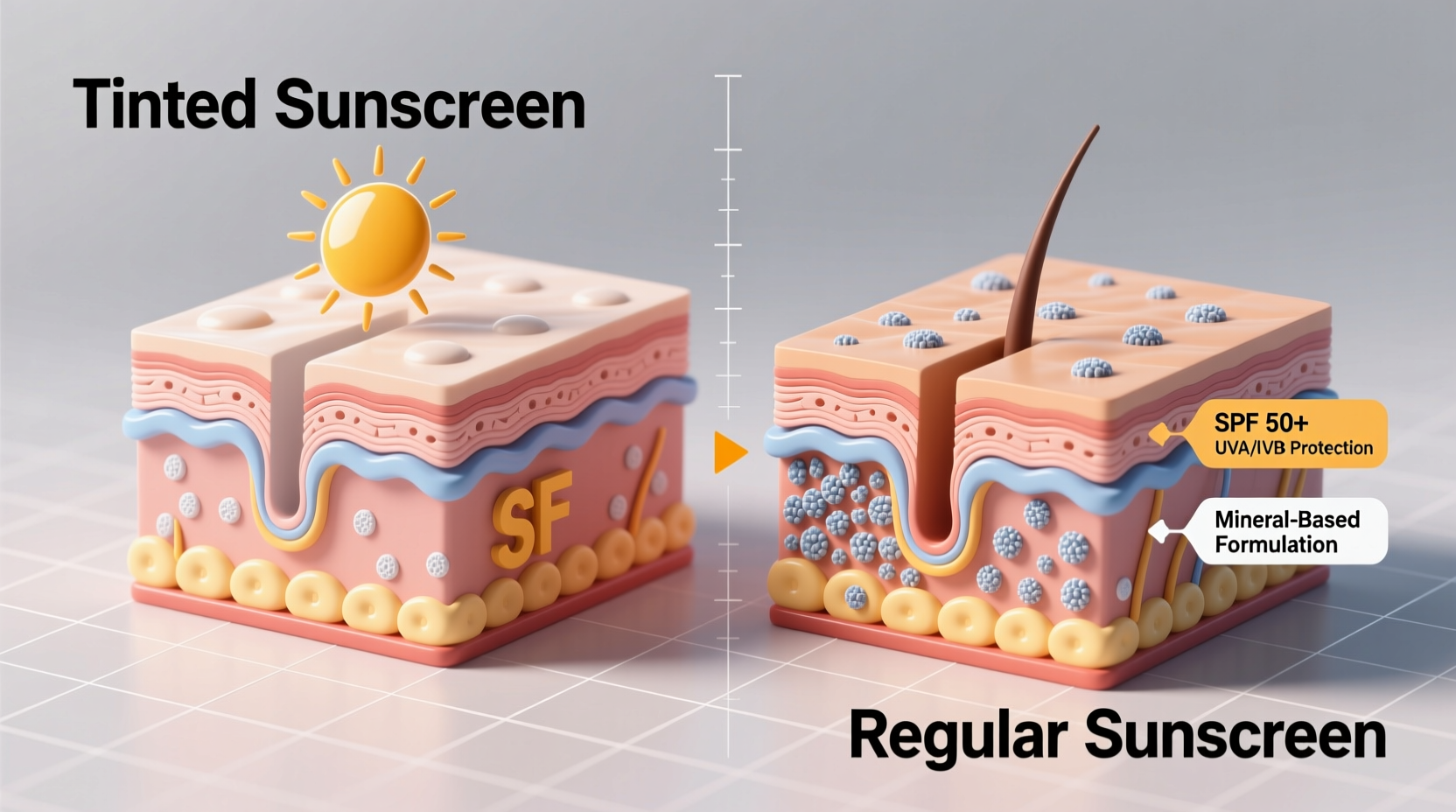
All sunscreens are designed to shield the skin from ultraviolet (UV) radiation, which includes UVA (aging rays) and UVB (burning rays). Broad-spectrum protection is essential for preventing premature aging, sunburn, and reducing the risk of skin cancer. The active ingredients in sunscreen fall into two main categories: chemical filters and mineral (physical) blockers.
- Chemical sunscreens absorb UV rays and convert them into heat, which is then released from the skin. Common ingredients include avobenzone, octinoxate, and oxybenzone.
- Mineral sunscreens sit on top of the skin and physically deflect UV rays. Zinc oxide and titanium dioxide are the most common mineral actives.
The effectiveness of any sunscreen hinges on its SPF (Sun Protection Factor), proper application, and reapplication every two hours when exposed to sunlight. Regardless of whether a formula is tinted or clear, these principles remain unchanged.
What Makes a Sunscreen Tinted?
Tinted sunscreens typically contain added pigments—often iron oxides—that give them a sheer color-matching effect. These pigments serve multiple purposes beyond aesthetics:
- They help neutralize the white cast often associated with mineral sunscreens, particularly on deeper skin tones.
- Iron oxides provide additional protection against visible light, which is especially beneficial for individuals prone to hyperpigmentation, such as melasma.
- The tint can offer light coverage, blurring minor imperfections and evening out skin tone.
Most tinted sunscreens use zinc oxide as the primary active ingredient because it pairs well with pigments and is less likely to degrade when combined with colorants. However, some chemical-based tinted options exist, though they’re less common due to stability challenges.
“Tinted sunscreens that include iron oxides offer a meaningful advantage for patients with pigmentary disorders. They protect against high-energy visible (HEV) light, which can trigger melasma flares.” — Dr. Whitney Bowe, Board-Certified Dermatologist
Comparing Efficacy: Tinted vs. Regular Sunscreens
The core question remains: Are tinted sunscreens just as effective as their untinted counterparts? When properly formulated and applied, the answer is generally yes—but with important caveats.
SPF Performance
A tinted sunscreen labeled SPF 30 must meet the same regulatory standards as a regular SPF 30 product. This means it should block approximately 97% of UVB rays under laboratory testing conditions. However, real-world performance depends heavily on user behavior. If people apply less of a tinted sunscreen because they dislike the feel or appearance, protection drops significantly.
Broad-Spectrum Coverage
Both types must pass broad-spectrum testing to claim UVA/UVB protection. However, tinted versions often have an edge in protecting against visible light, thanks to iron oxides. Studies show that visible light can contribute to oxidative stress and pigmentation, especially in medium to dark skin tones. Untinted mineral sunscreens may not offer this added layer of defense unless specifically formulated with iron oxides.
Application Habits
This is where differences emerge. Some users report that tinted sunscreens feel heavier or require more blending, leading to inconsistent application. Others appreciate the cosmetic elegance and are more likely to wear them daily. A 2020 study published in the Journal of the American Academy of Dermatology found that participants were more adherent to daily sunscreen use when using tinted formulations due to improved skin finish and reduced need for makeup.
Key Advantages and Limitations
Understanding the pros and cons helps determine whether a tinted sunscreen suits your routine.
| Factor | Tinted Sunscreens | Regular Sunscreens |
|---|---|---|
| UV Protection | Equal when SPF and actives match | Equal when SPF and actives match |
| Visible Light Protection | Yes, due to iron oxides | Rare unless specified |
| Cosmetic Appeal | Offers light coverage, evens tone | May leave white cast or greasy finish |
| Skin Tone Suitability | Variety of shades available | Can appear chalky on deeper tones |
| Reapplication Over Makeup | Potential for pilling or unevenness | Easier with sprays or powders |
| Shelf Stability | Pigments may settle; shake well | Generally stable |
While tinted sunscreens excel in daily wear scenarios—especially for those seeking a “no-makeup” glow—they aren’t ideal for all situations. For example, during prolonged outdoor activity or swimming, a non-tinted, water-resistant formula might be more practical and easier to reapply generously.
Real-World Example: Sarah’s Daily Routine
Sarah, a 34-year-old marketing executive with Fitzpatrick skin type IV, struggled for years with post-inflammatory hyperpigmentation from acne. She used a standard SPF 50 mineral sunscreen but often skipped it due to the noticeable white cast. After switching to a tinted SPF 40 with iron oxides, she noticed her skin tone appeared more even, and crucially, she began applying sunscreen every morning without fail. Over six months, her melasma patches showed less frequent flare-ups, and dermatologist visits confirmed reduced pigmentation progression. The cosmetic benefit directly translated into better compliance—and better skin health.
This case illustrates a broader trend: when sunscreen feels good to wear, people wear it more consistently. For many, tinted formulas bridge the gap between skincare necessity and aesthetic preference.
Choosing the Right Sunscreen for You
Selecting between tinted and untinted sunscreen shouldn’t be about trends—it should align with your lifestyle, skin concerns, and environmental exposure. Consider the following checklist before making a decision.
📋 **Sunscreen Selection Checklist**- Determine your primary concern: Is it UV protection, pigmentation control, or cosmetic finish?
- Check the active ingredients: Ensure it contains broad-spectrum filters like zinc oxide or avobenzone.
- Look for iron oxides: Especially if you have melasma or darker skin tones prone to discoloration.
- Test the shade range: Apply a small amount to your jawline in natural light to ensure it blends seamlessly.
- Assess reapplication needs: Will you reapply over makeup? If so, consider a tinted powder SPF for touch-ups.
- Evaluate texture: Creams suit dry skin; gels or fluids work better for oily complexions.
Common Misconceptions About Tinted Sunscreens
Despite growing acceptance, several myths persist:
- Misconception: Tinted sunscreens don’t offer enough protection because they’re “cosmetic.”
Truth: As long as they meet SPF and broad-spectrum labeling requirements, they are held to the same standards as regular sunscreens. - Misconception: The tint replaces the need for foundation.
Truth: While tinted SPFs offer light coverage, they’re not substitutes for makeup if you desire full concealment. - Misconception: All tinted sunscreens are natural or safer.
Truth: “Natural” isn’t a regulated term. Always review ingredient lists for allergens, fragrances, or comedogenic components.
Step-by-Step Guide to Using Tinted Sunscreen Effectively
To maximize the benefits of a tinted sunscreen, follow this routine:
- Cleanse and moisturize: Start with a clean, hydrated face to ensure smooth application.
- Apply the correct amount: Use at least 1/4 teaspoon for the face. Don’t skimp to avoid patchiness.
- Blend thoroughly: Use fingertips, a sponge, or brush to blend edges into hairline and neck.
- Wait before makeup: Allow 60–90 seconds for the product to set, especially if layering with other actives.
- Reapply strategically: If wearing makeup, use a setting spray with SPF or a tinted powder for midday touch-ups.
- Remove properly: At night, cleanse with a gentle oil or micellar water to fully remove pigments and sunscreen actives.
Frequently Asked Questions
Can I rely solely on a tinted sunscreen for sun protection?
Yes, as long as it’s broad-spectrum, SPF 30 or higher, and applied generously. The tint does not reduce UV protection. However, ensure you reapply every two hours during sun exposure, just as you would with any sunscreen.
Are tinted sunscreens suitable for acne-prone skin?
Some are, but not all. Look for non-comedogenic, fragrance-free formulas labeled for sensitive or acne-prone skin. Mineral-based tinted sunscreens with zinc oxide may be beneficial due to zinc’s anti-inflammatory properties, but thick formulas can clog pores in some individuals. Patch testing is recommended.
Do I need to wear additional antioxidants under tinted sunscreen?
While not mandatory, pairing your sunscreen with a vitamin C serum can enhance photoprotection. Antioxidants neutralize free radicals generated by UV and pollution exposure, complementing the physical and chemical barriers provided by sunscreen.
Final Thoughts and Action Steps
Tinted sunscreens are not inherently superior or inferior to regular ones—they are tools suited to different needs. Their ability to combine reliable UV protection with cosmetic elegance makes them a compelling option for daily wear, especially for individuals concerned with pigmentation or dissatisfied with the appearance of traditional mineral sunscreens.
The key lies in choosing wisely: verify the SPF, confirm broad-spectrum and iron oxide content, select a matching shade, and commit to proper application. Whether tinted or clear, consistency is what ultimately determines sunscreen effectiveness.
If you’ve been skipping sunscreen because of texture or white cast, trying a well-formulated tinted version could be the change that transforms your routine. Your skin doesn’t just deserve protection—it deserves to feel confident while wearing it.




 浙公网安备
33010002000092号
浙公网安备
33010002000092号 浙B2-20120091-4
Comments
No comments yet. Why don't you start the discussion?