
In an age where chronic stress is nearly universal, people are turning to natural remedies more than ever. Aromatherapy—using essential oils extracted from plants for therapeutic purposes—has surged in popularity as a go-to solution for calming the mind and body. But beyond anecdotal claims and soothing scents, does it actually work? And if so, what does science say about its ability to reduce stress?
The answer isn't just rooted in tradition or placebo effect. Modern research increasingly supports the idea that certain essential oils can influence brain chemistry, modulate physiological responses, and meaningfully lower stress markers. This article explores the scientific evidence behind aromatherapy’s stress-reducing effects, identifies which oils are most effective, and offers practical guidance for integrating them into daily life.
The Science Behind Smell and Stress Regulation
The human sense of smell is uniquely tied to emotional processing. When you inhale a scent, odor molecules travel through the nasal cavity to the olfactory bulb, which sends signals directly to the limbic system—the brain region responsible for emotions, memory, and arousal. Unlike other senses, smell bypasses the thalamus and connects straight to areas like the amygdala and hippocampus, which play key roles in fear, anxiety, and emotional regulation.
This direct neural pathway explains why certain smells can instantly evoke calm—or distress. In the context of stress reduction, this means aromatherapy doesn’t just create a pleasant environment; it can trigger measurable changes in the nervous system.
A 2017 meta-analysis published in *Complementary Therapies in Clinical Practice* reviewed 12 clinical trials involving over 600 participants and found that inhalation of essential oils significantly reduced subjective stress levels and lowered physiological markers such as heart rate and blood pressure. The study concluded that aromatherapy has “a moderate to large effect” on stress relief, particularly when used consistently.
“The olfactory system provides a backdoor into the brain’s emotional centers. When we use specific essential oils, we’re not just masking stress—we’re influencing neurochemistry.” — Dr. Rachel Herz, Cognitive Neuroscientist and Author of *The Scent of Desire*
Essential Oils with Proven Stress-Reducing Effects
Not all essential oils are created equal when it comes to stress relief. Some have been rigorously studied and shown to produce consistent results. Below are the most scientifically supported options:
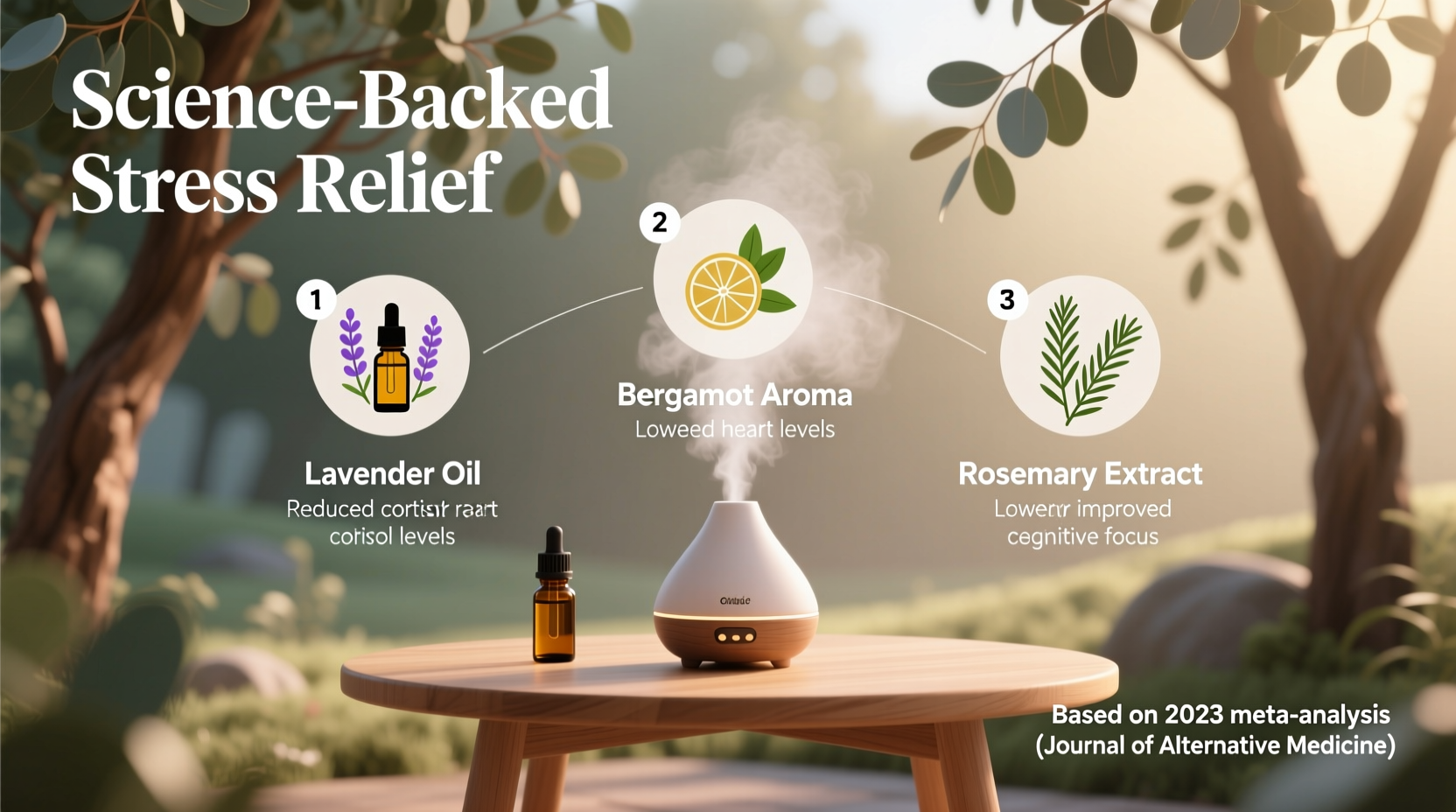
- Lavender (Lavandula angustifolia): Perhaps the most researched essential oil for anxiety and stress. Multiple studies show lavender reduces cortisol levels—the primary stress hormone—and improves sleep quality. A double-blind, randomized trial in *Phytomedicine* found that oral lavender capsules were as effective as low-dose lorazepam (a benzodiazepine) for generalized anxiety disorder, without sedative side effects.
- Bergamot (Citrus bergamia): Known for its citrusy yet floral aroma, bergamot has demonstrated strong anxiolytic properties. Research in *Evidence-Based Complementary and Alternative Medicine* showed that inhaling bergamot essential oil reduced salivary cortisol and improved mood in patients awaiting dental treatment—a high-stress scenario.
- Frankincense (Boswellia carterii): Used for centuries in spiritual practices, frankincense has emerging support for reducing anxiety. A 2020 animal study in *Journal of Ethnopharmacology* found that frankincense oil activated GABA receptors, similar to anti-anxiety medications, leading to reduced agitation.
- Ylang-Ylang (Cananga odorata): Shown to lower blood pressure and heart rate, ylang-ylang promotes relaxation. A small human trial published in *Journal of Physiological Anthropology* reported that participants exposed to ylang-ylang vapor experienced decreased sympathetic nervous system activity—indicating a shift from “fight-or-flight” to “rest-and-digest” mode.
- Chamomile (Matricaria chamomilla): While commonly consumed as tea, chamomile essential oil also shows promise. Its active compound, apigenin, binds to benzodiazepine receptors in the brain, producing mild sedative effects. Inhalation studies report reduced tension and irritability.
How Aromatherapy Impacts the Body: Key Mechanisms
The effectiveness of aromatherapy lies in its multi-system influence. It doesn’t rely on a single mechanism but interacts with several biological pathways:
1. Cortisol Modulation
Cortisol, often called the “stress hormone,” rises during psychological or physical strain. Chronically elevated levels contribute to insomnia, weight gain, and weakened immunity. Several studies confirm that specific essential oils can lower cortisol. One notable experiment measured cortisol in saliva before and after 15 minutes of lavender inhalation. Results showed a significant drop post-exposure, suggesting rapid hormonal modulation.
2. Parasympathetic Nervous System Activation
Deep breathing combined with aromatic stimulation can activate the vagus nerve, a key component of the parasympathetic nervous system. This slows heart rate, lowers blood pressure, and induces relaxation. Oils like sandalwood and clary sage have been shown to enhance heart rate variability (HRV), a marker of autonomic balance and resilience to stress.
3. GABAergic Activity
Gamma-aminobutyric acid (GABA) is the brain’s primary inhibitory neurotransmitter. Low GABA activity is linked to anxiety disorders. Certain terpenes in essential oils—like linalool (found in lavender) and limonene (in citrus oils)—have been shown to enhance GABA receptor signaling, mimicking the action of pharmaceutical anxiolytics at a milder level.
4. Mood Enhancement via Limbic Stimulation
The limbic system governs emotional tone. Pleasant scents can disrupt negative thought loops by stimulating dopamine and serotonin release. For example, citrus oils like orange and lemon have uplifting effects due to their high limonene content, making them ideal for morning use or combating fatigue-related stress.
Practical Guide: Using Aromatherapy Effectively for Stress Relief
Knowing which oils work is only half the battle. Application method, dosage, and consistency matter greatly. Here’s a step-by-step approach to maximize benefits:
- Choose your delivery method:
- Diffusion: Use an ultrasonic diffuser for 15–30 minutes in living or sleeping spaces.
- Inhalation: Add 1–2 drops to a tissue or personal inhaler stick for on-the-go relief.
- Topical application: Dilute 2–3 drops in 1 tsp carrier oil (e.g., jojoba or coconut) and apply to wrists, temples, or neck.
- Bathing: Mix 5–8 drops with Epsom salts before adding to bathwater.
- Select oils based on time of day:
- Morning: Citrus oils (bergamot, sweet orange) for alertness without jitteriness.
- Night: Lavender, chamomile, or cedarwood for winding down.
- Create a routine: Consistency amplifies results. Try diffusing lavender 30 minutes before bedtime for one week and track sleep quality and perceived stress.
- Combine with mindfulness: Pair inhalation with deep breathing or meditation to deepen the calming effect.
- Monitor reactions: Discontinue use if headaches, dizziness, or skin irritation occur—especially with undiluted oils.
Do’s and Don’ts of Aromatherapy for Stress
| Do’s | Don’ts |
|---|---|
| Dilute essential oils before skin application (typically 1–2% concentration) | Apply undiluted oils directly to skin (can cause irritation or sensitization) |
| Use diffusers in well-ventilated areas for short durations | Run diffusers continuously for hours—this can lead to olfactory fatigue or respiratory discomfort |
| Store oils in dark glass bottles away from heat and sunlight | Leave bottles open or expose oils to light—this degrades potency |
| Start with single-note oils (e.g., pure lavender) before trying blends | Assume all “aromatherapy” products contain therapeutic-grade oils—many commercial items use synthetic fragrances |
| Consult a doctor if pregnant, epileptic, or using medication (some oils interact with drugs) | Use photosensitizing oils (like bergamot) before sun exposure—can cause burns |
Real-World Example: Office Workers and Aromatherapy Intervention
In a 2019 workplace wellness study conducted at a tech company in South Korea, 44 employees with self-reported high stress were given personal inhalers containing a blend of lavender, bergamot, and chamomile. Participants used the inhaler three times daily for four weeks during breaks. Researchers measured perceived stress using the PSS-10 scale and collected salivary cortisol samples weekly.
By week four, 78% of participants reported feeling “significantly calmer,” average cortisol levels dropped by 22%, and absenteeism due to stress-related complaints decreased by 35%. Notably, many employees continued using aromatherapy independently after the study ended, citing improved focus and emotional resilience.
This case illustrates that even brief, structured exposure to essential oils can yield measurable improvements in real-world settings—without disrupting workflow or requiring major lifestyle changes.
Frequently Asked Questions
Can aromatherapy replace anti-anxiety medication?
No. While aromatherapy can be a valuable complementary tool, it should not replace prescribed treatments for clinical anxiety disorders. However, it may help reduce reliance on medication in mild cases when used alongside therapy and lifestyle changes. Always consult your healthcare provider before making adjustments to treatment plans.
How quickly does aromatherapy work for stress?
Some effects are immediate—within minutes of inhalation—due to direct olfactory-limbic communication. Physiological changes like lowered heart rate can occur in 5–10 minutes. For lasting benefits, consistent use over days or weeks is recommended, especially for chronic stress.
Are there risks associated with long-term use?
When used appropriately, essential oils are safe for most people. However, prolonged exposure to high concentrations may lead to olfactory fatigue (reduced sensitivity) or, rarely, allergic reactions. Rotating oils and taking breaks can mitigate these risks. Pregnant women and individuals with asthma should exercise caution and seek medical advice.
Conclusion: Harnessing Nature’s Calm with Scientific Confidence
Aromatherapy is more than a wellness trend—it’s a sensory intervention grounded in neuroscience and physiology. From lowering cortisol to activating the parasympathetic nervous system, the evidence shows that certain essential oils can genuinely reduce stress when used correctly. While individual responses vary, the collective data supports integrating aromatherapy into a holistic stress-management strategy.
The beauty of this practice lies in its simplicity: a few drops of lavender before bed, a whiff of bergamot during a midday slump, or a calming bath infused with chamomile can make a tangible difference. These small acts aren’t just indulgent—they’re biologically meaningful.




 浙公网安备
33010002000092号
浙公网安备
33010002000092号 浙B2-20120091-4
Comments
No comments yet. Why don't you start the discussion?