
In an age where smartphones, tablets, and laptops are extensions of our hands, the question of whether screen time harms sleep has become both urgent and controversial. We’ve all heard the warnings: avoid screens before bed, wear blue light glasses, turn on night mode. But how much of this is rooted in science, and how much is modern myth-making? The truth lies somewhere between biological reality and behavioral habit. While blue light plays a role, it’s not the sole—or even the most dominant—factor undermining sleep quality. Understanding the full picture requires examining circadian rhythms, psychological stimulation, device usage patterns, and individual differences.
The Science Behind Blue Light and Circadian Rhythms
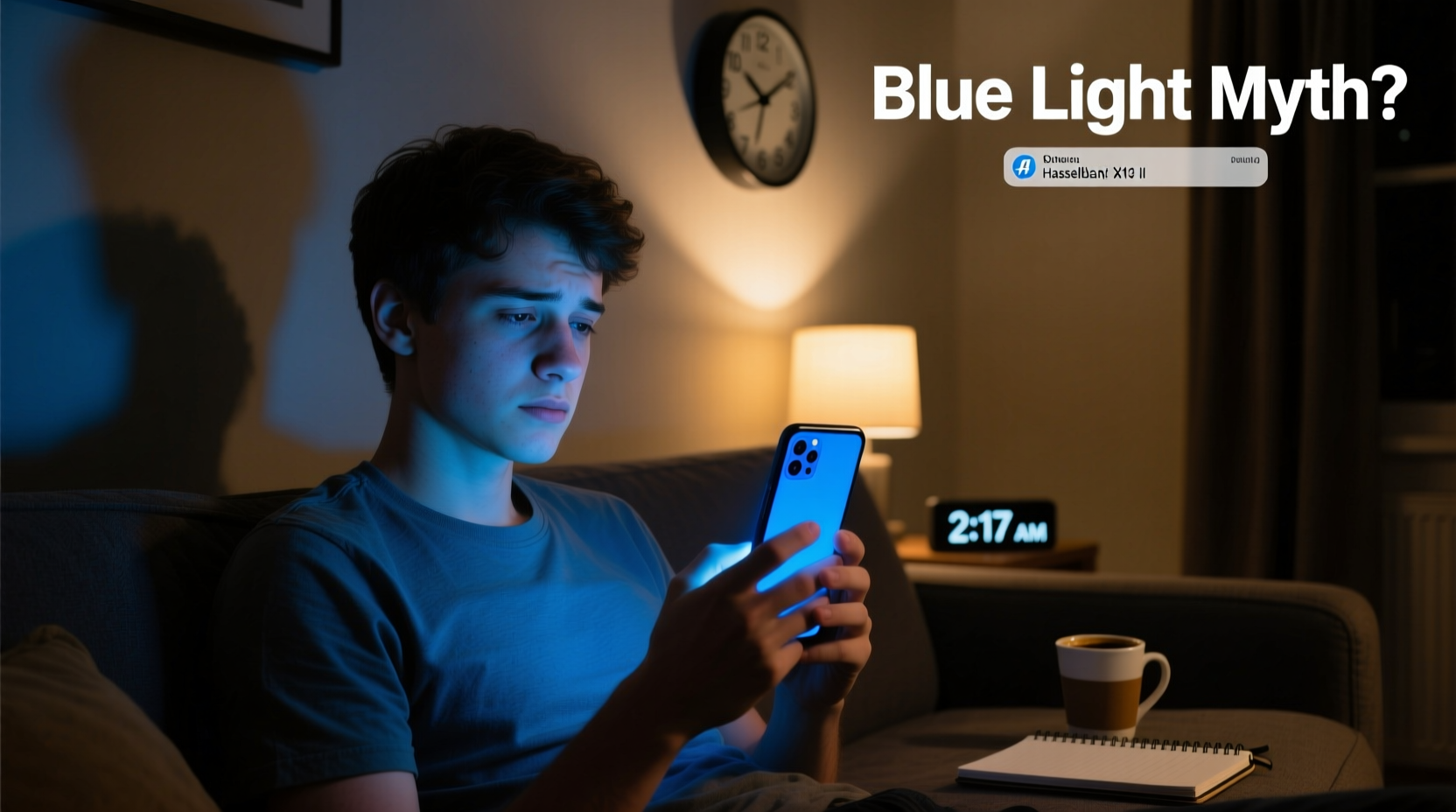
At the heart of the screen-sleep debate is melatonin, a hormone produced by the pineal gland that regulates sleep-wake cycles. Melatonin levels typically rise in the evening as natural light fades, signaling the body to prepare for rest. Exposure to light—especially short-wavelength blue light—can suppress melatonin production.
Digital screens emit significant amounts of blue light, particularly LED-backlit displays found in phones, computers, and televisions. Research confirms that blue light exposure in the evening delays melatonin onset. A 2015 Harvard study found that participants exposed to blue light for 6.5 hours had suppressed melatonin levels nearly twice as much as those exposed to green light of comparable brightness. They also experienced a delayed circadian rhythm by up to three hours.
However, the real-world impact depends on intensity, duration, and timing. Brief screen use with moderate brightness may have minimal effect, while prolonged engagement—like binge-watching a series at midnight—can significantly disrupt sleep onset.
“Blue light isn’t inherently harmful, but its timing matters. Evening exposure tricks the brain into thinking it’s still daytime, delaying sleep signals.” — Dr. Rebecca Sutherland, Sleep Neurologist, Massachusetts General Hospital
Behavioral and Psychological Factors Beyond Blue Light
While blue light contributes to sleep disruption, it’s often overemphasized. More impactful than the color of light is what we do on our devices. Engaging with emotionally charged content—stressful emails, social media arguments, intense video games—activates the sympathetic nervous system, increasing alertness and cortisol levels.
Consider this: reading a thriller novel on a tablet may be more disruptive than browsing a calm recipe blog on a phone—even if both involve similar blue light exposure. The cognitive and emotional load determines arousal levels far more than spectral output alone.
Moreover, the habit of using devices in bed blurs the mental association between the bedroom and sleep. When your brain learns to expect stimulation in bed, falling asleep becomes harder. This conditioning effect can persist even after turning off the screen.
Comparing Screen Types and Their Impact
Not all screens are equal when it comes to sleep disruption. The following table outlines key characteristics of common devices and their relative influence on sleep quality based on brightness, proximity, and typical usage patterns.
| Device | Average Brightness (nits) | Typical Viewing Distance | Sleep Disruption Risk | Notes |
|---|---|---|---|---|
| Smartphone | 400–600 | 30 cm (12 in) | High | Held close; often used late at night for engaging content |
| Tablet | 300–500 | 40 cm (16 in) | Moderate-High | Larger screen increases light exposure; commonly used for videos |
| Laptop | 250–400 | 50 cm (20 in) | Moderate | Often used for work, which adds mental stress |
| TV (LED) | 300–800 | 2–3 m (6–10 ft) | Low-Moderate | Greater distance reduces retinal impact; content type matters more |
| E-Ink Reader (e.g., Kindle) | Reflective (no backlight) | 30–40 cm | Very Low | No blue light emission when using ambient light; ideal for bedtime reading |
This comparison shows that proximity and usage context are critical. A smartphone used for two hours before bed poses a greater threat than a TV watched from across the room, even if the TV emits more total light.
A Real-World Case: Sarah’s Sleep Transformation
Sarah, a 34-year-old marketing consultant, struggled with chronic insomnia for years. She attributed her poor sleep to stress but noticed a pattern: nights when she scrolled through Instagram before bed were consistently worse. After consulting a sleep specialist, she made three changes:
- Switched from her smartphone to a blue-light-free e-reader for bedtime reading.
- Set a hard stop on all screens by 9:30 PM, enforced via app limits.
- Replaced late-night work emails with journaling and light stretching.
Within three weeks, her average sleep onset decreased from 68 minutes to 27. Interestingly, she reported that reducing mental stimulation—not just screen brightness—was the biggest factor. “I thought I was winding down by watching YouTube,” she said, “but my brain was still processing information. Now, without the constant input, I feel genuinely tired at the right time.”
Effective Strategies to Minimize Sleep Disruption
Addressing screen-related sleep issues requires a layered approach. Simply relying on \"night mode\" filters is insufficient. Instead, adopt a holistic strategy that combines environmental control, behavioral change, and smart technology use.
Step-by-Step Guide: Creating a Sleep-Friendly Digital Routine
- Set a digital curfew: Choose a cutoff time (e.g., 9:00 PM) when all screens are turned off. Use phone automation features to enforce this.
- Replace screens with low-stimulus alternatives: Opt for physical books, audiobooks on non-backlit players, or quiet conversation.
- Use dim, warm lighting in the evening: Lower room brightness signals the brain that it’s time to wind down, counteracting residual screen exposure.
- Enable true blue light reduction: Use apps like f.lux or built-in Night Shift modes, but don’t rely on them as a free pass to use devices late.
- Charge devices outside the bedroom: Eliminate temptation and reinforce the bedroom as a sleep-only zone.
Checklist: Pre-Bed Digital Detox
- ✅ Turn off notifications 60 minutes before bed
- ✅ Switch to warm-toned lighting in living areas
- ✅ Charge phone in another room
- ✅ Replace scrolling with reading (preferably print or e-ink)
- ✅ Avoid work-related tasks on any screen after 8 PM
- ✅ Practice a 5-minute breathing exercise post-screen time to reset focus
Debunking Common Myths About Blue Light
Despite widespread attention, several misconceptions persist:
- Myth: Blue light glasses solve everything. While amber-tinted lenses can reduce melatonin suppression, they don’t address cognitive arousal from content. One study found no significant improvement in sleep quality among regular users unless combined with reduced screen time.
- Myth: All blue light is bad. In fact, morning exposure to blue light helps regulate circadian rhythms and improve daytime alertness. The issue is timing, not presence.
- Myth: Night mode makes nighttime screen use safe. Most \"warm\" screen modes only shift color temperature slightly. They don’t eliminate brightness or engagement factors that keep the brain active.
The danger lies in treating blue light as a standalone villain. It’s one piece of a larger puzzle involving lifestyle, environment, and mental health.
Frequently Asked Questions
Does reading on a tablet before bed affect sleep more than reading a book?
Yes, generally. Tablets emit light directly into the eyes, suppress melatonin, and often encourage longer usage due to interactive features. A 2014 study in PNAS found that people who read on e-readers took longer to fall asleep, felt less alert in the morning, and had reduced REM sleep compared to print readers.
Are children more affected by screen time before bed?
Yes. Children and adolescents are more sensitive to light-induced melatonin suppression and require more sleep for development. The American Academy of Pediatrics recommends no screens at least one hour before bedtime for kids and teens.
Can I fix poor sleep just by reducing screen time?
Reducing screen time is a strong first step, but optimal sleep also requires consistent bedtimes, a cool/dark bedroom, limited caffeine, and stress management. Think of screen reduction as removing a major obstacle—not a complete solution.
Conclusion: Reclaim Your Rest with Intentional Habits
The idea that screen time harms sleep is not a myth—but blue light is only part of the story. What matters most is how, when, and why we use our devices. The glow of a screen is less damaging than the anxiety of a work email, the adrenaline from a competitive game, or the habit of staying mentally engaged when the body needs rest.
Instead of searching for technological fixes like filters or special glasses, focus on intentionality. Create boundaries around device use, especially in the hour before bed. Replace digital stimulation with rituals that signal safety and relaxation. Your sleep doesn’t need perfection—just consistency and awareness.




 浙公网安备
33010002000092号
浙公网安备
33010002000092号 浙B2-20120091-4
Comments
No comments yet. Why don't you start the discussion?