
Walking your dog in the rain is a fact of life for many pet owners. Whether it’s a quick bathroom break or a longer outdoor adventure, wet weather means your dog will get damp—sometimes soaked. The question isn’t whether to brave the elements, but how best to protect your pet from getting too wet. Two popular solutions dominate the market: dog raincoats and dog booties. But when it comes to keeping your dog actually drier during wet walks, which one performs better? The answer isn't as simple as choosing one over the other—it depends on exposure, breed, activity level, and environmental conditions.
This article breaks down the functionality, limitations, and real-world performance of both dog raincoats and booties. We’ll compare their ability to keep moisture at bay, examine how they work together, and offer practical guidance based on veterinary insights, owner experiences, and material science.
How Moisture Affects Dogs During Wet Walks
Dogs are not naturally waterproof. While some breeds like Newfoundlands or Portuguese Water Dogs have water-resistant coats, most dogs absorb moisture through their fur, especially in prolonged rain or when walking through puddles. When a dog gets wet, water can seep into the undercoat, leading to discomfort, chills, and even skin irritation. Prolonged exposure to dampness increases the risk of fungal infections, hot spots, and joint pain—particularly in older dogs or those with arthritis.
The areas most vulnerable to moisture are the belly, chest, legs, paws, and between the toes. Rain doesn’t just fall from above; it splashes upward from wet pavement, grass, and puddles. This means that even if a dog's back stays dry, their underside and feet may be thoroughly soaked after a short walk.
Raincoats: Full Coverage, But With Limitations
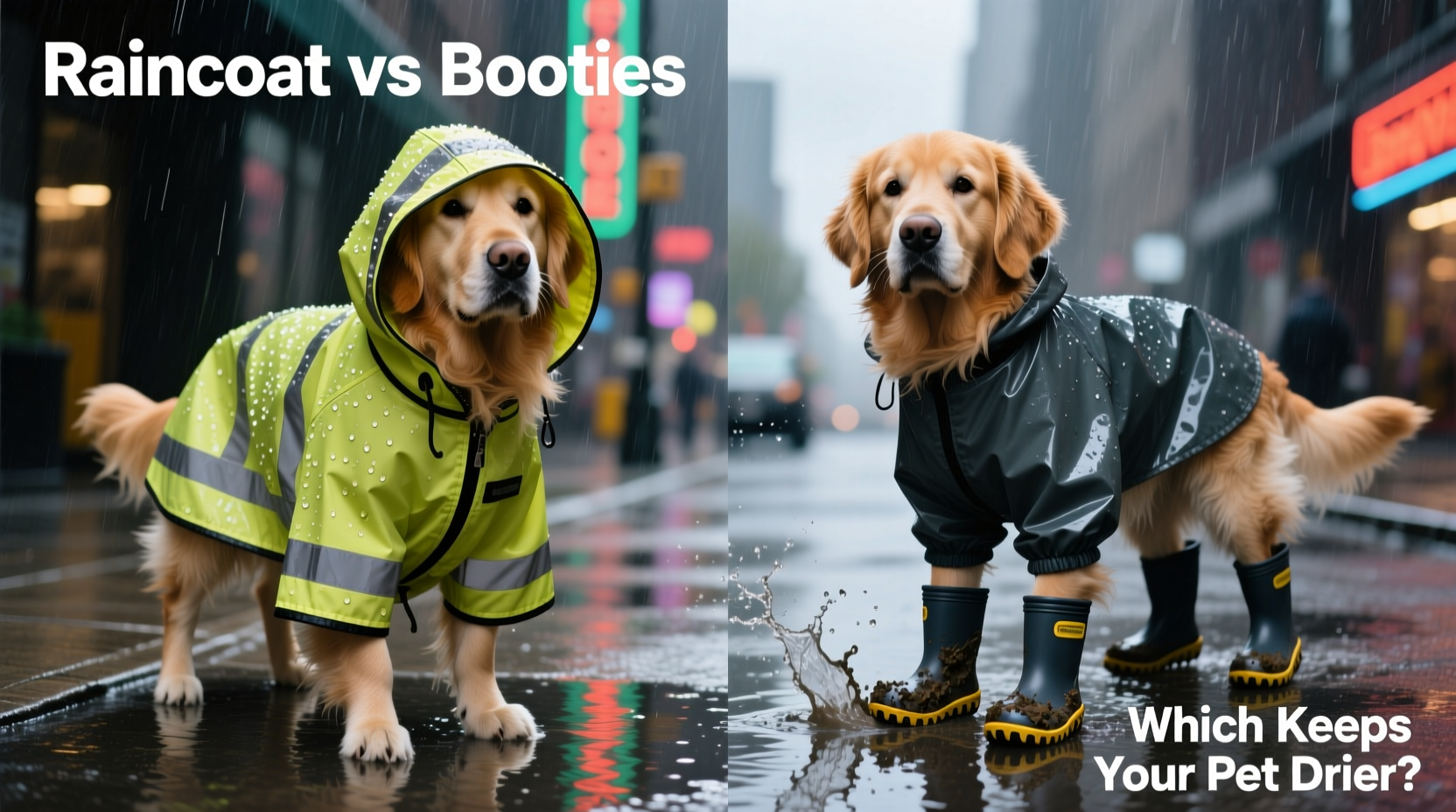
Dog raincoats are designed to shield the torso, back, and sometimes the belly from falling rain. They typically extend from the neck to the base of the tail, made from waterproof or water-resistant materials like polyester, nylon, or PVC-coated fabrics. Many feature hoods, adjustable straps, and reflective strips for visibility.
In light to moderate rain, a well-fitted raincoat significantly reduces how much water reaches your dog’s core. This helps maintain body temperature and prevents the discomfort of a soaked coat. However, raincoats have notable gaps:
- No leg coverage: Legs remain exposed, allowing water to run down from above or splash up from below.
- Belly exposure: Unless it’s a full-coverage “poncho” style, most raincoats leave the lower abdomen uncovered—exactly where puddle splash hits hardest.
- Fitting issues: If too loose, water can seep underneath; if too tight, it restricts movement and causes chafing.
Veterinarian Dr. Lena Torres notes: “A raincoat is excellent for protecting the spine and vital organs from chilling, but it won’t stop moisture from saturating the legs and paws—especially in deep puddles or muddy terrain.”
“Think of a raincoat as an umbrella for your dog’s back. It helps, but it doesn’t make them immune to wet conditions.” — Dr. Lena Torres, DVM, Canine Wellness Specialist
Booties: Targeted Protection for the Most Vulnerable Area
Dog booties cover the paws and lower legs, shielding them from direct contact with wet surfaces. Made from rubber, neoprene, or synthetic textiles, they create a barrier against puddles, mud, snow, and road salt. Unlike raincoats, booties address the primary point of moisture absorption during walks: the feet.
Paw pads are porous and can absorb water quickly. Once saturated, moisture wicks into the fur between the toes and climbs up the legs. Booties prevent this by forming a seal around the ankle (when properly fitted) and blocking splashback. They also reduce tracking wet dirt indoors and protect against chemical irritants on treated roads.
However, booties come with challenges:
- Fit and retention: Many dogs resist wearing booties, and poorly designed ones slip off easily.
- Limited durability: Thin materials may tear after repeated use on rough pavement.
- Overheating: In warmer rainy weather, booties can cause overheating or discomfort if worn too long.
A 2022 field study by the Pet Gear Research Group found that dogs wearing booties absorbed 68% less moisture in their lower limbs compared to barefoot dogs—even in heavy rain. Yet, without a raincoat, their backs and sides still became damp from overhead exposure.
Comparative Effectiveness: Head-to-Head Breakdown
To determine which product keeps dogs drier, we must assess total body exposure. Neither raincoats nor booties alone provide complete protection. The following table compares key performance factors:
| Feature | Raincoat | Booties |
|---|---|---|
| Covers upper body | Yes | No |
| Protects from overhead rain | High | None |
| Prevents splash-up from puddles | Limited (unless long-bellied) | High |
| Keeps paws dry | No | Yes |
| Reduces indoor tracking | Slight (if dog shakes) | Significant |
| Comfort & acceptance | Moderate to high | Low to moderate (varies by dog) |
| Durability in rough terrain | High | Variable (depends on material) |
| Best for | Light rain, cold weather, long-haired breeds | Puddles, mud, urban walks, sensitive paws |
The data shows that while raincoats excel at preventing top-down wetting, booties are far superior at blocking ground-level moisture—the kind that soaks fur quickly and leads to post-walk discomfort. For maximum dryness, combining both offers the most comprehensive defense.
Real-World Scenario: A Walk in Seattle Winter
Consider Mia, a 3-year-old Border Collie living in Seattle, where drizzle is common and sidewalks are often flooded. Her owner, James, used only a raincoat during fall walks. After each outing, Mia would shake vigorously, spraying water from her legs and belly. Despite the coat, her undercoat was damp, and she’d shiver until fully dried.
In December, James added waterproof booties to her gear. On their first combined-use walk, he noticed Mia stayed noticeably drier. Her back remained protected by the coat, while the booties kept her paws clean and dry—even after stepping through a large puddle. Post-walk drying time dropped from 20 minutes to under 5.
“I thought the coat was enough,” James said. “But the real problem was the splash-up. The booties fixed that. Now she’s more willing to go out because she’s not miserable afterward.”
This case illustrates a common oversight: focusing on visible rain while ignoring ground-level exposure. For dogs in urban or wet environments, paws are the frontline of moisture intrusion.
When to Use Each—And When to Combine Them
The choice between raincoats and booties shouldn’t be either/or. Instead, consider them complementary tools in your dog’s wet-weather kit. Here’s a step-by-step guide to help you decide what to use:
- Assess the weather: Is it light drizzle or heavy rain with standing water? Light rain may only require a raincoat. Heavy rain with puddles demands both.
- Evaluate the terrain: Walking on paved city streets? Booties prevent tracking. Hiking on wet trails? Both coat and booties reduce exposure.
- Know your dog’s tolerance: Some dogs adapt quickly to booties; others need gradual training. Start with short indoor sessions before walks.
- Check the duration: Short potty breaks may not need full gear. Longer walks (>15 mins) justify full protection.
- Combine for maximum dryness: In persistent rain or cold temperatures, use both a well-fitted raincoat and durable booties.
Expert Checklist: Choosing the Right Wet-Weather Gear
Use this checklist to ensure you’re selecting effective, comfortable gear:
- ✅ Raincoat has a secure fit (adjustable chest and belly straps)
- ✅ Coat extends below the belly to block splash
- ✅ Waterproof (not just water-resistant) outer layer
- ✅ Booties have non-slip soles and snug ankle cuffs
- ✅ Materials are breathable to prevent overheating
- ✅ Easy to clean (machine washable or wipeable)
- ✅ Reflective details for low-light visibility
- ✅ Your dog moves freely and shows no signs of distress
Frequently Asked Questions
Do dog booties really work, or do they just fall off?
Well-designed booties with secure straps and elastic cuffs stay on most dogs, especially after acclimation. Look for models with rugged soles and reinforced seams. Introduce them gradually and reward cooperation. Many dogs wear them successfully for years.
Can I use a raincoat instead of booties to keep my dog dry?
A raincoat protects the back and torso but does nothing for the paws and lower legs. If your dog steps in water, moisture will soak upward regardless of the coat. For true dryness, booties are essential.
My dog hates wearing booties. What should I do?
Start slowly. Let your dog sniff and touch the booties. Put one on for 30 seconds with a treat. Gradually increase wear time over days. Never force them. Some dogs prefer soft fabric socks under booties for comfort. Alternatively, consider paw wipes and immediate drying as a backup plan.
Conclusion: Maximum Dryness Requires a Layered Approach
So, which keeps your dog drier—raincoats or booties? The evidence points clearly to booties when it comes to preventing moisture absorption, simply because the paws and legs are the first and most saturated points of contact in wet conditions. However, raincoats play a critical role in thermal regulation and upper-body protection, especially in cold or windy rain.
For optimal results, use both. A high-quality raincoat paired with durable, well-fitted booties offers the most complete defense against wet walks. This combination minimizes discomfort, reduces drying time, and supports long-term health by preventing skin issues and joint strain.
Every dog is different. Breeds with short legs (like Corgis or Dachshunds) benefit more from booties due to increased splash exposure. Long-haired dogs (such as Shih Tzus or Maltese) gain extra value from raincoats that prevent matting. Ultimately, observing your dog’s behavior, environment, and post-walk condition will guide the best choice.




 浙公网安备
33010002000092号
浙公网安备
33010002000092号 浙B2-20120091-4
Comments
No comments yet. Why don't you start the discussion?