
Dogs love toys that make noise—but not all pet owners feel the same way. The classic squeaky toy has long been a staple in every dog’s playtime routine, but newer sound-emitting toys are gaining popularity with their varied audio cues, motion-activated barks, or even recorded human voices. While both types aim to engage your dog mentally and physically, they differ significantly in function, durability, and—perhaps most importantly—their impact on household peace. Choosing between a traditional squeaky toy and a modern sound toy isn’t just about what excites your dog; it’s also about preserving your own sanity during hours of repeated noises.
The Science Behind Canine Play and Sound
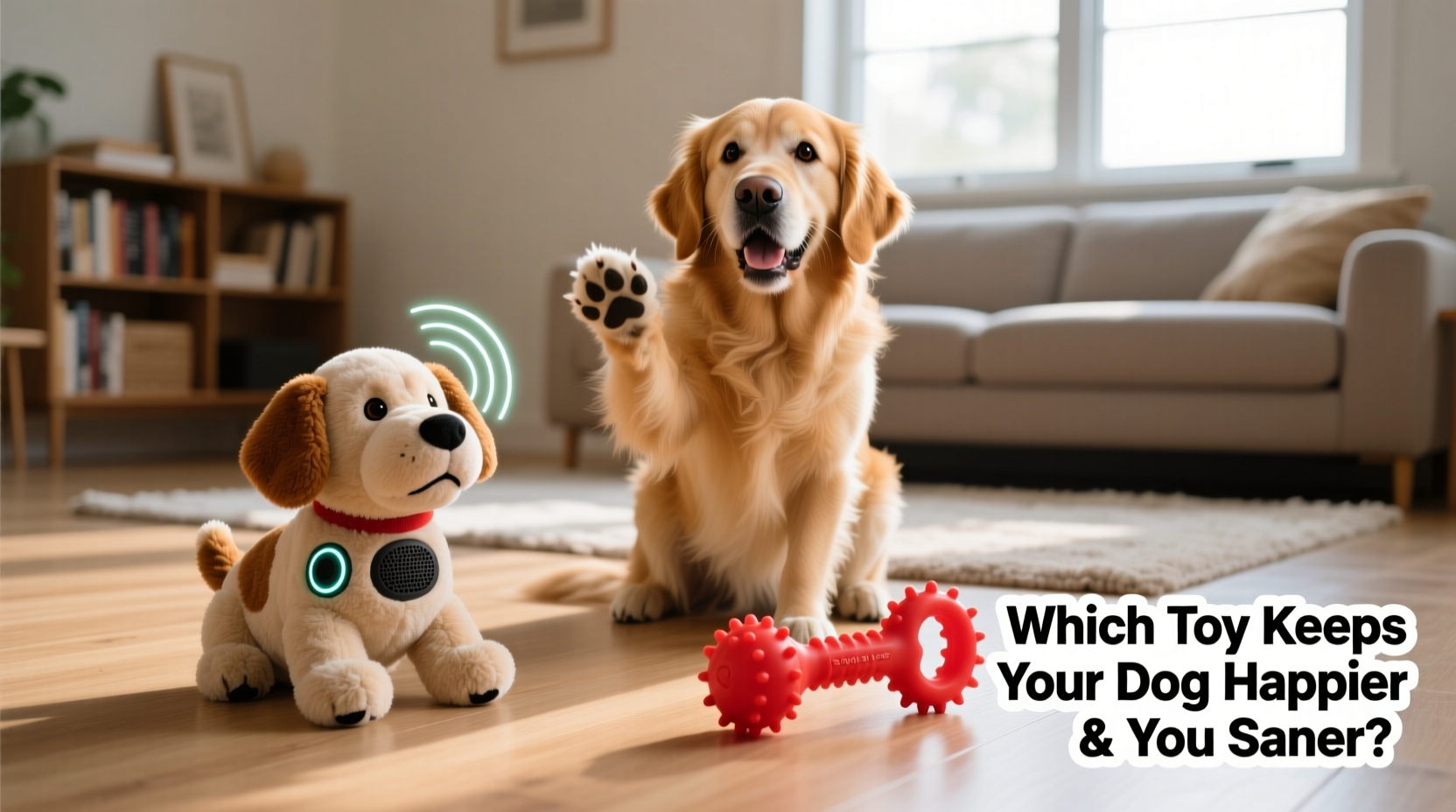
Dogs are naturally drawn to auditory stimuli. In the wild, predators rely on sound to detect prey—rustling leaves, scurrying rodents, or high-pitched squeaks mimic injured animals, triggering a dog’s instinct to chase, bite, and \"capture.\" This explains why many dogs go into full hunting mode when they hear a squeaker inside a plush toy. The sudden burst of sound satisfies their predatory drive, offering both mental stimulation and physical exertion.
Modern sound toys take this concept further by incorporating pre-recorded phrases (“Who’s a good boy?”), realistic animal sounds, or intermittent beeps. These are often designed to simulate interaction, especially useful for dogs left alone. However, while these sounds may keep a dog engaged longer, they can also become repetitive or grating over time—especially for human ears.
“Dogs respond strongly to high-frequency sounds because they resemble distress calls in nature. That’s why squeakers are so effective—but also why they can trigger obsessive behavior.” — Dr. Lena Reyes, Veterinary Ethologist
Key Differences: Squeaky Toys vs. Sound Toys
To understand which toy type suits your dog—and your household—best, it helps to compare their core features. Below is a breakdown of how they stack up across important categories.
| Feature | Squeaky Toy | Sound Toy |
|---|---|---|
| Noise Type | Short, sharp squeak (mechanical) | Varied: voice clips, chirps, music, beeps |
| Activation Method | Squeezed by mouth or paw | Pressure sensor, motion, or timer-based |
| Durability | Moderate; squeaker often destroyed quickly | Higher; electronics protected, replaceable batteries |
| Engagement Duration | Short bursts; ends when squeaker breaks | Prolonged; multiple sounds extend interest |
| Noise Level & Repetition | Loud but infrequent after destruction | Can repeat automatically; potentially constant |
| Best For | Puppies, fetch lovers, instinct-driven play | Independent play, solo entertainment, older dogs |
When Squeaky Toys Win: Simplicity and Instinct
Squeaky toys remain popular for good reason. Their mechanical simplicity means fewer parts to fail, no batteries to replace, and lower cost per unit. Most dogs react immediately to the sound, launching into a frenzy of shaking, tossing, and chewing—behavior that mimics killing prey. This kind of play burns energy fast and satisfies deep-seated instincts.
For puppies and high-energy breeds like Border Collies or Jack Russells, squeaky toys provide an excellent outlet. Once the squeaker pops, many dogs lose interest, which can actually be a blessing for owners. A dead squeaker often signals the end of playtime—or at least the transition to quieter chewing.
When Sound Toys Shine: Engagement Without You
Sound toys excel in scenarios where you’re not present to interact. Some models activate when the dog moves or nudges them, playing encouraging phrases or playful barks. Others include timers that emit sounds at intervals, keeping a dog mentally occupied during short periods of solitude.
These toys are particularly helpful for senior dogs or those with separation anxiety. The familiar tone of their owner’s voice—even if recorded—can have a calming effect. One study published in *Applied Animal Behaviour Science* found that dogs exposed to recorded owner voices showed reduced stress markers compared to silence or ambient noise.
However, the downside is clear: some sound toys loop phrases every few minutes, creating an endless cycle of “Let’s play!” or giggling sounds. What starts as charming can quickly become maddening for cohabitants.
A Real-Life Example: Max the Rescue Terrier
Max, a 7-year-old mixed terrier adopted from a shelter, struggled with loneliness when his owner worked from home. He’d bark at shadows and chew baseboards within 20 minutes of being left alone. His owner introduced a sound toy that played her recorded message: “Good boy, Max! I’ll be back soon.” The first few days were promising—Max would nudge the toy, hear her voice, and settle down with a blanket.
But by day five, the toy began malfunctioning, repeating the phrase every 90 seconds without pause. The owner returned to find Max pacing, clearly agitated—not calmed. She replaced the toy with a simple squeaky hedgehog, which Max destroyed in two minutes but then ignored. Though less sophisticated, the squeaker gave a brief burst of engagement without lingering auditory stress.
How to Choose Based on Your Lifestyle
The right choice depends less on your dog’s breed and more on your living situation and daily routine. Consider the following checklist before purchasing:
- Do you live in a small apartment or shared space? → Lower-noise options may be essential.
- Is your dog home alone for long stretches? → A sound toy with intermittent cues might help.
- Does your dog destroy toys quickly? → Squeaky toys may be more cost-effective.
- Are you sensitive to repetitive sounds? → Test volume and loop frequency before committing.
- Do you want interactive play or solo distraction? → Squeaky toys encourage joint games; sound toys work independently.
Smart Strategies to Keep Dogs Engaged and Homes Peaceful
You don’t have to pick one toy type forever. A balanced approach combines both, used strategically:
- Rotate toys weekly – Introduce a squeaky toy for active play sessions, then swap in a sound toy for solo downtime.
- Modify sound toys – Remove batteries when not needed, or cover speakers lightly with tape to reduce volume.
- Use sound toys as part of a puzzle – Place them inside treat-dispensing puzzles so activation requires effort, reducing mindless triggering.
- Supervise initial use – Observe how your dog reacts. Does the sound excite or overwhelm them?
- Retire noisy toys at night – Avoid placing any sound-making toys in bedrooms or crates during sleep hours.
Frequently Asked Questions
Can sound toys cause anxiety in dogs?
Yes, if the sounds are too loud, unpredictable, or repetitive. Some dogs perceive certain tones as threatening or confusing. Always monitor your dog’s body language—pinned ears, tail tucking, or avoidance suggest discomfort.
Are squeaky toys safe for aggressive chewers?
Only if supervised. Aggressive chewers can rip open plush toys and swallow the squeaker mechanism, which poses a choking or intestinal blockage risk. Opt for heavy-duty rubber squeaky toys designed for power chewers.
Do dogs get tired of the same sound?
Most do—eventually. Like humans, dogs experience habituation. A toy that fascinates them for weeks may suddenly be ignored. Rotating toys every few days helps maintain novelty and interest.
Final Thoughts: Balance Happiness and Harmony
The battle between dog sound toys and squeaky toys isn’t about declaring a winner—it’s about matching the toy to the moment. Squeaky toys tap into primal joy, offering quick bursts of instinctual play that often end as abruptly as they begin. Sound toys provide sustained engagement, especially valuable when you're busy or away, but come with the risk of sensory overload—for both dog and human.
The most effective strategy is variety. Use squeaky toys during playtime to bond and burn energy. Reserve sound toys for monitored solo moments, and always prioritize your dog’s emotional response over novelty. And for your own well-being, choose toys with off switches, mute options, or easy disassembly. After all, a happy dog deserves a sane owner.




 浙公网安备
33010002000092号
浙公网安备
33010002000092号 浙B2-20120091-4
Comments
No comments yet. Why don't you start the discussion?