
Suddenly, your well-trained dog isn’t responding. You say “sit,” and they glance at you before walking away. “Come” gets ignored mid-sniff. The reliability you once counted on has vanished, leaving confusion—and maybe a little worry—behind. This shift doesn’t mean your dog has turned stubborn or lost respect. More often than not, it’s a signal: something in their world has changed. Understanding why dogs stop listening is the first step toward restoring harmony. The good news? Most causes are fixable with patience, observation, and gentle, thoughtful adjustments.
Why Dogs Stop Responding to Commands
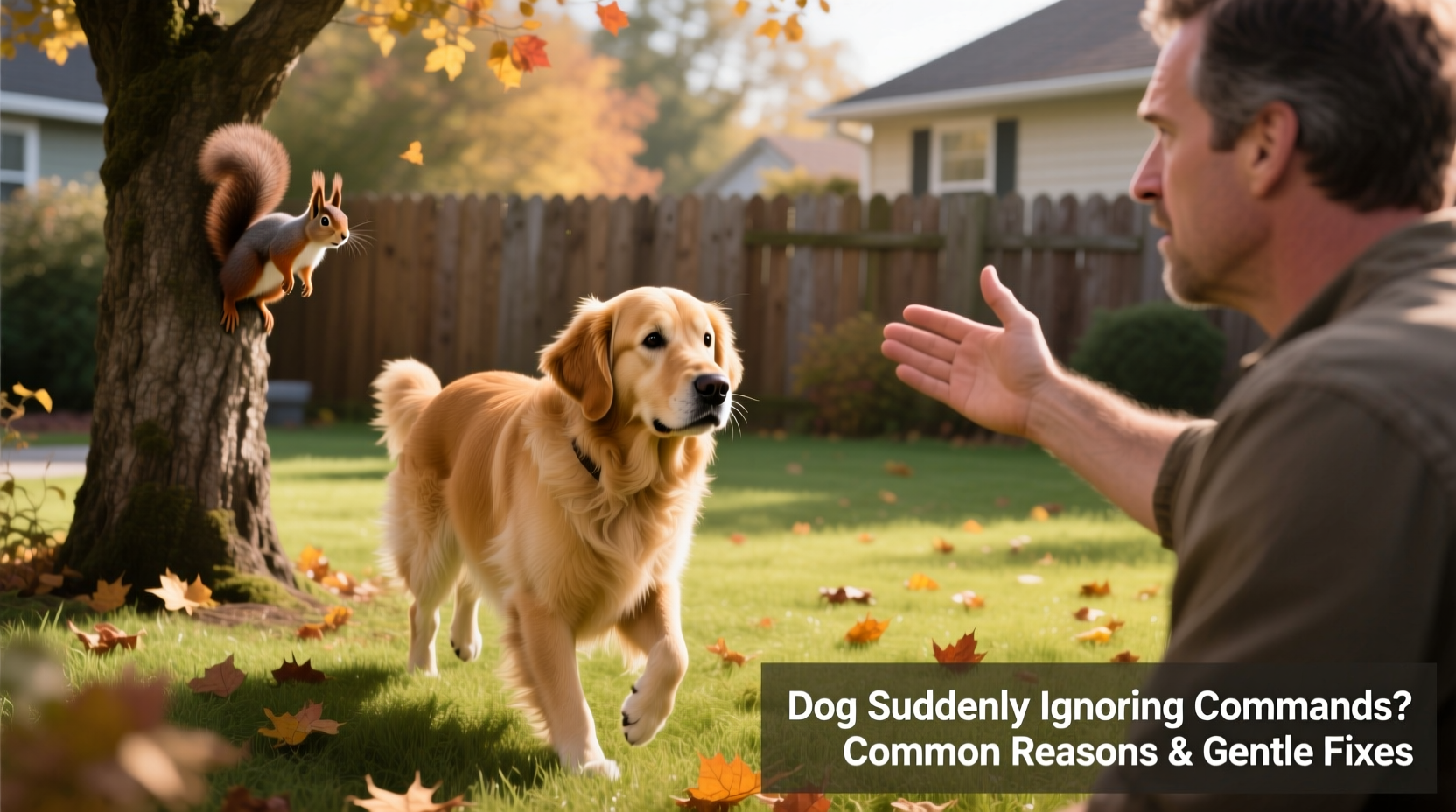
Dogs don’t disobey out of malice. Their behavior is communication. When a previously responsive dog begins ignoring commands, it’s usually due to one or more underlying factors—emotional, physical, environmental, or training-related. Unlike humans, dogs live in the moment. Their ability to respond depends on their current state of mind, body, and surroundings. A command that was easy in the quiet living room may become impossible in a park full of squirrels and children.
The key to resolving sudden non-compliance is to look beyond obedience and examine context. Was there a recent change in routine? Has the dog been unwell? Are distractions overwhelming them? Addressing these root causes—not just reinforcing commands—leads to lasting improvement.
Common Reasons Your Dog Ignores Commands
Understanding the “why” behind disobedience allows for targeted solutions. Below are seven frequent causes, each backed by canine behavior science and real-world experience.
1. Overwhelmed by Distractions
Dogs learn best in low-distraction environments. If you’ve moved training from your home to a busy sidewalk or dog park, your dog may be too stimulated to focus. Sights, sounds, and smells compete with your voice. This isn’t defiance—it’s cognitive overload. A dog can’t “choose” to obey if their brain is flooded.
2. Underlying Health Issues
Pain, illness, or sensory decline can dramatically affect responsiveness. An older dog who no longer comes when called might have arthritis making movement painful. A younger dog ignoring cues could be suffering from an ear infection, reducing hearing. Even dental pain can make head movements associated with commands uncomfortable.
3. Inconsistent Reinforcement
Dogs thrive on predictability. If “sit” earns a treat sometimes but never others—or worse, is repeated multiple times before compliance—the command loses meaning. Inconsistency teaches dogs to wait until the third or fourth cue, eroding reliability.
4. Lack of Real-World Practice
Training confined to one environment doesn’t generalize well. A dog who sits perfectly in the kitchen may not understand the same word outside. Without gradual exposure to varied settings, commands remain context-specific rather than universal.
5. Emotional Stress or Fear
Anxiety, fear, or past negative experiences can suppress response. A dog who once loved walks may freeze or ignore cues if they associate the outdoors with loud noises or aggressive dogs. In high-stress states, the brain shifts from learning mode to survival mode—obedience becomes secondary to safety.
6. Boredom or Lack of Motivation
If training feels repetitive or unrewarding, dogs disengage. Using the same treat for months or demanding performance without variety drains enthusiasm. Just like people, dogs need engagement and incentive to stay focused.
7. Accidental Reinforcement of Ignoring
We often unknowingly reward non-compliance. For example, calling a dog five times and then giving up teaches them that ignoring works. Or chasing a dog who won’t come turns recall into a game of tag. These patterns reinforce the very behavior we want to eliminate.
“Dogs don’t fail training—they fail to generalize it. Our job is to meet them where they are, not demand they perform where we wish they were.” — Dr. Sarah Thornton, Certified Applied Animal Behaviorist
Gentle Fixes That Build Trust and Compliance
Forceful corrections damage trust and rarely produce long-term results. Instead, effective solutions focus on clarity, motivation, and emotional safety. The goal isn’t blind obedience but willing cooperation.
Step-by-Step: Rebuilding Reliable Responses
- Rule out medical issues. Schedule a vet check-up to identify pain, hearing loss, or illness.
- Lower the difficulty. Return to a quiet, familiar space to re-establish success.
- Reinforce generously. Use high-value treats (e.g., chicken, cheese) every time your dog responds correctly.
- Shorten sessions. Aim for 3–5 minutes, 2–3 times daily, to maintain attention.
- Add a cue marker. Use a clicker or verbal “yes!” the instant your dog obeys, followed by a treat.
- Gradually increase challenges. Only move to busier areas once your dog responds reliably 9 out of 10 times.
- End on success. Always finish with an easy win to keep motivation high.
Adjusting Rewards for Better Engagement
Motivation drives performance. If your dog ignores commands, the reward may not be worth the effort. Match the challenge level to the reward: easy tasks earn kibble; hard tasks (like coming from a squirrel chase) require steak.
| Command Difficulty | Suitable Reward | Avoid |
|---|---|---|
| Low (quiet indoor) | Dry kibble, praise | Over-rewarding with treats |
| Medium (backyard, mild distraction) | Cheese cubes, soft jerky | Using only verbal praise |
| High (park, other animals) | Cooked meat, favorite toy | Expecting compliance without high-value reinforcement |
Creating Positive Associations
If your dog ignores “come,” avoid scolding when they finally arrive—even if it took ten calls. Punishment links the command to negative outcomes, making future recalls less likely. Instead, celebrate every return with excitement and a treat, even if delayed.
Real Example: Max the Rescue Terrier
Max, a 3-year-old terrier mix, had been reliably house-trained and responsive to basic cues for six months after adoption. Then, he began ignoring “sit” and “stay” during walks. His owner, frustrated, increased repetition and used firmer tones, but Max only looked away or sniffed the ground.
A consultation revealed two overlooked factors: Max had developed mild hip dysplasia, making prolonged sitting uncomfortable, and his recall practice always ended the walk—so “come” meant “fun is over.”
The fix was twofold: First, the vet prescribed joint supplements and approved shorter, more frequent sits instead of long durations. Second, the owner began ending walks with a fun game of fetch *after* the recall, changing the association. Within three weeks, Max responded consistently again—not because he was forced, but because listening became comfortable and rewarding.
Essential Checklist: Restoring Command Response
- ✅ Rule out medical issues with a veterinary exam
- ✅ Audit your reinforcement: Are rewards timely and valuable?
- ✅ Reduce distractions during training sessions
- ✅ Practice commands in multiple locations, gradually increasing difficulty
- ✅ Use a consistent cue word—avoid repeating it multiple times
- ✅ End each session with a successful response and positive reward
- ✅ Observe body language for signs of stress or discomfort
- ✅ Avoid punishing late responses—rebuild the cue positively instead
Frequently Asked Questions
Is my dog being defiant if they ignore me?
Defiance implies intent to challenge authority, which is rare in dogs. More often, non-response stems from confusion, fear, distraction, or lack of motivation. Labeling behavior as “stubborn” can delay identifying real causes like pain or anxiety.
How long does it take to fix sudden command ignoring?
It varies. If the cause is medical, improvement may follow treatment within days. Behavioral causes typically resolve in 2–6 weeks with consistent, gentle retraining. Progress is faster when training aligns with the dog’s emotional and physical needs.
Should I use a leash during recall training?
Yes, especially in unsafe or high-distraction areas. A long training leash (15–30 feet) allows freedom while ensuring safety. It also helps guide your dog back gently if they don’t respond, preventing accidental reinforcement of ignoring.
Conclusion: Patience, Not Pressure, Builds Lasting Obedience
A dog who stops listening isn’t broken—they’re communicating. Whether it’s pain, fear, distraction, or unclear rewards, the solution lies in empathy and adjustment, not dominance or repetition. By returning to fundamentals, reassessing motivation, and rebuilding trust through positive experiences, most dogs regain reliable responses quickly and willingly.
Obedience isn’t about control. It’s about connection. When your dog chooses to listen—even amid distractions—you’ve built something deeper than compliance. You’ve built partnership.




 浙公网安备
33010002000092号
浙公网安备
33010002000092号 浙B2-20120091-4
Comments
No comments yet. Why don't you start the discussion?