
For dog owners, seasonal weather brings more than just wardrobe changes for themselves—it raises real concerns about their pet’s comfort and safety. As temperatures drop and rain becomes frequent, the question arises: Should you reach for a winter jacket or a raincoat? While both serve protective purposes, they are designed for different conditions and offer distinct benefits. Choosing the wrong one can leave your dog cold, wet, or overheated. Understanding the differences—and knowing when to use each—can make all the difference in keeping your pup happy, healthy, and protected year-round.
Understanding the Key Differences
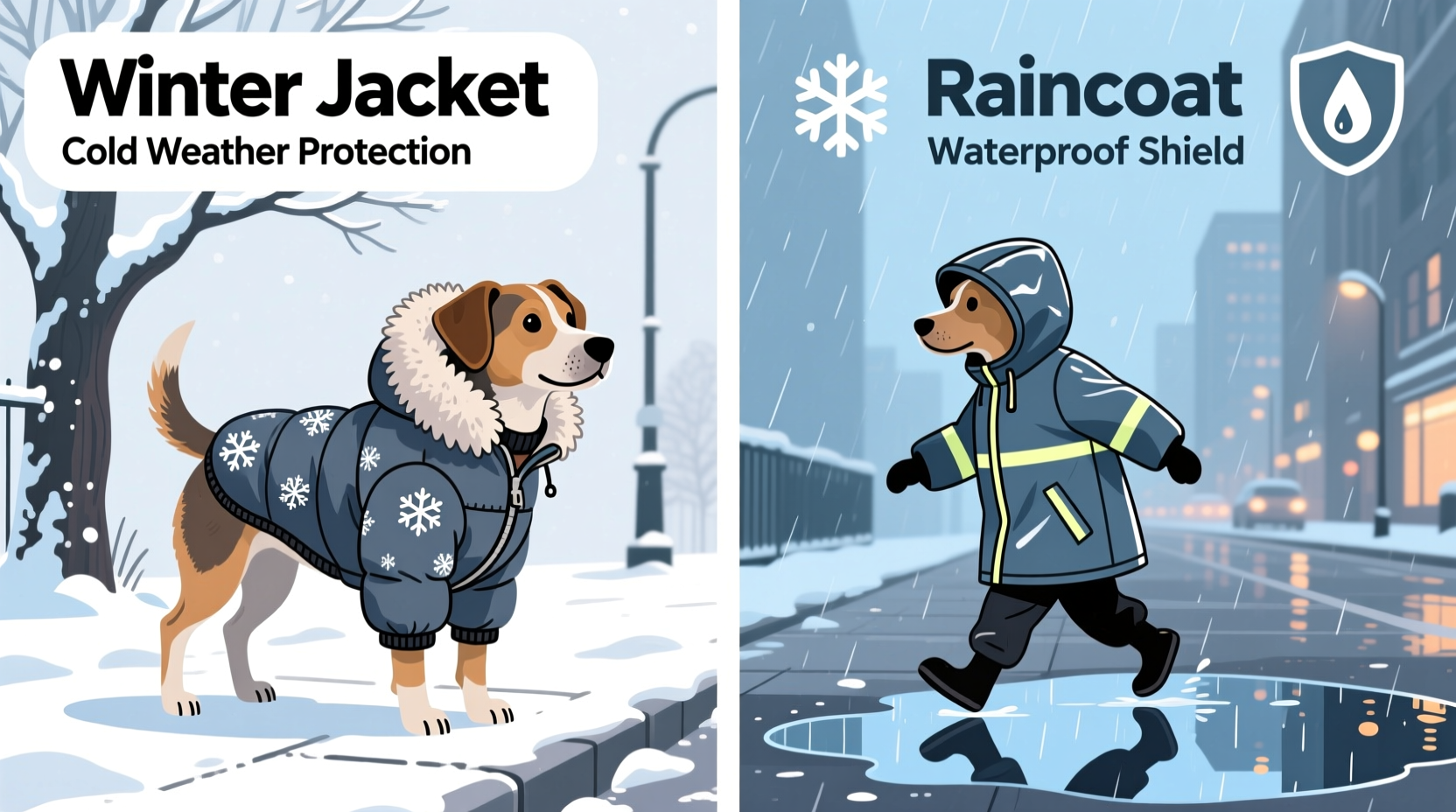
A winter jacket and a raincoat may look similar at first glance, but their materials, construction, and intended use are fundamentally different.
Winter jackets are primarily designed for insulation. They’re made from thick, warm fabrics like fleece, down, or synthetic thermal layers. Their goal is to retain body heat and shield dogs from cold air, wind, and light moisture. These are ideal for breeds with short coats, small dogs, seniors, or those with health conditions that make them sensitive to cold.
Raincoats, on the other hand, prioritize waterproofing over warmth. Constructed from materials like nylon, polyester, or polyurethane-coated fabrics, they repel water and prevent saturation during wet weather. Most feature hoods, sealed seams, and adjustable straps to ensure full coverage without restricting movement. A raincoat keeps your dog dry during walks in the rain, sleet, or slush—but it won’t necessarily keep them warm if temperatures are low.
When to Use a Winter Jacket
Cold weather protection isn’t just about comfort—it’s about health. Dogs can suffer from hypothermia and frostbite, especially in extreme temperatures. Breeds like Chihuahuas, Greyhounds, and Boston Terriers lose heat quickly due to their size and coat type. Even cold-adapted breeds like Huskies may need extra protection during prolonged exposure or if they're young, old, or unwell.
Consider a winter jacket when:
- Temperatures drop below 45°F (7°C), especially for small or thin-coated dogs.
- Your dog shivers, lifts paws, or seems reluctant to go outside.
- You live in a region with sustained cold, windy, or snowy conditions.
- Your dog has arthritis or circulatory issues exacerbated by cold.
The jacket should fit snugly but allow full range of motion. Look for high necklines, belly coverage, and reflective strips for visibility during shorter daylight hours.
“Dogs with less natural insulation can lose body heat rapidly in cold environments. A well-fitted thermal jacket is not a fashion statement—it's a functional necessity.” — Dr. Lena Torres, DVM, Canine Health Specialist
When a Raincoat Is the Better Choice
Raincoats shine when the primary threat is moisture, not temperature. Wet fur takes longer to dry, increases the risk of skin irritation, and can lead to chills—even on mild days. For dogs that love to splash through puddles or live in rainy climates like the Pacific Northwest, a quality raincoat is essential.
Choose a raincoat when:
- It's raining, drizzling, or sleeting.
- Your dog will be outdoors for extended periods in damp conditions.
- You want to avoid muddy paws and soaked fur after walks.
- The temperature is cool but not freezing (above 40–45°F / 4–7°C).
Look for features like taped seams, a hood, leg straps for stability, and a tail opening for easy bathroom breaks. Breathability matters too—cheap raincoats can trap sweat, leading to discomfort despite staying dry on the outside.
Comparing Features: Winter Jacket vs Raincoat
| Feature | Winter Jacket | Raincoat |
|---|---|---|
| Primary Purpose | Insulation and warmth | Water resistance and dryness |
| Material | Fleece, down, thermal synthetics | Nylon, polyester, PU coating |
| Water Resistance | Light to moderate (not fully waterproof) | High (fully waterproof) |
| Breathability | Moderate to high | Varies; often lower in cheaper models |
| Best For | Cold, dry, or windy weather | Rain, sleet, slush, wet snow |
| Drying Time After Use | Quick (if not soaked) | Very quick (water beads off) |
Real-World Scenario: The Portland Poodle
Meet Bella, a Standard Poodle living in Portland, Oregon—a city known for its damp, chilly winters. Her owner, Mark, initially bought her a thick winter jacket thinking it would suffice. But after several soggy walks, he noticed Bella was shivering not from cold, but from wet fur trapped under the non-waterproof jacket.
After consulting a local vet, Mark switched to a lightweight, breathable raincoat with a thermal liner. Now, Bella stays dry during daily drizzles and gets an extra fleece layer on sub-40°F days. This layered approach solved both moisture and warmth challenges without overheating her naturally curly, moisture-trapping coat.
Bella’s case illustrates a key insight: climate matters as much as temperature. In humid or rainy regions, waterproofing is often more critical than bulk insulation.
Can You Layer Them? Yes—But With Caution
In certain conditions—such as wet and freezing weather—it may be appropriate to layer a waterproof raincoat over a slim thermal base layer or lightweight fleece. However, caution is needed:
- Avoid bulky combinations that restrict movement or cause overheating.
- Ensure both garments allow freedom around the shoulders and hips.
- Monitor your dog for signs of discomfort, such as excessive panting or reluctance to walk.
Some manufacturers now offer hybrid “all-weather” coats that combine moderate insulation with full waterproofing—ideal for transitional seasons or variable climates.
Checklist: Choosing the Right Outerwear for Your Dog
- Assess your dog’s breed, coat thickness, age, and health.
- Evaluate your local climate: Is it cold and dry, or wet and chilly?
- Measure your dog’s back length, neck, and chest girth for proper fit.
- Decide whether warmth (winter jacket) or dryness (raincoat) is the priority.
- Look for adjustable straps, secure fastenings, and mobility-friendly design.
- Check care instructions—machine-washable options last longer with regular cleaning.
- Try the coat on and observe your dog’s behavior during a test walk.
Frequently Asked Questions
Can my dog wear a winter jacket in the rain?
Possibly, but not ideally. Most winter jackets absorb moisture, becoming heavy and losing insulating properties when wet. If caught in light rain, it may suffice briefly, but a dedicated raincoat is far more effective.
Do double-coated dogs need outerwear?
Generally, no—for extreme cold or prolonged exposure, even Huskies or Malamutes may benefit from a lightweight, breathable coat to protect their undercoat from ice buildup. Avoid overheating by choosing minimal coverage and monitoring activity levels.
How do I clean dog jackets and raincoats?
Follow manufacturer instructions. Most can be machine-washed on gentle cycle with mild detergent. Air dry completely—never use a dryer, as heat can damage waterproof coatings or shrink insulation.
Final Thoughts: Match the Gear to the Weather
The choice between a dog winter jacket and a raincoat isn’t about preference—it’s about purpose. Cold demands warmth. Rain demands dryness. Recognizing the difference ensures your dog stays comfortable, safe, and eager to enjoy outdoor time no matter the season. In many cases, owning both types of outerwear offers the best protection across changing conditions.
Start by observing your dog’s behavior in different weather. Are they lifting paws in snow? Shaking excessively after a walk? These are cues that protection is needed. Measure carefully, choose wisely, and don’t hesitate to invest in quality. After all, your dog doesn’t get to choose their coat—they rely on you to pick the right one.




 浙公网安备
33010002000092号
浙公网安备
33010002000092号 浙B2-20120091-4
Comments
No comments yet. Why don't you start the discussion?