
If you’ve been relying on DoorDash for income, noticing a sudden drop in order volume can be frustrating—especially when you’re online and ready to work. You're not alone. Many Dashers across the U.S. and Canada report periods of low activity, long wait times between deliveries, or even zero orders during peak hours. The good news is that most slowdowns have identifiable causes—and actionable solutions.
This guide breaks down the real reasons behind slow DoorDash order flow, from algorithmic factors to personal settings, and delivers practical strategies to increase your chances of receiving more deliveries.
Why DoorDash Orders Slow Down: Key Factors
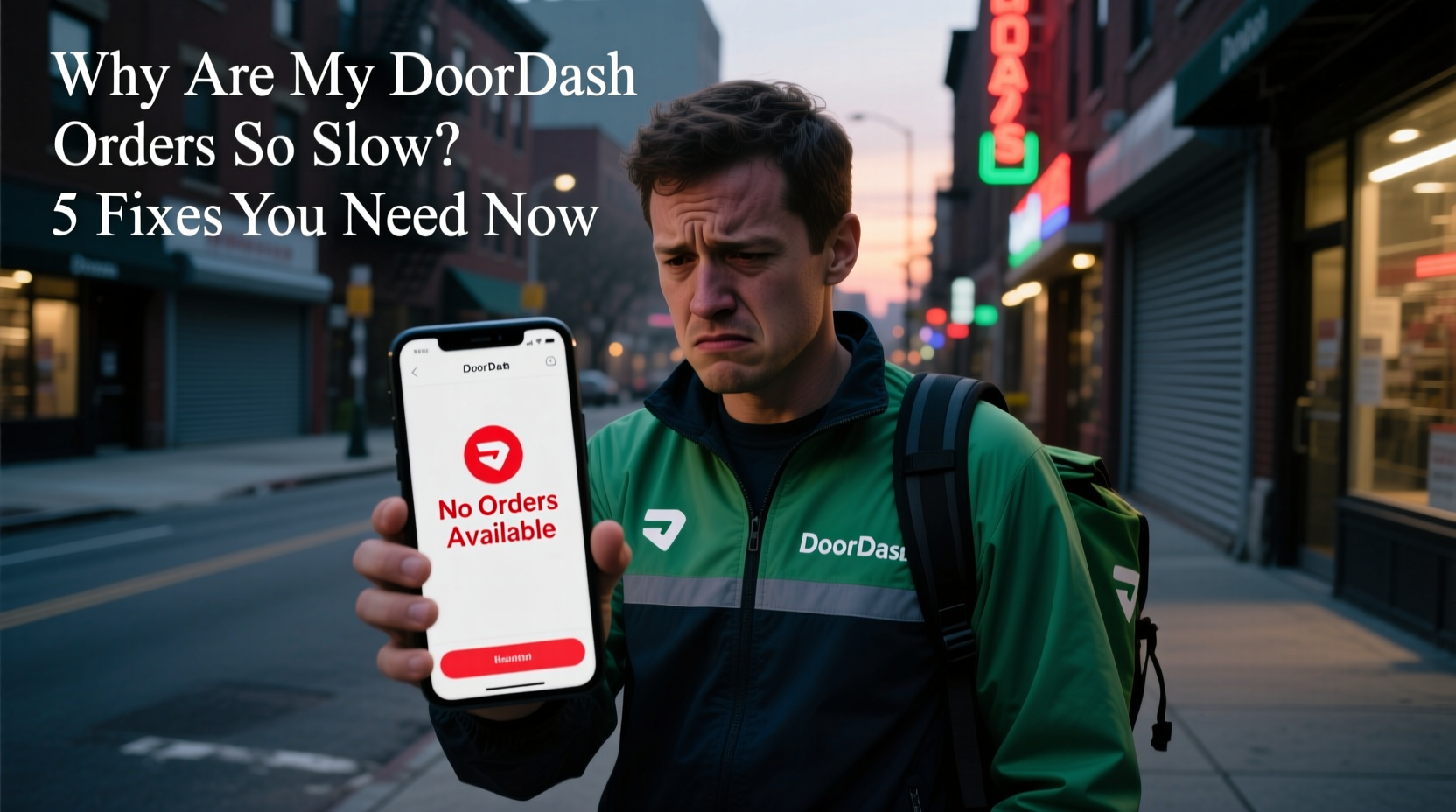
DoorDash uses a complex dispatch system influenced by supply and demand, driver performance, location dynamics, and platform priorities. When orders slow down, it’s rarely due to just one issue. Here are the primary contributors:
- Driver saturation: Too many Dashers active in your area reduces individual order opportunities.
- Low customer demand: Off-peak hours, bad weather, or local events can reduce ordering activity.
- App settings: Incorrect availability, zone selection, or notification issues may prevent order alerts.
- Performance metrics: Low acceptance rate, cancellations, or poor ratings can deprioritize your profile.
- Geographic positioning: Being outside high-demand zones or near underperforming restaurants lowers visibility.
“DoorDash’s algorithm rewards reliability and responsiveness. Consistently available Dashers with strong metrics get priority during high-volume windows.” — Logistics Analyst, Ride-Share Industry Report 2023
5 Proven Fixes to Get More DoorDash Orders
1. Optimize Your Active Zones
Your location while logged in directly impacts how often you receive orders. Simply being “online” isn’t enough—you need to be in the right place at the right time.
Use the DoorDash Drive Time map (available via third-party tools like Gridwise or NextDash) to identify hotspots. These are areas where restaurants are busy, customers are ordering, and fewer Dashers are currently active.
2. Improve Your Dasher Metrics
DoorDash’s backend system tracks your performance. A history of late deliveries, frequent cancellations, or low customer ratings can reduce your order priority—even if you’re in a prime location.
Focus on maintaining:
- Acceptance rate above 70%
- Punctuality (on-time delivery rate)
- Positive feedback from customers
- No unapproved cancellations
While DoorDash doesn’t publish exact thresholds, Dashers consistently report improved order volume after cleaning up their dashboards and avoiding unnecessary declines.
3. Adjust Availability Settings Strategically
Ensure your app is fully functional and set to receive notifications. Common oversights include:
- Do Not Disturb mode enabled
- Background app refresh disabled
- Location services turned off
- Incorrect vehicle type selected (e.g., bike vs car)
Double-check that your availability window matches actual peak times. Lunch (11 AM–1 PM) and dinner (5 PM–8 PM) are typically strongest, but some urban markets see steady flow until midnight.
4. Avoid Peak Saturation Times
Paradoxically, logging in during peak hours can backfire if too many Dashers flood the same zone. In cities like Los Angeles or Chicago, hundreds of drivers go online simultaneously at 5 PM, creating intense competition.
Instead, consider starting earlier (4 PM) or later (6:30 PM). You’ll face less competition and still capture a share of the dinner rush.
5. Use Multiple Platforms Wisely
Relying solely on DoorDash limits your earning potential and exposes you to downtime when orders dry up. Running Uber Eats, Grubhub, or Instacart alongside DoorDash increases overall trip volume.
However, avoid switching apps mid-order. Completing trips reliably on each platform strengthens your standing across all systems.
Checklist: Boost Your Order Volume in 24 Hours
- Verify app notifications and location permissions are enabled.
- Log into DoorDash and confirm your vehicle and availability settings.
- Review your recent performance: check cancellation rate and average rating.
- Study local traffic patterns using a third-party analytics tool.
- Relocate to a known hotspot 30 minutes before peak demand.
- Avoid declining orders unless absolutely necessary.
- Stay active for at least 2–3 consecutive hours to build session momentum.
Real Example: Maria’s Turnaround in Austin
Maria, a part-time Dasher in Austin, Texas, noticed her weekly earnings dropped from $450 to $220 over three weeks. She was logging in every evening but often waited 20–30 minutes between orders.
After reviewing her stats, she realized she’d been declining sushi and heavy-item deliveries due to stairs at pickup locations. Her acceptance rate had fallen to 58%. She also discovered she was parking in a low-demand residential cul-de-sac instead of moving closer to South Congress, a popular dining district.
Maria adjusted her behavior: she accepted all order types, relocated to a central zone, and drove during off-peak overlap times (4–7 PM). Within a week, her order frequency doubled, and her weekly income returned to $400+.
Do’s and Don’ts: Quick Reference Table
| Do | Don't |
|---|---|
| Stay in high-density restaurant zones | Wait in quiet residential neighborhoods |
| Keep acceptance rate above 70% | Decline multiple orders in a row |
| Arrive early to beat the rush | Log in exactly at 5 PM when everyone else does |
| Use secondary apps to fill gaps | Switch platforms mid-delivery |
| Ensure phone battery and data connection are stable | Run the app with weak signal or low power mode |
Frequently Asked Questions
Does DoorDash penalize Dashers for declining orders?
DoorDash does not explicitly state penalties, but consistent declines—especially repeated refusals during peak times—can lower your priority in the dispatch queue. Occasional declines are acceptable, but aim to keep your acceptance rate above 70% for optimal performance.
Can I get banned for not accepting enough orders?
You won’t be banned solely for declining orders, but prolonged inactivity or extremely low engagement may lead to deactivation, particularly if DoorDash identifies your account as inactive. Staying responsive and completing regular shifts helps maintain account health.
Why do I get no orders even when other Dashers are busy?
This often comes down to placement and performance. If you’re physically outside a high-demand radius or have weaker metrics than nearby Dashers, the algorithm may route orders to others first. It’s not always about who’s closest—it’s about who’s most reliable within range.
Final Steps to Sustain Consistent Order Flow
Improving your DoorDash experience isn’t about luck—it’s about strategy. The algorithm favors consistency, reliability, and smart positioning. By auditing your current habits, adjusting your location tactics, and maintaining strong performance, you can significantly increase your order volume.
Remember: small changes compound. Accepting one more order per shift, arriving 15 minutes earlier, or relocating just half a mile can make the difference between a slow night and a profitable one.




 浙公网安备
33010002000092号
浙公网安备
33010002000092号 浙B2-20120091-4
Comments
No comments yet. Why don't you start the discussion?